

So, the best nonfiction of the coming year – the all-encompassing nature of the category is always challenging. The technology of the book never ceases to amaze me, no matter how many other advances (let’s call them that) in information delivery are made. All these wildly different histories, analyses, examinations, lives, nestled in a paper packet you can slip into a bag or pocket.
And yet the practice of reading itself requires defending, and one of the staunchest warriors on its behalf is the columnist James Marriott, so I look forward with eagerness (and a little trepidation) to The New Dark Ages: The End of Reading and the Dawn of a Post-Literate Society (Bodley Head, May). For something a little more celebratory on the written word, there’s Cathy Rentzenbrink’s The Agatha Cure (Canongate, September) – must you ask which Agatha? This year marks the 50th anniversary of the great crime writer’s death: memoirist Rentzenbrink finds solace in her work.
Speaking of memoirs, there are some fine ones coming down the pike. The astonishingly courageous Gisèle Pelicot tells her own story in A Hymn to Life: Shame Has to Change Sides (Bodley Head, February), while novelist Siri Hustvedt considers life after her husband Paul Auster’s death in Ghost Stories (Sceptre, May). Rachel Eliza Griffiths’s evocative The Flower Bearers (John Murray, January) delineates the interweaving of one of her closest friendships and her marriage to Salman Rushdie, as well as the dreadful attack that nearly killed him.
Former chancellor Sajid Javid recounts his early years in Rochdale in The Colour of Home: Growing up in 1970s Britain (Abacus, February). Whatever your politics, it promises to be a story of determination and survival. (Colin Grant’s What We Leave We Carry: Voices of Migration to Britain, published by Vintage in June, will make a fine companion volume.) The other big political memoir announced so far is Angela Rayner’s as yet untitled book, coming from Bodley Head in the second half of the year: covering her tough upbringing and “unconventional route into politics”, it aims to “inspire and encourage others to overcome adversity”.
I loved Jarred McGinnis’s novel The Coward (2021); his memoir There Is No Meant to Be: A Family Story (Harvill, March), in which he traces the southern clan that shaped his growing up in the US, promises to be a treat. But maybe you’ll have a crack at telling your story; if so, pick up Blake Morrison’s On Memoir: An A-Z of Life Writing (Borough Press, April), “a freewheeling exploration of narrative nonfiction”. Morrison, whose memoir And When Did You Last See Your Father? has been hugely influential, will have fascinating tips to share.
Did you know that Barbara Cartland used boot polish for mascara? Me neither
Did you know that Barbara Cartland used boot polish for mascara? Me neither
One of the biographies that stands out in 2026 is Sara Wheeler’s Jan Morris: A Life (Faber, April), a study of the historian, travel writer and transgender pioneer. Her extraordinary life and career are worthy of Wheeler’s close attention, and I can’t think of a better writer to tackle the subject. Meanwhile, the great historian Antony Beevor is taking on the last czar’s mesmeric minister in Rasputin: And the Downfall of the Romanovs (Weidenfeld & Nicolson, March).
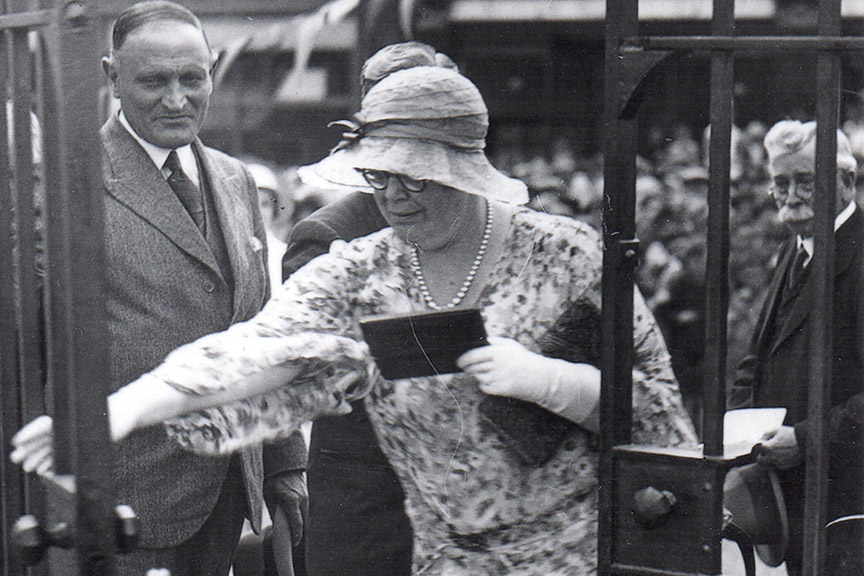
I’m also intrigued by the pairing of Barbara Cartland and Matthew Sweet, not least because his biography of the queen of romance is subtitled The Great Dictator (Hodder & Stoughton, September). Did you know she used boot polish for mascara? Me neither.
There will be fascinating secrets revealed in Piers Blofeld’s Master of Lies: How Anthony Blunt’s Treachery Shaped Our World (Quercus, May), recounting the life of the surveyor of the queen’s pictures, knight of the realm – and Soviet spy (W&N, March). Blunt’s double life was revealed in 1979, though he had confessed to spying for the Soviets 15 years earlier. More startling tales of the postwar period come to the fore in Fakers: A Top-Secret Tale of Phantoms and Forgeries on the Disinformation Front Line by Rory Cormac (OUP, May), which “reveals the rise and fall of the mavericks running Britain’s cold war forgery empire”. I also can’t help but be intrigued by Jonathan Caplan’s Not for Disclosure: UFOs: The World’s Best Kept Secret (Century, June). Caplan – a KC when he’s not scanning the skies – has been collecting data on UAPs (unidentified aerial phenomena), as UFOs are now commonly known, for five decades. Little green men? We’ll see.
Returning to this planet, The Surge: The Race Against the Most Destructive Force in Nature (Mudlark, February) by The Observer’s climate editor, Jeevan Vasagar, tracks our responses to flooding across the centuries and considers how we face a future of rising waters.
Two thinkers who give me hope have books on the horizon. Stephen Sackur was lead presenter of the BBC’s HARDtalk for two decades; now he has written Hard Truth: 10 Investigations That Shook the World – and Why They Matter Now (Headline, October), “a rallying cry for the vital and continuing role of investigative journalism. And the great Rebecca Solnit offers a sequel to Hope in the Dark with The Beginning Comes After the End: Notes on a World of Change (Granta, March), charting our continuing “revolution of ideas and rights”.
Newsletters
Choose the newsletters you want to receive
View more
For information about how The Observer protects your data, read our Privacy Policy
This year, Richard Dawkins’s landmark book The Selfish Gene, which transformed how we understand our genetic makeup and history, marks 50 years since publication; OUP is producing an anniversary issue in June. Francis Fukuyama’s The End of History and the Last Man, published in 1992, tried to put a full stop on current events; things haven’t quite worked out that way, however, and Fukuyama has written a follow-up, In the Realm of the Last Man: A Memoir (Profile, September). Also worth noting are David Turner’s Disability: A History of Resistance (Vintage, June) and Lifeboat at the End of the World: A Volunteer’s Story by Dominic Gregory (William Collins, March), which promises to reveal what it’s really like to go on a “shout” with a lifeboat crew.
As a devotee of the BBC’s Saving Lives at Sea, I can’t wait. Children’s laureate Frank Cottrell-Boyce marks the end of his tenure with A British Childhood: How Our Children Live Now (Picador, June), a moving portrait of what it is to be young today. And Patrick Radden Keefe, bestselling author of Empire of Pain and Say Nothing, turns his gaze to a tragedy in the capital with London Falling: A Mysterious Death in a Gilded City and a Family’s Search for Truth (Picador, April).
There are voices we turn to, over and again, to give us a sidelong glimpse of the world we think we know and show it in a fresh light. David Sedaris has one of those voices and – hurrah – there’s a new volume of his heartbreaking and hilarious essays, The Land and Its People (Abacus, July). Marina Hyde’s What a Time to be Alive! Scenes from a Strange Age (Faber, September) promises acid brilliance, while in The Castle (Viking, August), Jon Ronson (author of The Psychopath Test and So You’ve Been Publicly Shamed) finds an investigation coming close to home as his son is lured into a strange castle and – well, we’ll just have to wait to find out. Plus, Lena Dunham wrestles with celebrity and its ill-effects in her memoir Famesick (4th Estate, April).
When it’s hard to find light in the darkness, music illuminates the way. As you rock out to Last Christmas, know that Sathnam Sanghera’s Tonight the Music Seems So Loud: The Meaning of George Michael (Picador) will land on our shelves in June. Famous: Ego, Envy and Ambition in Pop, Rock and Hip-Hop by Matt Thorne (Orion, March) is a juicy account of great rivalries, and Lloyd Bradley’s Funk Is Its Own Reward: From R&B to Hip-Hop explores the genre’s flowering in the late 1960s and 70s (Constable, May).
All that said, I wouldn’t place any bets on what will be successful next year: remember the screenwriter William Goldman’s rule: “Nobody knows anything” when it comes to getting to the top of the greasy pole. But plenty of people are betting, especially on sport – an explosion of money and corruption that Darragh McGee explores in Imitation Games: How the Gambling Industry Hijacked Sport (Bodley Head, May).
So mark your dance card for the coming year; by which I mean, pre-order anything that takes your fancy in our recommendations. It helps authors, it helps the cause of reading – and we can all be glad of that.
To browse all books included in What to read in 2026, visit observershop.co.uk. Delivery charges may apply.
Illustrations by Martin O'Neill