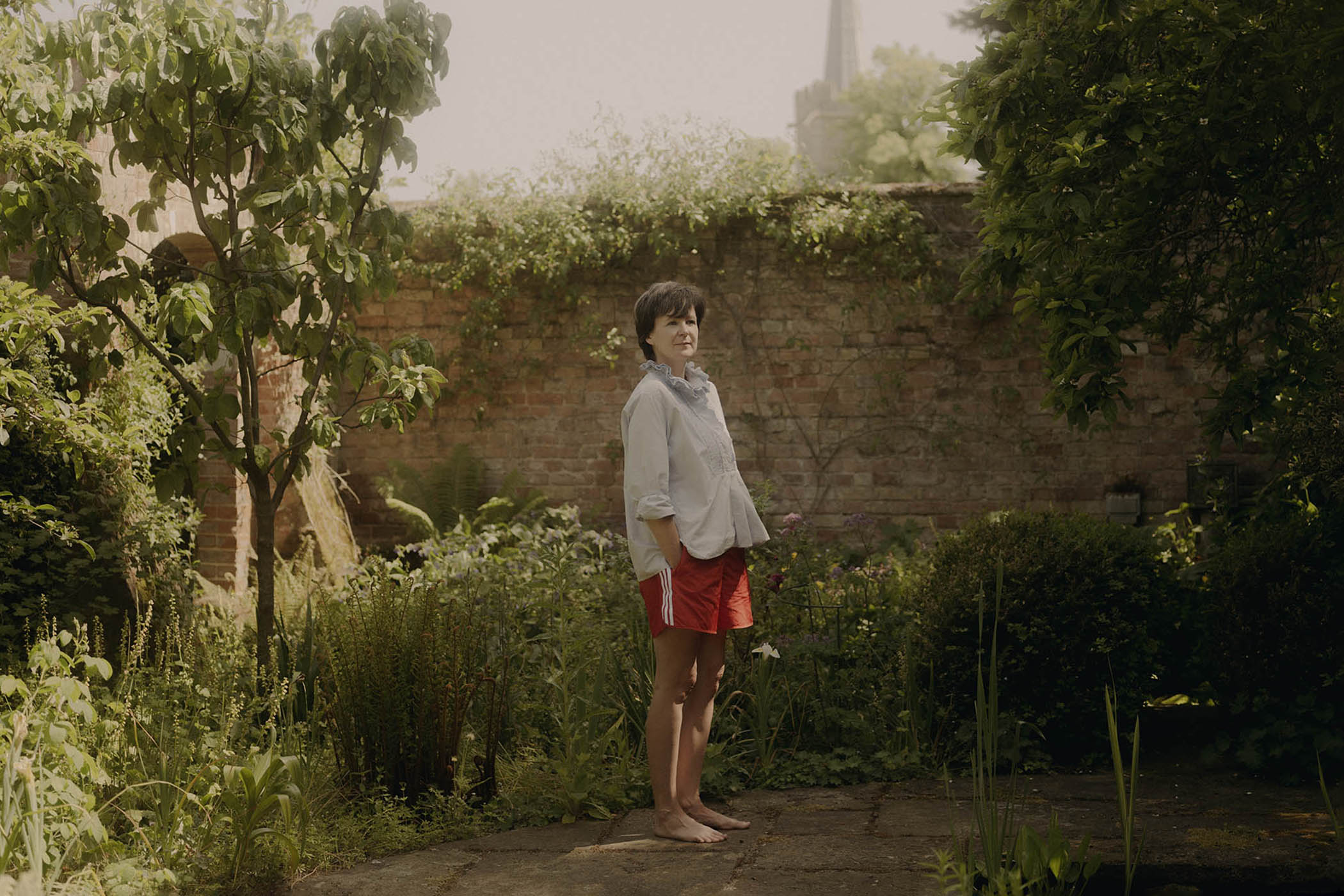
Portrait by Tori Ferenc for The Observer
The writer Olivia Laing, 49, is the author of five works of nonfiction, an essay collection and two novels. Their work frequently depicts outsiders, examining the lives and work of stigmatised figures through the lens of their relationship to alcohol, the body and their sexuality. This month marks 10 years since the publication of Laing’s beloved book The Lonely City, which used the stories of artists such as Andy Warhol and David Wojnarowicz to distil modern alienation and reframe loneliness as both an inevitability and an adventure.
The Lonely City captures a very painful period of isolation you experienced after moving to New York following a break-up. How has it been to revisit it a decade later?
It’s actually quite hard for me to read as it’s such a vulnerable book. Now it’s had this global life I almost felt protective of this younger version of me who was telling the world all these things.
Have people been similarly vulnerable with you in their responses over the years?
I can still tell who’s going to come up and talk to me about The Lonely City in a book signing queue because they’re tearful. Loneliness is so hedged about by shame, and the shame is so agonising. I think that was a real liberation of a burden for lots of readers.
What were you trying to say about loneliness with the art and artists you selected?
A lot of the artists in the book weren’t that well known when I wrote it, and I had to fight quite hard for them. Edward Hopper was a way of showing something that everyone understood: if you asked people to name a painting of loneliness, they’d almost certainly come up with [Nighthawks]. Then it was really finding a way to press at those images and work out why they feel so psychologically resonant. They convey incredibly subtle things about loneliness, space, surveillance, hyper-visibility, all of these quite subtle layers of loneliness.
Are there any contemporary artists that capture modern alienation who would also fit in?
I think now it would be much more about our involvement with the internet. It’s not just that we’re isolated in cities, it’s also the hyper-surveillance of living our lives with one foot in the physical realm and one foot in the digital realm. If there was [an equivalent] Hopper [image] now, it would be people leaning over their phones.
The Lonely City was such a big book on Instagram, and you mention in the afterword about it being selected as a prop for a character on The White Lotus. Do you feel conflicted about it being a digital symbol in that way?
The funniest one of those was Sebastian Stan making a video of his pandemic day reading The Lonely City and crying. I thought this has really found its moment [laughs]. I think once you’ve finished a book it goes out and lives its own private life. This one lived a life online and I’m pleased for it.
The pandemic helped to increase our empathy for the isolated, but is it also harder than ever to make the case for loneliness as a good thing given how it is being weaponised online?
I think what has happened online is that loneliness is used by the far right as a grooming tool. It’s a way of finding people who are vulnerable and offering them these really false promises of a community bonded by hatred. I don’t think it’s the loneliness that’s at fault there, it’s how it’s being used.
You got married after the book was published. Did you fear that might be perceived as a solution to loneliness, or having gained a ‘passport out of unhappiness’, as you put it in the book?
I honestly think the whole of [Laing’s subsequent novel] Crudo was me thinking about the absolute horror of intimacy [laughs]. I was very glad to get married, but it really was exploring the flipside of the melancholic pleasures of being alone and in control of your whole life, versus having to relinquish some of those borders and boundaries, and experience the ugly aspects of yourself in a way that you just don’t when you’re alone.
Your most recent novel, The Silver Book, has a cast of fictional artists and outsiders. How do you find the process of writing invented characters compared to real people?
When I was writing Nicholas, the main fictional character in The Silver Book, I was initially imagining a manipulative, Talented Mr Ripley character. This other person emerged who was much more soft and clearly very damaged by the intense homophobia of the 1970s. That sounds like I’m saying a fictional character is out of my control in a way that a nonfiction character isn’t, but actually I think they both have this capacity to surprise you on the page. I never feel like I know somebody inside out. As I’m writing, I use all sorts of odd scraps of people’s dreams, clothes, medical records to try to give you a sense of a whole person, but also a person that isn’t quite finished.
In The Lonely City you write about conversation and speech as a way of being understood. Does writing offer that for you too?
I think the thing about books is you can write yourself into the page, and it was a great relief for me, book after book, that I’d done that. As the book becomes less fashionable, I love it more. The idea of spending my life working in this endlessly dying but never quite dead art form feels weirdly very exciting. AI actually can’t get in the way of that, and it feels to me that there’s still this road open ahead for making new forms that describe the appalling strangeness and excitement of our times.
The 10th anniversary edition of The Lonely City is published by Canongate (£20); The Silver Book is out now in paperback from Penguin (£9.99). Order either book from The Observer Shop to receive a 10% discount off RRP
Olivia Laing will discuss The Lonely City at the Union Chapel, London N1, on 23 June
Newsletters
Choose the newsletters you want to receive
View more
For information about how The Observer protects your data, read our Privacy Policy