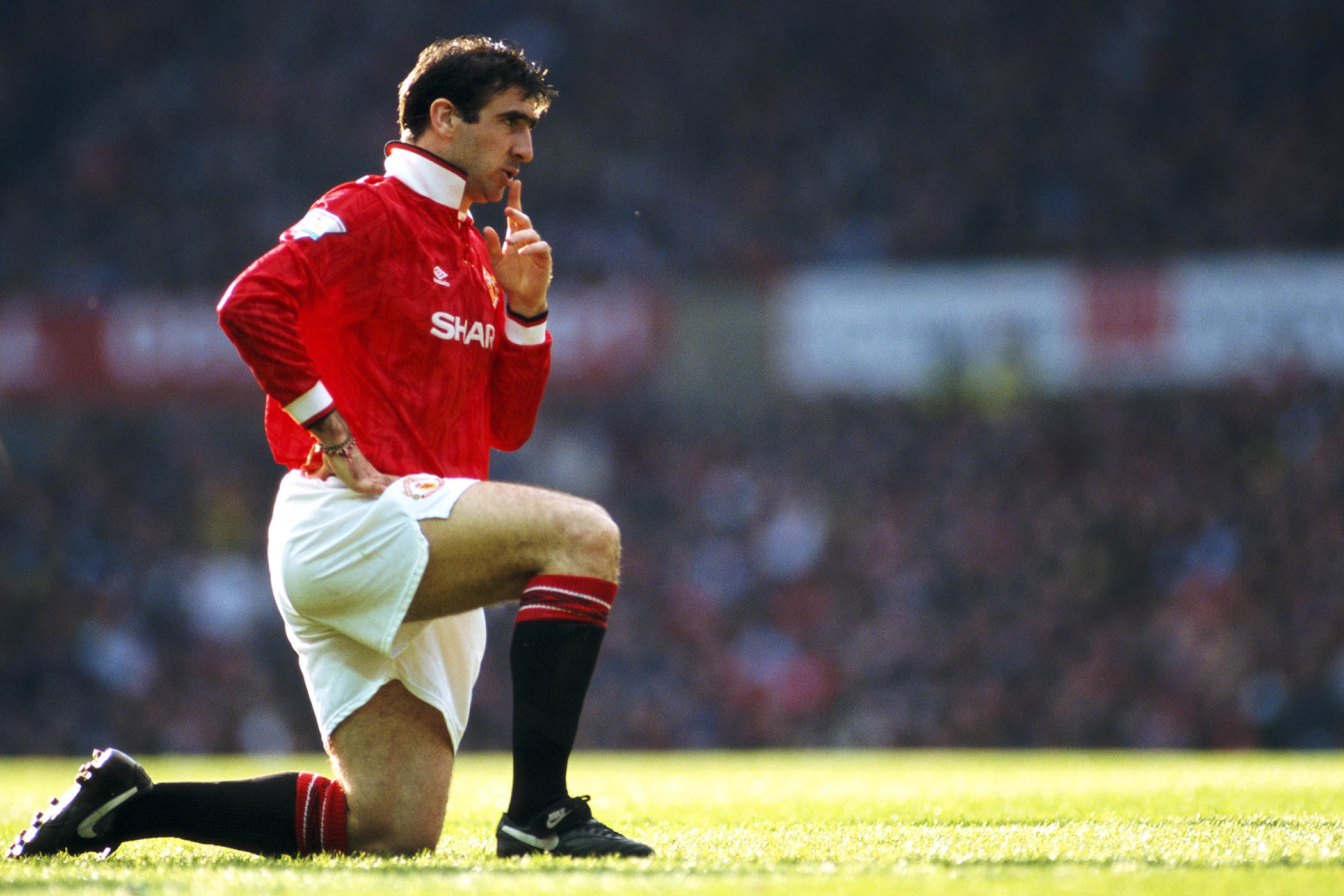



There’s more than one reason why Michael Cox’s 2017 book The Mixer, his history of tactics in the Premier League, ascribes such importance to the arrival of Éric Cantona at Manchester United in November 1992. Cantona, “more than anyone else, popularised technical football”, leading the English game out of its dark ages when any tactic beyond whacking the ball upfield was viewed with the same bafflement and suspicion neanderthals might have for an escalator. But he behaved very differently from your average footballer off the pitch, too. As Cox notes, after Cantona arrived, the regular drinks order for United’s squad became 17 lagers and one glass of champagne.
For a footballer, Cantona has generated a lot of art. A group of United supporters put out an album dedicated to him in 1995. That same year, the playwright Gérard Gelas wrote Ode à Canto, which gave a fictionalised account of the community service sentence Cantona received (alongside an eight-month football ban) after launching a flying kick at an abusive Crystal Palace supporter. (Cantona watched the play at the Avignon festival that summer during his suspension.) In 2009, he played himself in the Ken Loach film Looking for Eric.
And now he has inspired the short, strange and brilliant Éric Cantona’s 82 Goals, by the French poet Valentin Deudon, translated by Ian Monk. Deudon’s conceit of writing a short essay on each goal Cantona scored as a Manchester United player works like a cross between one of Georges Perec’s ingeniously structured literary experiments, Craig Brown’s fragmentary portraits of Princess Margaret and the Beatles, and Douglas Gordon and Philippe Parreno’s 2006 documentary Zidane: A 21st Century Portrait, in which 17 cameras are trained solely on French footballer Zinedine Zidane for the duration of a Real Madrid game. Coincidentally, United manager Alex Ferguson declined to sign Zidane in the mid-90s because he considered him too similar to Cantona.
Cantona’s influence was seismic, but his age of football feels impossibly distant
Cantona’s influence was seismic, but his age of football feels impossibly distant
Deudon’s 82 glimpses vary in style and focus. Some read almost like match reports: “on striking the ball, he manages to send it in a perfect arc towards the far corner”. Others offer philosophical ruminations on the nature of defeat: “a pitch, a place where happiness always conceals a certain distress”. Still others attempt to get inside Cantona’s head: “This improbable script, on this particular day, in such a historically burdened setting – an entanglement of emotions that may have reminded him of a few lines by Arthur Rimbaud.”
Very occasionally, Deudon lapses into pseudery: “It was a creation,” one section begins, “hinted at by the leather of a nonchalant ball that dreamed of being turned into a masterpiece.” Mostly, though, his book is a continually surprising delight that’s also supremely well constructed.
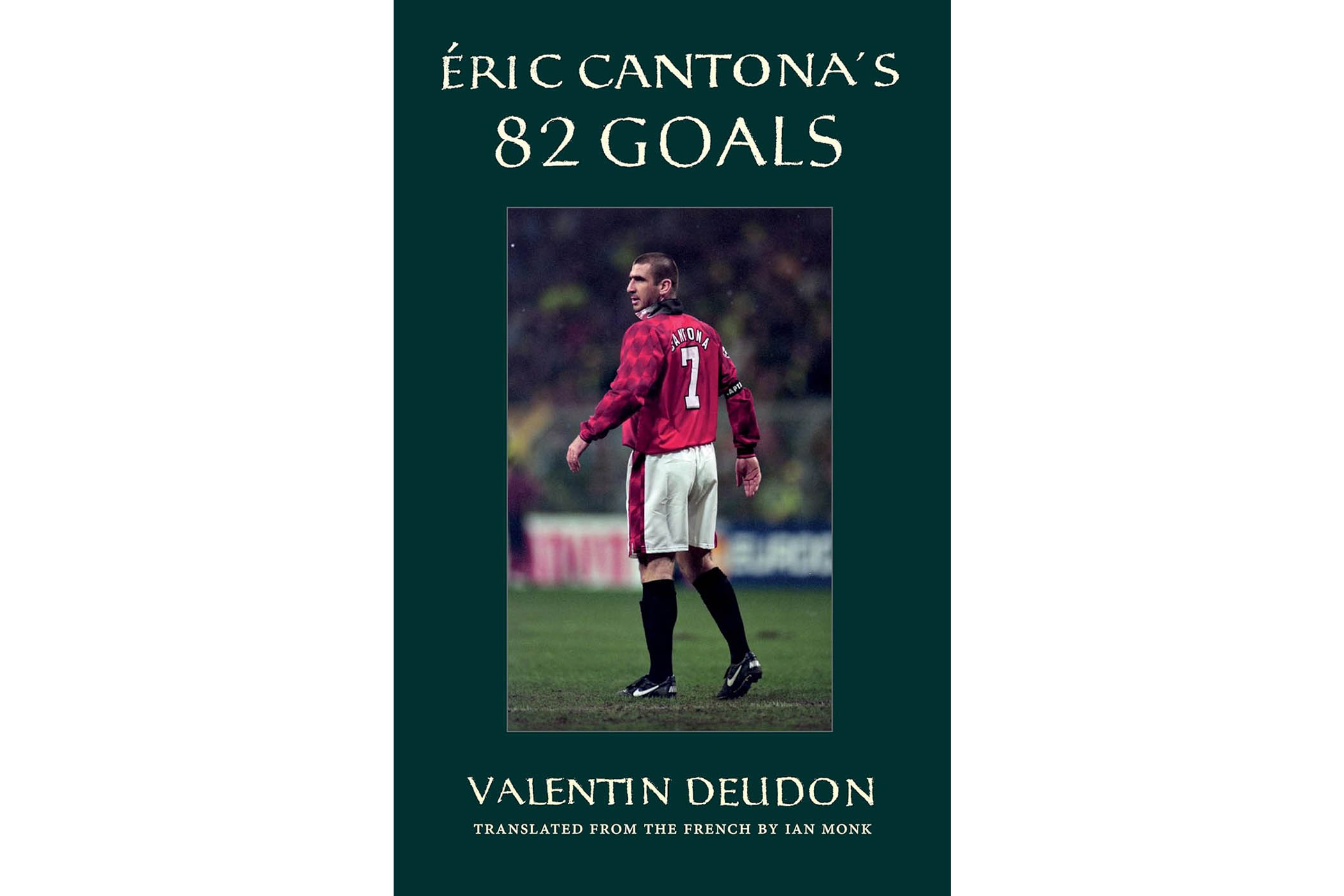
For much of the book’s length I thought its only significant flaw was that, by focusing on goals alone, it detracted from Cantona’s prodigious facility for a more selfless element of attack: the assist (his assist-per-game record stood for more than 20 years). In fact, Deudon’s seeming dismissal of assists early in the book is a dummy. Eventually, he quotes Cantona: “Scoring is extraordinary, but giving a goal is generosity.” “And,” Deudon writes, “everyone knows it: his greatest goal… was a pass.”
He means the breathtaking stabbed chip Cantona played to Denis Irwin against Spurs in January 1993. Among the greatest passes in Premier League history, it is Cantona’s own favourite moment from the extraordinary career he left behind him, aged 30, wanting instead to act, to paint, to sing (in 2023 he went on tour with piano and cello accompaniment). “I can live many lives – it’s a privilege,” he told French GQ in 2010, reflecting on his shock retirement.
His influence was seismic, but his age of football feels impossibly distant amid the branding deals and price gouging of the current World Cup. Last month, a reporter at Cannes asked Cantona if he was excited about the tournament. “No,” he said, then laughed a little at the thought. “No.”
Éric Cantona’s 82 Goals by Valentin Deudon, translated by Ian Monk, is published by Open Borders Press (£12.99). Order a copy from The Observer Shop for £11.69 (10% off RRP). Delivery charges may apply.
Photographs by Anton Want/Allsport via Getty Images, Open Borders Press
Newsletters
Choose the newsletters you want to receive
View more
For information about how The Observer protects your data, read our Privacy Policy