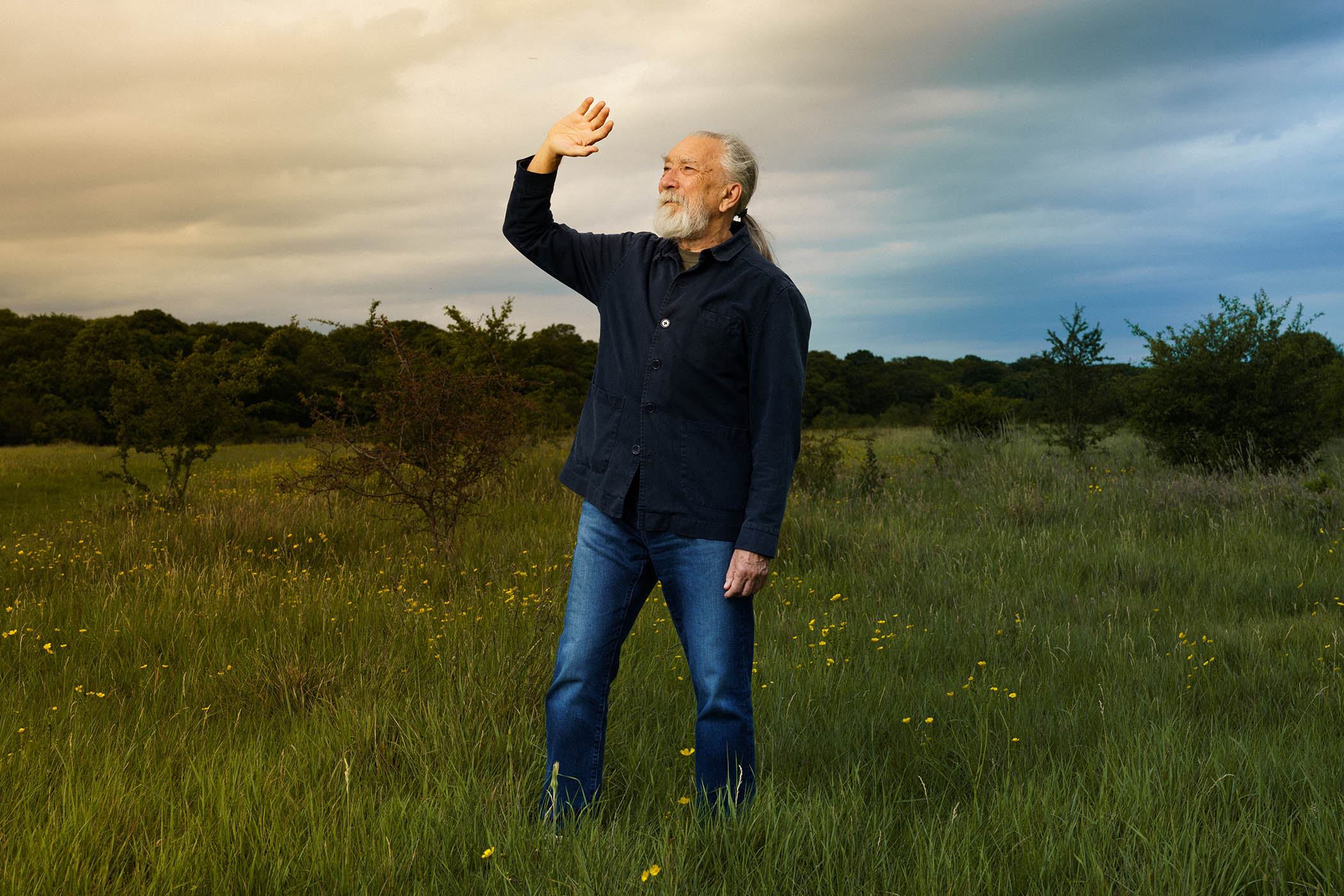


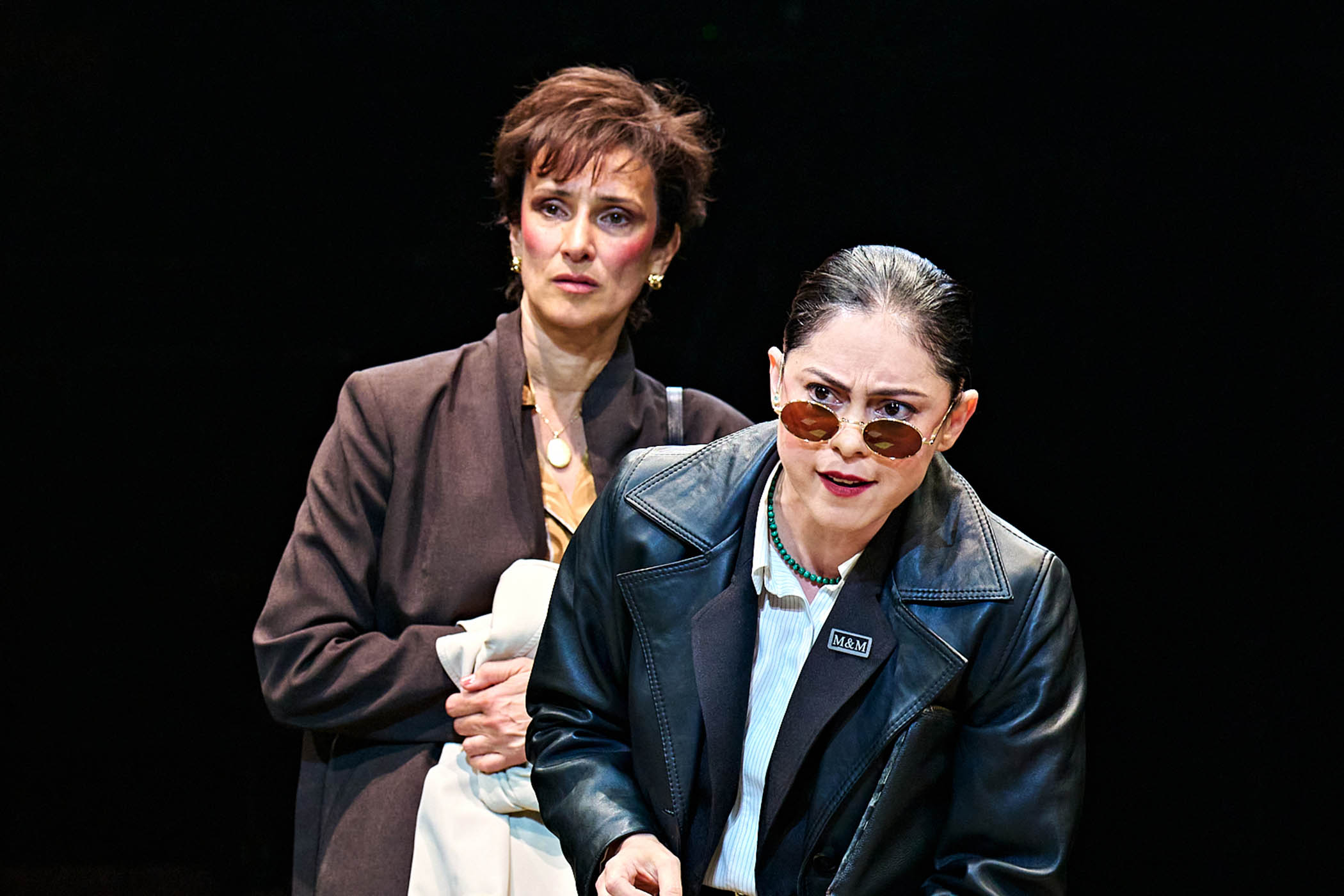
Photograph by Raphaël Neal for The Observer
One of my favourite weird mysteries is the origin of astromyxin, or star jelly, a translucent, lumpy gelatinous substance occasionally found on lawns. It has puzzled us since at least the 14th century, and has been identified variously as cyanobacteria, the remnants of dismembered toads, a substance brought to earth by meteors, industrial waste and slime moulds.
In M John Harrison’s new novel we learn that astromyxin is the physical manifestation of an invasion from the astral plane. These invaders, known as the iGhetti, first infested the City of London and spread to banking hubs worldwide, appearing as “tall writhing bursts of light” with a penchant for building frail, ephemeral copies of vanity architecture from the 2000s. From this, you might infer The End of Everything is a sophisticated satire on the financial sector, or perhaps the internet. It’s far more than that.
Harrison has described it as a seaside novel, a Brexit novel, a work of gothic and a road movie. It’s a tale of squalls, tides, fogs, violences, recollections, dislocations, things alternately obscured and revealed. It is extremely beautiful and terrifyingly remote. Reading it hit me like a truck and broke all my critical faculties. For weeks I found myself quite unable to talk about The End of Everything, let alone write about it. Nothing like this has happened to me before: it felt like a glitch – a malfunction – in the machinery I’d built over years of reading. Which was probably, I realised, what the author intended.
Harrison often writes about people living in societies on the far side of some disaster they can’t explain or understand. In this post-apocalyptic iteration, Britain is cut off from the continent by a wall of fog. People flock to boats to emigrate. Money has failed. Children make figures out of fallen ash. Everything is discontinuous: holidaymakers lounge under skies punctuated with attack helicopters on their way to the frontlines of the City of London. The fabric of reality has changed: there’s always the risk of walking into a “bad patch”, which forces you to experience something that may have already happened, or is happening elsewhere, over and over again. (Four chapters of the novel, all called The Sign, track the iterations of one such event and its transformations before it begins to “curl itself away into the astral plane”.)
The novel follows the more or less desperate journeys of two people along the south coast. Marnie is an elderly artist with a gun in a shopping bag; Phillip, her beachcomber nephew, has an alien artefact in his Lancia. Marnie’s journey along the coast is thick with ambiguity: her lapses in memory, wildly shifting emotions and increasingly uncertain sense of identity could be ascribed to Alzheimers, entailments of the apocalypse, or both, and her journey seems to be one instantiation of a far wider civilisational sundowning. Late in the book, she watches “the old men, working their way back down from 28,000 feet from their nightly raids on Dresden and Agincourt, coming home to roost curled up invisibly between the slats of the memorial benches and in corners of the lofts of the abandoned beachfront houses”. The kind of English mythos conjured in this surreal scene – I think of the second world war, Olivier’s Henry V, murmurations of starlings, falling arrows, Lancaster bombers – is beloved of both the populist right and the heritage industry, and Harrison, no fan of either, is skewering the kind of essentialist, nativist thinking that refuses to comprehend that the past is a different country.
It’s a novel that destabilises you in the course of its reading – but you’re absolutely not walking away
It’s a novel that destabilises you in the course of its reading – but you’re absolutely not walking away
Phillip is trying to sell the artefact that he pulled from the sea, “some kind of biological gadget the iGhetti had released in numbers when they first arrived, which was no longer of use to them”. It is terribly disturbing. First resembling a swaddled baby, it quickly grows. It made me think of the baby from Eraserhead, and later, the luminous figure of Blake’s The Dance of Albion, described by Tom Lubbock as “propaganda for a party of apocalypse”. But you might also imagine it to be something like an LLM or ambulatory Google; it evolves, it speaks, it always does what you ask. It can advise you on local history, good cafes. It knows how to drive. It adores adverts, likes to speak in slogans – a form of language equally suited for protest, art and marketing. “A new life is beginning,” it exclaims.
There is full-on body horror here of the most Cronenbergian sort. Some scenes involving polytunnels, wires and jaws will haunt me for a long time. But the deepest terror of this novel is in how perfectly it conjures a general epistemological collapse. The characters can’t work out what’s real, and nor can you. Things happen and the world does not react in the right way. Antecedents and consequences are unexpected. Causality is a mess. It’s a novel that destabilises you – quite savagely – in the course of its reading. But you’re absolutely not walking away. You’re locked in, and you’re having the time of your life.
The landscapes of The End of Everything are described with the topographical precision of a painter-naturalist and are rich with figurative possibility. The view from Marnie’s old terraced townhouse by the estuary, with its scrub and ruins, feels like both a real place and a Paul Nash painting; the crashed airliner on the other side of the road a Ballardian motif and a reference to 9/11. Fittingly, for a novel concerned with testimonial instability, the narration shifts from omniscient to objective, and sometimes becomes vaguely conspiratorial. The characters all appear capable of committing monstrous acts of violence with almost entirely flat affect: in a reversal of how fiction usually works, it’s impossible to identify with any of them.
Reversals are everywhere. Decisions are made and revoked, geography is inverted, the sea appears suddenly on the wrong side of the car. Treasured things are abandoned. Everywhere is alienation, frustration and desire. Everyone is desperate for reliable information. Notebooks and diaries fail to provide it. The deepest need of these characters seems to be to know and understand, and all of them are trying to engage with reality through a different channel. The problem is that in every case the signal-to-noise ratio is terrible. Marnie’s dementia is noise. The terrible things that a would-be purchaser of the alien artefact, a man called Hampson, does in his own quest for understanding result in unreadable, unreliable visions: visual snow.
Newsletters
Choose the newsletters you want to receive
View more
For information about how The Observer protects your data, read our Privacy Policy
I’ve been asked more than once where someone new to Harrison, who will turn 81 next month, should start reading. If you’re a sci-fi fan, begin with Light (2002), the first book of his Kefahuchi Tract trilogy. It is a superb example of space opera while also winningly subverting the genre. For gnostic horror, go for The Course of the Heart (1992), in which the unintended ramifications of a student rite to access a metaphysical realm are terrifyingly articulated. For a devastating account of how self-absorption prevents us from recognising what is happening around us, try the Goldsmiths prize-winning The Sunken Land Begins to Rise Again (2020). If you cleave to realism, Climbers (1989) is a fantastic novel about obsession, failure, alienation and upland geology. His short stories are marvellous, too.
But I suggest you begin with Harrison’s 2023 anti-memoir, Wish I Was Here, because it’s one of the truest and tricksiest pieces of writing in existence. It’s a manifesto and biography that courses with insights on the purpose and praxis of fiction. It’s also incredibly funny.
I came to Harrison early. Next to the bird guides and Enid Blytons on my bedroom bookcase was a sheaf of New Worlds magazines from the 1960s and 70s, back when Harrison was its literary editor. New Worlds was the journal of the New Wave movement, which rejected pulpy space adventures in favour of formally experimental sci-fi that liked to interrogate the human psyche. I never asked, because the content felt dangerous to talk about, but I assumed they belonged to my dad. Wherever they came from, they were among the first grownup works I ever read. The stories were confusing: I didn’t know much about the world. But because I grew up on an estate owned by the Theosophical Society, populated by elderly ladies who spoke as often of the astral plane as they did of their specimen roses, even the very weirdest of the stories felt like home. The unknowable, our neighbour Kate Batty-Smith once told me, wasn’t something one should fear. As soon as I read JG Ballard’s story The Voices of Time, and felt its brutal geometry of metaphysical dread, it was clear that she was wrong.
Ever since, I’ve loved books that refuse to do what you expect, texts that refuse easy readings and provoke a frisson of something that feels like endless potentiality; something you could call the sublime. The End of Everything is one of these books. But it’s not escapist literature. “You should have a more complicated relationship with fiction than simple entrancement,” Harrison said in a 2003 interview in Strange Horizons online magazine. “If you read for escape you will never try to change your life, or anyone else’s. It’s a politically barren act.” His job is to “stare grimly at things and write them down”. And he’s extremely clear on what it means to write about the apocalypse. “If you work in the genre you’re going to have to describe that as science fiction or something like it,” he said. “It isn’t, of course.”
It isn’t. It’s fitting that this book has arrived in this post-pandemic, post-neoliberal, post-Brexit, post-everything summer, a time of pernicious prediction markets, AI gumming up the works, TikTokers memorialising sodium streetlights, looksmaxxers, floods, failing infrastructure, Ukrainian fields glittering with drifts of fibre-optic cable and a cage-fighting arena being built on the White House lawn. I don’t think I’ll read a better book this year, perhaps decade. The world is falling apart and The End of Everything properly fucks one up.
The End of Everything by M John Harrison is published by Serpent’s Tail (£16.99). Order a copy from The Observer Shop for £15.29 (10% off RRP). Delivery charges may apply