

Tara, a Delhi lawyer in her 30s, loves her father. She loves his eyes, “those gas giants of omniscient calm”, his “unblemished slimness, the little miracles of his waist and stomach, his shirt tucked in with the fitted ease of a second skin”. Most of all, she loves his way of being in the world: curious and philosophical. The best she can say about her mother, on the other hand, “is that I took her for granted”. On the psychological spectrum, Tara registers somewhere above daddy’s girl but below full-blown Electra complex.
Tara’s real problem is with her brother, Rohit. After their father calls a family summit and tells them to expect no inheritance, Rohit thinks he’s losing his mind and shouldn’t be trusted with his property portfolio. Tara’s friend Lila is struggling, following her father’s death, to stop her adopted brother Kunal from assuming control of her family’s considerable assets. As Tara says: “Property disputes. Inheritance. The story of Delhi.”
More than a story taking place in Delhi, Keshava Guha’s second novel is really a book about India’s capital. He gives us the city in panorama – “the centre resembled a landscaped forest with broad green avenues and a light smattering of houses… As you moved away from the centre, you came eventually to a treeless world of streets the width of Lutyens’ Delhi pavements, choked up with dust and flies” – and particularities, from the Audis, Porsches and BMWs “forced into painful ashtanga contortions” in the narrow streets outside upmarket parties, to smart offices hiding behind shabby facades, and couples “rutting and rustling in the bushes” of Lodhi Gardens.
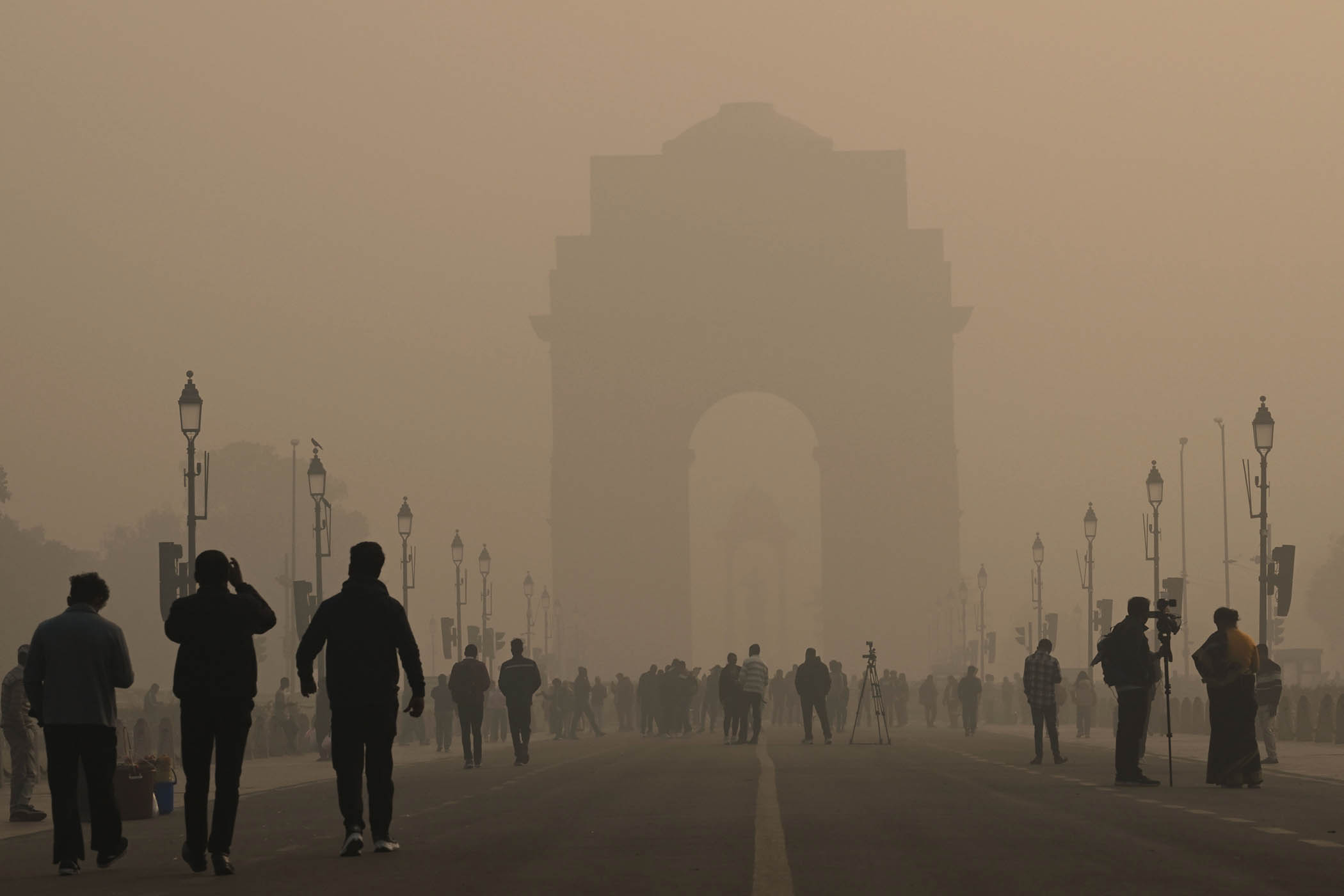
Hanging over it all is the poisonous air that wreathes the city from October to February, a hellish combination of burning fields, smoke from factories and power plants, vehicle exhaust and construction dust. From this toxic miasma emerges an ecological plot strand – only a motif at first, but by the novel’s end a major theme.
This is a novel filled with sharp observations of social politics, enjoyably flawed characters and tense set-pieces
This is a novel filled with sharp observations of social politics, enjoyably flawed characters and tense set-pieces
Its other preoccupation is the matter of gender. “In Delhi,” Tara notes, “the very existence of a son-in-law is a blessed wonder. Here he is to be fed and feted… But being a daughter-in-law, even for Lila, meant a life spent on a different kind of chair – at a desk, writing a perpetual exam.” In conflict with their brothers, Lila and Tara must tread carefully and determine when to turn a cold war hot.
More than once while reading The Tiger’s Share I was reminded of Devika Rege’s debut, Quarterlife, both books appearing in hardback around the same time last year. Rege’s novel, set mainly in Mumbai, takes place in 2014, while the central events of Guha’s occur three or four years later, but both describe an India experiencing the convulsions of populism, a country to which young, US-educated professionals – who would have previously set their sights on Wall Street or Silicon Valley – are returning home. Coincidentally, both novels feature a character called Rohit, who produces videos and becomes entangled in politics.
If the novel has a flaw, it’s Guha’s tendency to overexplain. Tara editorialises her conversations to ensure we take from them what we should. The symmetry of her and Lila’s familial situations is apparent without us needing to be told “there was something rather symmetrical about the Chawlas and the Saxenas”. At one point, Tara references Isabel Archer of Henry James’s novel The Portrait of a Lady, suggesting the lineage Guha considers his book to derive from. Not an unreasonable ambition, but some more Jamesian reticence would help his cause.
For the most part, though, this is a novel filled with traditional pleasures: sharp observations of social politics, enjoyably flawed characters and tense set-pieces. Guha has a particular talent for memorable secondary characters, and the increasingly reticent Kunal develops a real menace. He knows his vision of India has prevailed, but a degenerative bone condition – and here Guha does leave us to work it out – is the novel’s way of suggesting the rot has already set in.
Keshava Guha appeared at the Jaipur literature festival 2026, in association with The Observer
The Tiger’s Share by Keshava Guha is published by John Murray (£10.99). Order a copy from The Observer Shop for £9.89. Delivery charges may apply
Newsletters
Choose the newsletters you want to receive
View more
For information about how The Observer protects your data, read our Privacy Policy
Photography by Vipin Kumar/Hindustan Times via Getty Images