
Andrew Motion’s 15th collection Gravity Archives, his first since 2020, upholds his reputation as the “laureate of loss”. As yet more friends, family and former selves depart, Motion describes the world through the same death-darkened glasses that previously commemorated Princess Diana, the Queen Mother and his own cherished mother. Yet he also marks a bold new chapter in his six-decade career. “Could it be where Andrew Motion / went to die?” he blackly teases in Autumn Light, mapping in moving lyric form a final resting place of his own.
The ghost of John Berryman, who died in 1972 after jumping off a bridge on to the ice of the Mississippi River, haunts a journey across America, where Motion has lived since 2015, and to the shores of “the sad Atlantic”. But this dismal search also touches on the clay of his former home of Essex, as the poet returns to the act of burial. His mother’s death after falling from a horse is just as devastatingly painful for him now – if not more so – as it was in his 1978 debut collection, The Pleasure Steamers; not least through Motion’s challenging of the assumption that time heals all wounds. In English Elegies, from that collection, time “curled up its hand / and battered” life from his mother’s bones. In these poems, time batters still.
In 1907, the American physician Duncan MacDougall studied six terminally ill patients before and after death, determining the weight of the human soul to be around 21 grams. Motion likewise attempts to measure “the ghost parts of myself, the gone-before, / whose loss I mourn and cannot live without” but these are not truly tangible. In Largo, his friend sickens: “something like a hand (but made / of shadow) beckons you on board”.
While modern poetry is increasingly packed with experimental pyrotechnics, Motion turns to the quiet embers of poetic thought. His striking imagery – “the sand man pouring out his grains” – is upheld by relatively plain structures. The predictable flow of couplets and three-line stanzas is cut short, like the lives they recall, by heart-stopping line breaks and little else. In this way, the mind “chop-chops forward in regret”.
His attentive approach to an older school of poetry brings comfort amid the exhausting changes of the present. “New wars begin; old wars scratch their itch”, Motion laments ironically in Charm City; “fake news takes root; dust pixilates the sun”. Even gazing at the adored maple tree feels taxing. Regarding its “lavish appetite to be”, Motion asks, “must your theatre all my sight-lines cram? / I only see hysteric greenery.”
At 73, Motion achieves new depths of pathos, and unlikely sources of hope. “Death is more enchanting now than life,” he writes; “No wonder I am frankly excited.” Grief, he consoles himself, “can’t be murder all the time”. These poems are products of winter years, yet at times they leap with boyish, spring-like pleasure. Perhaps there is life after death after all. Or at least a form of galvanising energy, as in Autumn Light, where the poet’s soul hovers in the clouds before descending as atoms among raindrops:
“I re-enter my life like a bullet
loaded in a gun. I inhale
that oily powder smell.
It speaks to me of everything alive.”
from Autumn Light
Andrew Motion has also died
although the gull, whale or wave of him
appears still in bolts of good weather
thrashing the sad Atlantic.
He was a fool in his own opinion,
always wiping the slate, always failing.
Now he is in two minds drowning
here/there; now/then.
As for myself, I am
living or partly in ways he imagined.
Borderless, bodiless,
prowling the shore not leaving
so much as a footprint. Browsing at will
through ripped pages of ocean.
Gravity Archives by Andrew Motion is published by Faber (£12.99). Order a copy from The Observer Shop for £11.69. Delivery charges may apply
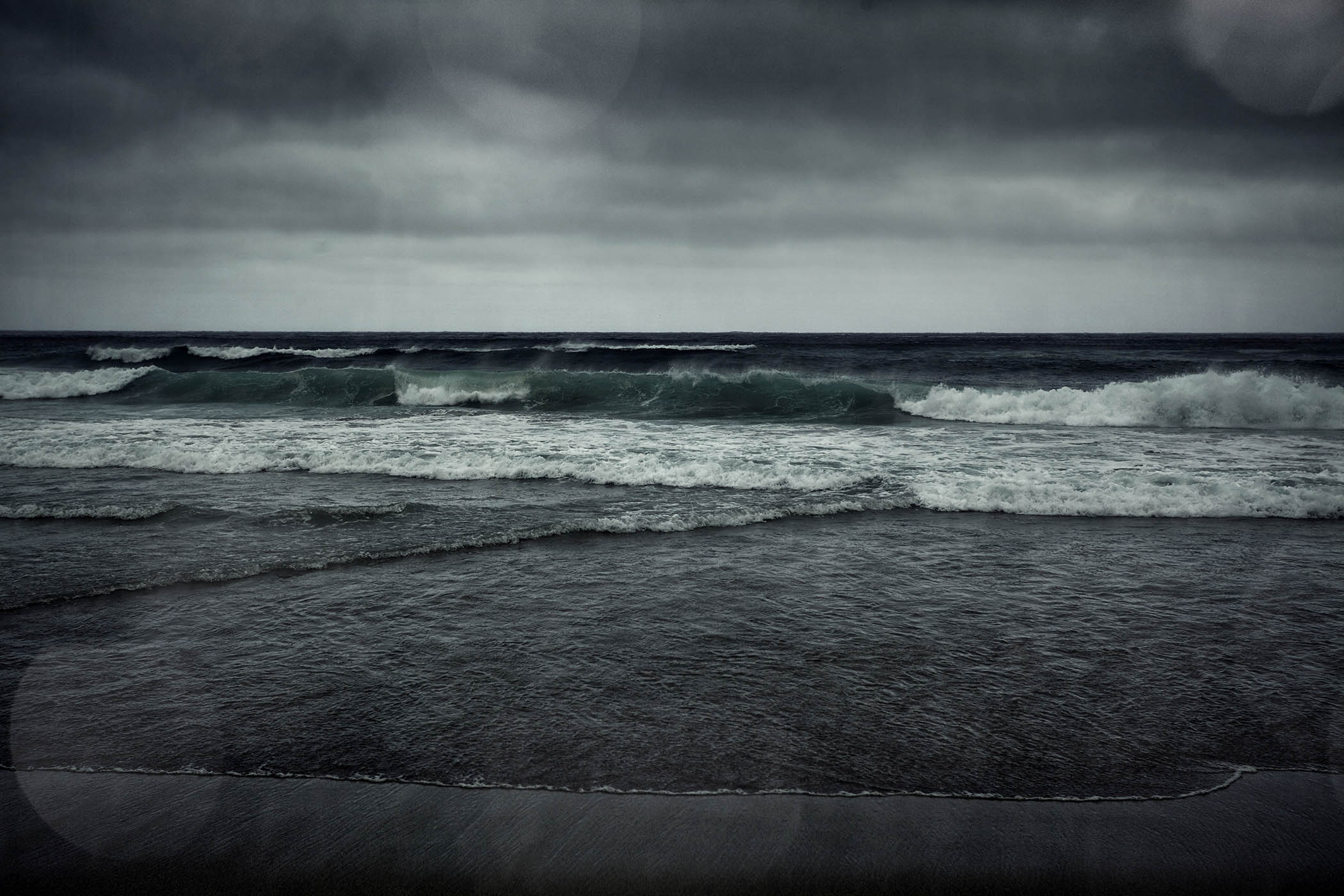
Photograph by James O’Neil/Getty Images
Newsletters
Choose the newsletters you want to receive
View more
For information about how The Observer protects your data, read our Privacy Policy