

Debut poets are so often described as “daring” that the word has lost its shine. However, in the first full-length collection by Jennifer Lee Tsai – a Liverpool-based fellow of the Complete Works programme founded by Bernardine Evaristo – its true meaning glimmers through.
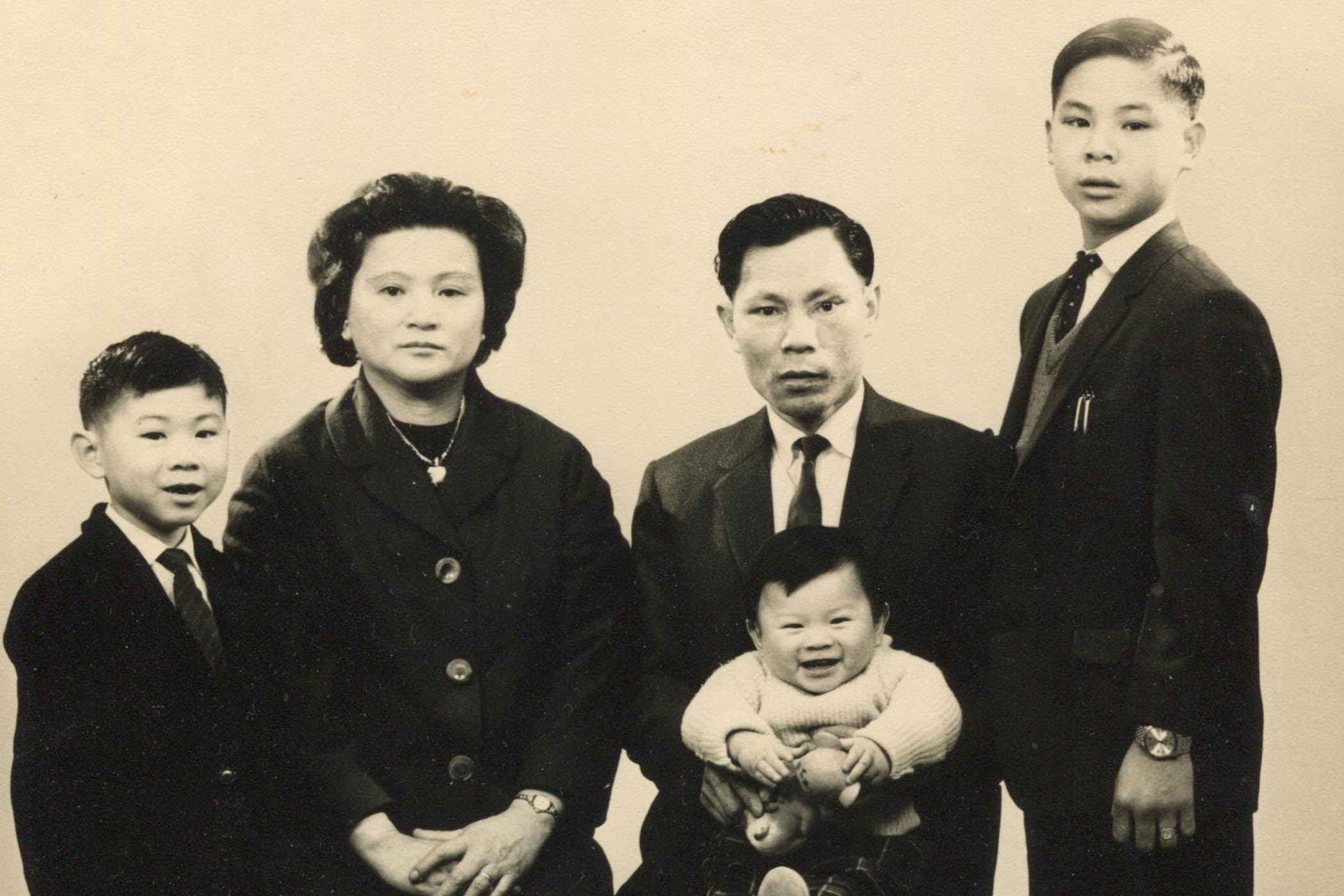
This courage is shaped by moving stories of her family’s migration to the UK. One poem evokes the narrative of her father and uncle swimming through shark-filled waters – roped together at the waist – past gunboats and border police to escape communist China. From there, her father moves to Liverpool as a student and strives to become “the good immigrant, the model minority” despite deep suffering.
Lee Tsai poignantly illustrates the first-generation British Chinese struggles and pressures to assimilate. Her father is depicted as continuing to work through terminal cancer “until he was almost paralysed by pain”. Nevertheless, her book bravely promises “to empty the contents of her mind upon the page / and create something beautiful”.
“No lyric shame”, Lee Tsai insists, handling these painful shards with a dignity inherited from her relatives. Arriving in England with little more than “a laughing Buddha for joy, / an ivory peony for honour, / a bowl of satsumas for prosperity”, they live stoically. “Sacrifices made in silence. They never complained. The rice grains of memory become refined and polished like pearls.” The book lives up to its namesake – Melete is the muse of meditation and contemplation – through lines of thoughtful inquiry. Lee Tsai challenges the stereotyping and exoticisation of "the yellow woman", questioning why she is fetishised as a "geisha" or "little Chinese doll. Elsewhere are musings on how the Chinese language functions with no tenses, or how the traditional character for love contained a heart at its core until communism simplified the script and “the character for love lost its heart”.
“With this – she writes herself / back into existence,” Lee Tsai states in Rebirth. It is words, after all, that first provided her with an escape, lifting her from the monotony of pressing lids on to food containers in her family’s Chinese takeaway, to lyrical flights that would make any poet proud.
A writer well-versed in the perils of lyric shame is Daljit Nagra. In his latest collection, Yiewsley, Nagra returns to his predominantly white working-class home town near Heathrow airport. And, though haunted by screeching planes and park drunks, the landmark he remembers most vividly is language. In Nigel, he recalls the childhood friend who would help him with obtuse phrases: “Nigel, what’s donkey years? ... what’s a signature? … what’s praseetamole? ... what’s a birthday? ... what’s hard shoulder?” Words seem to gain geographical contours, each phrase insurmountable as a pillar, leaving Nagra perplexed, small and “humiliated” in their shadow.
Lee Tsai’s father swam through shark-filled waters to escape communist China
Lee Tsai’s father swam through shark-filled waters to escape communist China
While Yiewsley’s factories, football pitches and flytipping hot spots feel familiar to Nagra, language remains unnavigable. As he relives the memory of growing up speaking Punjabi in a house with no books – struggling with postcodes, telling the time, and the linguistic pitfalls of opening a bank account – he describes his mouth moving “awkwardly” as though it has “swallowed / a pocket dictionary – a word blur / that tastes nothing like the sugar lumps you’d feed / the chestnut horse at Sabey’s dump after school”.
Entering his 60s, the poet finds himself stuck on the wrong side of language, once again: the riddle-speak of “youngsters [...] nowadays” leaves him “dumbstruck”. But Nagra’s poems remain sprightly, despite the decades they have travelled. The freshness spills forth most forcefully in Lucozade. In this surprisingly tasteful ode to a “drink so classy some raised it / at home like a toast in a wine glass”, somehow, “golden vomit” becomes sublime – like the glint of planes in Yiewsley sun – shedding light on the daily inequalities and prejudices that “slip through your hands”.
Beneath Nagra’s trademark humour is a harrowing truth: “You felt alone in the world and bore the loneliness / of bolted shop backdoors sprayed with swear words / and swastikas that left you suicidal. The unspeakable time / you nurse yourself for life.” The honesty grows, commendably, as he reflects on two decades of featuring as “a first debut of colour by a prestigious press” on the GCSE syllabus, and heartbreaking letters received from students: “I hate your poem… why did you write it… / everyone calls me Singh… / they put on an Indian accent… / I hate you.”
Nagra’s pioneering use of “Punglish” (Punjabi-English) was introduced to readers in his prize-winning debut, Look We Have Coming to Dover! (2007). Here he acknowledges the risk of his approach – that it adds to a mood of “laugh-along banter”, his “poems like banana skins chucked from a football / stand” – while convincingly demonstrating its logic. It’s true that everything looks amusing when lost in a second language (“It’s so funny / how the English talk – / like tracing paper being cut in a hurry”). Even so, as both Nagra and Lee Tsai reclaim the power of words and their right to wield them, these careful meditations on otherness remind us of the magic that flourishes in the margins.
Melete by Jennifer Lee Tsai is published by Bloodaxe Books (£14); Yiewsley by Daljit Nagra is published by Faber (£14.99). Order a copy of either book from The Observer Shop to receive a 10% discount. Delivery charges may apply
Photograph of Jennifer Lee Tsai’s grandparents, father and her uncles courtesy of the author
Newsletters
Choose the newsletters you want to receive
View more
For information about how The Observer protects your data, read our Privacy Policy