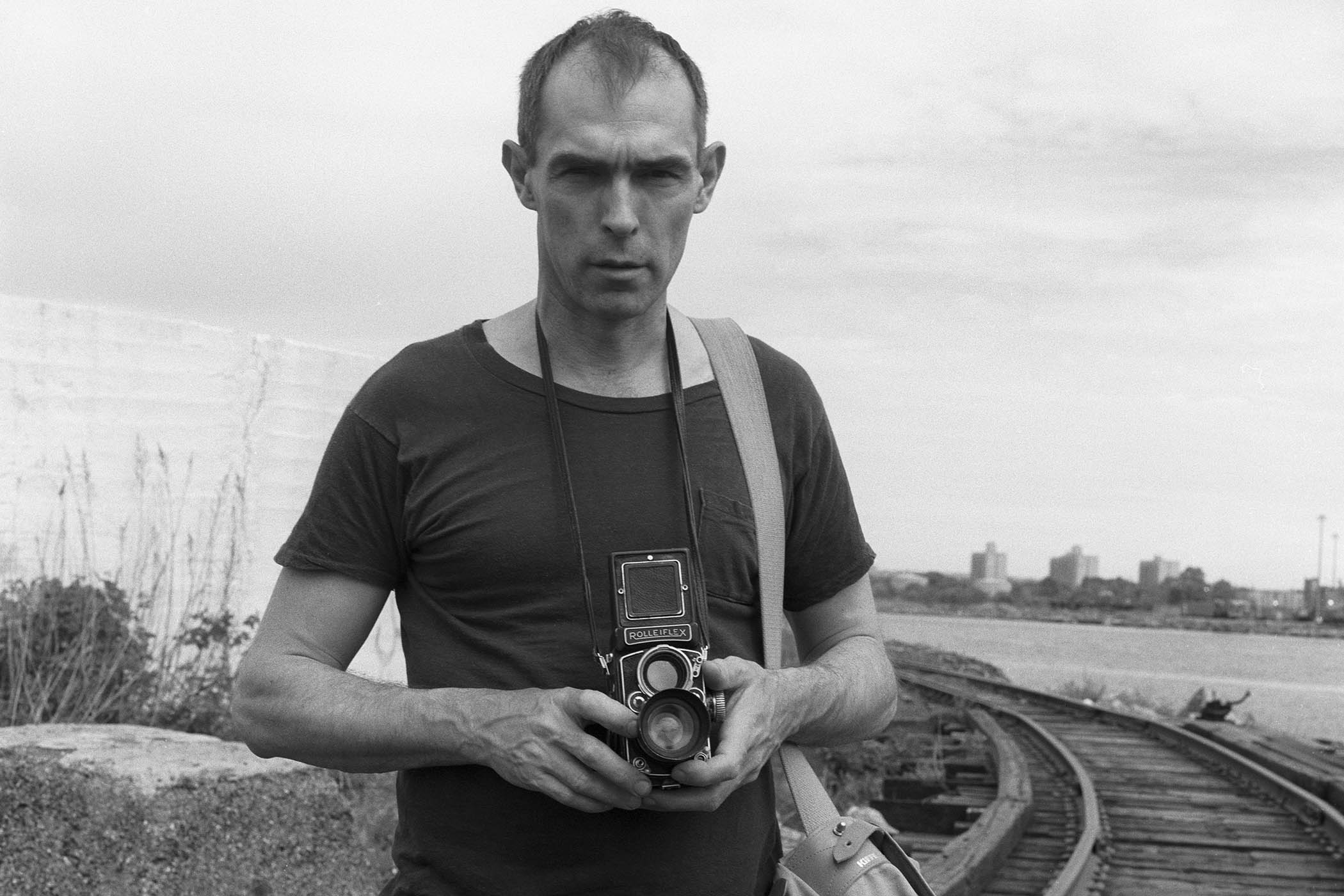

Peter Hujar, one of the greatest photographers of the 20th century, is finally getting his dues. In the past decade, there have been retrospectives at the Morgan Library in New York and at London’s Raven Row. He was played by Ben Whishaw in the 2025 film Peter Hujar’s Day, and his work was introduced to a substantial new audience by way of the wincing orgasm face on the American cover of Hanya Yanagihara’s bestselling novel A Little Life. It’s the kind of attention and acclaim that always eluded him over the course of his short, focused life.
Hujar was a denizen and documenter of New York’s downtown, the experimental art scene that burned away below 14th Street until the Aids crisis obliterated many of its most incandescent participants. He was born in 1934 and initially raised by his Ukrainian grandparents on their New Jersey farm. His single mother didn’t have him live with her until he was 11, but she did give him a camera, an Argus C3. His first boyhood pictures were of cows, the beginning of a long-term fascination with animal portraits.
Animals were allies, but his mother was not. Rose Murphy was a drinker and verbally cruel. When Peter was 16, she threw a beer bottle at his head, prompting him to leave home for good: a beautiful gay boy burdened with a legacy of lack and rage that would grow more uncontrollable in adulthood. His talent was outsize, too – a capacity for capturing the reality, the sheer presence of another being, combined with an extraordinary technical skill.
He met Paul Thek – the other subject of this dreamy, wistful joint biography of uncommercial artistic lives – in 1956, on a road trip to Miami. Paul appears for the first time in Hujar’s contact sheets posing in the crumbling boathouse of Villa Vizcaya, the first of many romantic ruins they would explore together. While Hujar never wavered in his commitment to photography, Thek was as restless an artist as he was a person, cycling through mediums and processes.
They became lovers in 1960. Both were intensely sexual. Thek had relationships with women as well as men, and often fantasised about finding a wife (his top pick as a future bride was their mutual friend Susan Sontag, who regarded his proclaimed heterosexuality with scepticism). As for Hujar, by 1970 he calculated he’d had sex with 15,000 people. He was, the author Andrew Durbin writes, “a sexual savant, insistently adventurous, seemingly insatiable”.
Love for gay men in those pre-Stonewall years: what form should it take, Durbin asks? Open and porous, or carefully modelled on heterosexual marriage? Hujar and Thek chose the former. They kept it loose, exchanging letters when apart. A summer house on New York’s Fire Island, a year abroad (separate apartments) in a Dolce Vita-ish Rome, with Fellini in cameo. In Manhattan, Hujar took a master class given by Richard Avedon and found a footing in fashion; in remote villages in Norway, Italy, Holland, Thek painted and swam, filled notebooks with drawings and religious messages to himself.
The key that unlocked both their mature bodies of work came in Sicily, on a trip to the catacombs in Palermo. It was like entering the underworld: the ranked bodies of the dead, still dressed in their rotting finery. Photography was banned but Hujar couldn’t resist. He took portraits of mummified corpses stacked on stone shelves or embalmed in glass coffins. These are extraordinary images, stately and grotesque, uncompromising missives from the city of the dead.
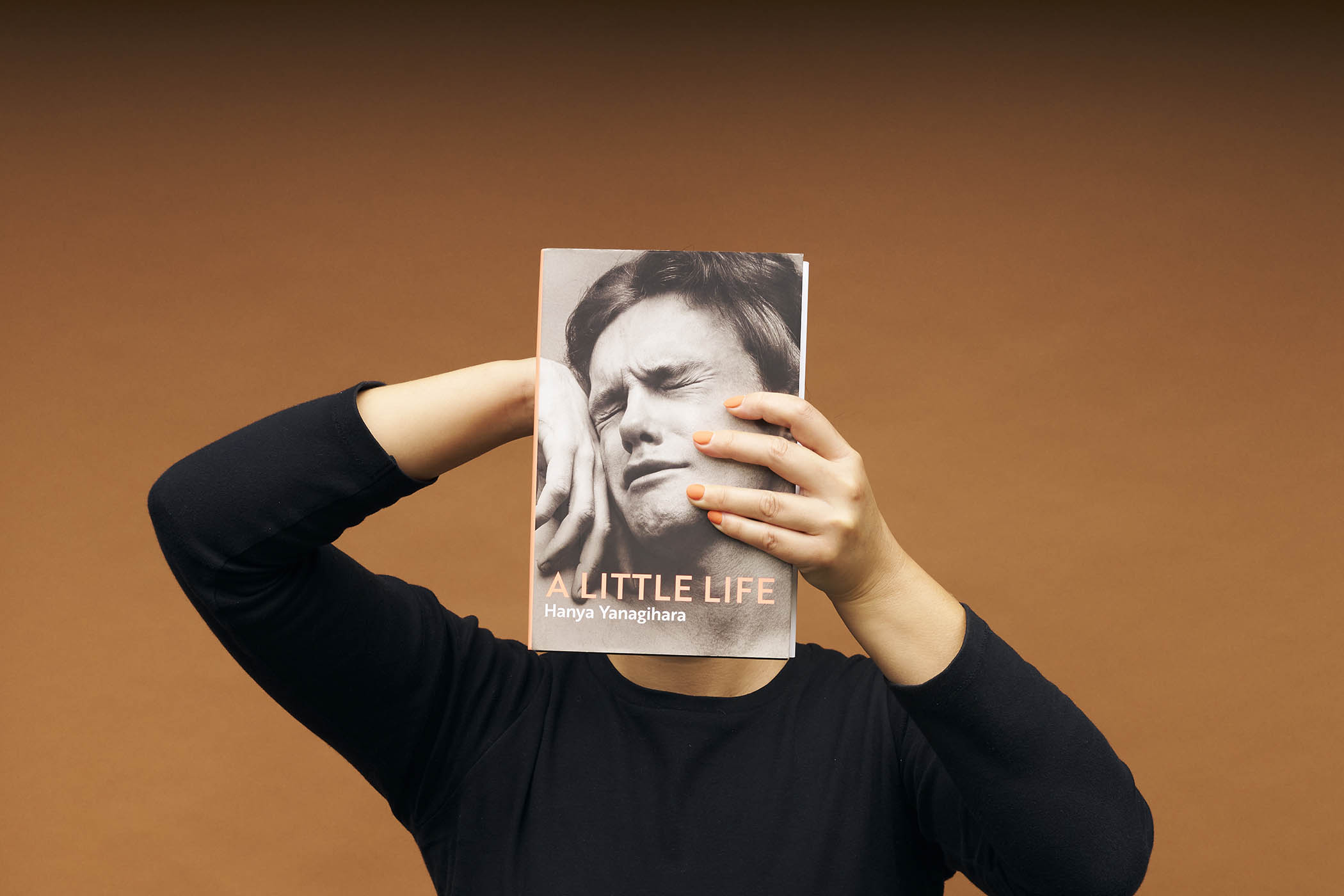
Above: the book jacket of Hanya Yanagihara’s A Little Life, featuring photography by Peter Hujar; main image: Hujar in Bayonne, New Jersey
The Palermo photographs would form one half of the only monograph Hujar published in his lifetime, 1976’s Portraits in Life and Death, running alongside images of his own circle of friends and contemporaries. Thek, too, was inspired. He picked up what he thought was a piece of paper in a coffin, only to realise it was part of somebody’s dried thigh. It kicked off a new direction in his work, a profound engagement with materiality and mortality.
Thek started by making meat: eerie fabrications of bruised flesh and mottled skin created from wax. In 1967, he produced the most famous of all his works, casting an exact replica of his own body, dressed in pink jeans and pink jacket, two coins painted with butterfly wings laid on its cheeks. It was exhibited in a pink pyramid, like a tomb, and became known as Dead Hippie – a memorial to an idealistic decade that was already in its death throes.
What followed for Thek cannot be described as a successful career. He kept travelling, making work that was more and more frangible. Installations and costumed processions, things that could not be repeated, let alone sold. Thek is a true artist’s artist, chaotic, whimsical, beguiling, and it’s impossible to imagine his self-sabotaging paranoia or his sweetness surviving today’s art market. (As a portrait of a lost art world in which making and community trump any notion of profitability, it’s salutary to read this book alongside Josh Kline’s widely shared essay, New York Real Estate and the Ruin of American Art.)
In 1975, Hujar photographed Thek for Portraits in Life and Death. It was the last image he ever took of his one-time partner. After 20 years, their friendship had come to an end. Thek was homeless, almost penniless, and tumbling ever deeper into crisis. Hujar had moved on. Within a decade, both men were diagnosed with Aids. Hujar died in 1987, Thek in 1988.
If there’s a criticism here, it’s that Durbin, the editor of Frieze magazine, has a tendency to fill in gaps in the record with speculative formulations such as “might have” or “must have”. He’s skilled, though, at unpicking the magic of Hujar’s photographs. Two things, really: Hujar’s capacity for intense, soulful connection with his subject, from horses and geese to downtown luminaries such as William S Burroughs and Sontag to people cruising, masturbating and having sex. He shot the Warhol superstar Candy Darling on her deathbed, and Jackie Curtis in his coffin. There was none of the estranging chilliness of Diane Arbus about his approach to people in extremis. Hujar was a fellow traveller, and he gave his subjects the entirety of his grave and tender regard.
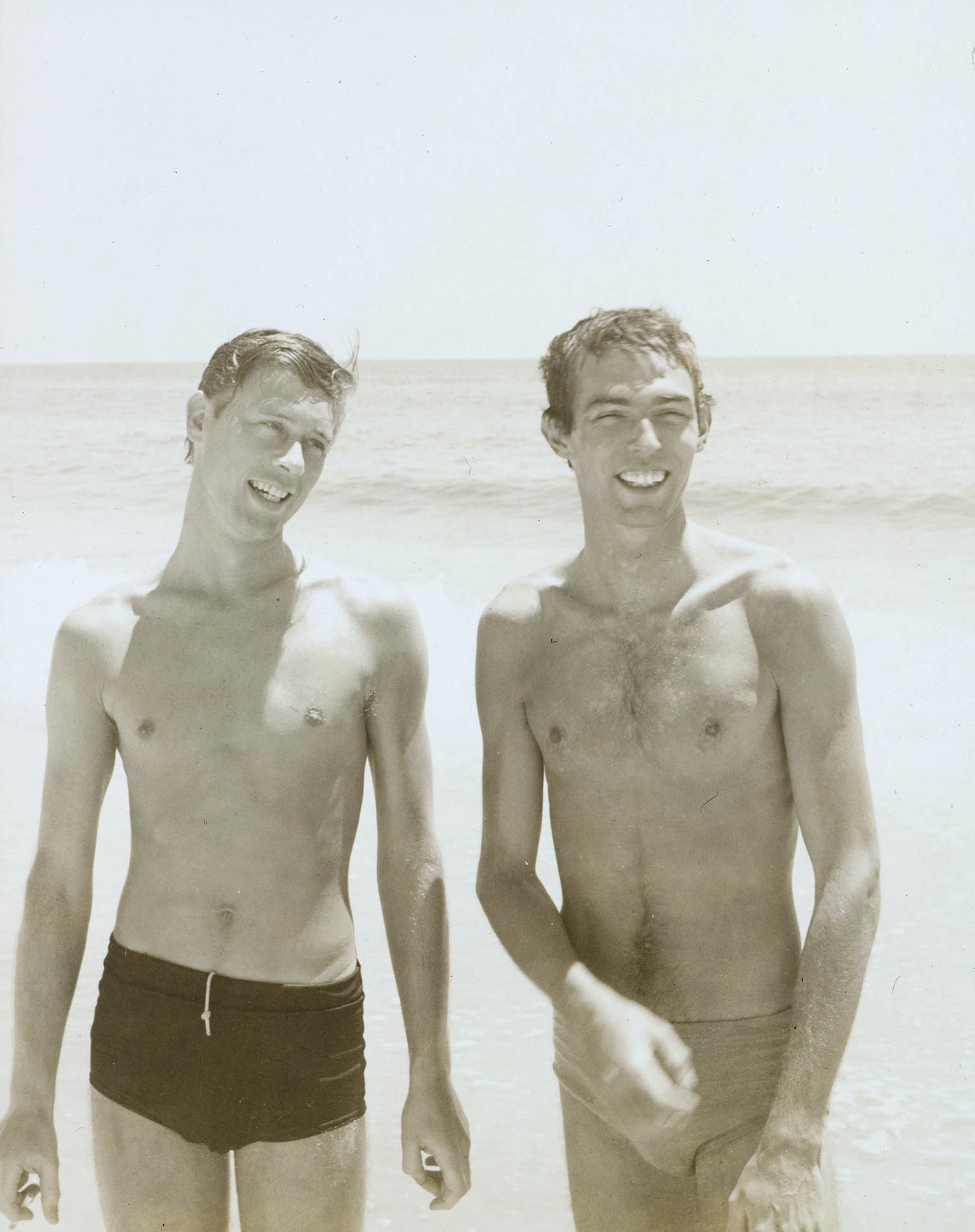
Paul Thek and Peter Hujar at the beach in New York
If there’s a criticism here, it’s that Durbin, the editor of Frieze magazine, has a tendency to fill in gaps in the record with speculative formulations such as “might have” or “must have”. He’s skilled, though, at unpicking the magic of Hujar’s photographs. Two things, really: Hujar’s capacity for intense, soulful connection with his subject, from horses and geese to downtown luminaries such as William S Burroughs and Sontag to people cruising, masturbating and having sex. He shot the Warhol superstar Candy Darling on her deathbed, and Jackie Curtis in his coffin. There was none of the estranging chilliness of Diane Arbus about his approach to people in extremis. Hujar was a fellow traveller, and he gave his subjects the entirety of his grave and tender regard.
In addition, there’s the near-miracle of his darkroom work, his capacity for working on his black and white images, “dodging, burning, bleaching, spotting”, until he achieved something refined and exact. As Durbin observes, Sontag was ignorant of all this invisible artistry when she wrote her critique of the camera’s thieving gaze, On Photography.
This is not to say he was an easy person. Hujar’s rages were legendary among his friends. He was loved by many people, and yet he burned bridges with editors and gallerists. Towards the end of his life, as he metabolised the bitterness of his diagnosis, he turned on those he was close to. But he did care about the future of his work. He was canny in appointing one of his more bourgeois friends, Stephen Koch, as his executor. Until his death earlier this year, Koch was a tireless advocate and caretaker of Hujar’s reputation.
The Wonderful World That Almost Was takes its title from an unfinished novel by Thek. It’s appropriately repurposed here, for this portrait of artists’ lives that were full of promise and pleasure and that seemed to end in disaster and disappointment. There was no rapprochement for Thek and Hujar, no deathbed re-evaluation of the years of love and friendship. For a love story that doesn’t end in recrimination and hostility, one needs to turn to Fire in the Belly, Cynthia Carr’s magisterial biography of Hujar’s lover and protege, the artist David Wojnarowicz, or to Wojnarowicz’s memoir Close to the Knives. Hujar really needs his own biography.
After his diagnosis, Hujar never took another photograph. He let his darkroom chemicals dry up and, with the help of a friend, brutally culled his archive, throwing a bin bag of discards out on the street. He knew what he was leaving behind: work of the utmost seriousness and skill, a dive into the soul of humans, animals and cities. The intimacy of his art is breathtaking, as close as one can get while allowing the dignity of the other to exist. As Hujar once said: “No part of me is remote, my dear.”
The Wonderful World That Almost Was: A Life of Peter Hujar and Paul Thek by Andrew Durbin is published by Granta (£25). Order a copy from The Observer Shop for £22.50. Delivery charges may apply
The exhibition Hujar: Contact runs from 22 May to 25 October 2026 at the Morgan Library & Museum in New York
Photography by Bob Berg/Getty Images; Suki Dhanda for The Observer; The Morgan Library & Museum © The Peter Hujar Archive/Artists Rights Society (ARS)
Newsletters
Choose the newsletters you want to receive
View more
For information about how The Observer protects your data, read our Privacy Policy