

The Indian writer Rahul Bhattacharya excels at longform narratives that double up as elegies for nations. His 2005 memoir, Pundits from Pakistan, was ostensibly about following the Indian cricket team on a historic tour of their neighbouring country the year before, but much of the action that Bhattacharya captured took place miles away from a cricket pitch. He cruises around Lahore with vodka-guzzling hotel managers and meets a man in Multan who whispers “I hate border” in his ears, making the reader privy to the beating heart of a republic and its citizens’ secret lives.
In his debut novel, The Sly Company of People Who Care (2011), a twentysomething Indian journalist moves to Guyana for a year to “escape the deadness of the life one was accustomed to”. His encounters with tempestuous diamond hunters, inveterate wedding crashers and, above all, his proclivity for the Creole spoken by the people around him, evoke a land where “you can encounter a story a day”.
In Railsong, his second novel, he turns this country-hopping gaze inward. Some time in the late 1950s, Charu Chitol is born to a chargeman in a railway workshop in Bhombalpur, a fictional town in eastern India. Her early years run parallel to the trials and tribulations of her motherland after independence. We’re told about a drought taking place in the eastern states in 1966, and then the countrywide workers’ strike in 1974 that was followed by a spell of vengeful repression by the Congress government. Meanwhile, little Charu loses her mother at five, gets teased as a dead witch’s daughter at school, goes underground with her father during the workers’ strikes, and escapes from home on a train to Bombay aged 16.
All along runs the threnody of the Indian census, which takes place every 10 years. Charu, who has always wanted to “count people”, first observes this meticulous bureaucratic procedure at 13, when a “neat man with a preternaturally efficient way about him” shows up at her father’s staff quarters in Bhombalpur. But when she was three years old, she’d been counted too: “This particular enumeration, the first of her life, Charu would retain no memory of.”
“General elections, census, railways,” Charu’s father tells her at one point. “These things go across the full country.” The insight isn’t just meant for his daughter: the reader is also being nudged on how to interpret Charu’s story. She is a kind of Indian Forrest Gump – a reliable witness to multiple events of national significance in her time. In Bombay, Charu feels “her way into her young republic’s history” while reading the letters of those who’d been unlawfully jailed during Indira Gandhi’s dark emergency in the mid-1970s.
After her father dies, she too ends up working for the Indian Railways, first as a personnel clerk, and then a welfare inspector in Bombay. There, she learns that “everything that happened in India happens also on the Indian Railways”. In 1984, at a party after work, she laments that year’s ghastly anti-Sikh riots in Delhi. Later, once she is promoted, a senior colleague tells her that if one could understand the gripes of their fellow 1.5 million railway workers, then “you could understand the life of the entire country”. When she is deputed one year to conduct the census in a Bombay neighbourhood, she feels gratified at the prospect of pinning “people to the page”.
The description of the train ride is reminiscent of Kipling’s Kim in its attention to colour
The description of the train ride is reminiscent of Kipling’s Kim in its attention to colour
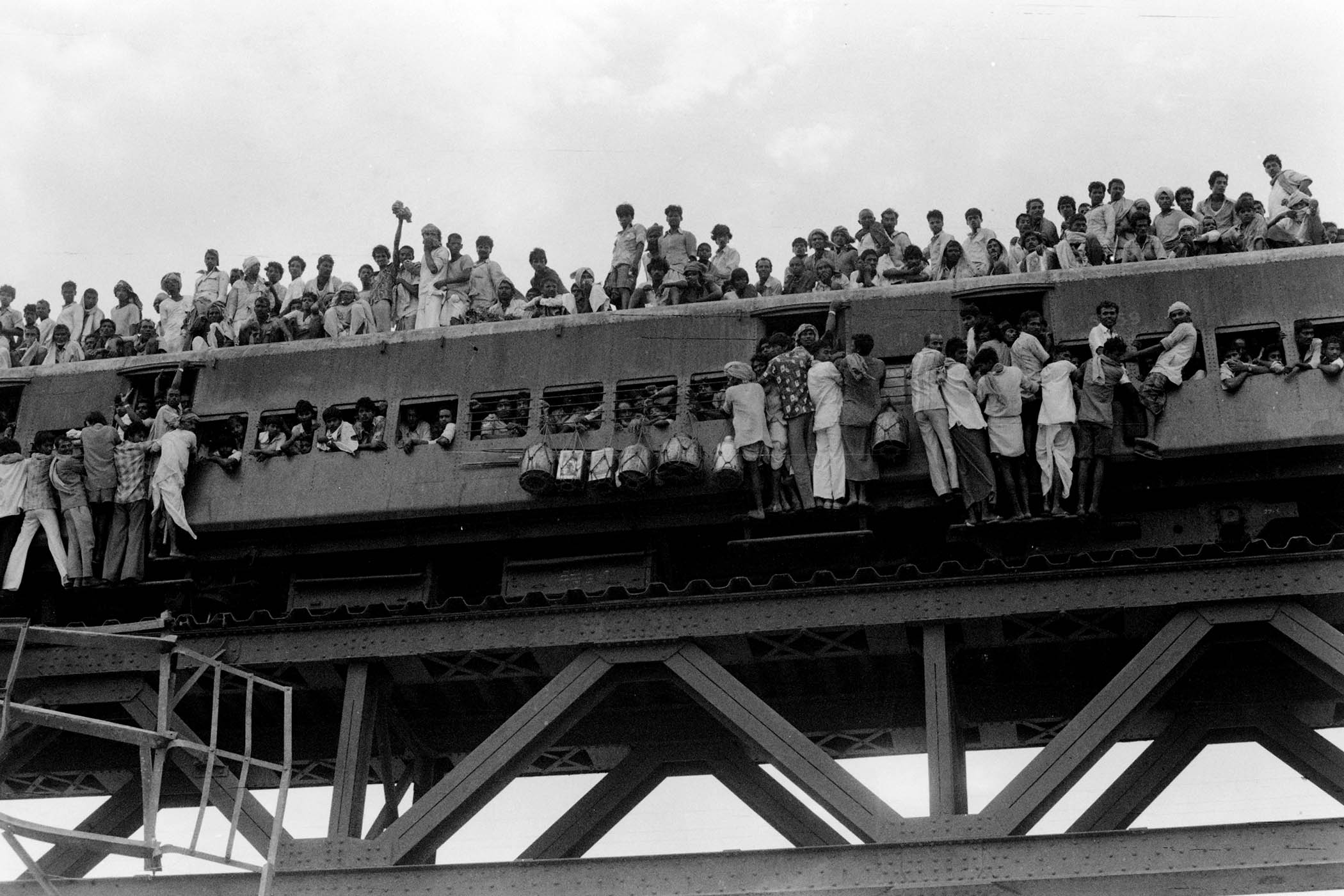
There is much to admire about Bhattacharya’s extended paean to India’s gargantuan railway network. When the Chitol family first arrives in Bhombalpur, they occupy one half of a staff bungalow, “turning all rooms into some form of bedroom” – a phrase that succinctly captures the utilitarianism of Indian working-class life. The description of Charu’s train ride from Bhombalpur to Bombay is reminiscent of Rudyard Kipling’s Kim in its attention to local colour and should count as one of the most self-assured passages ever written by an Indian writer.
From the moment she leaves home, Charu is referred to as Miss Chitol in the story, an obvious nod to the eponymous hero of VS Naipaul’s A House for Mr Biswas. But if the search for a home is a tragicomic quest for dignity in Naipaul’s novel, Charu’s relationship to the railways – and by proxy, to her young republic – doesn’t seem as urgent. As part of her job, she travels the length and breadth of the country to search for missing and dead workers, or to run a background check on an employee’s credentials. But just when you feel the novel is approaching unfamiliar terrain, the social import of these encounters gets underlined.
Indeed, Charu’s bildungsroman is more absorbing when the overarching metaphor isn’t spelled out. Some time after her wedding, for instance, Charu is exposed to her in-laws’ sexism and their advocacy of far-right Hindu nationalism. Bhattacharya writes: “To have put herself in this position after the long quest for independence felt to her at moments the highest folly.” This sentence is impressive precisely because the twin gradations of “independence” – personal and national – haven’t been clarified.
Borges once wrote that in a riddle to which the answer is chess, the only word that shouldn’t be used is chess: “To omit a word… is perhaps the most emphatic way of stressing it.” Railsong can sometimes feel bogged down by the responsibility of being a history-of-the-nation novel, especially when Charu’s inwardness is fascinating by itself. You root for her when she rekindles a relationship with an old flame after attending a Hindustani classical music concert. You see how her progressive upbringing might have impeded a more honest reckoning with her own class and caste privileges at her workplace.
Newsletters
Choose the newsletters you want to receive
View more
For information about how The Observer protects your data, read our Privacy Policy
Bhattacharya seems to believe that an exhaustive familiarity with the hierarchies of the personnel department of the Indian Railways, or the news that might be blaring from a nearby radio or TV, will deepen our intimacy with his protagonist, but there is more to Charu than her identity as a young citizen of a bustling postcolonial state. “The loneliness at the centre of a person never disappears,” she thinks at one point, “it only changes shape.” Despite following her journey over three decades, and 400 pages, you long to be led closer to the centre of her lonely self.
Railsong by Rahul Bhattacharya is published by Bloomsbury (£18.99). Order a copy from The Observer Shop for £17.09. Delivery charges may apply
Photograph by Sondeep Shankar/Getty