Related articles:

There is, writes Reinier de Graaf, an “unwavering belief that, despite all evidence to the contrary, architecture in its current form continues to represent a force for good”. It’s clear he doesn’t share it. Rather, he says, “architecture, as we know it, may be coming to an end”; “measured against the major issues of our time” it is “at best marginal”. Which, for anyone who both appreciates the splendours of which the medium is capable and hopes against the odds for better societies, is sad news.
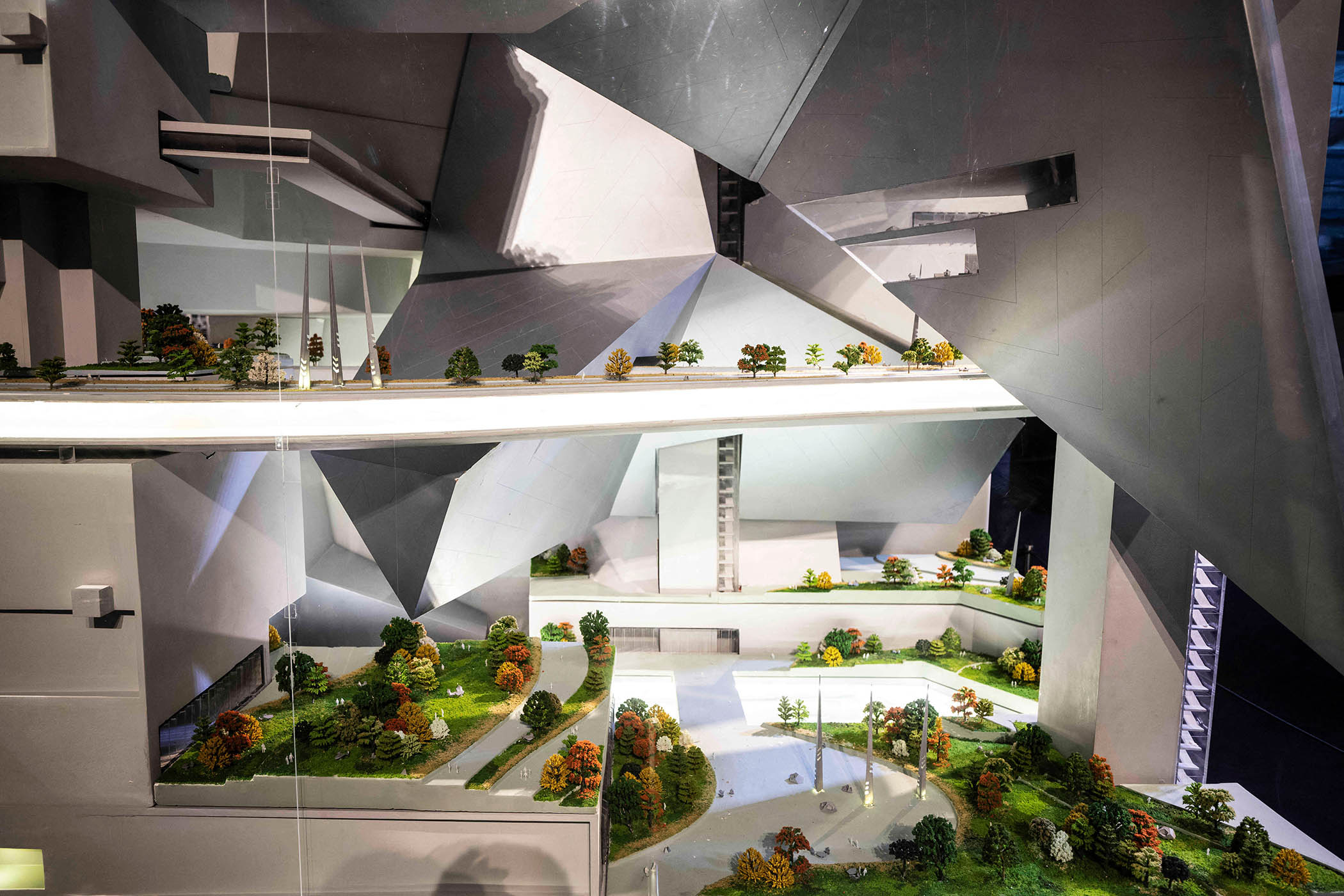
De Graaf is a partner at the Office of Metropolitan Architecture (OMA), the Rotterdam-based practice co-founded by the world-famous Rem Koolhaas. De Graaf has been involved in many of OMA’s singular and significant commissions, including work on The Line, the now-truncated plan by Crown Prince Mohammed bin Salman to build an unfeasibly vast city in the Saudi Arabian desert. He has been in the rooms where it happened. Or, given The Line’s fate, where it didn’t happen.
From this inside position and from wider observation he notes and punctures the absurdities and pretensions of the business in which he himself is involved. He punches out brutal facts – that the average architect earns less than a bricklayer, for example, and that both earn less than estate agents. His tone is sardonic, sceptical, given to aphorisms, sometimes apocalyptic and sometimes witty, but beneath there is a kind of idealism, a belief in the importance of taking on centres of power and vested interest. He cites his uncle, a militant trade unionist in the Rotterdam docks in the 1970s, as an inspiration.
He outlines the issues that have dogged the profession: revelations of sexual abuse; the challenges and potential of AI; attempts by employees to unionise in the face of low pay. He tells stories of the caprices of power in commissioning and demolishing monuments, from Louis XIV to communist East Germany to MBS. De Graaf challenges the myth that buildings are designed by singular geniuses rather than collaborative groups of people. He eviscerates schools of architecture for “a lethal cocktail of misplaced self-importance and narcissistic pseudo activism”, evidenced by a long list of courses with verbose and fatuous names.
He punches out brutal facts – that the average architect earns less than a bricklayer, and both earn less than estate agents
He punches out brutal facts – that the average architect earns less than a bricklayer, and both earn less than estate agents
He wants to dismantle the centuries-old idea that architecture is an art, arguing that the two disciplines differ by virtue of the fact the former should respond to the wishes of the client. By posing as the artists they are not, and pursuing a cult of originality whereby every building has to be different, he says, architects make themselves peripheral to the social and technical issues they could be addressing. Their designs act as distractions and marketing tools for the real forces shaping cities.
The true makers of the built environment, in De Graaf’s view, are speculative capital and authoritarian regimes, the former creating cities to invest in rather than live in; homes for cash more than for people. And despite the earnest claims of architects to design various kinds of “zero-carbon” projects, the construction industry plays a leading role in the merry charge towards climate emergency.
Yet there is hope. De Graaf proposes a “reinvention of architecture” that would require the industry to discard assumptions it holds dear and sacred.
Existing buildings should wherever possible be retained, regardless of their perceived heritage value, simply for environmental reasons. Such new buildings as may still be deemed necessary should, by contrast, not be designed for eternity but in such a way that they can be dismantled and reconfigured at ease. Questions of style and taste should be handed over to AI. Architects should refuse to work in situations where their work is used “as a fig leaf for financial returns”.
Related articles:
There’s a problem here, which De Graaf acknowledges. Who with power and wealth is going to commission architects to work against the interests of power and wealth? An architect’s dilemma, as he says more than once, is that engagement comes at the price of making a difference and vice versa: if you accept your corporate client’s dollar, you lose your freedom to challenge the values they embody.
He also sometimes comes close to the sort of grandiosity that he lampoons in others in his profession. At one point, he calls on architects to involve themselves in the remaking of absolutely any kind of environment – including rainforests and the rewilding of former farmlands – on the basis that everything “natural” is to some extent constructed by humans.
But his main points stand. Architects do indeed risk making themselves trivial in times that are anything but, and they should be using whatever skills and influence they have to change those things they can affect – such as housing – for the better.
Architecture Against Architecture: A Manifesto by Reinier de Graaf is published by Verso (£18.99). Order a copy from The Observer Shop for £17.09. Delivery charges may apply
Photograph by Eliot Blondet/Abaca Press/Alamy
Newsletters
Choose the newsletters you want to receive
View more
For information about how The Observer protects your data, read our Privacy Policy