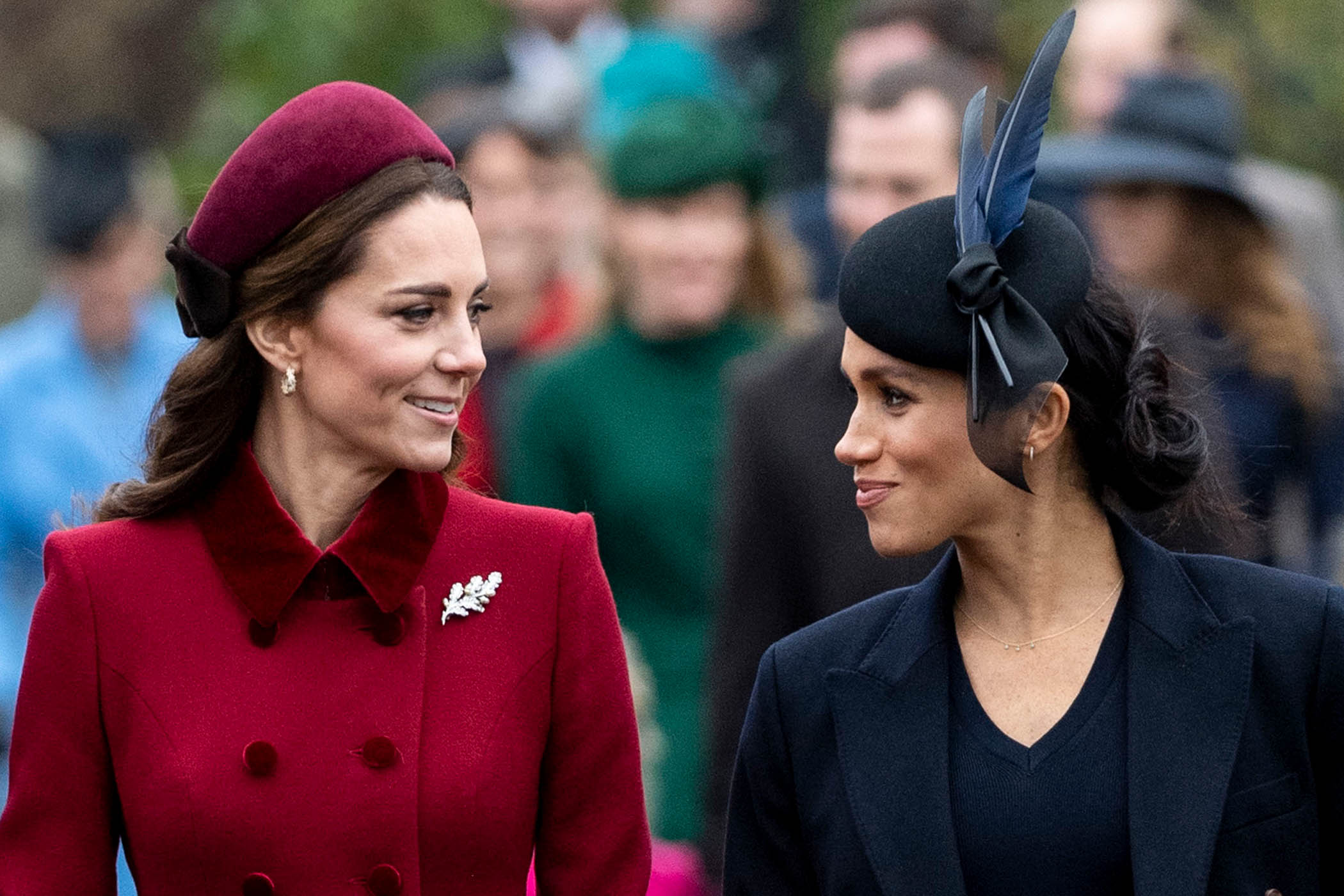

“Kate or Meghan?” The question appears, at worst, frivolous. Again and again, journalists invite me to pick a side as I surf the sofas of TV and podcast studios talking about my new book. Always I demur, explaining that I wrote Divide and Rule: Royal Women and Their Battles precisely to illuminate the repercussions of pitting royal women against each other. The choice on offer is not actually between the real Princess of Wales or the flesh-and-blood Duchess of Sussex, but value sets projected on to them. Opt for Kate, and you declare yourself on the side of tradition, an increasingly weasel concept as populists invoke a past that never was. Back the Duchess of Sussex and you espouse ideals now rubbished as painful wokery.
There’s a comedic element to trying to convey this urgent message in a world primed not to hear it. Still, the same sense of urgency that woke me every morning at 5am until I had completed the book compels me to persevere. Confected competitions affect not only the women at their core but everyone everywhere all at once. Culture wars are shredding the long-held consensus around the benefits of reducing social and economic inequalities, while undermining hard-won rights and protections for women and vulnerable minorities, and reframing diversity as a threat.
And where there is division, so too you will find organised disinformation campaigns designed to befuddle us until we no longer know what is true. Remember the conspiracies that swirled when Kate dropped out of sight? Even after the revelation of her cancer diagnosis and fragile return to public life, wild theories proliferated. Perhaps the footage of the 2024 Trooping the Colour had been deepfaked. Could she have been a hologram? Government sources and academics linked the spread of these rumours to China, Russia and Iran. The aim, said experts, was not to shape views of the princess, but to destabilise democracy.
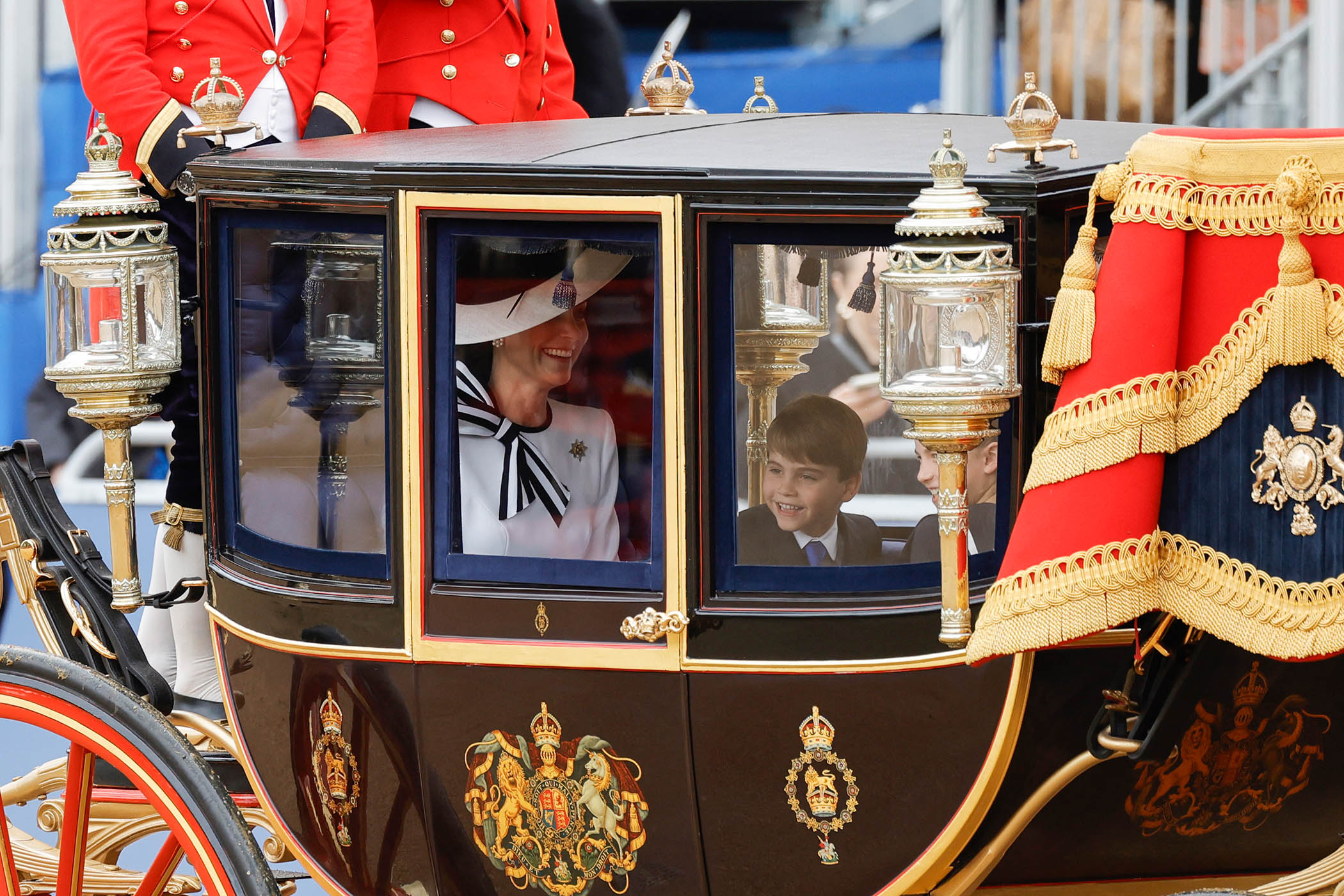
The Princess of Wales and Prince Louis during Trooping the Colour 2024
That twist alone should have been enough to generate sustained media attention and serious inquiry. The fact that it did not lies with the strange power of two words: “royal” and “women”. Individually and more so in combinationthey are capable of instantly dampening the interest of editors who really should pay more attention to both. Cash cows and clickbait for mass-market outlets, royalty is widely mistaken by loftier programmes and titles as a branch of entertainment. The huge, secretive, global institution of monarchy tends to be probed primarily in respect of its opaque financial arrangements and legal exemptions or when its members fight court cases or are arrested. Its cultural heft goes almost entirely unreported. As for the label “woman”, this still triggers a widespread reflex among those same editors to move a story to the lifestyle section.
These reactions are both the result and guarantor of a depressing continuum. Before Divide and Rule had even been published, a former tabloid journalist called Dan Wootton devoted an entire episode of his online show to warning against it. “It’s dangerous,” he said. “It’s dangerous because it will be the first rewriting of history.”
“Has he ever read a book by a historian?” deadpanned a friend after watching the clip. History is fluid, constantly revised, including in the actual moment. Even so, this fact remains constant: only a tiny fraction of recorded history bothers to chart the actions, achievements or mere existence of the female half of the population. Royal women, by contrast, remain pinioned in the public gaze, disproportionately influential through no fault of their own, and instrumentalised to tell reductive stories about all women. Their use as carriers of disinformation is nothing new either.
Wootton, whose career highlights include the Sun’s scoop about the Sussexes departing the UK and his sacking by GB News, for sexism, is part of a growing network of presenters attracting substantial audiences with inflammatory content. This includes guest appearances from far-right activists such as that man of convictions and multiple aliases, Tommy Robinson. Though Wootton’s perennial target is Meghan and her ostensible crime of damaging the monarchy, he and his guests arguably do at least as much to undermine it. The economy of hatred and the politics of polarisation complicate the job of a constitutional monarch charged with uniting the populations he represents.
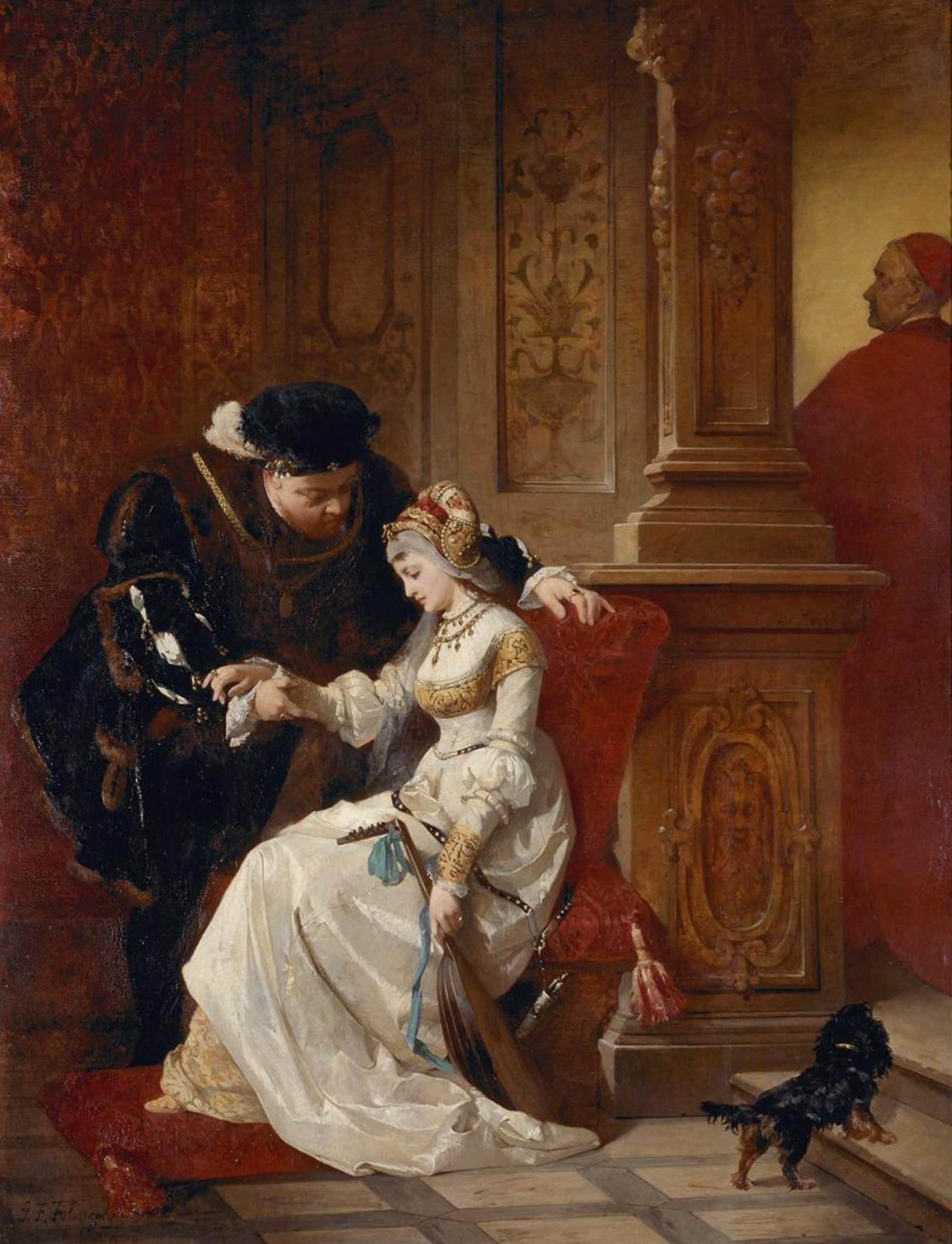
George Folingsby’s painting First Meeting Between Henry VIII and Anne Boleyn (1879)
It is not only people using new platforms but the tech itself driving division, with algorithms rewarding incendiary posts and spreading deepfakes. I open Divide and Rule with Anne Boleyn because every development in communications technology speeds and broadens the transmission of ideas and information, lies, distortions and propaganda. The Tudor queen lived and died as printing presses enabled texts to reach large audiences. Seditious material such as religious tracts translated from Latin, chipped away at the primacy of priests. Not merely a catalyst for Henry VIII’s break with Rome but engaged with the intellectual arguments for reform, Anne remained a significant figure in that great culture war, the Reformation, long after her death. She continues to be reinterpreted as either the evil temptress popularised by her Catholic opponents or the wronged saint imagined by Protestantism.
Her daughter, Elizabeth I, offset the taint of Boleyn blood and her own sex by harnessing art and literature to forge her own mythologies, a Virgin Queen, a prince, Gloriana. Victoria contended with the exponential growth of the newspaper industry early in her reign, later becoming the first British monarch captured by still photography and on film. Oh, and all that guff about Prince Harry breaching royal tradition by writing an autobiography. Victoria, who kept diaries, became a bestselling memoirist with two books of edited highlights, Leaves from the Journal of Our Life in the Highlands, and its sequel, More Leaves from the Journal of a Life in the Highlands, both mentioning her close companion John Brown. If her children had not censored her writings, there would have been more for scholars to enjoy.
Researching these women, I realised how easily invention fills the gulfs between what sparse evidence shows and who we think they were and did. Their real stories, insofar as they can be teased out, prove far more compelling than the narratives hung on them. This is just as true for Elizabeth II, Diana and Camilla, and, of course, Kate and Meghan too, though here I have an advantage. As a long-term observer of the Windsors, veteran journalist and biographer of Charles, I have had access to most of them, and for my sins was the only journalist to accompany the then Prince Andrew on his first trip to China as trade envoy. All of this has endowed me with a substantial network of sources. My activism, including co-founding the Women’s Equality Party and acting as its president for the near-decade of its existence, has sharpened my sense of the systemic and structural barriers to women, whether common-or-garden commoners like me or royals.
Newsletters
Choose the newsletters you want to receive
View more
For information about how The Observer protects your data, read our Privacy Policy
The patrimonarchy (my coinage) condemns queens, princesses and duchesses to yet greater scrutiny than other prominent women. Unlike other institutions, this one can only recruit new members through marriage or reproduction, seemingly legitimising public interest in the private lives and bodies of the women in its ranks. This was the point the celebrated Wolf Hall author Hilary Mantel attempted to address in 2013, in a long essay called Royal Bodies, during Kate’s first pregnancy.
Mantel saw her empathy for Kate, then in the grips of hyperemesis gravidarum – severe morning sickness – misconstrued as hostility. The novelist accurately observed that coverage of Kate tended to render her “a shop-window mannequin”. “These days,” Mantel added, “she is a mother-to-be and draped in another set of threadbare attributions. Once she gets over being sick, the press will find that she is radiant. They will find that this young woman’s life until now was nothing, her only point and purpose being to give birth.”
Mantel “writes great books, but I think what she’s said about Kate Middleton is completely misguided and completely wrong,” protested then prime minister David Cameron. If he had read to the end of the piece, he would have understood that Mantel’s criticism was directed not at Kate but her portrayals.
“Cheerful curiosity,” Mantel wrote, “can easily become cruelty. It can easily become fatal. We don’t cut off the heads of royal ladies these days, but we do sacrifice them, and we did memorably drive one to destruction a scant generation ago. History makes fools of us, makes puppets of us, often enough. But it doesn’t have to repeat itself.”
It is in this spirit that wrote Divide and Rule and will continue to do the media rounds, politely refusing to choose between Kate and Meghan and using the opportunity to explain why.
Divide and Rule: Royal Women and Their Battles is published by HQ (£22)
Photographs by Mark Cuthbert/UK Press via Getty Images, John Phillips/Getty Images, Alamy