

For years, investigative journalists have salivated over that old heuristic “follow the money”. Deep Throat’s instruction to Robert Redford’s Bob Woodward in All the President’s Men, delivered in a shadowy car park, has become the North Star for uncovering financial crime and corruption.
In his alarming new book, Everybody Loves Our Dollars, Oliver Bullough makes a compelling case that we’ve been looking in the wrong direction. To truly understand the global money-laundering industry, he argues, you need to think a lot bigger. Criminals today have sophisticated ways of making money disappear, “like a wizard in the Harry Potter books” – and how do you follow something that simply vanishes?
Whether via the ancient hawala system of money transfers, Chinese students using drug money to buy Gucci handbags in Bicester Village, or salad dressing marked at $720 a bottle on a customs form, Bullough’s bad guys are five steps ahead of both dopey compliance officers and journalists who are still focused on tracing dodgy cash through the traditional banking system.
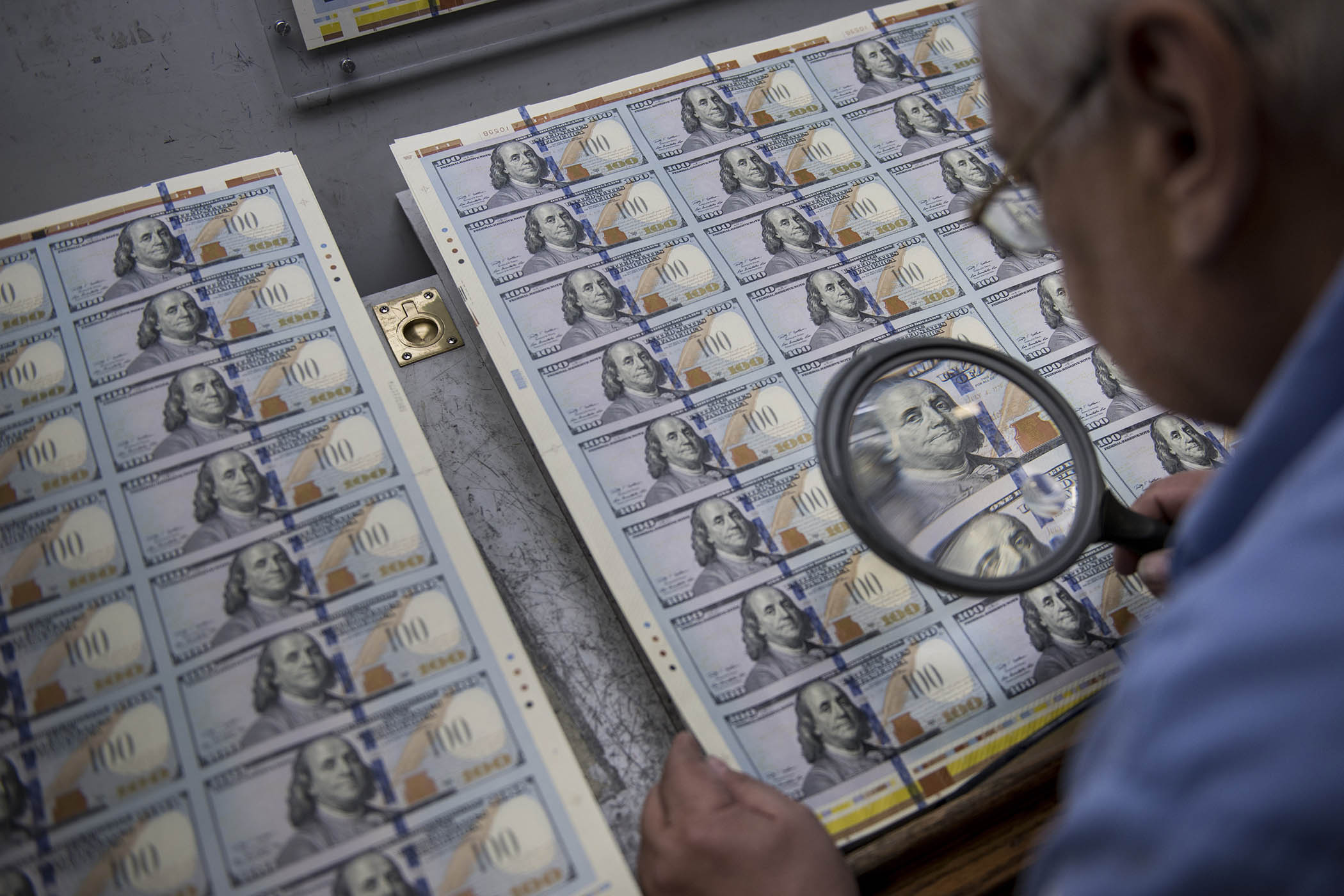
The author visits Fort Worth in Texas, home to the Western Currency Facility. The Federal Reserve prints billions of bank notes there every year, and the facility is planning to open up new premises and ramp up production. Bullough asks the obvious question: why is demand for dollars growing, when people across the world are using less and less cash? And why, out of all the notes, is it the highest denominations – £50 and €500 notes and $100 bills – that are the most popular?
The explanation is both shocking and obvious. Criminals love banknotes, particularly in large denominations: you need fewer of them to move a lot of money. That’s why cash is still king. “Two decades ago, the $100 bill was only the third most common banknote in circulation, behind the $20 and the $1,” Bullough writes. “It is now America’s most popular banknote, with more than 18 billion of them in circulation, 55 for every person in the United States.” Central banks could strike a major blow against money launderers by scrapping high-denomination notes. But instead they produce more and more, partly, Bullough argues, because governments earn billions of dollars a year simply from printing money. Like those in many other institutions in the book, these bankers prefer to stick their heads in the sand.
Writing about money laundering is a fraught task. It’s a world full of soporific abbreviations (FATF, SBML, TBML, IVTS), and Bullough is honest about the risk that some readers will switch off. This would be a shame, as what he uncovers is outrageous. Money laundering, he writes, is the support mechanism “for the worst people in the world”. Criminals, drug dealers, cartel bosses, corrupt politicians and terrorists all rely on it to hide the origin of their wealth and to move it unnoticed into the legitimate economy. Meanwhile, money laundering enables Russia to pay for the weaponry that targets Ukrainian citizens, for human traffickers to sell women into bondage, and South American cartels to finance their bloody drug wars. According to the best estimates, money laundering accounts for somewhere between 2% and 5% of global GDP. That’s between $2tn and $5tn.
Banks could strike a major blow by scrapping high-denomination notes; instead they produce more and more
Banks could strike a major blow by scrapping high-denomination notes; instead they produce more and more
Bullough is clear from the start: his story is one of failure. Western governments have been supposedly cracking down on money laundering since 1970. Hundreds of millions of dollars a year are spent on compliance. Some of these measures disproportionately affect the innocent, and Bullough mentions Muslim charities throughout the world that have been “debanked” only because of their name. And yet today money laundering is as rife – if not more so – as it ever was. Bullough travels to several far-flung and exotic locations (on a seemingly limitless reporting budget) to reveal the specific failure points.
It’s in the later chapters where the book really shines. Bullough looks at how modern criminals transfer value rather than money – a system honed by the Medici banking family in the 14th century, but which has been refined today to include anonymous crypto transactions conducted via app. So called trade-based money laundering (TBML, another abbreviation) takes many forms, but essentially it’s about moving money without transferring it directly. A criminal might misreport the value of an export, or buy US goods from abroad at prices far higher than normal, or launder his cash through a wealthy Chinese person anxious to spend money in the west. None of this shadow economy touches the banks. None seems to be taken seriously by the authorities.
A journalist who has reported from war zones and authored books about Russia and eastern Europe, Bullough is clearly furious at this lack of action. Swiss banks, he says, were complicit in truly appalling crimes, so “fuck them”, he writes: “they deserve to be maligned”. Towards the end of Everybody Loves Our Dollars, I wondered if this anger would be channelled into a solution. The final chapter is called “We Can Do Better”, but it reads like an afterthought, a positive gloss on a depressing reality. In the main, the book is a counsel of despair; a cry of frustration at the horrific human impact of a criminal system forever outmanoeuvring the clunky vested interests and national legal systems set up to oppose it.
Everybody Loves Our Dollars: How Money Laundering Won by Oliver Bullough is published by W&N (£25). Order a copy from The Observer Shop for £22.50. Delivery charges may apply
Newsletters
Choose the newsletters you want to receive
View more
For information about how The Observer protects your data, read our Privacy Policy
Photograph by AFP/Getty Images