In 2022, world leaders agreed to protect 30% of the world’s land and 30% of its ocean to avoid the total breakdown of natural life. Though celebrated by conservationists, the 30x30 target was immediately condemned by groups such as Survival International, a human rights organisation campaigning for Indigenous peoples. Indigenous peoples feared – indeed, they knew from experience – that it would be their land that would be set aside as “wilderness”. If human activity was banned, they themselves might be removed from environments they had maintained for thousands of years.
This is the kind of paradox that Cal Flyn explores in The Savage Landscape. Despite its off-putting title, there is, thankfully, nothing savage within. Rather, the book identifies and explores 10 definitions of “wilderness”, both historically and through to the present day. She visits each wilderness type in person, notching up an astonishing amount of mileage in the process: “We were 200 miles off Cape Longing when I saw my first iceberg”; ‘The lama lived high on the mountainside”; “My partner and I were driving north from Jackson Hole towards Yellowstone”; “This was Yanomami country.” Unfortunately, none of these extraordinary experiences are accorded more than a few pages; this is not deep-dive travel writing. Each serves to locate and provide first-hand colour to the essays they introduce.
The essays are thorough, deeply researched and interesting. Paradoxes abound. The chapter called The King Will Ride discusses wilderness as hunting ground. Ultimately, after disastrous collapses in African animal populations under colonial rule, European imperial powers imposed the only model of wildlife preservation they knew: a patchwork of private hunting preserves, such as those European aristocrats once enjoyed. Nowadays, admission is reserved for another kind of elite. “Big-game hunters were the originators of the international conservation movement … but they built it based on a central contradiction: that one might save wildlife by simultaneously killing it.”
Many of Africa’s supposedly protected spaces are open to those rich enough and bloodthirsty enough to want the “pure experience” of shooting a lion. (Readers may recall Cecil, the creature shot by an American dentist.) It might cost you $70,000 to shoot a lion; many African countries are obliged to grit their teeth and rely on trophy hunting to fund conservation efforts, although they resent the neocolonial character of the practice. However, Flyn discovers that where trophy hunting is practised, animal numbers have actually risen. “Kenya, which banned hunting in 1977, has seen some of the steepest declines in all Africa,” while “other countries … passed trophy hunting bans only to reverse them within months.” It is a strange kind of wilderness, a self-directing ecosystem held in private hands and upheld by elite pocket money.
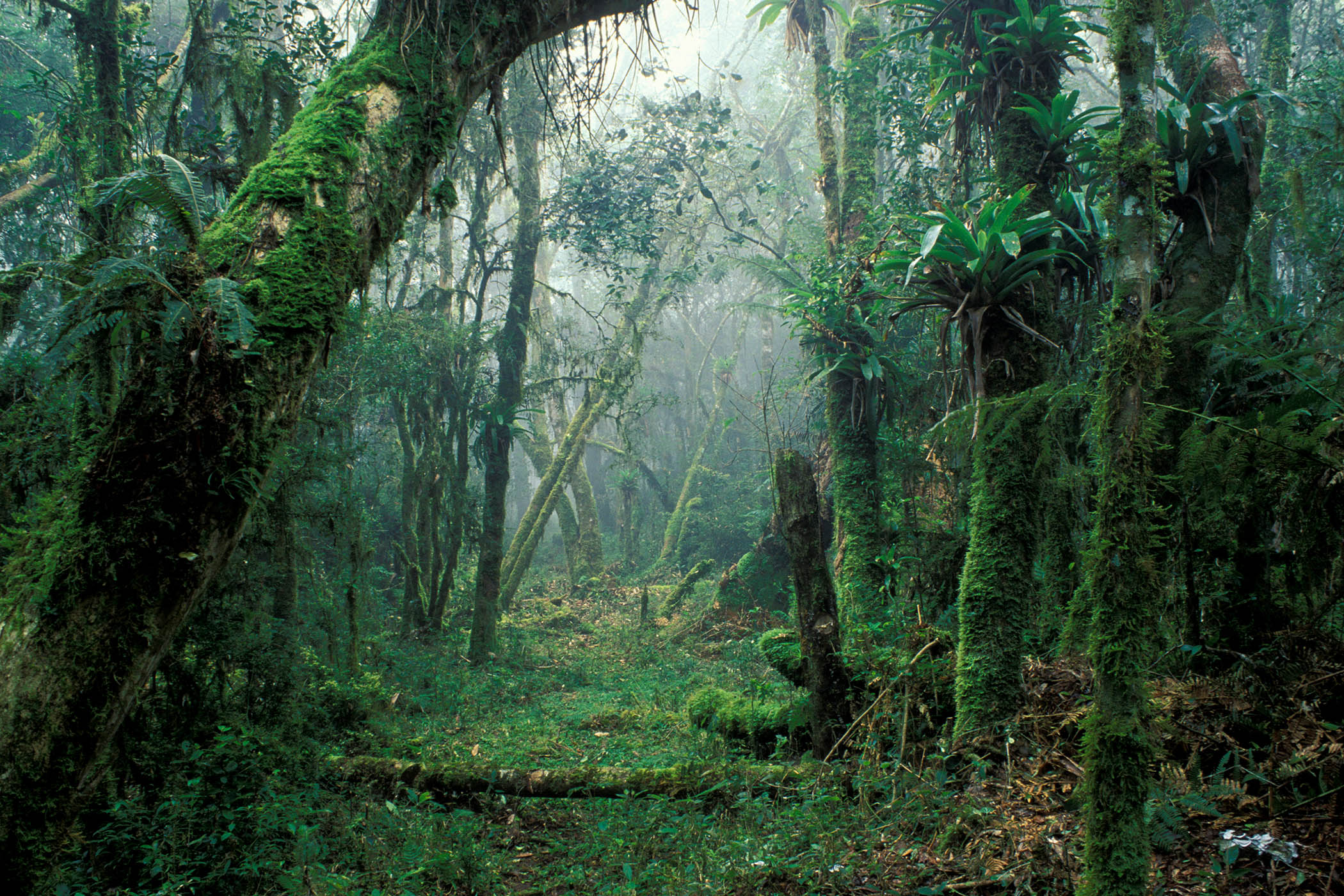
If not wild creatures, it’s “savage man” we may imagine as inhabiting a wilderness. In the chapter A State of Nature, we are taken to the Indigenous reserve of the Yanomami people in the Brazilian rainforest. These people are extremely vulnerable to disease and to unlawful land invasions, so entry is tightly controlled. After a long trip by riverboat, and perhaps injudiciously, Flyn attempts to gain access to their lands, negotiating via an interpreter. The Yanomami are hardly “stone age” people, she writes: they haggled hard. “Several of the younger men had requested a chainsaw.” Flyn demurred. “Hadn’t it been their lack of chainsaws … that was the reason I was so keen to come?” It was quite the dilemma, and Flyn teases out its ramifications. ‘To deny the Yanomami such a tool represented … both a wish to preserve the Yanomami themselves in a ‘primitive’ state, and to hinder their ability to alter their environment.” If we classify as “wilderness” places known to be inhabited by Indigenous groups, “either we don’t recognise these groups to be impacting their environment, or we still don’t fully recognise their humanity”.
Flyn asks the question: “What level of human interaction ‘spoils’ a wilderness?” The Amazon rainforest is supposedly untouched yet its Indigenous peoples have always planted orchards and fertilised the soil. In the end, their request for a chainsaw denied, the Yanomami ask for hoes, axes, rakes, shovels and fishing hooks. They accepted shotgun cartridges. Having gained entry to the village, Flyn asks about the idea of “wilderness” in Yanomami culture, but the term doesn’t translate into their language.
In designated American “wilderness areas”, chainsaws are prohibited. “The national park has been celebrated as ‘America’s best idea’.” It arose with the realisation that wild land was not infinite; the photographs of the environmentalist Ansel Adams were pivotal. But to indulge this “Yellowstone model” of wilderness, the original inhabitants were overlooked, or cleared. “In 1929 they burnt down the last Indian village in Yosemite as an eyesore.” The American approach was more democratic than the European, with access open to all. However, by 1948, Adams himself was complaining that Yellowstone was horrible, with “millions of people, cars, bears, garbage”. In 2024, there were 331m visits to US national parks. Entry is often by permits, granted by lottery, another strange sort of wilderness.
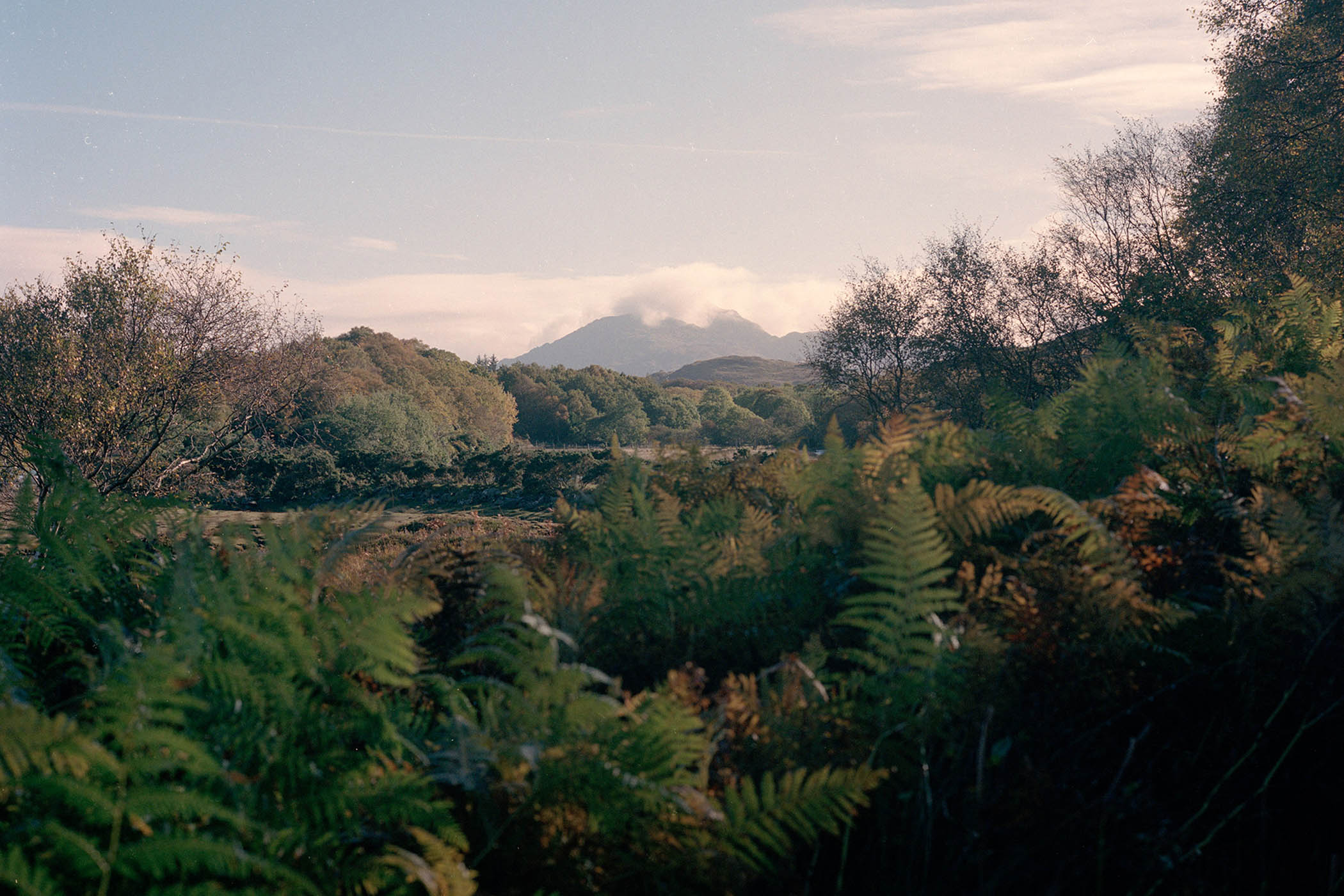
Flyn is from the Highlands of Scotland and inevitably the book arcs toward home, with a trip into her own wilderness, where rewilding is fashionable among the landowning class. The Cairngorm plateau turns scary when the weather closes in; one can easily become dangerously lost. When it comes to wilderness, “in a sense we are all circling the same preoccupation, which is the edge of unknowing and what the darkness beyond might obscure”.
If Flyn’s book requires a world atlas, Kapka Kassabova’s, by contrast, would fit on to a single OS sheet. Borrowed Land concerns the glens south west of Inverness, which drain into the Beauly Firth. Kassabova, originally from Bulgaria, has dug in deep among “the ruined cottages, abandoned villages … haunted glens, extinct families and place names in a forgotten language”.
We have heard this kind of thing before, of course: the romance of the Highlands. “Modern settlers in the Highlands like the majestic emptiness. It makes them feel like pioneers. The locals run away from it, it makes them feel like orphans.” But Kassabova is shockable, where others are inured. She says: “There is something Balkan about the Highlands. It’s an atmosphere. A howl in the perfect land, as if a force has blasted through it and swept it of its creatures, and exiled them.”
Newsletters
Choose the newsletters you want to receive
View more
For information about how The Observer protects your data, read our Privacy Policy
She is also unforgiving about the “industrial doctrine of communism”, which she says blighted her homeland, and she believes a similarly rampant industrial exploitation is occurring in the Highlands right now, at the expense of wild land and native culture. “Big energy” is especially despised. This is the development we are all supposed to approve of: renewables, wind turbines, the race to net zero, the “decarbonisation of the grid”. But green energy for Kassabova means only private profiteering and destruction, often by absentee landowners, backed by government. “Beautiful wild places have been sacrificed.”
It’s a process that began with hydro power after the second world war. The Power from the Glens project has hitherto been seen as heroic. However, Kassabova believes it was just a precursor, a softening up of the Highland landscape for the present-day “giantism”. Huge new pylons and transmission lines are planned for her own glen, “which would rip through Giusachan forest and Aria’s woodland”. The glen is narrow but “they want to force through a substation platform, two SuperGrid transformers, three large future bays … a new control building and new access roads”. Who are “they”? No one quite seems to know. Sometimes the subcontractors doing test drilling don’t even know themselves. They are out for profit, and the “empty” Highland landscapes will provide. (But we do like our electricity, if only to counter what she calls the “uniquely Scottish bone-rotting dampy cold”. )
Although Kassabova often strikes a keening note, the book is so rich with the actual present-day people of the glens, their conversation, anecdotes and misadventures, their dogs and goats and idiosyncrasies, that one can forgive her the lyrical highs. As she says: “To discover something is easy – you just turn up. But to know it takes time.” Kassabova has indeed taken the time, and as a result seems to know everyone within a 20-mile radius of her home, from gallerists to ghillies.
Fishermen, housekeepers, hermits all feature, incomer and native, all with their own stories. People appear to trust her, they speak for themselves and will recognise themselves, for good or ill. Her dialogue is bright and engaging, and offers genuine insight into the dynamics and kinship of people and place. She knows every building, be it a lodge belonging to landlords who arrive by helicopter, or a drover’s bothy in the hills, or a “fairie-like” self-build in the woods.
Every tree and rock matters, especially if named, because the names are where Gaelic lingers. She deplores the extirpation of that language and what it meant of an ancestral connection to the land, a “land of song and soul”. Borrowed Land has an urgency about it – the author wants to recover or record “what may be lost” to the extractive industries. It’s a romantic impulse, of course, but she is far from embarrassed by that. (Ticking under her grief for the land, there are strong hints at another grief: the end of the relationship that first brought her to Strathglass 20 years ago.)
Flyn asks if we should set aside regions of natural abundance “to save them from harm at our own hands”. One suspects Kassabova would answer with an emphatic yes, starting with Flyn’s homeland, the Highland glens. Our human appetite for energy – and profit – is voracious, but “without the living land”, Kassabova says, “we are nothing”.
The Savage Landscape: How We Made the Wilderness is published by William Collins (£18). Order a copy at The Observer Shop for £18 (10% off RRP). Borrowed Land: A Highland Story is published by Jonathan Cape (£22). Order a copy from The Observer Shop for £18.70 (15% off RRP).
Photograph by Carl Bigmore