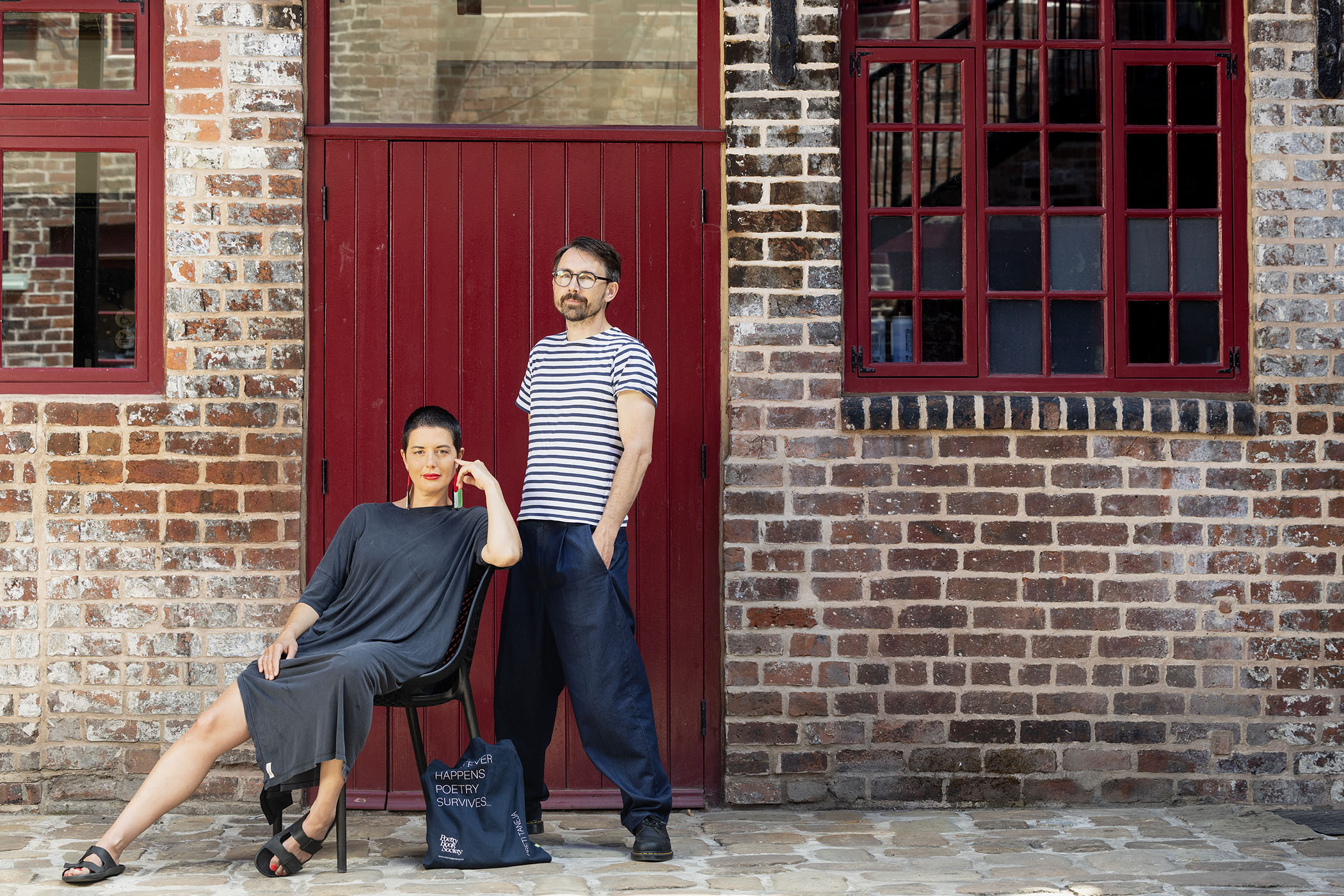
Photograph by Gary Calton for The Observer
When the members of the And Other Stories team took their seats in the Tate Modern’s Turbine Hall for this year’s International Booker prize ceremony, they immediately assumed they hadn’t won. “Last year, Heart Lamp’s table was right at the front,” said Stefan Tobler, the small press’s publisher, referring to the novel by Banu Mushtaq, translated by Deepa Bhasthi and published by And Other Stories, that took home the trophy in 2025. This year, the team was further back, away from what Tobler assumed was the winner’s zone. He endeavoured to just enjoy the night.
But it turns out there is no way of predicting how these events will go: “You might as well try to read pig entrails,” said Tara Tobler, the press’s senior fiction editor, because And Other Stories would go on to win. Taiwan Travelogue, a metatextual tale about food and colonialism by Yáng Shuāng-zǐ, translated by Lin King, became its second consecutive International Booker triumph. This is a first for any publisher, not least an independent press with the equivalent of four full-time staff, based in a “tiny cubbyhole” in Sheffield central library.
When And Other Stories first read Taiwan Travelogue, considering it for UK publication after King’s translation had won a 2024 National Book award in the US, it was a “no-brainer” that the team would publish the novel, said Tara. “One of the most celebrated things about Heart Lamp’s victory was the broader argument it was making with its stylistic choices as a translation, about the work we need to do to continue to decolonise English as a literary language.”
That sensibility is also present in Taiwan Travelogue: it shows that literature in translation need not compromise on literary merit. “You can do all these extraordinary things without having to cater to market assumptions about how much a reader is or isn’t willing to work, because those assumptions are all just about privilege and the assumption that the English market is used to having everything handed to it.”
Small-press publishing ‘is like a small farm that tends to each sapling lovingly and nurtures it to let it attain its full growth and taste’
Small-press publishing ‘is like a small farm that tends to each sapling lovingly and nurtures it to let it attain its full growth and taste’
Working against those assumptions has been a key part of the And Other Stories project from the beginning. This September will mark 15 years since the press’s first publication, Down the Rabbit Hole by the Mexican author Juan Pablo Villalobos and translated by Rosalind Harvey. Stefan, a translator from Portuguese and German, said he founded the press after being “fed up” with the “lack of UK publishers doing translations”, launching it with £24,000 in Arts Council England funding. Tara joined in 2014. (The pair were married but have now separated.)
In 2015, the press was taken on by the Arts Council as a national portfolio organisation, meaning it receives a regular sum of public money each year – one of few publishers to do so. “It’s not the bulk of our money,” Stefan clarified. “The bulk of money is sales, but it is a really nice stabilising thing that has helped us to take risks with what we’ve published.”
Those risks have been numerous, but many have paid dividends. While translated fiction is a focus, the press also publishes works originally written in English, such as Deborah Levy’s novel Swimming Home, which was rejected by mainstream publishers before being shortlisted for the Booker prize in 2012, and going on to revitalise Levy’s now feted career. The press’s choices often have a political or moral purpose: it was, for example, the only publisher to take up Kamila Shamsie on her suggestion of making 2018 a year for publishing only women.
And the decision to set up base in Sheffield was “a deliberate provocation on our part”, said Stefan. “We have been persistently annoyed by how London-centric publishing is in the UK, and how New York-centric it is in America. You shouldn’t need to afford to be able to move to London, pay extortionate rent and work for free as an intern in order to get your foot in the door in publishing, because that automatically draws a line about who is going to get in and who is not.”
The press’s books have a northern footprint too: its tactile cream covers are made from coffee cups recycled at Tebay services on the M6 in Cumbria and are manufactured at an ecological paper mill in the Lake District.
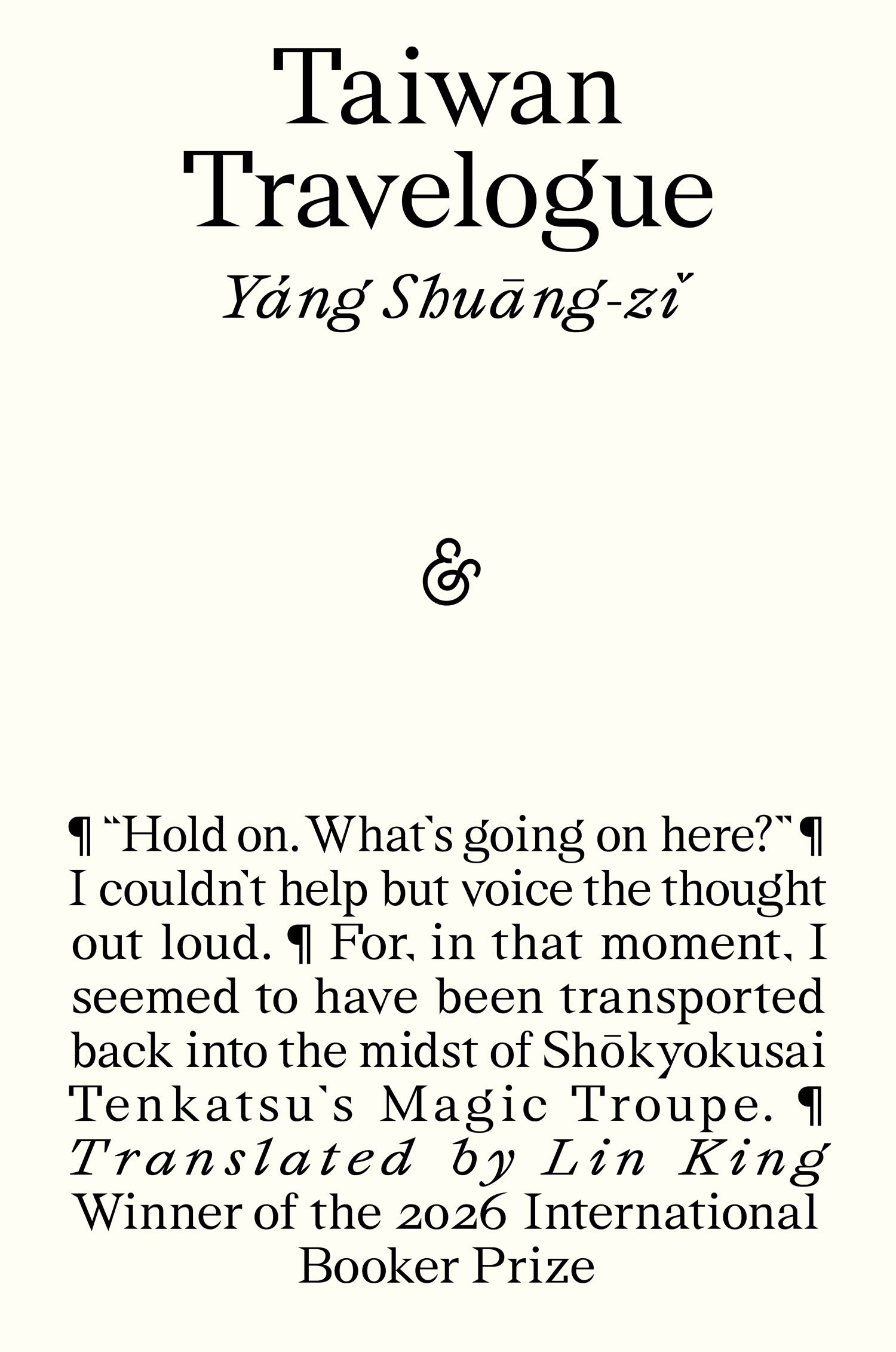
Taiwan Travelogue won this year’s International Booker prize
Stefan was born in Brazil to English and Swiss parents, and lived in Germany and southern England before settling in Sheffield. As well as German and Portuguese, he also reads in Spanish and French, and has translated authors including the Brazilian novelist Clarice Lispector and the German poet Lutz Seiler. Tara grew up in Ontario, where she worked at the independent Canadian publisher Biblioasis before moving to Sheffield.
She reads in French, “but nobody in the team reads Arabic or Urdu or any of the other languages that we have been looking at recently”, she said – so the collaborative acquisition effort also relies on contributing editors who can read in other languages, alongside a “chain of recommendations” that includes translators’ reports and samples. But not having a certain language isn’t necessarily a setback, Tara added. “When you can’t read the original, you end up looking even more carefully for that spark of something in the translation itself – a voice that sets it apart. I like the mystery. I like working with languages that I can’t read, because it forces open doors in my brain.”
And Other Stories has six UK staff (some of whom work part-time) and publishes fewer than 20 books a year. In a landscape dominated by the “big five” publishers, the sense that only small presses can afford to take risks has become something of a cliche, said Preti Taneja, a contributing editor at And Other Stories and the author of Aftermath, a creative nonfiction work about the 2019 London Bridge terror attack that the press published in 2022.
But “that’s what makes [small presses] both necessary and successful”, she added. “If that means publishing hybrid, diasporic and world voices, or writers working in different forms and languages, or mixing genres, using form in ways that reflect on the unities in our fractured world, that allow us to see in new ways how things have come to pass and how they might be different, I don’t see the risk. I just see the thing being done the way it should be.”
For And Other Stories, that approach involves welcoming exciting early career writers such as the London-based author Tice Cin, whose debut novel, Keeping the House, the press published in 2021. Cin described the publisher’s mission as “global-eyed publishing that is open to play and creativity … It’s a deeply personal publishing experience where every win feels shared.” Meanwhile, And Other Stories also signs up authors such as Levy, who the mainstream had turned its back on; the eccentric Australian writer Gerald Murnane, whose back catalogue the press is republishing; and the English novelist Rosalind Belben, whose works it is bringing back into print after decades out.
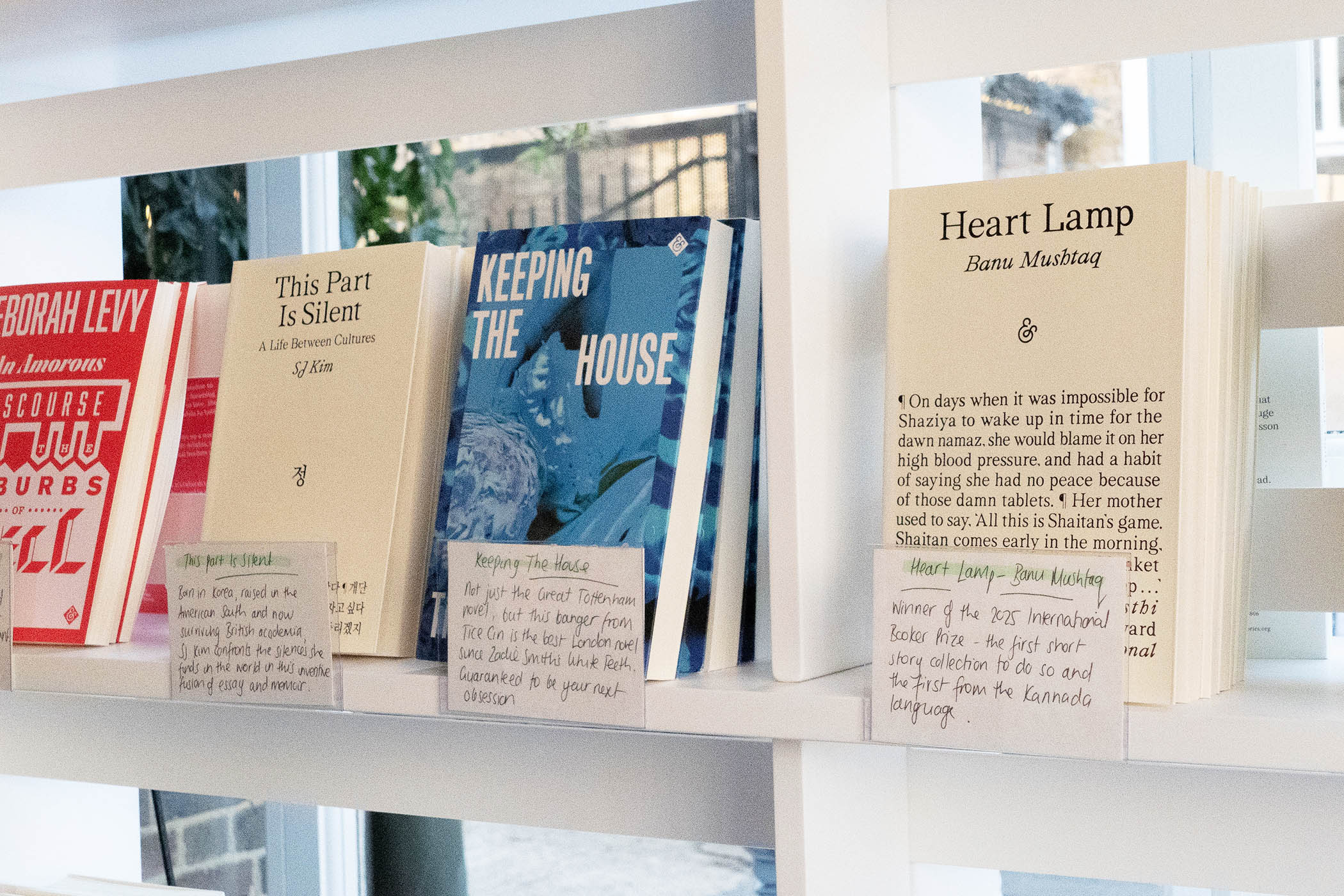
And Other Stories’s distinctive cream covers
Other authors have already found success elsewhere but go to And Other Stories to help their books “realise their full potential”, said Geetanjali Shree, who won the 2022 International Booker with Tomb of Sand, which was translated by Daisy Rockwell and published by Tilted Axis Press. She has since published another novel, The Roof Beneath Their Feet, translated by Rahul Soni, with And Other Stories. Small-press publishing “is like a small farm that tends to each sapling lovingly and nurtures it to let it attain its full growth and taste”, she said. “This is not about pitting small scale versus large scale but about the different touch small scale allows. And Other Stories has excelled in that touch again and again. I love my entry into this charmed and devoted family.”
Fiction in translation is where And Other Stories started and where its focus remains. The Catalan novelist Eva Baltasar, translated by Julia Sanches, continues to be a big success for the press, while its roster also includes the German novelist and short story writer Clemens Meyer, the Mexican-born author Cristina Rivera Garza and the South Korean poet Kim Hyesoon. Translated fiction – once considered niche and uncommercial – has become increasingly popular, buoyed in significant part by the International Booker’s championing of it.
In 2025, sales of translated fiction were up more than 30% on 2016. And as Gaby Wood, chief executive of the Booker Prize Foundation, pointed out on stage in the Turbine Hall, buyers of translated fiction are younger than average: in 2025, the largest share of translated fiction was bought by readers aged 25 to 34, compared with those aged 60 to 84 for general fiction.
Readers of translated fiction are also more ethnically diverse, more likely to live with a child under the age of 18 and more likely to buy from independent booksellers. We’re told that men are reading less fiction than ever, and indeed, they bought only 37.2% of general fiction in 2025. But they bought 51.3% of translated fiction. Its rising popularity is allowing literature to reach wider audiences, and the International Booker seems to be betting that this will only grow, with the prize this month announcing a doubling of its prize money to £100,000 in future years (split between author and translator), thanks to new investment from Bukhman Philanthropies.
And Other Stories isn’t the only press to be reaping the benefits of this moment. Fitzcarraldo Editions, another small, independent publisher that was set up around the same time as the Toblers’ endeavour, has had more books nominated for the International Booker than any other. Based in south London, it is known for its inherently chic and collectible uniform blue and white covers, inspired by the design of European publishers.
Newsletters
Choose the newsletters you want to receive
View more
For information about how The Observer protects your data, read our Privacy Policy
After some experimentation, And Other Stories decided on uniformity too. “We had a series design at the beginning,” said Stefan. “And our sales reps at the time told us it was a bad idea. So we moved away to do individual covers. We found that the sales reps were wrong. It didn’t improve our sales. We saw Fitzcarraldo had done a great job sticking firm with their series look, and we were like: ‘Well, let’s do the same.’” As fellow small presses, “we all learn from each other, we all share advice, we all share ideas”.
And Other Stories, though, name its books’ translators on their covers, a practice that sets it apart from Fitzcarraldo and most other UK publishers: in King’s acceptance speech, she revealed that this was a key reason for choosing the press.
But does this all equate to a boom time for And Other Stories? “The truth about literary fiction publishing is that most books don’t sell enough copies to break even,” Stefan said. Some And Other Stories books “sell modestly”, he added, while others “sell amazingly”. The first print run of Taiwan Travelogue was 3,600 copies. In the week after the International Booker win, demand had led the number of copies printed to exceed 56,000. “It’s a great boost,” but only for one title. “It’s not like, suddenly all translated literary titles are selling 5,000 copies or something … it’s still a tough gig,” Stefan said, pragmatically.
Still, the effect of a prize win – no matter two consecutive ones – on a press as small as And Other Stories has been noticeable. Heart Lamp’s triumph last year “gave us a lot more security in practical terms”, Stefan said, by which he meant that now, when he is travelling to London for work: “I don’t necessarily have to sleep on my friend’s sofa, if it’s an awkward day for them. I might stay in a modest hotel.” On top of that, by the time Taiwan Travelogue was shortlisted for the International Booker this year, the press felt financially confident enough to advertise for a seventh team member, in a business role.
“I am hoping when we make this hire that I might get a chance to translate something again,” said Stefan, longing for a return to the kind of work that started it all, 15 years ago. “That would be nice.”
Photographs by Gary Calton for The Observer; Molly Boniface