

When the Berlin Wall fell, many commentators declared the spy novel dead. Not John le Carré. He might have ended George Smiley’s cold war with the defection of Karla in Smiley’s People a decade earlier, but in le Carré’s view the collapse of communism would only serve to reinvigorate the genre. “For decades to come,” he wrote in 1989, “the spy world will continue to be the collective couch where the subconscious of each nation is confessed, where its secret neuroses, paranoias, hatreds and fantasies are whispered to the microphones.”
Time has proved his point. From Jack Ryan and Jason Bourne to Jackson Lamb and his motley crew in Slough House, the fictional agents of the post-cold war order have not simply flourished, they have served as a cultural barometer, reflecting the moral anxiety, political disillusionment and institutional distrust that mark our age. The patriotic certainties of the Soviet era might have vaporised, but the spies spy on.
In his fifth novel, A Stranger in Corfu, Alex Preston examines that old era alongside the new. It is the mid-1990s, and on the Greek island of Vidos former members of MI6 are living out their retirement. Vidos is an idyllic spot, but the location is not some kind of a reward for the former spies’ service. These men and women are damaged or compromised, or both. They are the fiascos and failures that the Secret Intelligence Service would like wiped from the record, an ignominious catalogue of botched missions and betrayals. Some, the “incurables”, are kept in a sedated haze in the sanatorium. The rest live independently but can travel only to neighbouring Corfu and then only under strict supervision. All are permanent exiles, prisoners of the state – and of their pasts. It is a tantalising premise for a novel.
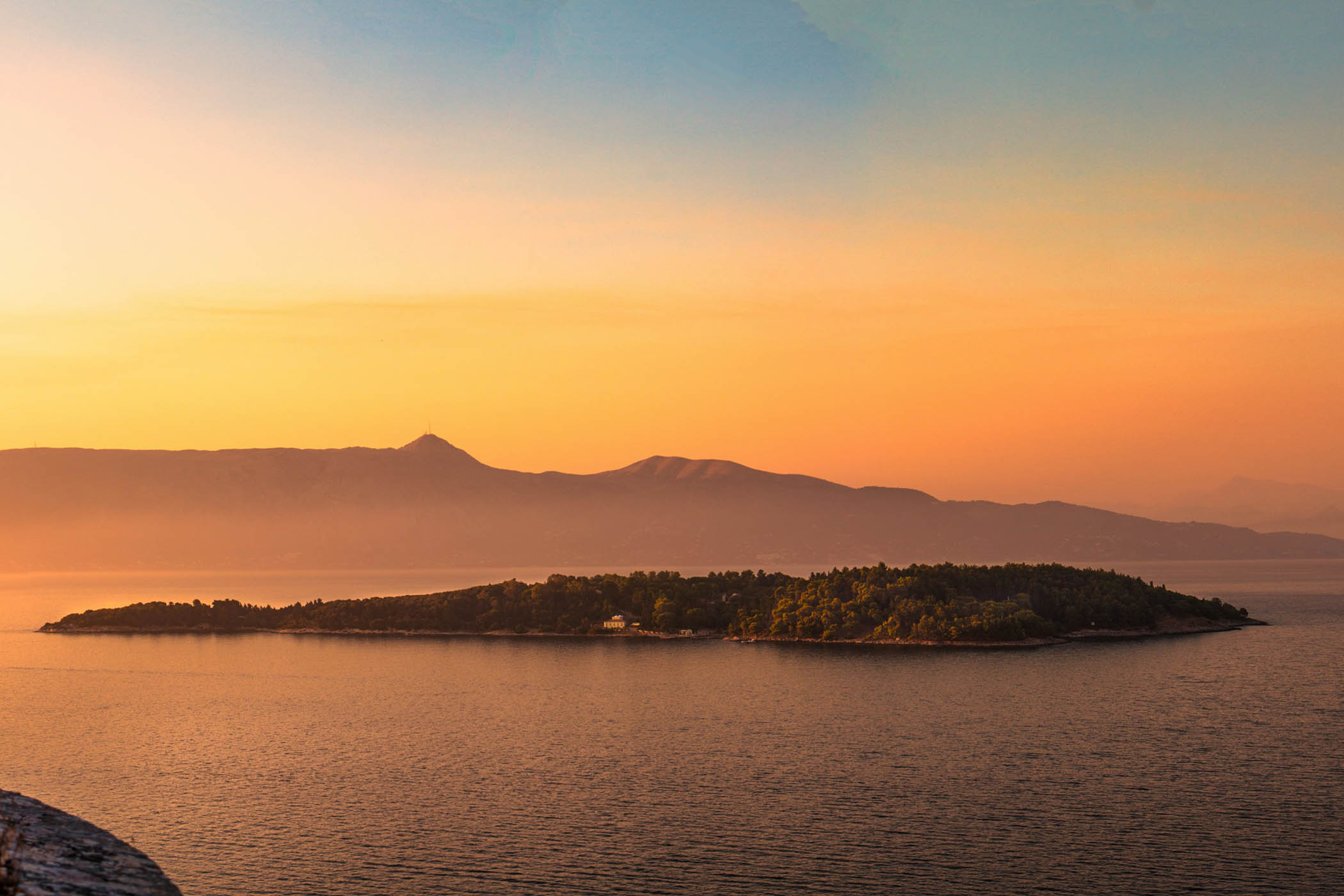
Vidos, a real-life speck of land less than a kilometre across (these days it is an uninhabited nature reserve), has been used as a fortress and a prison off and on since the Peloponnesian war. Preston has enlarged this history, imagining it also as a base in the 1950s for a British intelligence operation to destabilise the communist government in Albania. Which makes it a striking – and strikingly ironic – location for a kind of Slough-House-on-Sea. Preston’s agents call it Spyland.
These people are the fiascos and failures the secret service would like wiped from the record
These people are the fiascos and failures the secret service would like wiped from the record
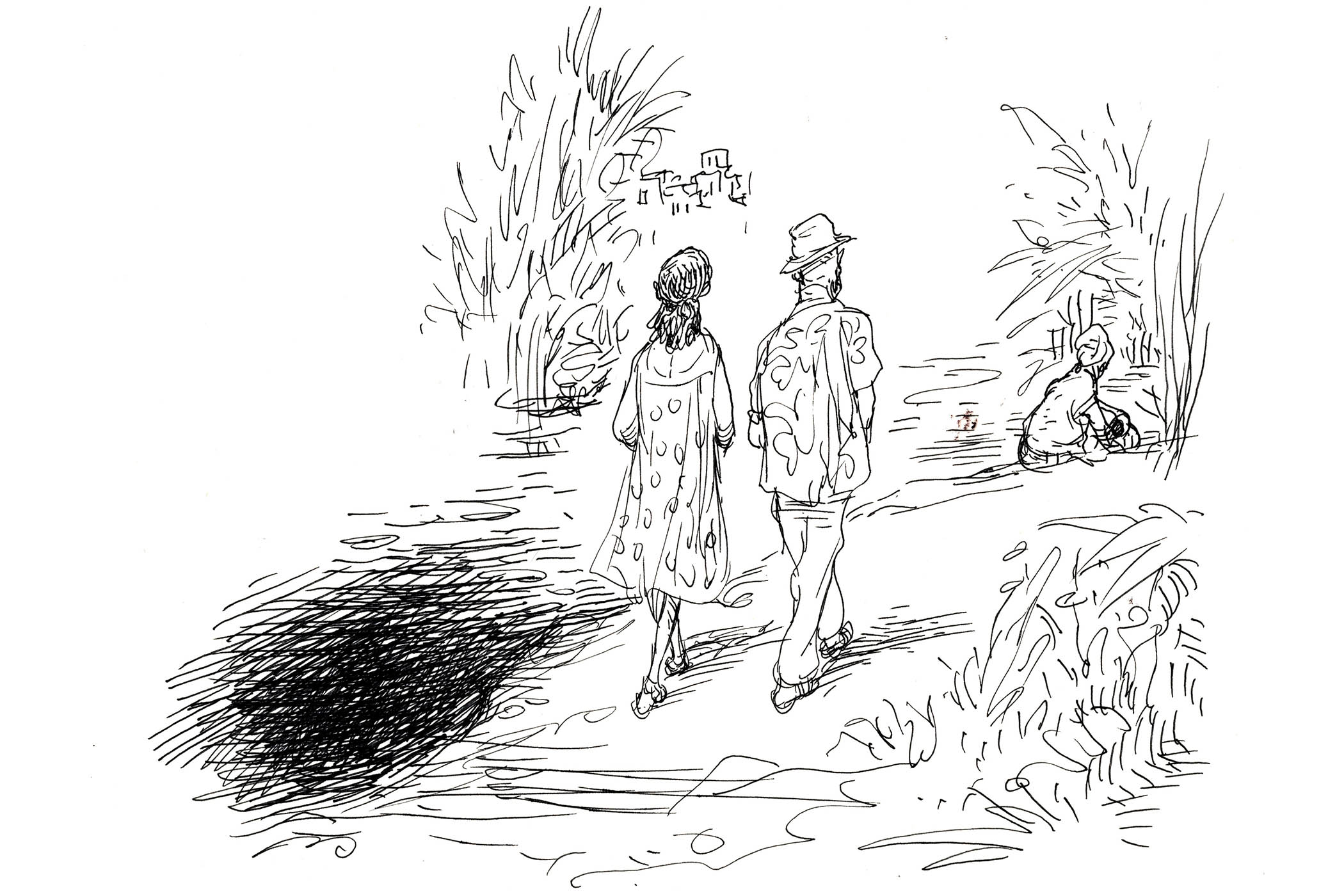
The newest arrival is Nina, an agent in her mid-20s, traumatised by a catastrophic operation in the Balkans. Nina swims in the sea, takes her medication, tries to find peace. She befriends her elderly neighbours, a band of old-school spies who play bowls and drink pink gin and contrive – unlike Herron’s thwarted slow horses – to be mostly philosophical: they had, after all, “a good innings, batting longer into the evening than most”. For Nina, the island is a refuge, a place out of time. Until one day, when she is walking in the forest, an unseen assailant tries to shoot her and everything begins to unravel.
A Stranger in Corfu defies easy categorisation: even as the body count on Vidos rises, it never quite becomes a thriller. The tension is held all in the past, summoned in long flashbacks, as the occupants of Spyland revisit the choices and convictions that brought them there. Alone at a clifftop shrine, Nina asks herself the question every one of them, one way or another, must eventually confront: “whether the wreckage of one’s own life, the misery inflicted on others, could be justified by some abstract good, by the evils left undone”. It is this reckoning, and not the police investigation on the island, that sits at the heart of the story. Death might come peacefully, it might be sudden and violent, but it is life that must be accounted for.
Preston’s characters are not always quite complex enough to satisfy. His spies, forged in the tense and treacherous cold war, too often say precisely what they mean. But what he captures with skill is the awful truth of so much espionage, that unspeakable sacrifice is demanded for principles that turn out to be misjudged or mismanaged or not to exist at all. In Spyland, everyone has betrayed someone. As le Carré predicted, the collapse of communism has given way not to a braver new world but to the brutal self-aggrandisement of capitalism, where the greater good is nothing but a cover story and the institutions in which we have to place our trust are driven – just as we are – by the hunger for money and for power.
A Stranger in Corfu by Alex Preston is published by Canongate (£18.99). Order a copy from The Observer Shop for £17.09. Delivery charges may apply
Photograph of Vidos Island by Getty Images
Newsletters
Choose the newsletters you want to receive
View more
For information about how The Observer protects your data, read our Privacy Policy