
When British audiences think of the work of George Balanchine, we conjure athletic dancers making patterns of abstract beauty. What we don’t think of are massed ranks of children in pink satin, pointing their feet and shaping their arms in rapturous imitation of the ballerinas around them, and especially not fierce warriors brandishing weapons, sweeping across the space in soaring jumps.
Yet all are there in the great choreographer’s version of Coppélia. It was mounted in 1974, by which time his New York City Ballet had long established the American style, but it is full of affectionate tributes to his Russian past. He staged it with the help of the ballerina Alexandra Danilova, his colleague and former lover in their shared days at Diaghilev’s Ballets Russes, and their mutual respect for one another and reverence for the tradition from which they sprang positively drips off the stage.
Danilova’s phenomenal memory recreated the Petipa variations of the first and second acts from the 19th-century original, while Balanchine let his imagination run riot in the Festival of Bells in the concluding section. The folk dances that punctuate the action have an unusual level of authenticity, with the men in tasselled white culottes and ultramarine waistcoats and the women in pretty orange bodices and character boots bending and swaying in synchronised grace.
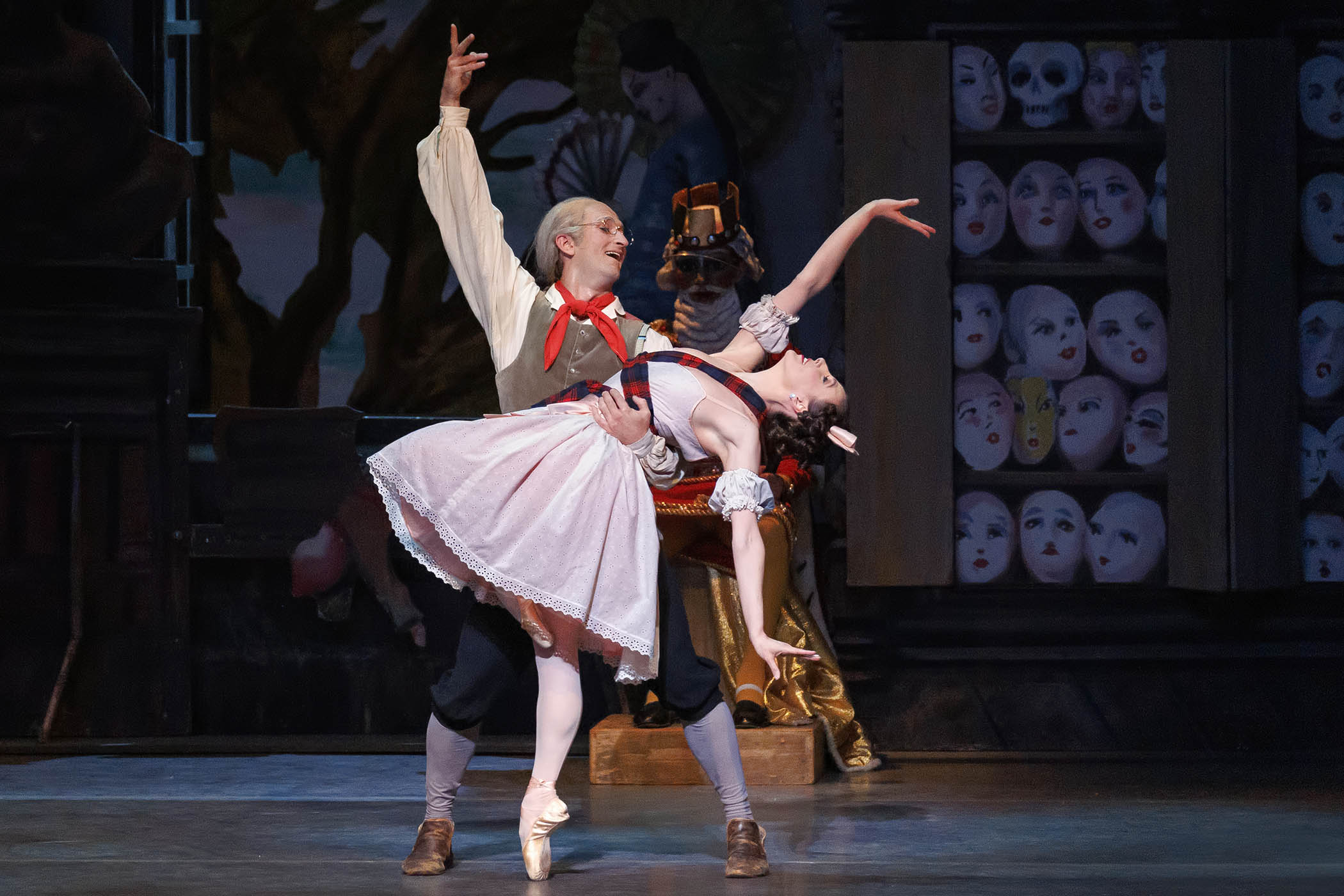
The result is both more extravagant and more disarming than Ninette de Valois’ restrained Royal Ballet version. NYCB dance with a seriousness and precision that is entrancing, turning a slender tale about the mad inventor Dr Coppélius, his lifelike doll (Coppélia) and a pair of squabbling lovers (Swanilda and Frantz) in a Carpathian valley into a balletic treat. It doesn’t exactly scream modern relevance, but with the help of Rouben Ter-Arutunian’s picturesque designs, its impact is more than felt.
At the centre of the performance I saw was Tiler Peck’s Swanilda, a perfect piece of casting since the dancer’s lively personality makes the most of the vivid comedy. She plays up the drama: those battering clenched fists when she (rightly) suspects that Frantz has turned his romantic intentions to Coppélia, her shaking knees when she and her friends invade Dr Coppélius’s workshop in a glorious snaking line, holding hands to pull one another fearfully along.
But more importantly she is utterly responsive to every note of Léo Delibes’ score, one of the most beautiful in the ballet repertory. She seems to embody the music, flowing with its inflections, whether in turns so fast they flash, or in variations where her body tilts sideways, her balances both perilous and secure. When she impersonates Coppélia, making the crazed Coppélius (Harrison Coll) think his doll really has come to life, the delicacy of her dancing as a high-flying sylph and a Spanish señorita is beautifully judged, as is her mischievous teasing of her dim-witted boyfriend whom Chun Wai Chan endows with just the right measure of sweetness. Among a uniformly excellent cast, Dominika Afanasenkov stands out as a serenely lovely Prayer in the final act solos.
It’s all very silly, of course, but it is also a reminder of where ballet comes from, how it creates the stuff of fantasy from the trained skill of human bodies.
Photograph by Erin Baiano
Newsletters
Choose the newsletters you want to receive
View more
For information about how The Observer protects your data, read our Privacy Policy