
It’s 20 years since Wayne McGregor, a contemporary-trained choreographer, was appointed resident choreographer at the Royal Ballet, an august classical institution. Alchemies, a bill of three short ballets, one new, two older, is a snapshot of his impact to date. As its title suggests, it reveals just how richly productive that collision of two traditions has been.
In his riveting new book, We Are Movement: Unlocking Your Physical Intelligence, he talks about the difference between convergent and divergent thinking, associating the first with high technical proficiency and conformity, and the second with experimentation and daring.
Broadly speaking, ballet schools still prize the first. But contemporary dance encourages the second. “It is no surprise then, that international ballet companies have welcomed contemporary dance creators into their ranks, to infuse new energy into their art form, often mining the diversity and expansiveness of their work and their willingness to embrace innovative creation methods,” he writes.
These methods liberate dancers, encourage their creativity. McGregor’s works for the Royal Ballet use the meticulous beauty of their formal ballet training and unleash it into a world of possibility, imagined through unexpected and unconventional collaborations.
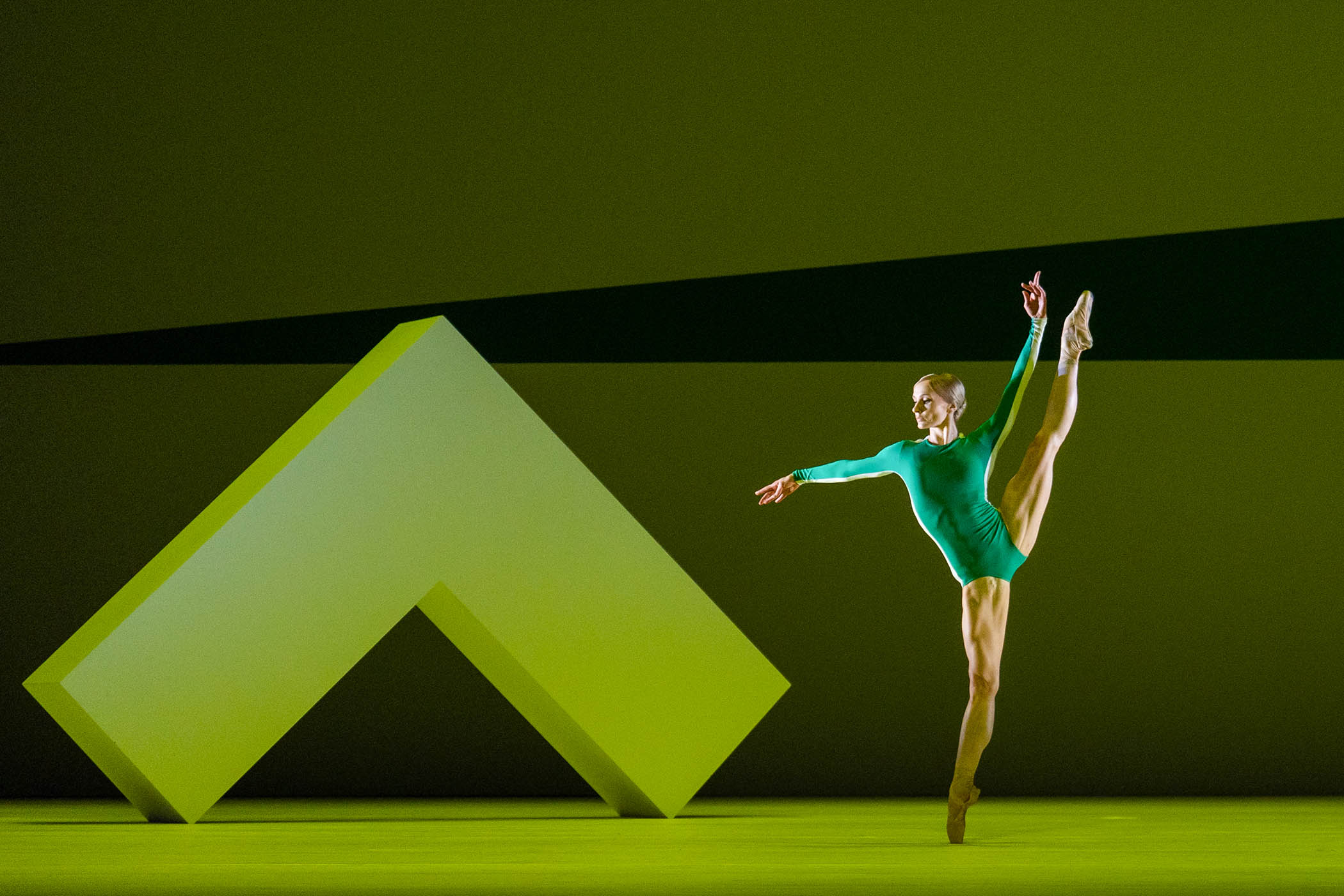
All those qualities are present in Untitled, 2023, one of his finest pieces. Its mood is conditioned both by the paintings of the late Cuban artist Carmen Herrera – who inspired it and who provides a white backdrop broken by a single green triangle and an abstract sculpture – and by the score by the Icelandic composer Anna Thorvaldsdóttir. The contrast between her doomy, driving dissonance with its hint of threat and Herrera’s airy minimalism lets McGregor imbue the piece with a kind of pressure, a sense of dancers exploring power and poise, at once exhilarating and oppressed. It’s full of magical moments: Joseph Sissens’s twisting solo; William Bracewell bearing Fumi Kaneko aloft, her extended legs in the air spinning like a propeller; a quicksilver group full of twitchy energy.
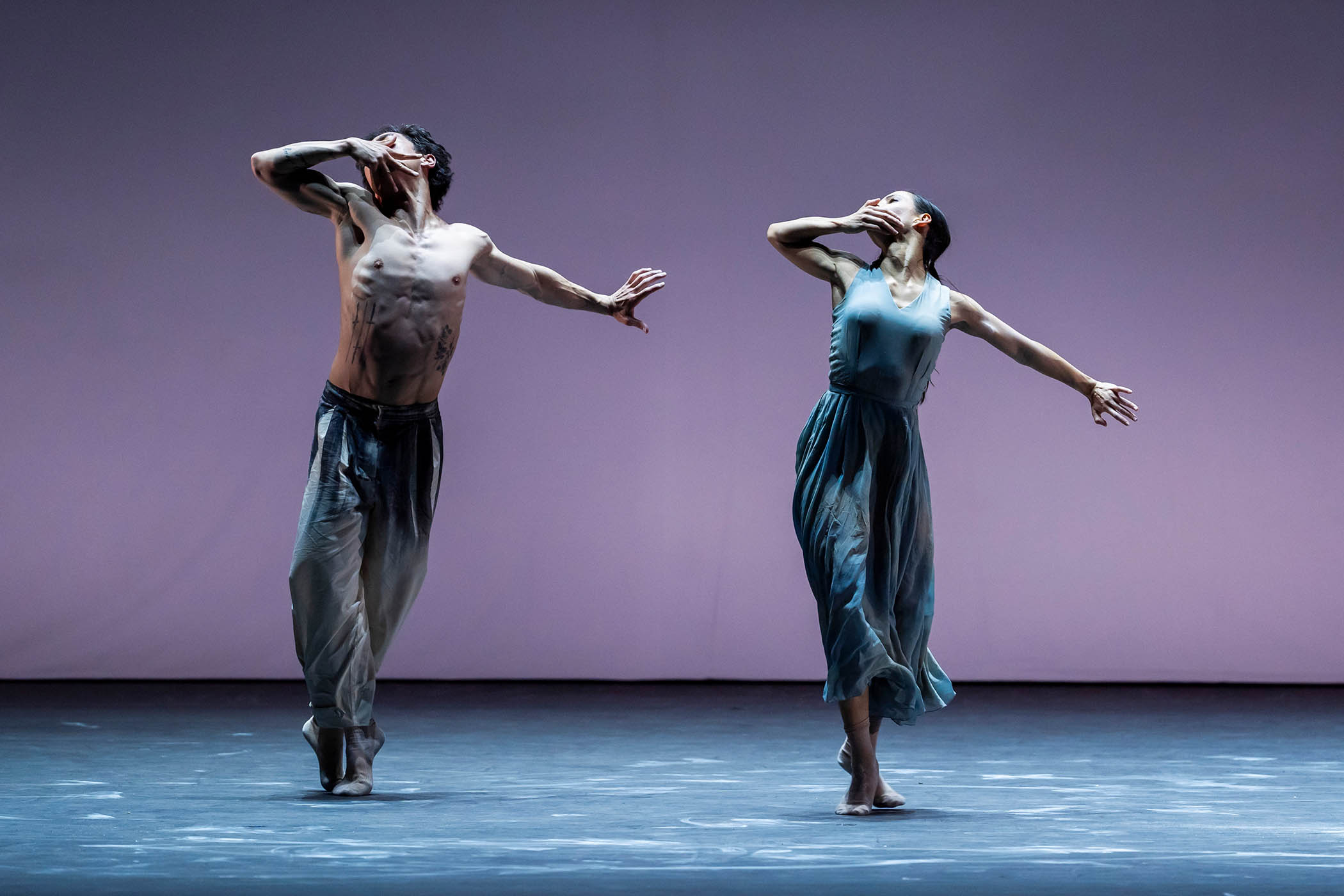
Yugen, set to Leonard Bernstein’s jazzily sacred Chichester Psalms, sung by choir and boy soprano, couldn’t be more different. On Edmund de Waal’s set of vertical frames that conjure speculative cathedrals, McGregor’s choreography suggests both reverence and family ties, as Marco Masciari’s young man wheels and pulls away from the intimate emotionalism of the duets for Matthew Ball and Sarah Lamb, or forges a partnership with Emile Gooding. The movement is lushly beautiful, full of longing and reach.
Quantum Souls, the new work, is as bold as the bright buttercup light with which Lucy Carter (who is the lighting designer for the entire programme) suddenly floods the stage. The backcloth glitters with white points, suggesting orphan stars in the void of space, but it is the percussionist Beibei Wang, a charismatic comet of energy, who dominates the stage, surrounded by her multiple instruments. As she plays Bushra El-Turk’s score, some of it improvised, the dancers watch her and she them: there is a constant sense of action and reaction.
In this shifting soundscape, with the orchestra growling in the pit, there’s an excitement, a tautness in the movement, full of beaten jumps, sliding runs, pirouettes. The dancers, in black and yellow, excel: Melissa Hamilton, bending this way and that, holding her arms above her head to catch the beat; Bracewell making arched jumps through the air.
The quantum soul theory merges art and science with its suggestion that the human soul may be a type of quantum field. It has its own alchemy. Mysterious, complex and yet full of hope, it feels like a perfect symbol of McGregor’s own explorations of life and art with the company that he has made his classical home.
Wayne McGregor: Alchemies is at the Royal Opera House, London, until 6 May
Newsletters
Choose the newsletters you want to receive
View more
For information about how The Observer protects your data, read our Privacy Policy
Photograph by 2026 RBO/Andrej Uspenski