

First features tend to be the arena in which film-makers explore their chosen art form, tentatively working towards finding a distinctive voice. Often you see glimpses of their potential, of the artist they will become. But occasionally, a talent arrives fully formed, and the Canadian-Hungarian director Sophy Romvari is one such phenomenon.
Already effortlessly fluent in the language of cinema, she is confident enough to have made a feature debut that is entirely her own. Blue Heron, a semi-autobiographical mosaic of fractured memories, is a remarkable film: unflinchingly personal, intellectually agile and genuinely original. In some ways, it put me in mind of Eva Victor’s equally impressive debut, Sorry, Baby, not for any tonal similarities – Blue Heron is categorically not a comedy – but because both are the product of film-makers exploring an unimaginable personal tragedy and processing it with insight and bruising honesty.
Romvari has built a reputation through a series of highly acclaimed short films, mostly documentaries or hybrids that looked at the intersection between fiction and non-fiction. Reflecting a wider trend in documentary film-making, she turned her lens to aspects of her own life: Grandma’s House (2018) and Remembrance of József Romvári (2020) dealt with her Hungarian heritage, while Norman Norman (2018) explored her relationship with a beloved pet dog. Still Processing (2020), in some ways a predecessor to this film, recorded Romvari’s raw response to a cache of previously unseen photographs from her childhood – a portal to painful memories of her family’s collective traumas.
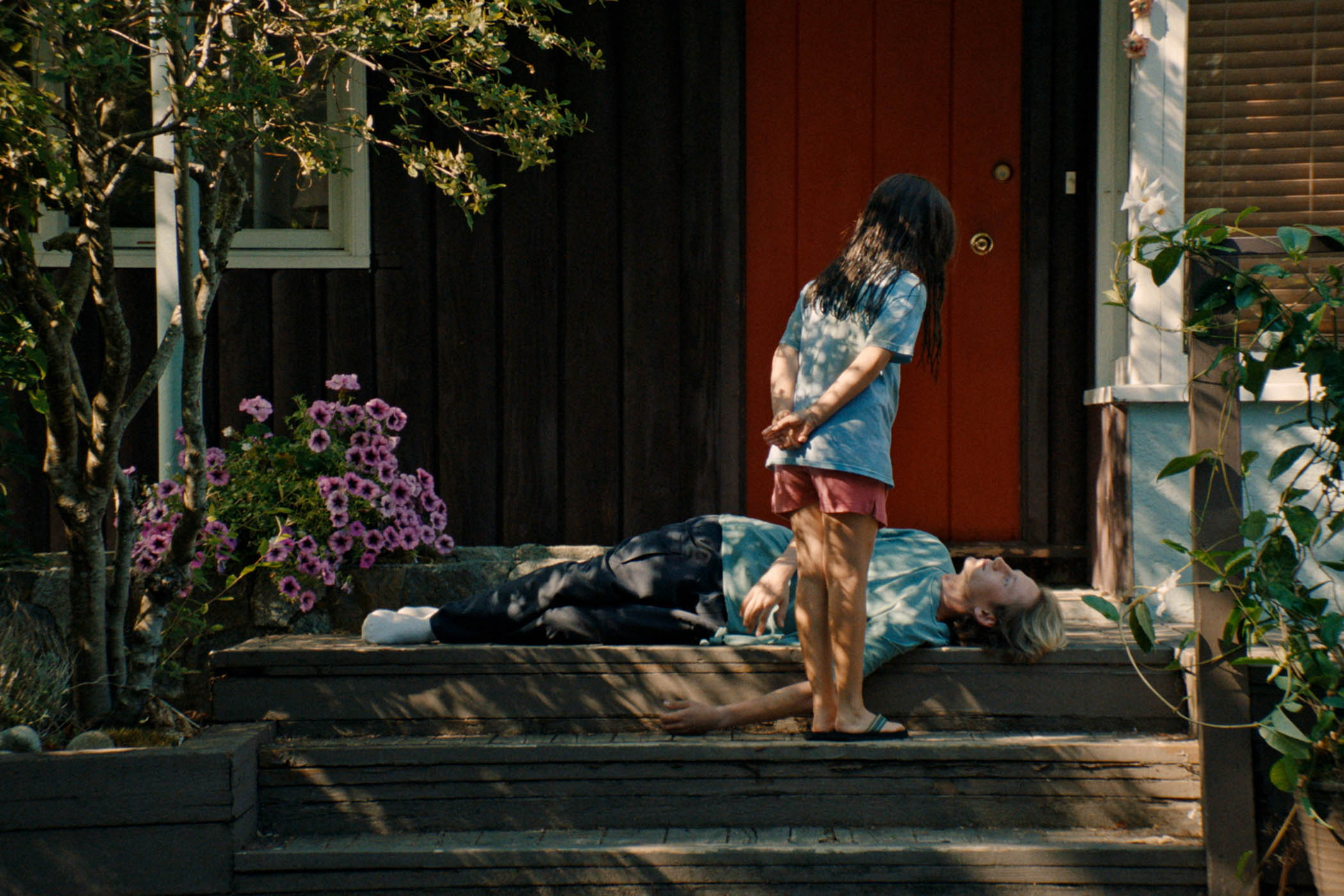
Blue Heron is inspired by some of the events unearthed in that film, but here Romvari adopts a creatively oblique approach. Roughly divided into three sections, it opens in the 1990s with eight-year-old Sasha (an entirely natural performance from newcomer Eylul Guven), her Hungarian immigrant parents and her three older brothers having recently relocated to Vancouver Island. It’s a fresh start. Their modest, cluttered home buzzes with creativity and art projects; Sasha’s father (Ádám Tompa) floods the house with eclectic music, from classical to avant-garde 1980s electronica. Seen largely through the eyes of the youngest child, it is a scrapbook of intimate family portraits.
But gradually, it becomes clear that all is not easy in the household. Sasha’s oldest brother Jeremy (Edik Beddoes) is a troubled soul, at odds with the rest of the family. His increasingly alarming behaviour is a source of constant stress: the film’s point of view sporadically shifts from Sasha to the fraught conversations between two terrified parents who are at their wits’ end, and blaming themselves.
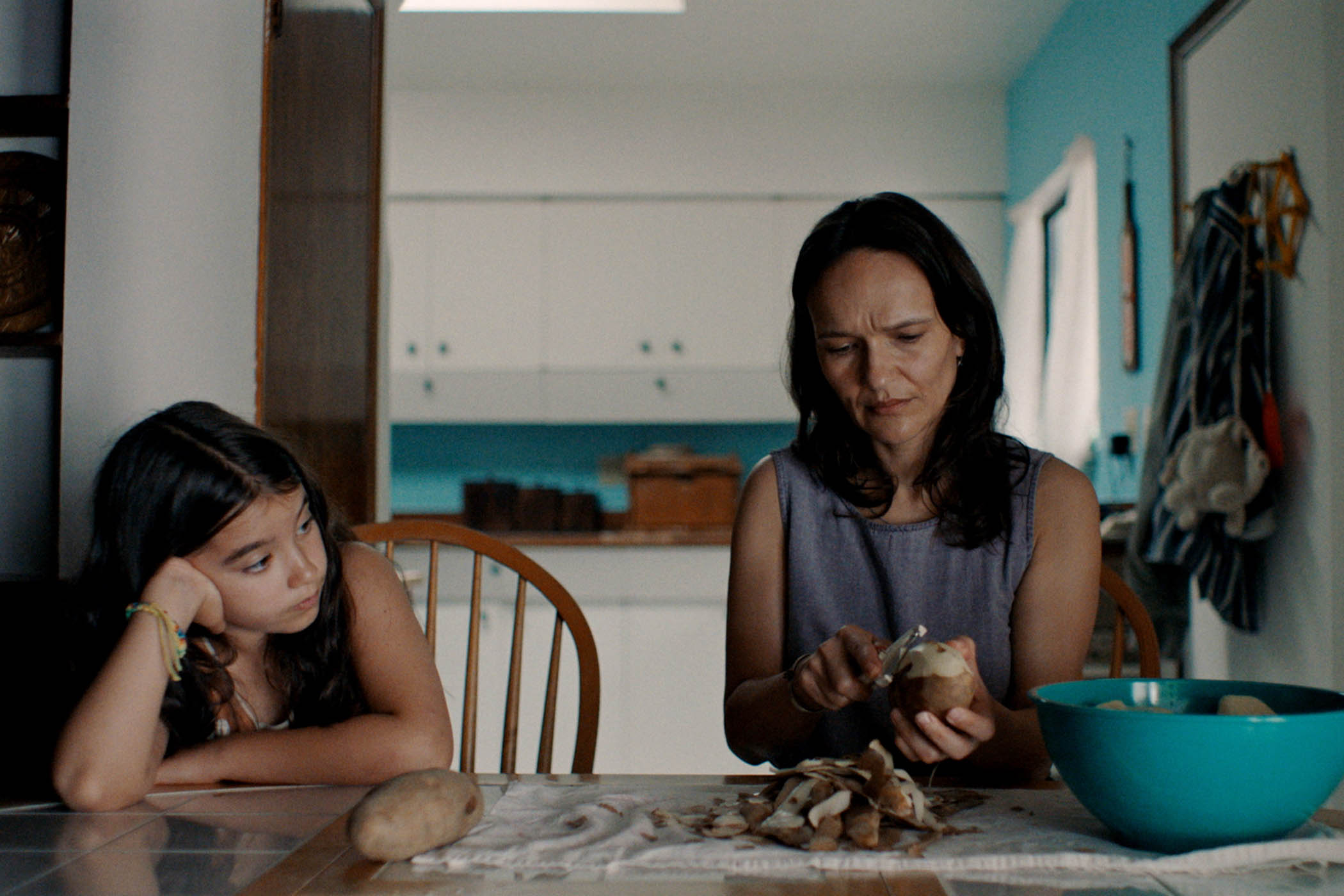
This first section is the most conventional, but is no less elegant and accomplished. Romvari shoots the family with a long, unobtrusive lens that lends a sense of authenticity to both the performances and to the texture of the domestic world depicted. The use of sound is equally complex, evoking the patchwork of snatched memories and noises that etch themselves into Sasha’s subconscious.
In the second section, we are jolted into the present. Adult Sasha (Amy Zimmer) is a film-maker trying to make sense of a period of her life that her eight-year-old self failed to grasp. Borrowing the language of documentary, Romvari has her alter ego consult with a panel of social workers to learn what diagnosis and support her brother might have received had he been born two decades later.
But it’s the third part that unleashes the emotional impact, as the adult Sasha meets her child self and her sad, struggling parents. There’s a key moment, during a pivotal conversation, that provides the picture’s devastating climax. But I was equally moved by the smaller details, such as how a shot of adult Sasha watching a child playing on the deck of a ferry speaks to a snippet of home video captured by her father decades before. In this exceptional film, we learn the past and present are in constant dialogue.
Photographs by Conic Films
Newsletters
Choose the newsletters you want to receive
View more
For information about how The Observer protects your data, read our Privacy Policy