
Illustration Andy Bunday
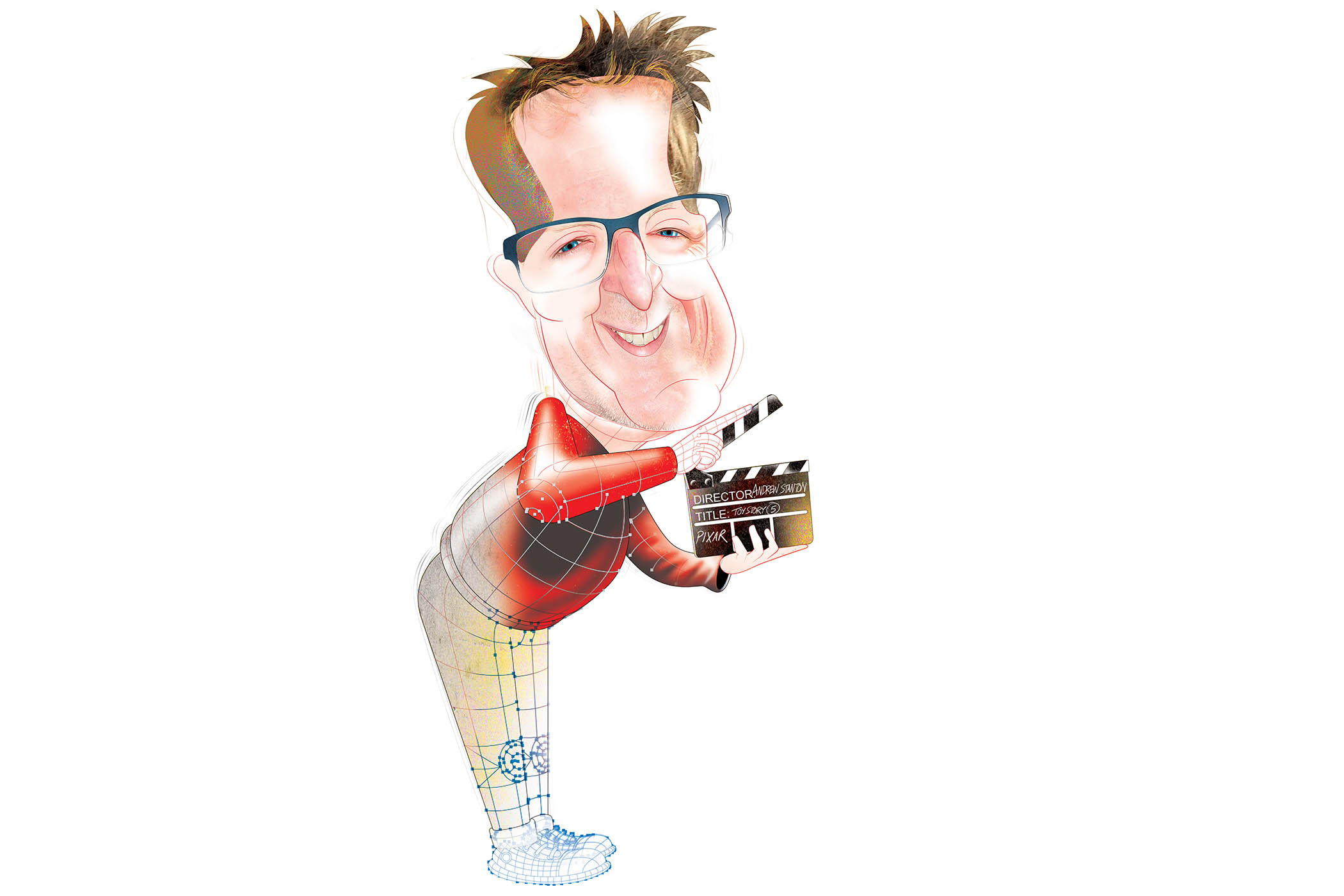
As Toy Story 5 is released, Pixar Animation Studio’s Andrew Stanton is hoping he has a friend in you.
Stanton, 60, directs the fifth instalment, which features a new Taylor Swift song (I Knew it, I Knew You). A mainstay of Pixar (since 2006, a subsidiary of Walt Disney Studios), Stanton has co-written all the Toy Story movies and had a hand – writing; directing; producing; voice-acting – in Pixar releases, including A Bug’s Life (1998), Monsters Inc (2001) and Up (2009).
This, however, is the first time Stanton has directed the 31-year-old flagship franchise: working alongside McKenna Harris, also Stanton’s co-writer. After an explosive opening, Toy Story 5 is predicted to make $150-175m in America and Canada alone, setting a new industry record.
The original Toy Story was the highest grossing film of 1995 and the first animation nominated for a Best Screenplay Oscar. It chronicled the anxiety of a group of traditional toys – led by pull-string cowboy, Woody (Tom Hanks) – feeling displaced in their owner Andy’s affections by state of the art toy, Buzz Lightyear (Tim Allen). With themes of family, belonging, obsolescence, and mortality, it morphed into a kind of “crying dads” phenomenon, reducing parents to blubbering wrecks.
The new film puts a fresh twist on familiar “trad versus new” Toy Story territory. The toys, mainly led by cowgirl Jessie (Joan Cusack) and Buzz face a screen-based threat: the arrival of a tablet called Lilypad (Greta Lee). The children abandon the toys to bathe their – blankly hypnotised – faces in the blue glare of screens.
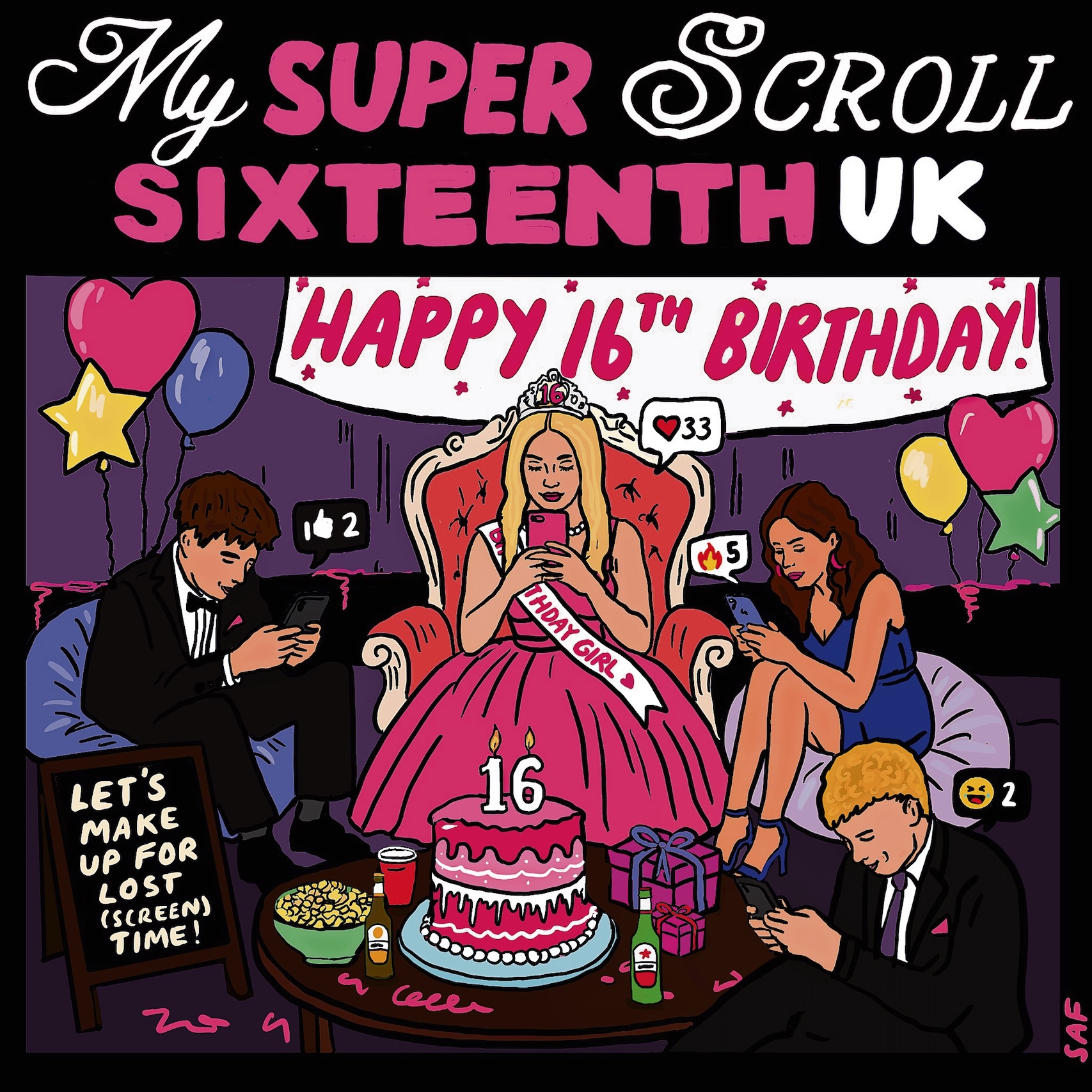
It arrives in Britain as Keir Starmer announces plans to ban social media for under-16s; following an earlier government proposal to ban smartphones in schools. Stanton’s film taps into global parental/societal anxiety not only about “toxic tech” but also AI sweeping through culture and Hollywood itself: when director Martin Scorsese recently announced his investment in an AI company, industry backlash was immediate.
Jonathan Ross, chat show host and TV presenter, formerly of BBC1’s Film… (1999-2010) is a longtime Toy Story superfan. He now fronts a film podcast, Reel Talk With Honey & Jonathan Ross, with his daughter. “I fell in love immediately. It’s a beautiful story, a fabulous, profound idea – that toys could be sentient and also have to struggle… It’s about ageing, usefulness, change, death.”
‘Stanton is gifted, an incredible writer… The scripts are so good, better than good: never saccharine or mawkish’
‘Stanton is gifted, an incredible writer… The scripts are so good, better than good: never saccharine or mawkish’
Stanton, says Ross, “is gifted, an incredible writer… The scripts are so good, better than good: never saccharine or mawkish.” Toy Story 5’s screen theme doesn’t surprise him: “You couldn’t make a film for today’s audience about today’s toys without acknowledging that.”
Molly Kingsley is co-founder of SafeScreens, a campaigning group that helped advise Conservative peer Lord Nash and other cross-party peers on negotiating the social media ban amendment to the Children’s Wellbeing And Schools Act. Kingsley views Toy Story 5’s tackling of screens as “brilliant and overdue… Technology is known to be addictive, designed to keep children hooked, away from the real world and their families, should have no place in children’s lives.”
Newsletters
Choose the newsletters you want to receive
View more
For information about how The Observer protects your data, read our Privacy Policy
Dr Malcolm Cook, associate professor of film studies at the University of Southampton has researched the Toy Story franchise. He notes the irony that the original film itself provoked anxious ethical debate as the first computer-animated feature, the biggest technological development since Disney’s first animated feature Snow White And The Seven Dwarfs in 1937.
Cook says: “The original Toy Story was about the tension between traditional toy Woody and new technology — which you could read as Pixar as the disrupter, breaking the Disney cell-animation of The Lion King.” But Cook observes that Stanton and Pixar are “no longer the new kids on the block, the disruptors leading the pack. They’re playing catchup.”
A practising Christian married to his high-school sweetheart, Julie, and father to children Ben and Audrey, Stanton was born in Rockport, Massachusetts. His father founded a company that worked on radars for the US Department of Defense; his mother was an actress.
Graduating from the California Institute Of Arts with a degree in Character Animation, one of Stanton’s early jobs was animating sperm for a sex-ed film. Aged 24, he joined Pixar as second animator to John Lasseter, who directed/co-wrote Toy Story. Stanton is now one of a group of Pixar leaders – including Lasseter, Pete Docter, and Asian-Canadian animator, Domee Shi – known as the Braintrust, reported to check over every new Pixar project. Cook says: “Senior figures will comment on scripts, storyboards… So while each director has particular angles, ultimately that Braintrust in the studio structure creates a studio tone and approach to all Pixar films.”
In terms of future projects, Stanton has been announced to write-direct Chairman Spaceman, based on the New Yorker magazine story by Thomas Pierce. It feels absurd to cast this multifaceted utility knife of a film-creative as creatively frustrated: Finding Nemo (2003) and Wall-E (2008), both of which he directed and co-wrote, won Oscars for Best Animated Feature.
John Carter bombed at the box office, deeply wounding Stanton who was diagnosed with ADHD during writing the script
John Carter bombed at the box office, deeply wounding Stanton who was diagnosed with ADHD during writing the script
Still, a sci-fi buff, influenced by Star Wars and Blade Runner, he’s made forays into live action. The highest-profile was John Carter (2012), which bombed at the box office, deeply wounding Stanton, who was diagnosed with ADHD during writing the script. He spoke later to the Los Angeles Times of feeling around him “this weird air… of schadenfreude”.
Purely in Toy Story terms, Stanton’s creative journey scans from crying dads to toxic tech, though, for all the timely AI/online themes swirling through the latest instalment, reflecting both inhouse Hollywood anxiety and that of wider society, Ross feels the film remains characteristically nostalgic, innocent and subtle. “I wouldn’t recommend that the cabinet go to look at it to solve the social media problem… I would recommend they go to see it, so they can cheer the fuck up.”
Cook views Stanton as “returning to homebase” where his singular talents are appreciated… to infinity and beyond? “Toy Story 5 would be expected to make a billion dollars at the box office… They don’t want to take risks with that.”