

The word “brave” is rather overused in film reviews. Everything from an actor’s weight gain or unflattering wig choice to a director’s unconventional editing decision might be lauded as an act of unparalleled daring. I’m as guilty as the next critic of this kind of hyperbole once in a while. But the fearless film-makers of Iran are truly deserving of the label.
Among them, the dissident artist Jafar Panahi must rank as one of the most courageous. His furious latest film It Was Just an Accident, which won the Palme d’Or at Cannes this year, is a direct attack on the regime: an abrasive, absurdist, at times darkly comic thriller about a former prisoner who abducts a man who may or may not be the guard who tortured him. It speaks forcefully of the impossibility of living alongside those who wish you dead, or at least irreparably broken, for your beliefs.
Panahi’s films are acclaimed internationally: The Circle (2000) won the Venice Golden Lion and Taxi Tehran (2015) the Berlin Golden Bear. But he has collided with the Iranian regime on numerous occasions over the course of his career. He was banned from film-making and travelling, and sentenced to six years in prison in 2010 for “propaganda against the system”.
He continued to make films covertly during the ban and served about 10 months in total behind bars: the first three while awaiting trial in 2010, then seven more starting in July 2022. Panahi’s second stint in prison was a consequence of his protest at the arrest of fellow directors, including Mohammad Rasoulof (who was forced to leave Iran after making his most recent film, The Seed of the Sacred Fig), a further indication of the high stakes for film-makers who incur the wrath of the government. Panahi was released from prison in 2023 after a hunger strike, having had his sentence overturned by Iran’s supreme court. (Reports this week suggested his troubles are not over: he has been sentenced, in absentia, to another year in prison.)
It’s a knotty moral dilemma: to exact revenge or demand an apology; to return to a dark chapter of the past or move forwards to the future
It’s a knotty moral dilemma: to exact revenge or demand an apology; to return to a dark chapter of the past or move forwards to the future
After the necessarily personal, introspective and under-the-radar work he made while banned (No Bears, This Is Not a Film), his latest, shot in secret in Iran, widens his scope once more, taking in a heightened turbulence in contemporary Iran. The characters in the film are fictional, but their stories are based on real-life conversations Panahi had with fellow prisoners during his incarceration. As he tells it, the scars in Iran run deep and wide, carving through all sections of society.
The film opens, like so many of Panahi’s pictures, in a car. A man (Ebrahim Azizi) and his heavily pregnant wife, driving home on the outskirts of Tehran at night, smile tolerantly as their young daughter pinballs around the car interior. It’s a scene that evokes the easy, affectionate family dynamic of Hit the Road by Panahi’s son, Panah Panahi, also a director. But this banal domesticity may or may not hide a darker side.
A chance accident means that the family crosses paths with Vahid (Vahid Mobasseri), who stiffens when he hears the man’s voice and – crucially – the squeak of his prosthetic leg: sound design plays a chillingly effective role in the picture. Vahid acts without thinking, following the family to their home. The next day, he snatches the man from a busy street. He’s almost certain that he has finally found the sadistic prison guard, nicknamed Peg Leg, who ruined countless lives.
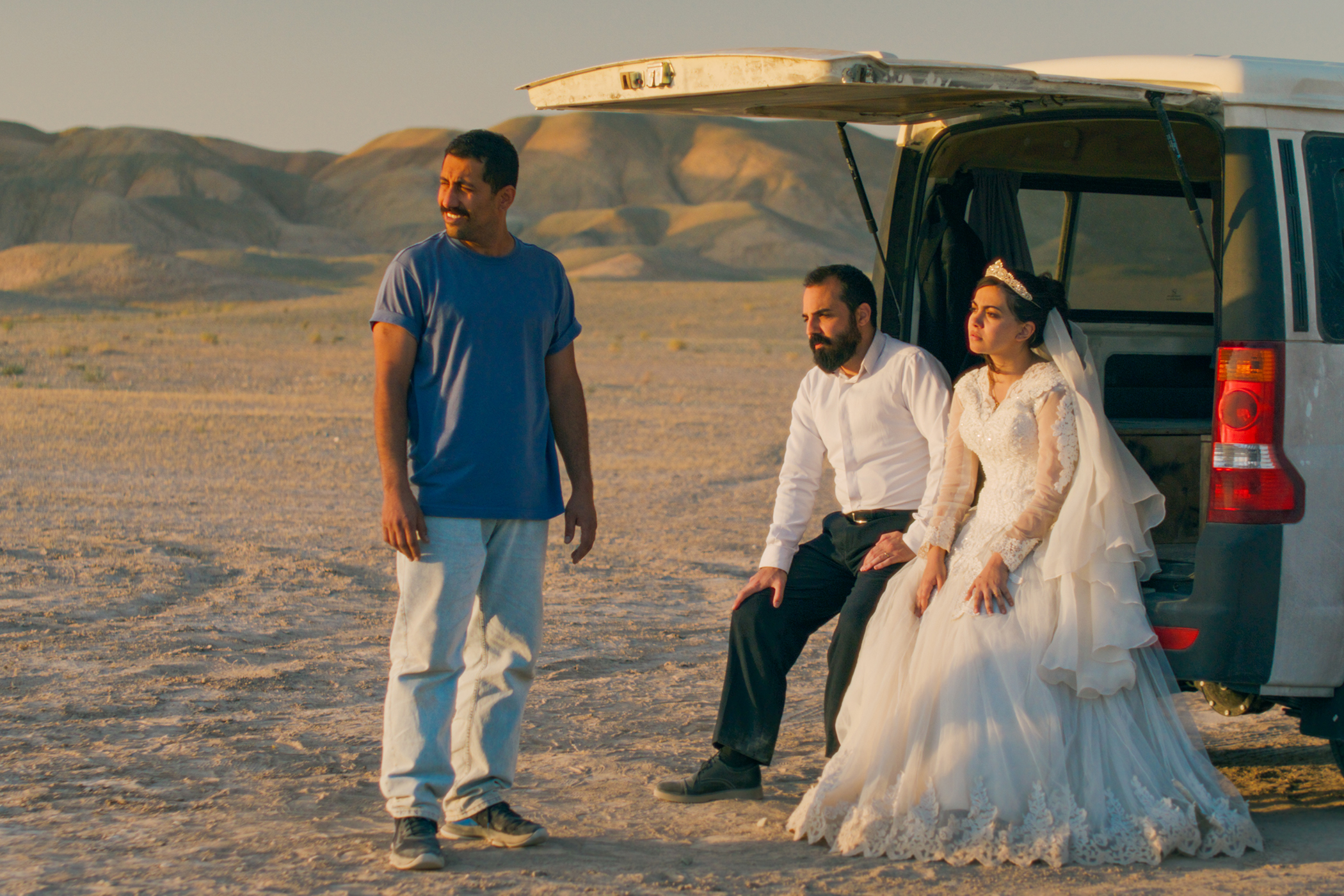
But there’s a lingering doubt in his mind that stops him from ending the man’s life, then and there, in a shallow grave in the desert. He calls on fellow victims of Peg Leg’s reign of terror: wedding photographer Shiva (Mariam Afshari), Goli (Hadis Pakbaten), a bride-to-be in a frothy white dress, and punchy, rage-filled Hamid (Mohamad Ali Elyasmehr). This mismatched group, together with Goli’s hapless groom, are crammed together into the back of a borrowed van, along with the unconscious body of the mystery man and a freight load of unresolved trauma. It’s a knotty moral dilemma: to exact revenge or demand an apology; to return to a dark chapter of the past or to move forward to the future.
It is, says Shiva dryly at one point, a bit like Waiting for Godot. She has a point. There is a theatricality to this film’s approach, with its declamatory delivery and dense dialogue. There are times when it feels as though the characters are talking in endless circles. But a screenplay that might feel overly wordy and unwieldy in other hands makes absolute sense here.
This, after all, is a picture that amplifies voices previously suppressed; a film that invites us to listen to the stories that, as far as the regime was concerned, were never meant to be told.
Newsletters
Choose the newsletters you want to receive
View more
For information about how The Observer protects your data, read our Privacy Policy
Photograph by Les Films Pelleas