

Cinema has a morbid fascination with fandom. From the deranged extremes of Misery or The King of Comedy to the cautionary tale of aspiring Insta-intimacy Ingrid Goes West, it’s rarely painted in a positive light. This is perhaps not surprising: fandom in the social media age has grown evermore unpleasantly intrusive.
But it’s also a crucial component of the movie star industrial complex. Popularity is one of the measures used to quantify the value that an actor brings to a project. The question for every aspiring star, then – be they an actor, musician or influencer – – is how much of themselves are they prepared to give to a fanbase that would happily devour everything? And, conversely, what is a diehard fan prepared to do to claw their way into a celebrity’s inner circle?
Lurker, the supremely confident directing debut from The Bear and Beef screenwriter Alex Russell, addresses both questions with a shrewd and unflinching eye. The film is so acerbic that watching it at times feels like being attached to a drip-feed of pure venom. And while it may not sound like it, that’s high praise indeed.
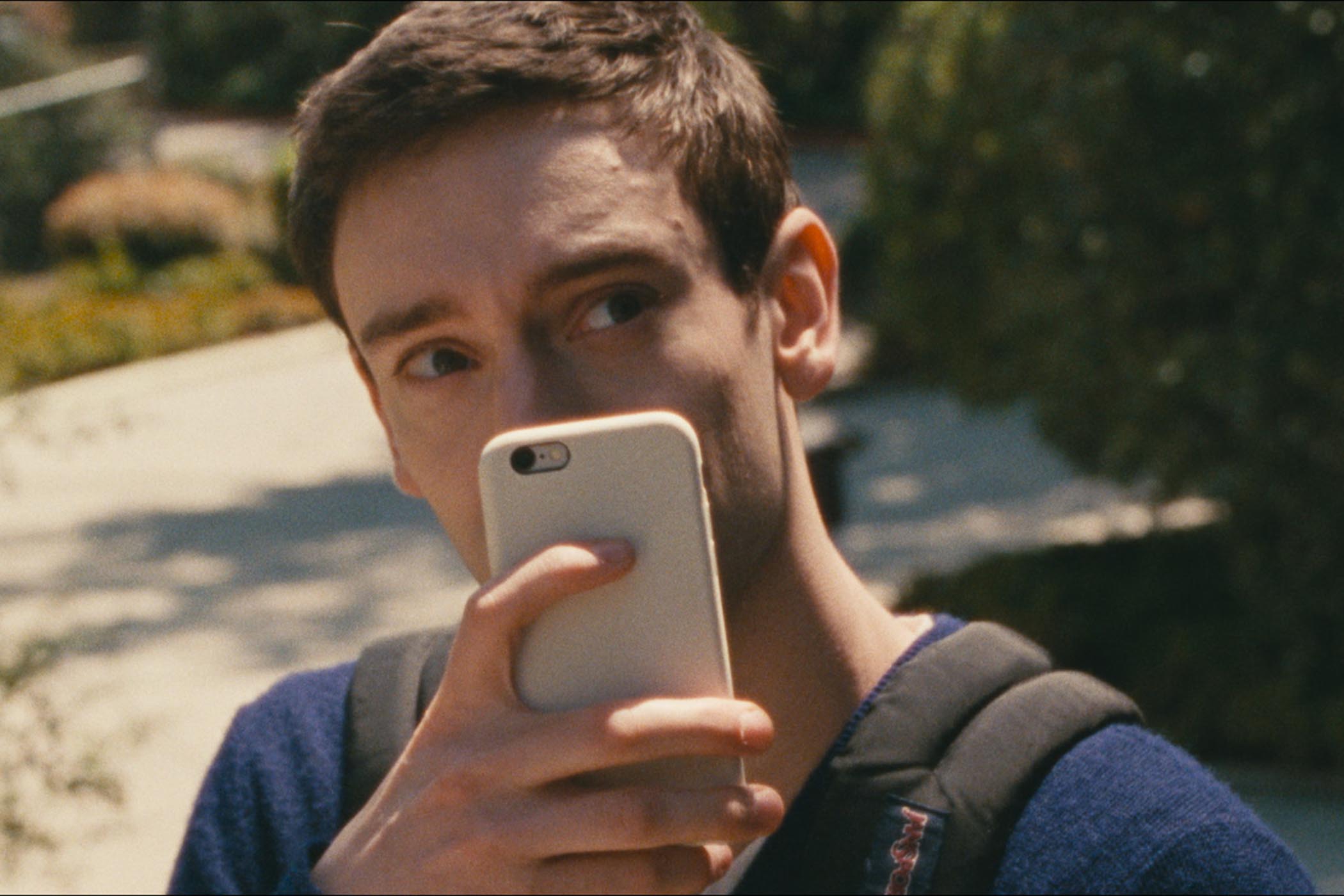
Drawing on his pre-screenwriting career as a music journalist (he was a contributor to publications such as Vice and Complex), Russell has created a film that is stingingly of the moment in its portrayal of the parasocial obsession of a fan. Matthew (Théodore Pellerin) scours the digital footprint of his idol, and who has memorised every throwaway post and appropriated it as intimacy.
Yet there’s also something universal in it. Matthew inveigles his way into the fringes of rising pop star Oliver’s (Archie Madekwe) entourage, but the toxic dynamics, low-level bullying and simmering paranoid uncertainty that he encounters there are not specific to any one industry or any one ego. It could play out wherever a group of needy, competitive hangers-on are caught in the orbit of a capricious narcissist. This is not – and I cannot stress this enough – the place to look for sympathetic characters.
It is, however, a film that is driven by two fantastic performances. Pellerin first caught my eye earlier this year with his bruised vulnerability in Sophie Dupuis’ Solo, another film that deals with poisonous, manipulative relationships – in that case, here on the Montreal drag queen circuit.
This movie is not – and I cannot stress this enough – the place to look for sympathetic characters
This movie is not – and I cannot stress this enough – the place to look for sympathetic characters
In Lurker, Pellerin is a painfully gauche but doggedly thick-skinned presence, grinning his goofy Pee-wee Herman smile as Oliver’s homies humiliate him for kicks. Their hazing never ends, reminding Matthew, a fashion store assistant, that he doesn’t really belong. But he clings on – at first like a barnacle that has attached itself, then later burrowed deep into Oliver’s world like some kind of parasitic worm.
He finds a role in the singer’s circle, graduating from pot washer to videographer, shooting scrappy footage on a primitive DV camera for a documentary. The footage is threaded through the film, treasured proof of Matthew’s special connection with his idol.
British actor Madekwe is equally impressive. Having partially redeemed the largely obnoxious Saltburn with an eye-catching performance as a leechlike freeloader, he shines as the mercurial, charismatic Oliver. He is not unlike the spoiled playboy Dickie Greenleaf in The Talented Mr Ripley: finding yourself in his favour is akin to being bathed in the warm California sun. But fall from grace, and your world becomes positively Arctic.
There are a few choices that don’t quite work here, and the main one is Oliver’s music, which is so bland and featureless that it is hard to imagine it could incite such devotion. A pivotal song, which muses on “the difference between love and obsession”, feels clumsy and on the nose.
Newsletters
Choose the newsletters you want to receive
View more
For information about how The Observer protects your data, read our Privacy Policy
What’s not in question, however, is Russell’s skill as a writer. His pin-sharp instincts are demonstrated by the film’s judicious omissions as much as the scenes he chooses to include. Matthew’s fall is sudden and entirely deserved. But the gravity of what he does to regain his place at Oliver’s side is hinted at rather than overtly spelled out.
We grasp the enormity of Matthew’s act from the dramatic vibe shift in Oliver’s group; averted eyes, painful silences. Oliver’s expression becomes stricken as power leaks from his grasp: the craven fanboy has morphed into a monster in their midst.
Photograph by Mubi