
It’s hard to say what’s more disappointing about Antoine Fuqua’s aggressively anodyne Michael Jackson movie: the details that are left out or the hackneyed directing choices that made it in. The film, which covers a period spanning from 1966 in Gary, Indiana to his Wembley stadium concerts in 1988, adheres rigidly to the music biopic trajectory of early hardship, explosive success, a struggle with a personal demon (the Jackson patriarch Joe, played by Colman Domingo, takes the panto villain role), and a phoenix-like rise as a stronger, wiser person. Add in dazzling live performances, closeup shots of hardened music professionals moved to awestruck tears, and all the biopic boxes are duly ticked.
The film was made with considerable input from the Jackson estate, which clearly has a vested interest in presenting a carefully curated image of its main asset. There are aspects of Jackson’s story that are too inconvenient to include; others that the production is reportedly legally prevented from mentioning. But hands-on brand management can easily start to feel like a large-scale reputation laundering operation. And Michael does.
This version of the Michael Jackson story is worlds away from the one told in Dan Reed’s 2019 HBO documentary Leaving Neverland, which detailed allegations of grooming and child sex abuse by Jackson. Instead, it is a film for lovers of the music who prefer not to have their fandom sullied: Jackson is portrayed as so ethereal, so glistening and sanitised, that he’s closer to a figure in fairytale stories (which feature as a narrative device) than to a flawed, three-dimensional character.
At times, the CGI rendering of Bubbles the chimp has more depth and range
At times, the CGI rendering of Bubbles the chimp has more depth and range
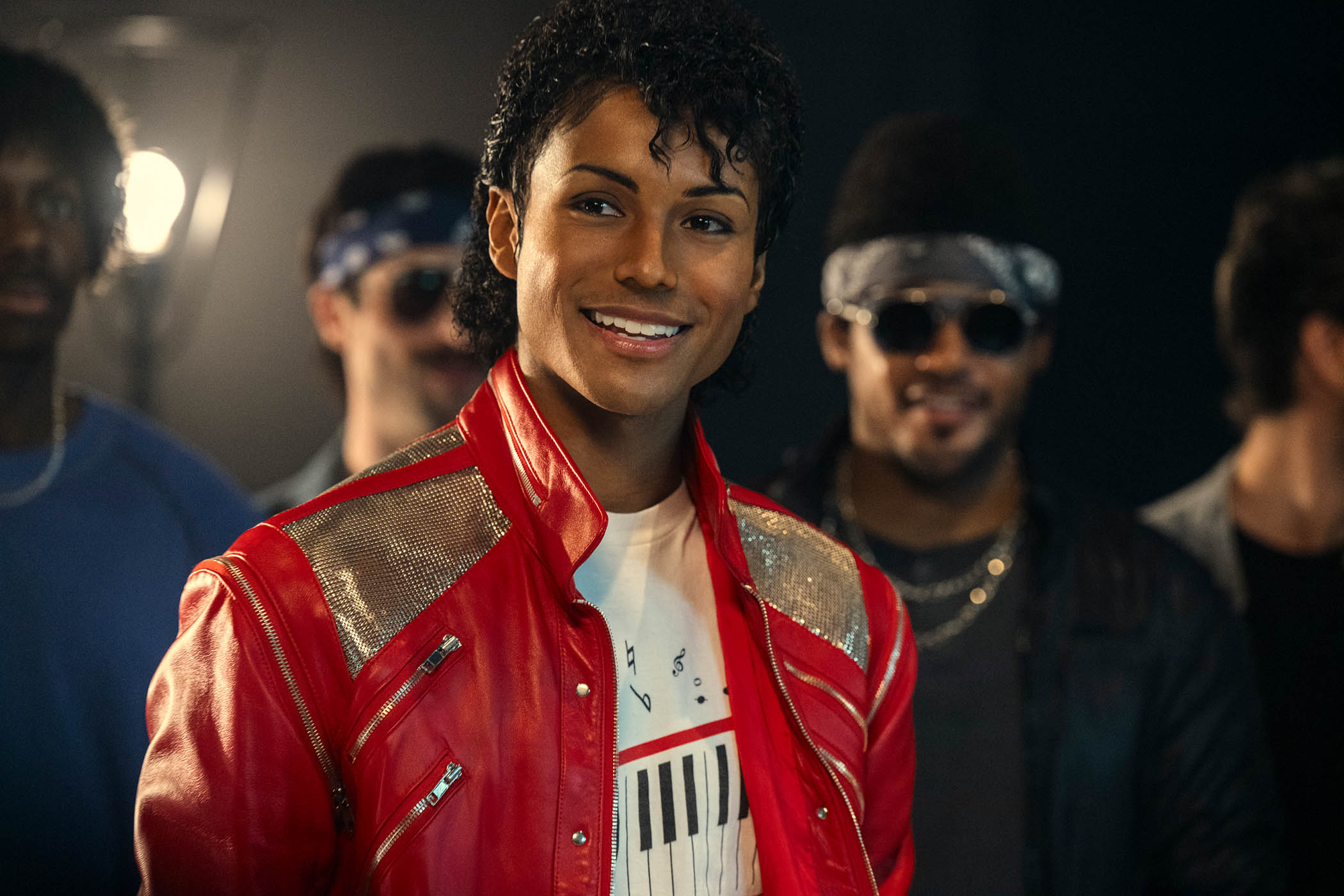
The King of Pop is played as a young boy by Juliano Valdi (who was nine when he was cast) and as an adult by Jackson’s nephew Jaafar Jackson (son of fellow Jackson Five member Jermaine). It is Jaafar’s first film role – it’s hard to think of a more challenging gig – and to his credit his impersonation is uncannily accurate. He captures the wispy, feathery speaking voice; the sparkle-eyed smile; the near-weightless precision of his dancing. Apparently he even sings, although his voice is mixed with Michael’s recordings, so it’s hard to tell how much is Jaafar’s recreation.
But a film like this requires more than an impersonation, and Jaafar struggles to pull off much beyond mannerisms and physical flourishes. There’s a look of glassy panic on his face at moments when he is asked to convey more than one emotion at the same time. At times, the CGI rendering of Bubbles, Jackson’s pet chimpanzee, has more depth and range.
In Jaafar’s defence, the bullet-point script by John Logan (or at least the version of it that made it to the screen) doesn’t offer many opportunities for textured line readings. Storytelling devices and directorial choices are of the honkingly obvious variety: it starts with the 1982 hit Wanna Be Startin’ Somethin’. In exposition sequences, Jackson’s songwriting genius is illustrated through the medium of Post-it notes, pinned to a cork board.
What’s more, the film takes a reductive cause-and-effect approach to Jackson’s psychology. His father’s jibes – he calls the young Michael “Big Nose” – is the seed that grew into the singer’s unhealthy relationship with plastic surgery; the childhood lost to Joe’s despotic musical boot camp led to Jackson’s fondness for plush toys, his identification with Peter Pan and the collection of exotic animals he describes as friends.
But for all its laziness and evasiveness, the film does capture what, for many, matters most about Michael Jackson: the music, his electrifying stage presence, his unusually raw and open-hearted embrace of his fans. The film portrays all of this, and the very unique combination of gifts that made Jackson such an enduringly beloved performer. For fans, that will be more than enough.
Photograph by Lionsgate
Newsletters
Choose the newsletters you want to receive
View more
For information about how The Observer protects your data, read our Privacy Policy