

Peril has always been an integral part of Pixar’s enduringly excellent Toy Story series. From Sid, the psycho-kid toy-mutilator in the first film, to the venal collector in the second, and that chokingly tense tumble towards a rubbish incinerator in the third, the toys have faced and survived numerous threats. The sherbert-coloured palette and peppy energy of the pictures have always belied their darker themes: lift the lid of the toy box and you’ll find stories that deal with relationship breakdowns, jealousy, mortality, ageing and imposter syndrome. Woody the cowboy doll and his motley band of playthings have confronted obsolescence, replacement and numerous existential crises. But throughout all this, until now, the kids were all right. In Toy Story 5, that’s no longer the case. Thanks to ubiquitous digital devices, the children are sad and alienated. They struggle to connect without a screen to mediate. They have forgotten how to play. The existential threat is not just facing the toys; it looms over childhood itself.
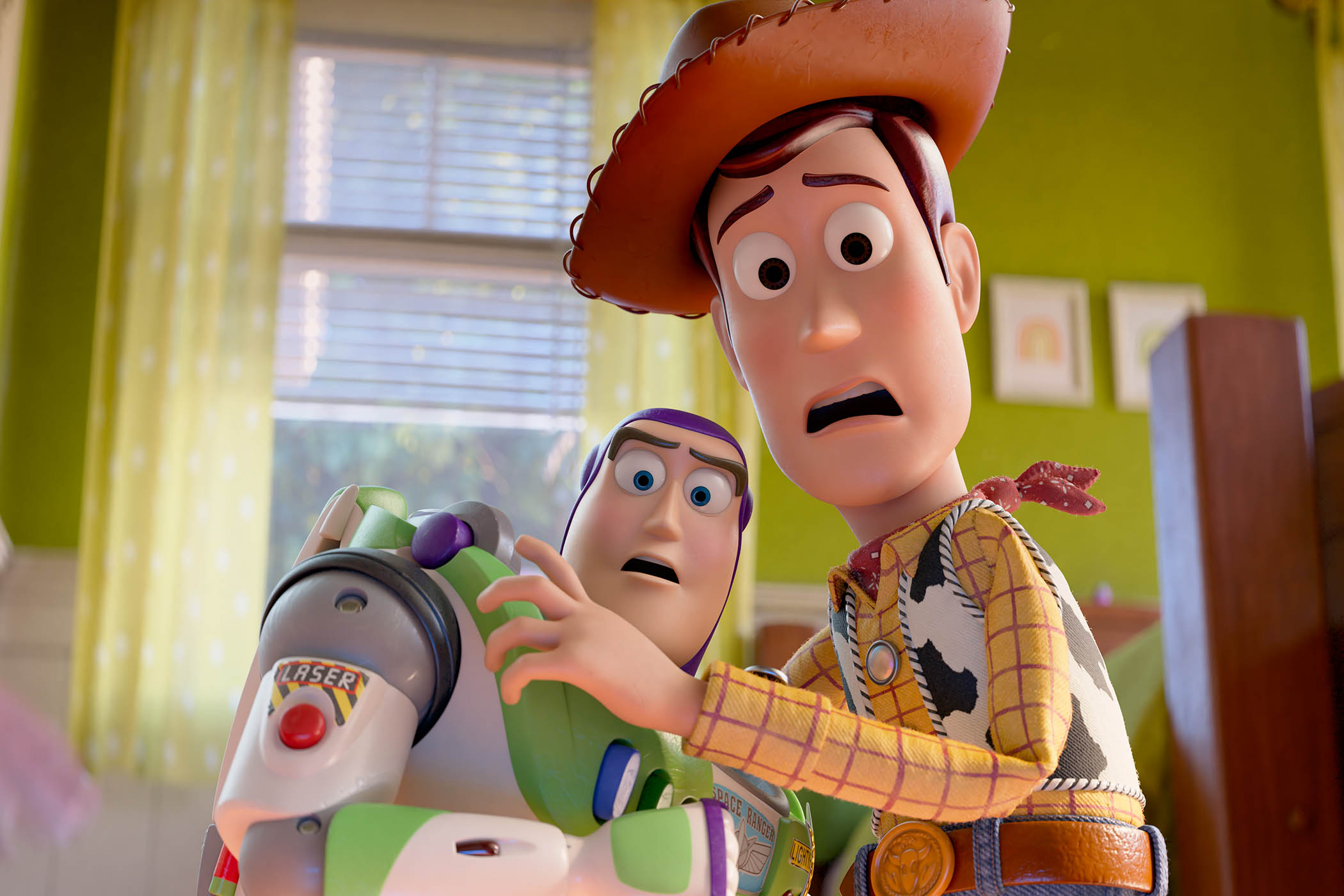
Woody now has a light-reflecting bald spot and has taken to hiding his paunch under a makeshift poncho
Woody now has a light-reflecting bald spot and has taken to hiding his paunch under a makeshift poncho
It’s 31 years since the first Toy Story, which, with John Lasseter directing, was a landmark feature, both for its use of digital animation and its satisfyingly layered storytelling. And, in a way, this latest movie reconnects with the story themes of the original, wherein Woody (voiced, then and now, by Tom Hanks) was superseded in his child’s affections by the then showily hi-tech plastic astronaut Buzz Lightyear (Tim Allen). Woody, a collectible piece of early merch from a short-lived 1950s television series, was already painfully outdated as a toy even in the first outing. Now he’s positively pensionable: he has a light-reflecting bald spot and has taken to hiding his paunch under a makeshift poncho. But he and the other toys have more to worry about than middle-aged spread; what they are facing is an extinction event, triggered by a devious, frog-shaped tablet named Lilypad (voiced by Greta Lee).
Nostalgia has always been a foundational aspect of this series, with its romantic idea of a simpler time when all a child needed to provide days of entertainment was a stick, a hoop and an imagination. Yet there’s a note of real alarm in this new film, co-written and directed by Pixar veteran Andrew Stanton (Finding Nemo, Wall-E). We are, it suggests, losing our children to tech. It’s certainly the most boomer-coded of the franchise so far, and you wonder how this will play with younger audiences. A movie that doomily informs them that they are being brainwashed by their screens may be as enthusiastically received as a blanket ban on social media for children. Still, the picture asks some pertinent questions about the fundamental difference between gaming and playing, the scope for casual bullying and alienation afforded by technology that is meant to connect us, and the shifting landscapes of friendship in a digital age.
However, as with the entire series, the serious stuff is carried by a generous helping of humour. This probably won’t be anyone’s favourite Toy Story instalment, but it’s a polished, mid-tier Pixar feature that is unlikely to disappoint fans. Much of the amusement comes from new characters, including a piece of near-obsolete tech named Smarty Pants (Conan O’Brien), an electronic potty-training device that gives the screenplay free rein to indulge in plenty of toilet humour. Plus, in a plotline that feels a little too similar to the start of DreamWorks animation The Wild Robot, a container of upgraded Buzz Lightyears is shipwrecked on a desert island, offering opportunities for physical comedy and a convenient, late-story narrative device. Meanwhile, Jessie (Joan Cusack) takes centre stage as the main toy protagonist, bringing her fiery cowgirl sense of justice to the smug green new gadget in town.
The setting of the tale – largely in the suburban homes of Bonnie (Scarlett Spears), the toys’ owner, and other children’s bedrooms – limits the scope for visual impact. This picture is not as achingly lovely as Toy Story 4, which used its neon-hued fairground backdrop to create a play of light every bit as sophisticated as in one of Japanese film-maker Makoto Shinkai’s animes. Here, the outdoor adventures of the Buzz Lightyears provide a visual contrast, and the technological leaps in computer animation bring an almost tactile, well-worn quality to toys that, over the years, have been loved almost to bits.
Photograph courtesy of Disney/Pixar
Newsletters
Choose the newsletters you want to receive
View more
For information about how The Observer protects your data, read our Privacy Policy