
When I ditched my phone and all its nagging algorithms in favour of a simple Nokia that wouldn’t demand my attention, I didn’t anticipate how hard it would be to find my way around London. Since moving to the big city from a small town, I had relied entirely on Google Maps to guide me. Suddenly, I was lost.
The bike ride to work was fine. I remembered that. But at the end of my first smartphone-less day, I was due to meet a friend at the pub. And while I had been to this particular pub a few times before, I had no idea how to find it without my phone.
Before leaving the office, I opened Google Maps on my work laptop and noted down every left and right and all the street names. I strapped my notebook to my handlebars and set off. It took me ages; I was constantly stopping and missing turns. I arrived stressed, late and apologetic.
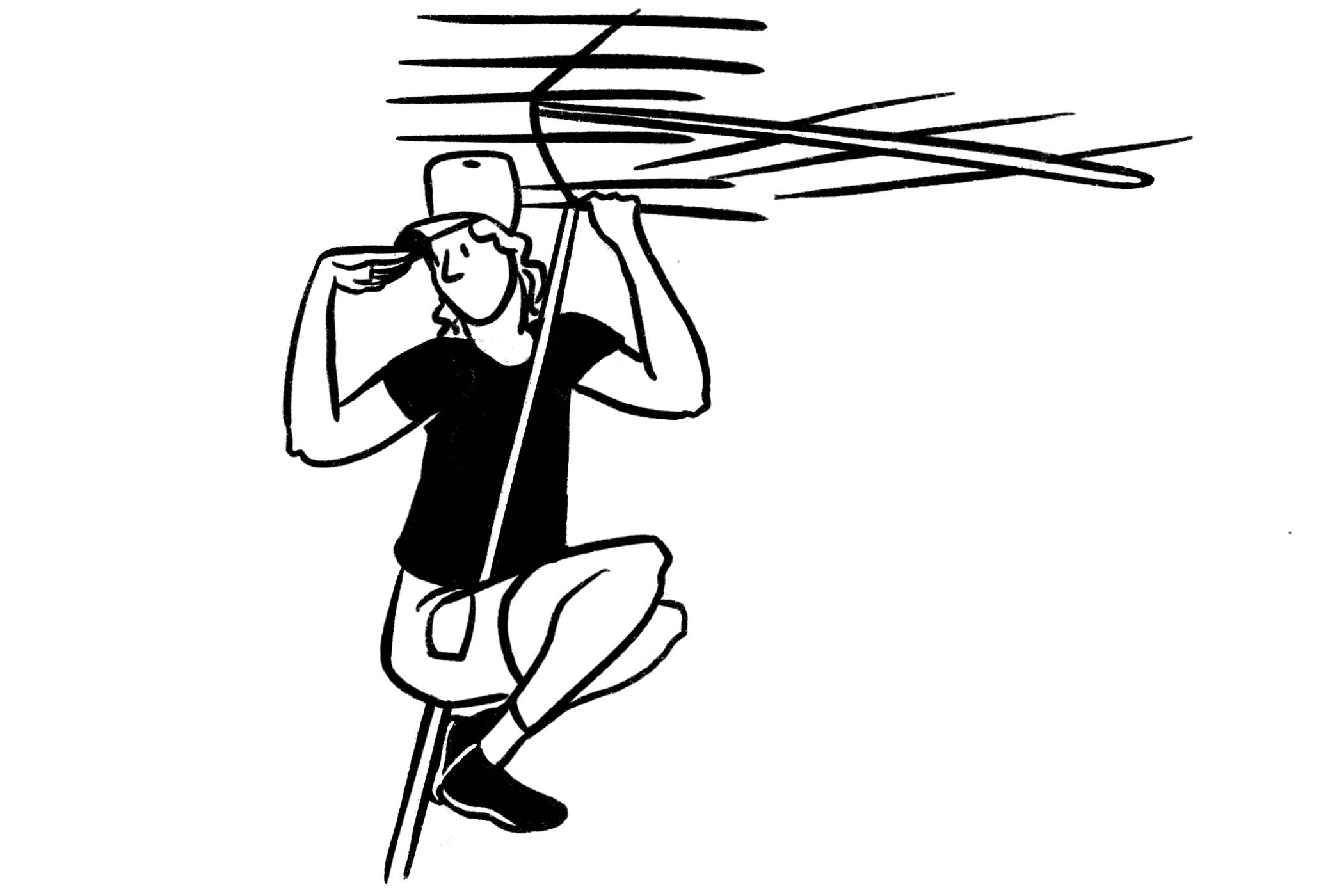
At work the next day, I emailed Tristan Gooley, author, natural navigator, and the only person to have both flown solo and sailed single-handedly across the Atlantic. I asked for some advice – specifically, how to get around London without a phone. He agreed to help and told me many useful things. Most useful was that in central London you can orient yourself with the TV aerials on top of houses. They all point south.
An epiphany! All these TV aerials perched on the top of houses that had wholly escaped my notice suddenly became essential reference points. If I became lost in south London, I could just cycle north till I hit the Thames and find my way from there – or vice versa. A map developed in my mind; I got more confident; I got lost less often.
But what were the aerials for? Why did they all point in the same direction? They are known as Yagi-Uda antennas, I discovered. They were invented in 1926 by a man called Shintaro Uda and his wizardy-looking colleague Hidetsugu Yagi at Tohoku Imperial University in Japan. In the old days, television stations would convert video and audio data into electromagnetic waves. Then, Eiffel Tower-like television-transmitting-stations would shoot them in all directions. Younger readers might imagine Sauron’s eye, but way more chill.
And every little house would set these Yagi-Uda antennas up on top of its roof to receive the signals. When the metal elements of the antennas received the invisible signal, they probably enjoyed a tingling sensation as all the dancing electrical currents ran down their spines into a coaxial cable into the back of televisions and blammo – it’s Tuesday night and the whole family is eating fish fingers, watching EastEnders!
But why do they all point to the south? Well, in London, the main television transmitter is in Crystal Palace, on top of a big hill – the highest structure above sea level in the capital. In the age of wifi and cable, the Yagi-Uda antennas are mostly just ornate relics of the past. Many have been damaged or discarded, some even point the wrong way. But, I’ve happily found – at many closing times – more enough of them are still standing strong, directing analogue travellers safely home.
Related articles:
Illustration Oscar Ingham
Newsletters
Choose the newsletters you want to receive
View more
For information about how The Observer protects your data, read our Privacy Policy