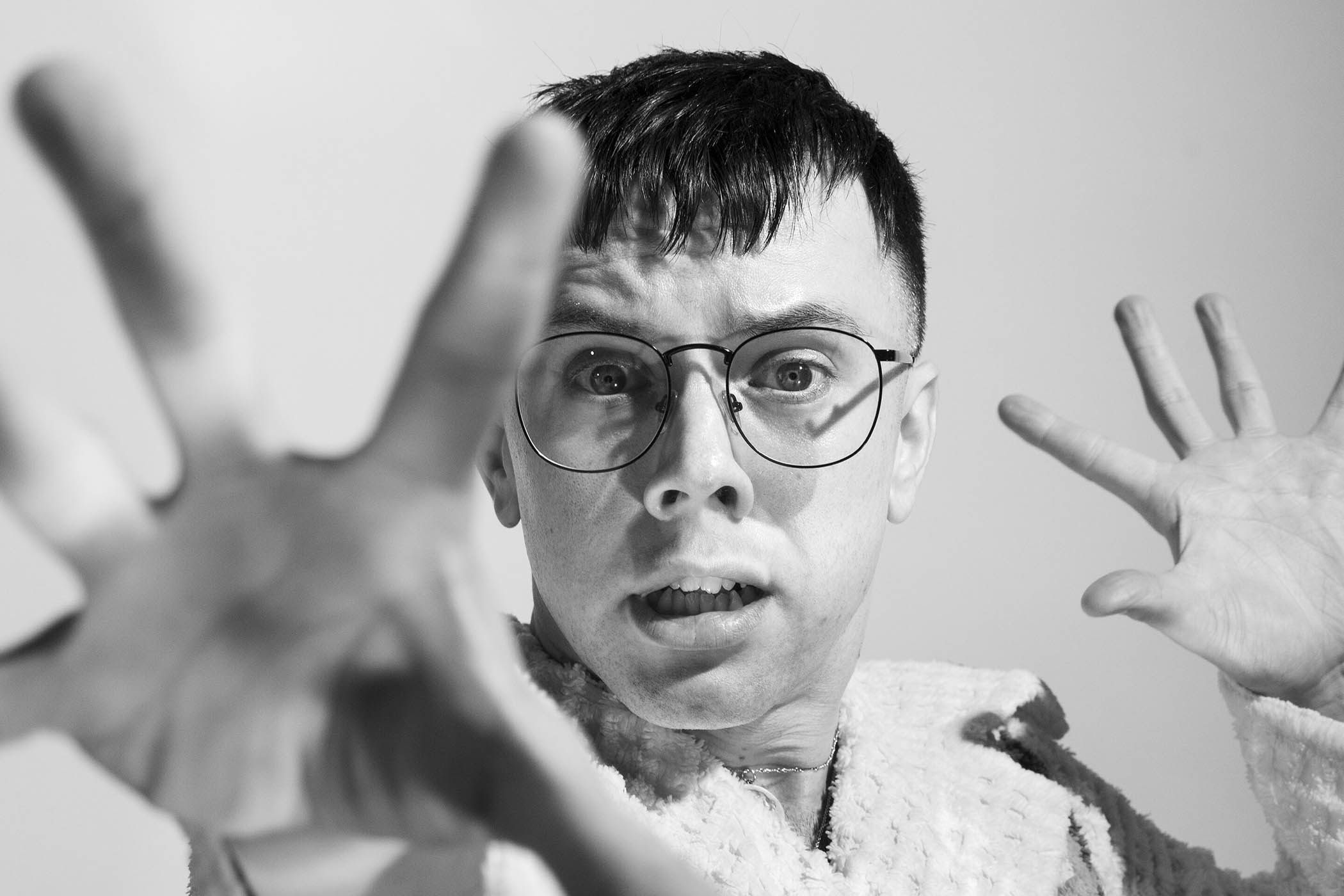


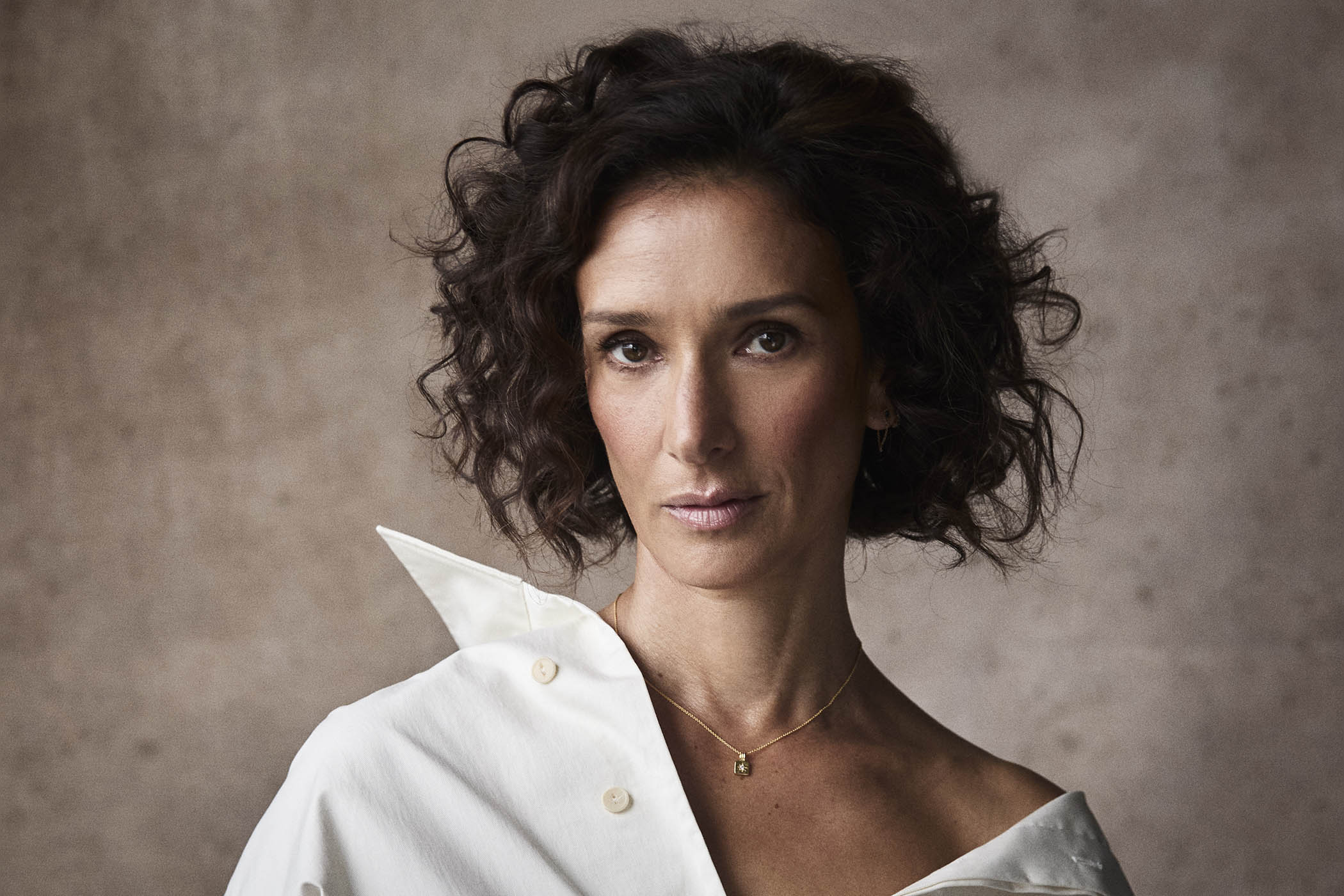
If you have to ask what a “demon twink” is, a character type the comedian Cole Escola is frequently employed to play, then, “I’m sorry,” they say with pointed pity, “but it’s too late for you to understand.” Last year, Escola became the first non-binary artist to receive a Tony for leading actor in a play. The play, Oh, Mary!, which Escola wrote as well as starred in, is a feverish comedy that reimagines Abraham Lincoln’s wife Mary as a deranged alcoholic diva who would be a cabaret star if only her husband would get out of her goddamn way. The idea was formed in a note Escola wrote in 2009. It read: “What if Abe’s assassination wasn’t such a bad thing for Mary?”
To write the play, Escola did absolutely no research into Mary’s life, nor the historical context of the story, nor whether Lincoln was actually closeted, or fellated beneath his desk by an aide, as the play suggests. And yet the result became one of Broadway’s biggest hits of the decade and, also, an absolute hoot. In the play, Mary is ignorant of the ongoing Civil War. “How would it look for the first lady of the United States to be flitting around a stage right now in the ruins of war!” Lincoln chides. “How would it look?” Mary shoots back, her voice rising in grim hysteria: “Sensational!”
Escola and I are meeting in a London hotel where the vast window frames relentless rain, but Escola is impish and sunny, allowing themself only brief moments of terror. Oh, Mary! has opened in the UK – reviews have been fabulous. At one preview “There were a couple of people who walked out,” Escola says, “which made me proud.”
Escola was born in 1986 in rural Oregon. They lived in a trailer until their father, an alcoholic Vietnam veteran with PTSD, forced the family out at gunpoint, at which point they moved in with Escola’s beloved grandmother and never went back. “As a kid you’re constantly looking for signals that you are doing something wrong. And so often, anytime I did something slightly feminine, I would get the feedback it was bad. But my grandmother just treated me as if the things I liked and the person I was were normal.” It was with their grandmother that Escola learned to read, and also to create characters, often inspired by her elderly friends. “The first character I named was this person called Donna, who was basically a version of a woman I went to church with,” Escola says. “She was kooky and so I made a character based on her. But I made it so she just happened to also be Satan.”
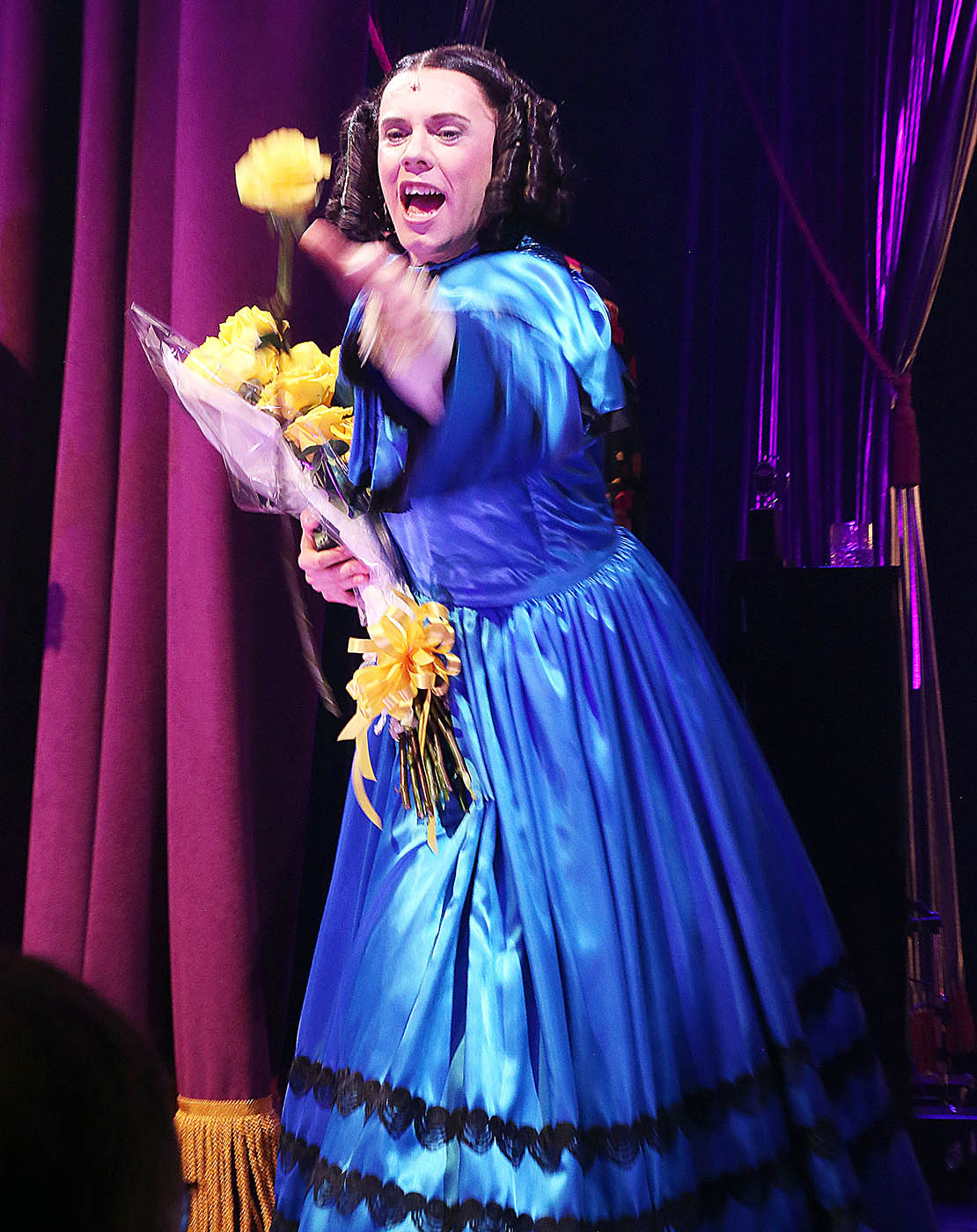
Escola says of the Oh, Mary! preview: ‘There were a couple of people who walked out, which made me proud’
In early comedy videos, which Escola made in their teens, they leaned into their sometimes otherworldly looks: round Disney eyes, sharp little teeth, a sweetness pierced with derangement – these led to memorable parts in dark TV comedies and absurdist online sketches. But it is with Oh, Mary! that mainstream fame now threatens to stick. When the play opened on Broadway in July 2024, there were more celebrities in the stalls than you would see at the Oscars. Meryl Streep was there, Steven Spielberg, Madonna. They called it the new Hamilton. As a first lady herself, Michelle Obama adored it. (“Who thought of this?” she gushed on a podcast. “What’s going on inside that head?”) The secret to the success of Oh, Mary!, of course, is that it is barely about Mary Todd Lincoln at all. Really it is about Escola: their rapacious ambition, their humiliating dreams of stardom, the eternal worry that other people find them grating. Every character they write “are parts of me that I am worried are unlovable,” they say, then pause. Around 10 years ago they started performing a character called the Goblin commuter of Hoboken – “a goblin who happens to just work on Wall Street” and is “sort of grotesque and speaks with a monster voice”. The character was “an extension of how I feel in romantic situations,” Escola says. “It’s like playing out my worst fear – that I’m a hideous, grotesque goblin – and presenting it in a way that’s hopefully entertaining, and which makes me feel not so unlovable.” They squint apologetically “I mean, that’s really lofty. That’s only me prescribing psychoanalysis after the fact. I’m not like, ‘How can I take this part of me and turn it into art?’ I’m just, you know, ‘I love this wig, that skirt’s funny, what dumb voice can I do?’”
Oh, Mary! earned more than $1m in its first week, which meant that Escola’s life suddenly became a stream of chat shows, the Met Gala, talking about themselves, like this, in foreign hotels. They have approached this new success with a certain amount of caution. “This past couple of years has stirred up a lot of feelings I’m afraid of and ashamed of or curious about,” they say. The work they’re developing now revolves around “wanting to put those feelings somewhere”.
Escola says Miss Piggy ‘is someone who knows somewhere deep inside that she’s right and that she is special’
Escola says Miss Piggy ‘is someone who knows somewhere deep inside that she’s right and that she is special’
A month after Oh, Mary! premiered, around the time all the Madonnas and Obamas were filing into the theatre, Escola learned their younger brother had died. “The worst thing that’s ever happened to me happened at the exact same time as one of the best things that’s ever happened to me,” they say. “It was dizzying. I’m only now coming out of that.” Escola couldn’t return home: they were the show, the show was them. “It’s like that Maggie Smith quote I’m going to butcher: for two hours a day you know who you are and what you want, because your wants are the character’s wants. And the rest of the day, the rest of your life, you’re sort of flopping around like a fish.” How does it impact a person when the best and the worst thing happens all at once? “Well, honestly, because I had a job to do, I didn’t have time to consider how to deal with it, which I’m glad of.” The first few shows were hard. “You know the nightmare of when you lose someone and you wake up and remember all over again that they’re gone? It was like that every time, after every scene. I’d exit the stage and it would hit me all over again.”
When Escola’s mother recently saw the show, she marvelled with surprise and pride at the wild applause. “She’s a good mum,” Escola says. “Which is hard for an artist, you know? I mean, I come from a long line of alcoholics, don’t get me wrong...” Was there a moment they chose sobriety? “There were several moments when I should have stopped,” but “all I wanted was to drink, and I didn’t want anyone to get in the way of that, and it just becomes this cycle of ‘Everyone leave me alone!’ and then ‘Why am I so lonely?’” Escola stopped drinking in part because “those drunken nights were all the same night, over and over again. I wasn’t having new experiences.” When you take alcohol away, “you’re left with your feelings. But I think feelings are good for writing.”
It was recently announced Escola had been signed to write the Miss Piggy movie (produced by Jennifer Lawrence and Emma Stone), and the internet screamed with glee. Who better to explore the life of an empowered feminist diva who is also a puppet sow? Escola was attracted to Miss Piggy for “the same things that attract me to Mary: she is someone who is told by everyone around her that she’s too much, but who knows somewhere deep inside that she’s right and that she is special.”
Success has felt spooky and miraculous. Suddenly there is money, which they worry they’re spending like a lottery winner, and disgust, at the attention they’re receiving, and freedom, to pick their next projects, and fear that tomorrow it will all disappear. “All I want,” they say, “is the same thing everybody else wants: unconditional love from everybody at all times. And to feel a part of something bigger than myself.” Done.
Oh, Mary! is at the Trafalgar Theatre, London until 25 April, trafalgartheatre.com
(Theatre photograph by Wireimage)
Newsletters
Choose the newsletters you want to receive
View more
For information about how The Observer protects your data, read our Privacy Policy