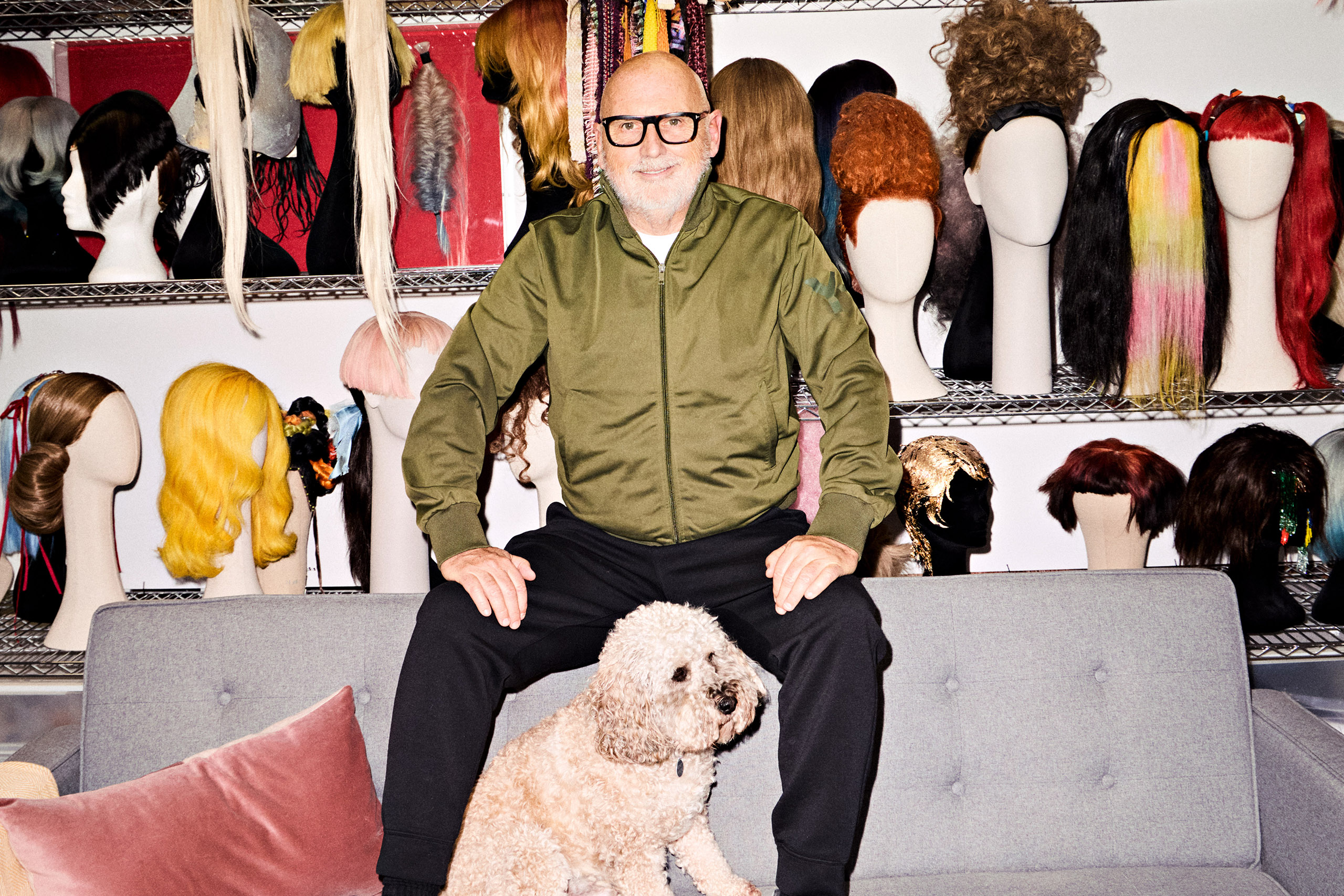


On a grizzly Monday afternoon in west London, Sam McKnight is drinking coffee in his studio, housed at the back of an imposing former furniture repository. Dressed in his signature Fred Perry polo shirt and tracksuit bottoms, he’s the most unassuming figure to have shaped the heads of the world’s most famous women.
Stanley, his champagne-coloured cockapoo, settles on the sofa; McKnight points out the rips in his tracksuit, “dog teeth holes,” he laughs.
Over his 50ish years in the industry (McKnight turned 70 last summer), his roll call has featured Diana, Princess of Wales, Kate Moss, Cate Blanchett, Lady Gaga and more than 200 Vogue covers. It’s quite the glow-up from a childhood as the son of a miner in New Cumnock, Scotland. But then that gentle persona is why he’s trusted with the look of women who know their haircuts will be on the front pages of papers the next morning.
McKnight sits, his coffee in a William Morris-patterned mug (aside from trimming hair, he’s a keen gardener), in front of some of the fantastical wigs he’s created for shows. He takes one out. It’s made of spicy red, black and clear plastic plaits that trail for about 8ft. “It’s from a Westwood show,” he says, explaining, “We did that the night before. We didn’t have hair long enough, so we made it out of her garment bags.” It shows the resourcefulness demanded to bring to life these fleeting moments of brilliance. McKnight worked with Westwood for decades, until her death in 2022.
“Yasmin Le Bon and I were watching from backstage,” when Naomi Campbell fell from her 9in platforms, “but I was watching the wig wobbling. God bless her, we were like ‘That’s why she gets the big bucks!’” Westwood was acutely involved in the minuscule details of the model’s looks before they walked on the runway. “Pulling the hair out, smearing the lipstick,” he recalls. “There was one show when she wanted the girls to look like their hair was on fire,” he points to some wigs with a foot of black and orange hair shaped like a flame in full burn, “and she did the same thing with hers.”
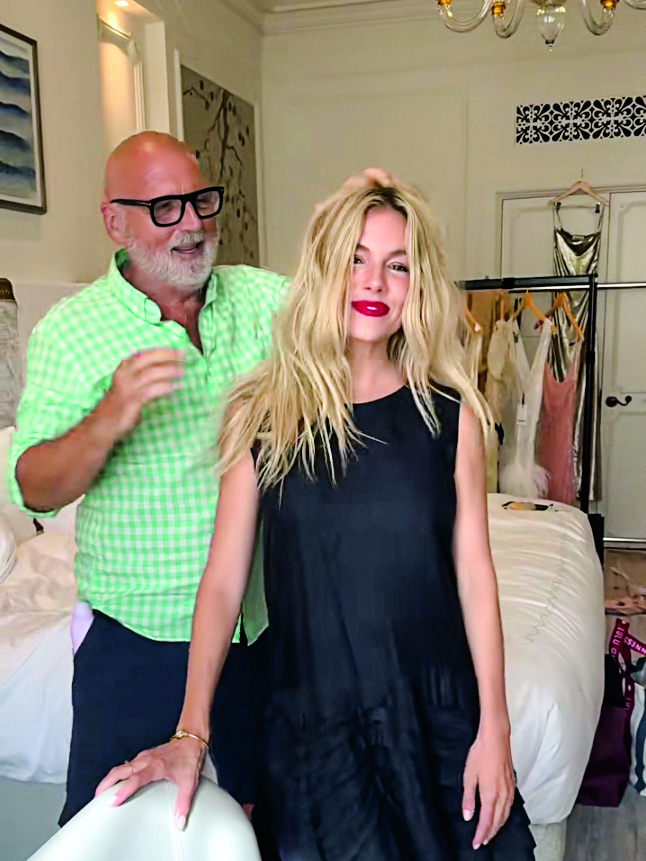
‘The 1990s were full on’: McKnight styling long-time client Sienna Miller
The first time he met Diana, on a Vogue shoot in a Hackney studio in 1990, McKnight lopped off her 1980s bouffant. “She disarmed us, we all melted straight away,” he says. McKnight ended up working with her until her death, seven years later. He was there when she visited the Taj Mahal, and Mother Teresa in Kolkata as well as a refugee camp in Pakistan. “That was the most traumatic for me. She didn’t travel with a big entourage, she liked that we saw what she was doing. It wasn’t a jolly she was on, it was work. Really the two most famous people in the world then were her and Madonna. Madonna was hungry for fame, but Diana… That was a lot of pressure.” McKnight’s glamorous alter-world of fashion shows and shoots fascinated Diana. “She was very interested in the supers – Christy, Cindy. They were a similar age and she found it intriguing how they dealt with things. She could see the often unwanted attention these young women got and she recognised that.”
McKnight did Madonna’s hair, too, and worked with her for the Bedtime Stories album cover. “We were in Miami in August,” he recalls, “so she invited us back to her house for her birthday party.” Ever the professional, he politely turned her down as he had another shoot the following day. “But I regretted that. I never said no again.”
While McKnight describes his 1990s as “full on”, flying back and forth from the US (he did Diana’s hair every day if he was in town), his influence hasn’t waned. He fastened on Lady Gaga’s steak hairpiece for her MTV awards appearance in 2010. The steak was attached to a wig with a lot of pins. “In the hotel room, she was in the shower singing I Will Always Love You, and it stopped me in my tracks.” The room was full of flies, circling the steak.
McKnight has the magic touch of trust. “I’m not the person coming in with this idea and saying that’s what you’re gonna have. I’m sensing what somebody’s saying, between the lines.” He remembers a Tilda Swinton press tour. “I’d worked with her a few times before. Her hair was shoulder length and she said, ‘I don’t want to be too glamorous. I want my own identity. Should we cut it short?” They were in the bathroom at the Covent Garden Hotel. “It got shorter and shorter, finally we just buzzed it.” Last minute chops are a speciality. “Cate Blanchett at the Fashion Awards, she looked at me and said, ‘Do you think we should cut it? Let’s do it now!’ Whoosh, off.”
Last week, he shot his other Kate, Moss. “She’s got more energy than 10 people together. She’s like a whirling dervish when she gets on set, but like all those girls, they’ll give the photographer the picture in minutes. She’s definitely not perfect, but she doesn’t try to perpetuate any myth.”
And this week he’ll be rushing headlong into London Fashion Week. Most fashion people groan when show season comes around, but McKnight says, “I love it.” He’s become a vocal advocate for better backstage conditions in an industry which, for all its demands for newness, remains steadfastly retro in many respects. Space is often cramped and haphazard. “There’s never been any protection. We’ve got hot tools, sharp tools. There’s still a bit of bullying in certain quarters, expecting too much of teenage children. The diva-ish behaviour doesn’t come from the models, that’s all I’m saying.” Laudably he got Bectu, the entertainment trade union, to set up a fashion branch. “A few of the bigger agencies have warned people that they’re forbidden to join. The young ones are scared to stand up and get blacklisted. But I’m not!”
Since entering his 60s, he hasn’t slowed down, merely shifted his priorities. “I was 65 during lockdown and this light came on, ‘I don’t want to be on this hamster wheel. I don’t want to be the person that drops dead in the studio.’” Stanley the dog and his haircare line (recently launched in Marks & Spencer) are the fruits of this.
Presumably he could also knock off a pretty electric memoir. “No, God, no. I’m not interested” – which is likely why he maintains his clients’ trust. Does the cliché of the hairdresser as therapist ring true? “To be honest, it goes in one ear and out the other. I’m not taking anyone’s problems on board. You’re more a sounding board, really. It works both ways; they know it’s never going to leave that room.” He adds, twinkling, “Although, wait until next year, when the money runs out.”
Newsletters
Choose the newsletters you want to receive
View more
For information about how The Observer protects your data, read our Privacy Policy