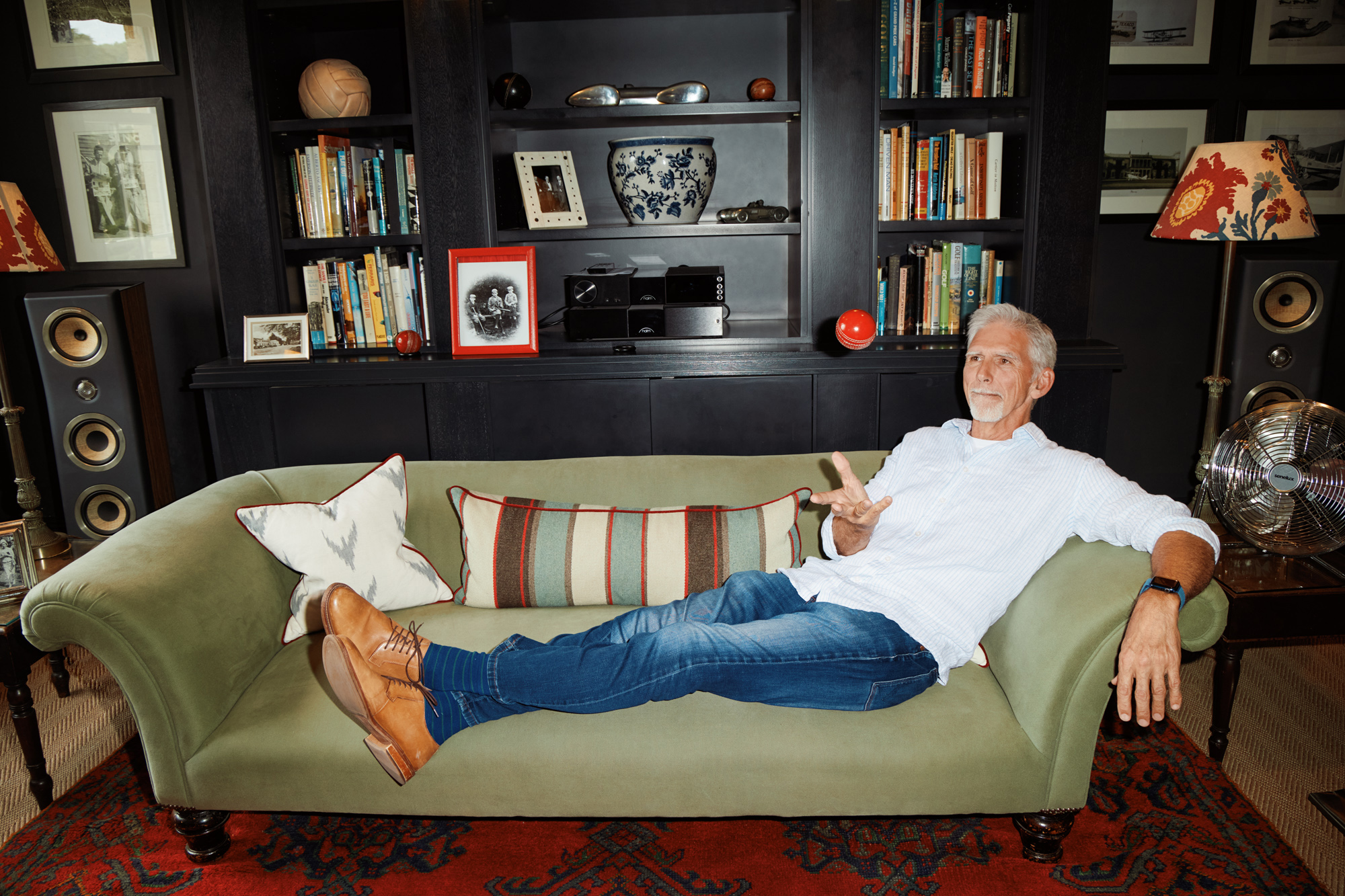

Sometimes, when he meets a motor- racing enthusiast, Damon Hill is reminded that he is quite different from most people in his line of work. “If you’re an F1 racing driver, you live in Monaco and drive Ferraris,” he says. “And I don’t have a Ferrari. I don’t have a car collection. My car interest is almost on the floor.” He creases a wry smile. “Sorry, this is a massive disappointment to everyone.”
Hill, in fact, lives just outside Guildford, Surrey, which is not a tax haven, last time I checked. He does own three vehicles, but he does most of his driving in two of them: a Citroën Berlingo minivan, which is arguably the least sexy car on the road, and a VW Passat Alltrack estate with 120,000 miles on the clock. “Why will anyone not understand that that is the best car ever made?” he wonders.
His other drive is more modern, but mainly it irritates Hill. “I’m at war with my car because it’s got all these safety features that keep binging,” he says. “Soon we won’t be allowed to drive. We know that the insurance won’t cover you if you’re going to steer this thing yourself. But I hate the car telling me what I should be doing. I’m a Formula One world champion, for heaven’s sake! I know how to reverse!”
The mid-1990s was one of the most thrilling and poignant eras of F1, encompassing the death of Ayrton Senna and the emergence of Michael Schumacher. And Hill was at the heart of it all. In 1994 he was a teammate of Senna at Williams-Renault when the Brazilian had his fatal crash at Imola in Italy. Hill was on a winning streak that season and arrived at the final race just a point behind Schumacher. But in Australia, the rivals clashed and both cars were forced off the track, handing the title to the German in the most controversial of circumstances. Hill’s heartbreak was so palpable that he was voted BBC Sports Personality of the Year.
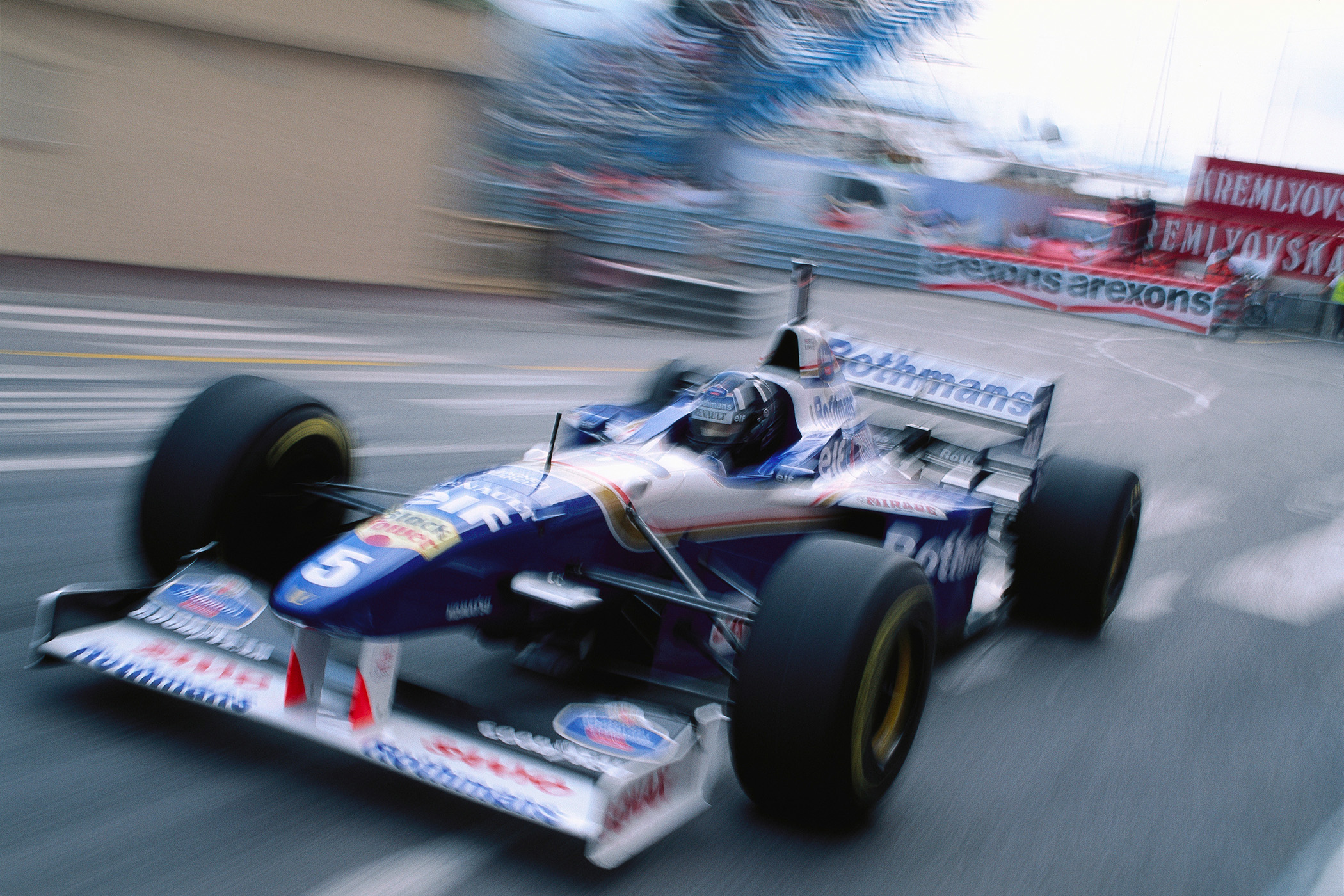
Hill at the Monaco GP in 1996
Revenge came in 1996, when Hill won eight grands prix, half of that season’s races, and claimed the drivers’ championship. He became the eighth British driver to become an F1 world champion, and the first son of a champion (his father Graham won in 1962 and 1968) to claim the title. There was more emotion – commentator Murray Walker was famously overcome by the result and stopped speaking on air – and another Sports Personality award.
Hill, who is now 65 and has a snow-white goatee, matching eyebrows and hair, and a professorial air, claims not to reflect much on those years, “because there’s nothing more boring than a sportsperson who goes on about himself the whole time”. But he is being forced to, in large part because this year is the 30th anniversary of his triumph. There will be a particular fuss made at the Goodwood Festival of Speed, where Hill will drive his 1996 Williams-Renault round the circuit and be honoured in what organisers call “a balcony moment” in front of fans.
I’m sure, deep down, Hill is chuffed. But when we meet for a cup of tea he sounds baffled by the attention. “Since when has the 30th anniversary of anything been an anniversary?” he says. “Isn’t it normally 25, 50, 75? We’re a bit late for the 25th, so the 30th, why not? I’m going to get my moment on the balcony and hopefully that will be that. Then I can slide off into the sunset and go and play golf.”
Still, as Hill has come to look back on those years, even he has to concede that there’s a tale worth telling. For some, it will be a throwback to childhood and a nostalgic luxuriating in the genuine, they-properly-dislike-each-other beef between Hill and Schumacher. For younger fans, perhaps introduced to the sport by Netflix’s Drive to Survive, it is a gateway to Formula One’s dramatic heritage.
“I went into it thinking, ‘Oh God, will anybody be interested in this?’” says Hill. “But after a bit you start to hear the story the way other people hear it. And you start telling the story, and you go, ‘Actually, that’s really extraordinary what happened there.’ Having raced with, by pure chance, Nigel Mansell, Alain Prost, Ayrton Senna, and raced against Michael Schumacher, Jacques Villeneuve and David Coulthard, and anyone else who was there – it was mad.”
There are also the details of how Hill came through the ranks. On the surface, he acknowledges, he was the archetypal nepo baby. But Hill seemed to do everything he could to avoid following his legendarily dashing father into Formula One. When he eventually accepted his fate, he was in his early 30s, practically ancient by F1’s standards. “I don’t think it could happen now,” he says.
Newsletters
Choose the newsletters you want to receive
View more
For information about how The Observer protects your data, read our Privacy Policy
All of which contributes to the impression that Hill is, in many ways, far from a typical Formula One driver. He remembers, when he was first given a seat at Williams-Renault in 1993, a Guardian journalist came to visit him at the Wandsworth house he shared with his wife and young children. “We were in the kitchen and I was unloading the dishwasher, and I said to him, ‘Do you think Ayrton Senna empties the dishwasher?’ Because basically that’s what I was up against: ‘I can’t be emptying the dishwasher, I’ve got to beat Michael Schumacher!’
“But these are stupid ideas,” he goes on. “Everyone’s got to take their kids to school and stuff. Anyway, I like it.”
Graham Hill was a star of what remains the most darkly glamorous period of Formula One. Safety measures were non-existent, deaths were commonplace and drivers swaggered around like movie stars. “Fame in those days was more potent, because there were less people who were famous, I think,” Hill says. “If you were famous in the 1960s, you were thrown into the pot with the Beatles and Sean Connery. I’ve got pictures of my dad on the grid in Monaco with Peter Sellers and Britt Ekland.”
Hill was born into this world in 1960. His christening was attended by racing drivers Stirling Moss and Bruce McLaren. He went on holiday to Spain with the likes of actor Stanley Baker and comedian Eric Sykes. “I was lucky to be taken along to events like shooting with the Queen,” Hill recalls.
I went from being unemployed to the best team in Formula One
I went from being unemployed to the best team in Formula One
Not that Hill was always entirely comfortable with the attention. He was a shy child, who often felt awkward in the limelight that being around his gregarious, handsome father forced him into. “I was quite intimidated,” he says. “I’m happy with my own company. A lot of people tend to throw me sometimes. I’ve got better at it, but when my dad was around I was quite happy to take a back seat. And so I grew up observing how people behaved around someone famous and that was a useful insight.”
Everything changed in 1975. Hill was watching television when there was a newsflash about an airplane crash involving a motor-racing team. Graham Hill had eventually retired from driving himself, but set up his own team, Embassy Hill. Damon, then 15, feared the worst and he was right: his father, who was the pilot, and five members of the team were dead.
“They didn’t mention his name, but I was old enough to work it out that there was a strong chance it was my dad,” he says. “When my dad said he was going to retire I was really pleased. I just thought, ‘Brilliant, glad you’re not doing it.’ So the crash was not expected in the sense that it wasn’t a racing accident, and he’d given up the dangerous job. So those sort of things scarred me, I think. They scarred my mum. My mum clearly had anxiety about what would happen to her if anything happened to him.”
The repercussions were felt for years. Graham Hill’s pilot licence was out of date, so he was effectively uninsured. The family had to move from their “big gaff in the Hertfordshire countryside” to a more modest house in St Albans. “I was incapable of dealing with it,” he says. “I was only 15, and all I could do is watch my mum go through it, really. And we pretty much went into deep freeze as a family.”
Hill finished school and started to work as a labourer on building sites and as a motorcycle courier. He didn’t have a career plan: “Make money, go bike racing at the weekend,” he says. “I think I had bouts of depression, actually. If you’re the son of a famous person, inevitably 20% of the interest in you goes on who your parents are. You’re always confronting this in every relationship: ‘Who are they really interested in?’”
Around this time, Hill met Georgie, his future wife: she had no idea who his father was. Not long after, they had the first of their four children, Oliver, who was born with Down’s syndrome. “There was a lot of solemnity around the birth from the doctors and there wasn’t any optimism,” says Hill. “They literally said, ‘Well, don’t worry, there are good institutions.’ But with the help of some brilliant people we met, we realised that is not the way forward. The way forward is to integrate as much as possible.”
The Hills, with some local families, have since set up the charity Halow to help young adults with learning disabilities and autism in Surrey, each year it supports around 350 individuals.
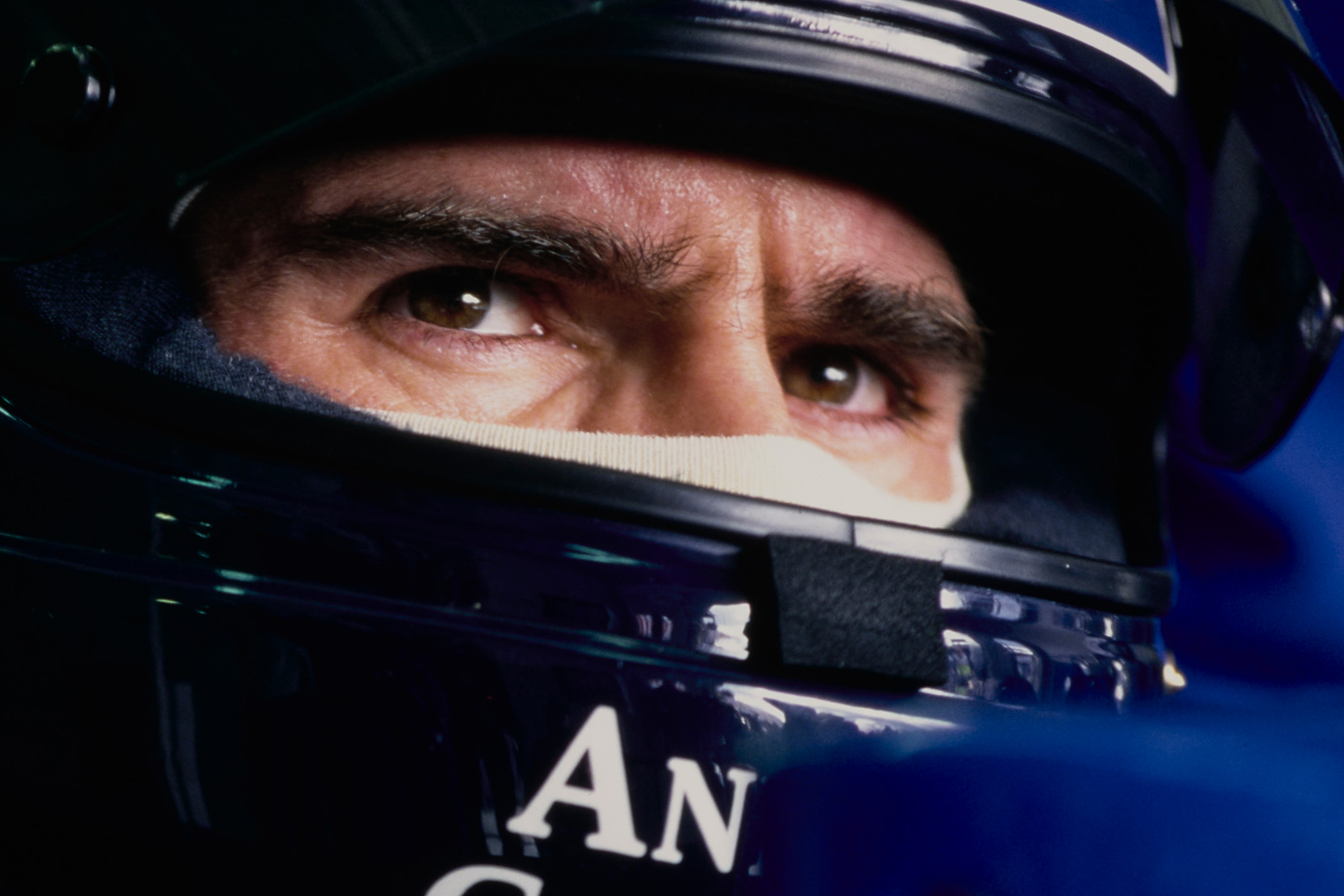
Meanwhile, though, Hill’s career was stalling. Deciding that racing motorbikes was too dangerous, he moved to single-seater cars. But his age was counting against him: “I was down and out as far as racing was concerned by the time I was 28.” Eventually, Hill decided to take a gig as a test driver with Williams-Renault, which was “quite a well-paid job for failed racing drivers”. But, in an unexpected turn of events, Nigel Mansell had a massive bust-up with Williams over his contract and decided to retire. The team suddenly, and very desperately, needed a new driver, ideally one who knew the car, before the 1993 season started.
“I went from being literally unemployed to being in the best team in Formula One, teammates with Alain Prost, in the space of three years,” says Hill. “Boom!”
Hill’s career in Formula One may have started late and been comparatively brief, but it never lacked drama. His interactions with his first Williams-Renault teammates, Prost and Senna – two of the all-time F1 greats – were cordial and respectful. There was, though, always an intense internal rivalry in that awkward partnership. “You’re not teammates,” says Hill. “Every driver is passing through, and everyone knows that. It’s like going to a hotel: the staff come out and go, ‘Oh, we hope you have a nice stay.’ And you go, ‘Thanks. It’s lovely.’ But you are going to leave one day, you’re not staying there forever.”
Senna wasn’t, in his Hill’s opinion, “the slightest bit worried about me”. This was in part, Hill believes, because of the Brazilian’s extreme approach to risk. “He was controversial, because he was so committed at a time when it was still quite dangerous,” he says. “And some people thought he was taking things too far. I took the view that I wasn’t going to get tricked into or pushed into taking ridiculous risks when I was racing. I definitely thought there’s a time to put everything on red, and other times where you do what you need to do to get the best performance without putting your neck out too far.”
When Senna died, Hill didn’t want to attend his funeral – the last one he’d been to had been his own father’s. But a conversation with F1 legend Jackie Stewart changed his mind, and Hill actually carried Senna’s casket. “I didn’t want to go, but you have to acknowledge the truth about what you’re doing,” he accepts.
Hill’s defining relationship in F1 came with Michael Schumacher. There’s clearly respect there: “He just had ridiculous amounts of skill and competitiveness,” says Hill, puffing out his cheeks. But the rivalry, and the ill-feeling that came with it, was real, and much of it was built on allegations against Schumacher’s Benetton team in 1994. The German’s car was found to have illegal software in the engine’s computer code, but no one could definitively prove that the drivers used it during races – a technicality that still rankles Hill.
“It’s slightly disappointing,” he sighs. “So I can be astonished at Michael’s achievements, but I can’t admire his approach to competition. When you have doubts that they would win unfairly, then it casts a little question mark over everything they’d done.”
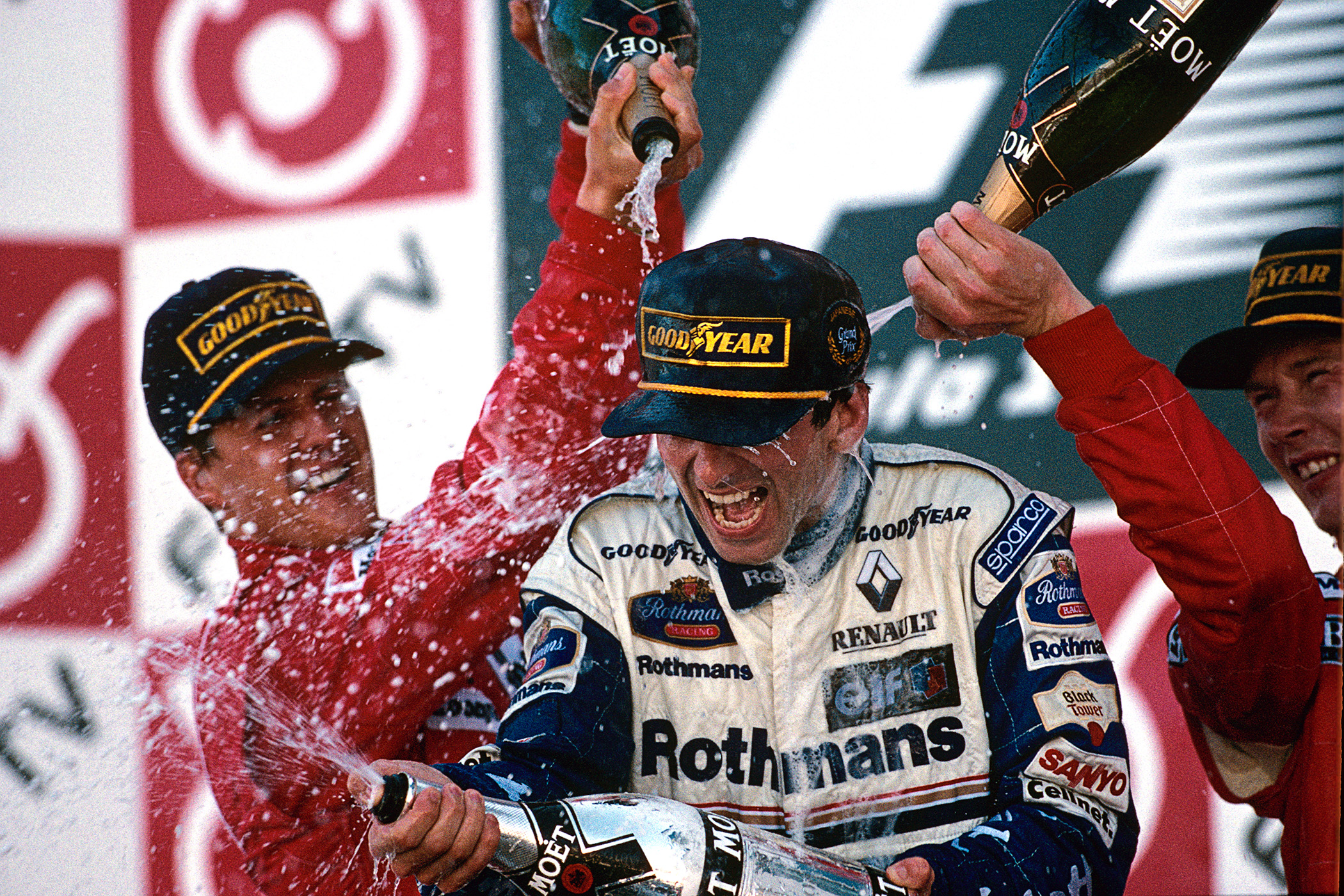
Hill with Michael Schumacher and Mika Hakkinen at the Grand Prix of Japan in 1996
Later, I ask Hill if, after he retired, he always watched Formula One. He replies: “I didn’t watch when Michael was winning everything. I couldn’t do it, but I found something really weird happened. I’d go into the garden, and I quite often found myself using machine tools. Don’t know why, maybe I just needed the engine. So I had a chainsaw, and I’d go into the woods and chop wood while the race was on. What does that tell you psychologically? I’d be going weeeehhh,” he mimics a chainsaw buzz. “‘Why am I doing this?’”
Hill did have his moment of triumph over Schumacher. In 1996, his Williams was dominant from the first race and, despite a mid-season wobble, Hill finished the job at the last race in Japan. “I knew this was a golden opportunity,” he says. “I knew that this probably would almost certainly be my one and only chance.”
At home – boosted by a rare sporting success in the jingoistic England versus Germany narrative – Hill’s popularity surged. “Everyone used to say to me, ‘My mum loves you,’” he says. “But it’s the story arc, isn’t it? The son of a father who died tragically, can he finally become world champion himself? And: ‘It’s so sad that his dad wasn’t there to see him.’ Murray’s in tears, everyone’s in tears. It’s a phoenix-rising happy ending.”
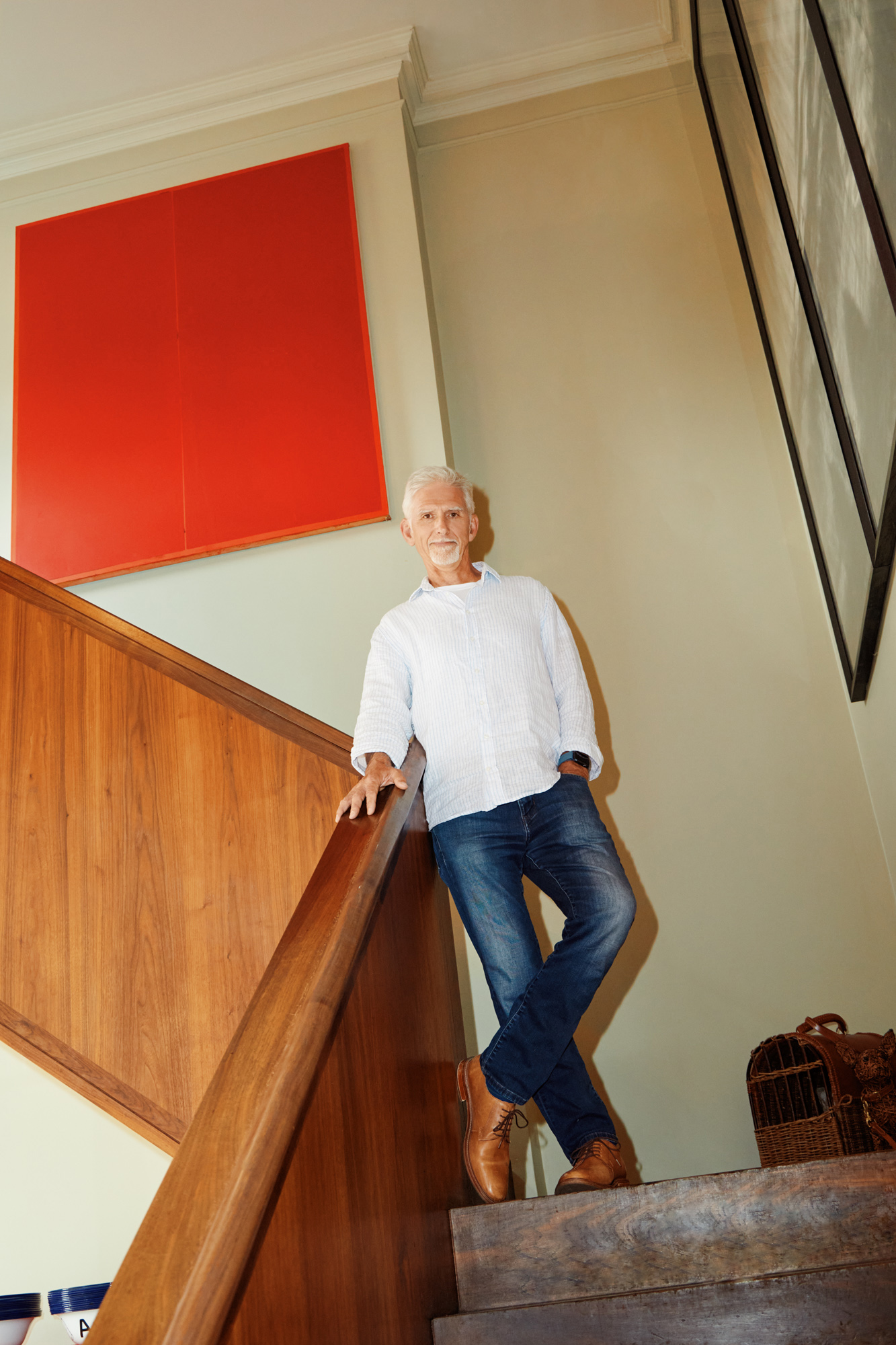
Hill retired in 1999, at 39, and mostly disappeared from public view. There was speculation that he was the Stig on BBC’s Top Gear, but actually most of the driving he was doing was taking the kids to school in the Passat estate. Eventually, when his son Josh expressed interest in driving professionally, Hill did return to motorsport, becoming a presenter and a pundit on Sky Sports and the BBC.
“It was a good investment, let’s put it that way,” says Hill, with typical pragmatism, of his 1996 victory. “Because I’m an ex-F1 driver, but I’m always a world champion. It’s a new paradigm, a different bracket, and it’s the one that every driver would love to visit. Some people do it multiple times, and so I don’t know how they choose which one is their favourite world championship.”
Hill laughs, “But I know which is mine!”
Getty Images