Portrait by Gary Calton for The Observer
The late American preacher Tony Campolo had a routine he would sometimes perform in front of conservative congregations. “I have three things I’d like to say today,” he would begin. “First, while you were sleeping last night, 30,000 kids died of starvation or diseases related to malnutrition. Second, most of you don’t give a shit. What’s worse is that you’re more upset with the fact that I said ‘shit’ than the fact that 30,000 kids died last night.”
It is a useful rhetorical mechanism: a moral trap baited with profanity. In 2015, as a twentysomething comic still shaping his onstage personality, Alfie Brown used a riskier version of the same device. The routine was designed to worry at a particular kind of liberal hypocrisy: the possibility that some white audiences were more scandalised by language than by the conditions in which their phones and clothes were made. To make the point, Brown used the N-word, not once but 14 times.
Brown soon dropped the section. It didn’t work, he decided, comedically or morally. Rather than issue an apology that no one at the time was asking for, he attempted to remove footage of the routine from the web and moved on. In the years that followed, he continued to refine his sharp, self-interrogating act. By the early 2020s, he had acquired the support of Stewart Lee, appeared on the BBC’s Live at the Apollo, secured a nomination for the main Edinburgh Comedy Award and, in New York, performed for the casters of Saturday Night Live fulfilling, or seeming to fulfil, a promise critics had identified years earlier. In 2013, Beyond the Joke called him “one of the most exciting young comedians” around whom “there should be a deafening buzz.”
Brown grew up in a comedy household: his father was the musician and comic Steve Brown, the first act signed by Avalon, now one of the largest comedy agencies in Britain. His mother is the Radio 4 stalwart Jan Ravens, the first female president of Cambridge Footlights, and the erotically memorable voice of Cadbury’s Caramel bunny in several commercials. From an early age, Brown wanted to be a “shiny floor” comic entertainer, a plan soon complicated by his natural flair for provocation and candour. Still, in early 2023 he seemed poised for a version of mainstream success that could accommodate the abrasiveness of his act, its clever, clockwork routines and his prickly intimacy with audiences.
Brown, who identifies as a leftist, was always interested in exposing vanities and hypocrisies, especially his own. “I tell woke jokes in a non-woke way,” he has quipped. “There’s no audience for it.” It’s these instincts that, in 2023, helped precipitate his professional collapse. On Twitter, Brown accused former Labour leader Jeremy Corbyn of casual antisemitism, which Brown attributed to stupidity rather than malice. The remark led to a testy back-and-forth with a Corbyn supporter, then to a wider pile-on. Before long, Brown’s critics had found his old routine and circulated it as evidence that the comic accusing others of prejudice was himself guilty of racism.
I was ‘reckless with words that have been used to hurt people… Now I’m an unapologetic comedian who has apologised. I don’t really know where that leaves me’
I was ‘reckless with words that have been used to hurt people… Now I’m an unapologetic comedian who has apologised. I don’t really know where that leaves me’
He issued an apology, condemning his own “abhorrent racial language” and expressing regret not that the routine had resurfaced, but that he had ever performed it. He characterised his younger self as arrogant and stupid, albeit well intentioned. It was not enough. Brown lost his agent and most of his work. “I poked the bear and the bear ate me,” Brown tells me. “And while it’s not very nice to eat somebody, you also shouldn’t poke a bear.”
As the scale of the damage became clear – losing not only money but the whole future that had been opening in front of him – he remembers crying in the kitchen. There were some who, for their own reasons, offered comfort. Almost immediately, Brown began to receive invitations to appear on rightwing podcasts. He recognised the role he was being asked to play: another cancelled comic, welcomed into a politics of grievance and grift. He refused it. “I felt it would not be a constructive thing for me to do,” he says.
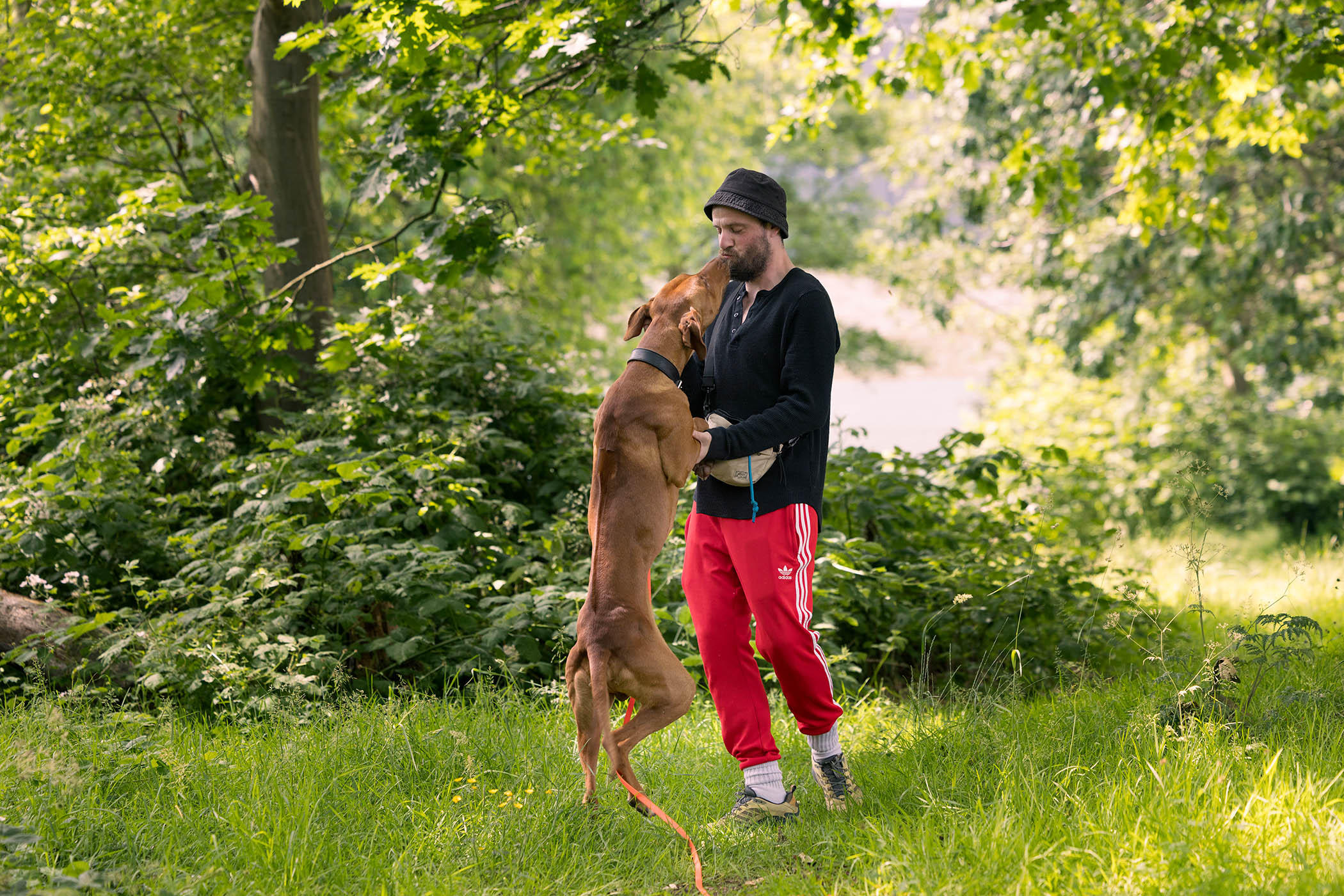
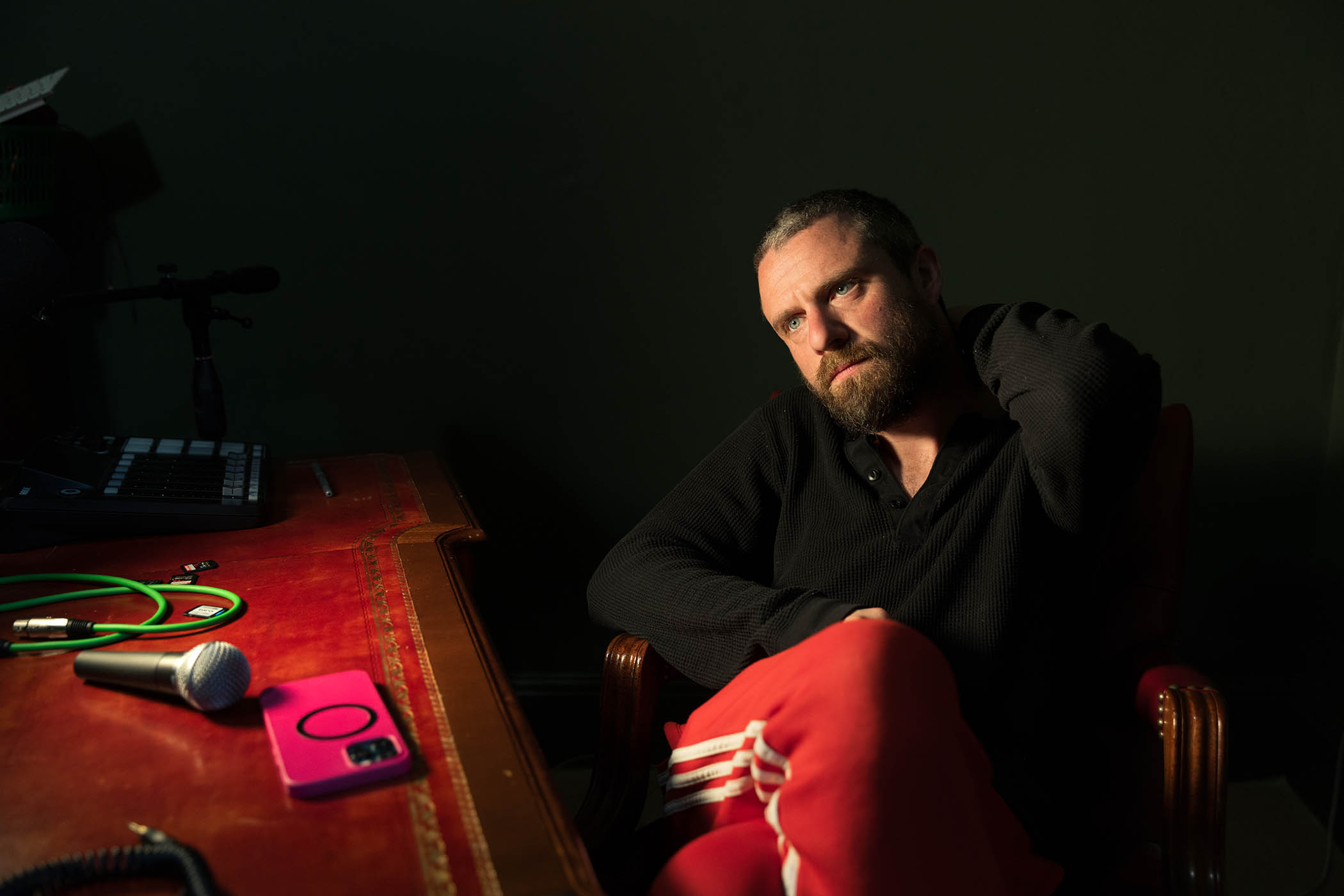
‘I tell woke jokes in a non-woke way. There’s no audience for it’: Alfie Brown pictured at home in Liverpool
Then, a few weeks later, Brown learned that his closest friend and collaborator Adam Brace had died age 43 after a short illness. Brace was a widely loved comedy writer who had directed shows by Ruby Wax, Lou Sanders and Ivo Graham, as well as Brown’s own. For Brown, the grief and the cancellation became inseparable. Brace had not merely been a friend, but one of the people through whom he understood his own intentions as a comedian. Ten months later, Brown’s father died too.
While some comedians have been able to grift their way out of cancellation, assisted by what one of Brown’s friends described as “a global vibe shift”, Brown felt unable to escape the weight of his grief, or his sense that, while he had made an obvious mistake, he had also been deliberately misunderstood and his mistake had been weaponised for political purposes. He thinks he was cancelled during a period that was shaped by a strange, distorting isolation. Public feeling was heightened after Covid, as well as the deaths of George Floyd and Sarah Everard, and the Harvey Weinstein scandal, but people had been deprived of the ordinary human means of testing their opinions. “All of this horror was existing with us isolated from one another,” he says. “The only thing we had was each other’s performance about it on social media.”
Newsletters
Choose the newsletters you want to receive
View more
For information about how The Observer protects your data, read our Privacy Policy
Before he could begin to reinvent himself, Brown felt that he and his family needed a change of environment, leaving London, a place now freighted with professional humiliation. In 2024 he and his partner, the actor, writer, and Harry Potter star Jessie Cave, moved to Liverpool, a city to which Brown had been drawn since his childhood, when he’d visit his grandparents on the Wirral. The city offered space and distance. It also offered a setting for a different kind of public performance. In February 2025, Brown and Cave launched the podcast Before We Break Up Again, whose title refers, with typical bluntness, to the fact that the couple – who have four children and first got together in 2014 – have already separated twice.
The celebrity couple podcast has become a popular British format, with Jamie Laing and Sophie Habboo, Chris and Rosie Ramsey, and James and Clair Buckley all hosting chart-dominating shows. ButBefore We Break Up Again arrived in more precarious circumstances, and Brown and Cave’s rawness soon attracted an audience drawn to what Californians might term its “radical honesty. In each episode the couple lurch from affection to bickering, from adoration to exasperation, unpacking the nature of domestic life as well as the agonies of being a creative person in an era when artists are increasingly expected to function as their own managers and clip departments. They discuss grief and childcare, the long-term effects of a sexual assault on a couple’s dynamic, the boundaries of monogamy, and the small-business logistics of keeping a young family alive.
It can be almost unnervingly intimate. In one episode, for example, Cave recalls talking with her brothers, who work in medicine, about Brown’s use of steroids. One sibling joked that the drug could reduce Brown’s life expectancy by 20 years. “What I couldn’t say at the table,” Cave adds, “is that it’s worth it, because his dick is so great.” “Yes,” Brown adds, “it’s like I’ve imported a dick from Sweden to use.” This is not the sort of material one generally hears on a couples podcast.
The distinction matters to Brown. Celebrity intimacy, like celebrity contrition, is often suspiciously well lit. “It’s difficult for some couples’ podcasts to sound anything but performative,” Brown says, “because they are often millionaires with a production team and film crew around them. With Jessie and me, it’s just us at the kitchen table, pressing record.”
Through the podcast, listeners have traced the uneven contours of Brown’s recovery from his year of grief and reckoning. Privately, he says most of his peers have drifted back too: he reconciled with his former manager, and comics again began seeking him out as a “cometurgist” – the joke doctor who could find how a routine might acquire pathos or shadow, and an extra star or two in a broadsheet review.
This is the talent he brought to his self-funded, 90-minute YouTube special The Last Cancelled Comedian – his attempt to parse his cancellation. The title nods to Brown’s sense that the culture has moved on from the most extreme period of cancellation. It is an unusually vulnerable piece of work: self-lacerating and resistant to any easy redemption arc.
Brown examines what it feels like to be publicly fixed in time by your worst work, and asks what we want from accountability culture once an apology has been issued and accepted by no one in particular. I was “reckless with words that have been used to hurt people,” careless, and seduced by transgression, he says. “Now I am an unapologetic comedian who has apologised. And I don’t really know where that leaves me.”
In part, that disorientation derives from the challenge of knowing what to write about after tackling such vast, tectonic subjects as cancellation and grief. “If everybody whom I love remains alive, and I’m left to my own devices, where do I find meaning?” he says. For now, the answer is The Entertainer, his forthcoming Edinburgh show, named for the shiny-floor BBC One comedian he once dreamed of becoming. “All of those entertainment instincts are a huge, huge part of who I am,” he says, “and something I’ve lost because I, for some reason, took standup a little more seriously.” The new show, then, is not simply a light one after a dark one, but an attempt to see whether lightness can carry meaning.
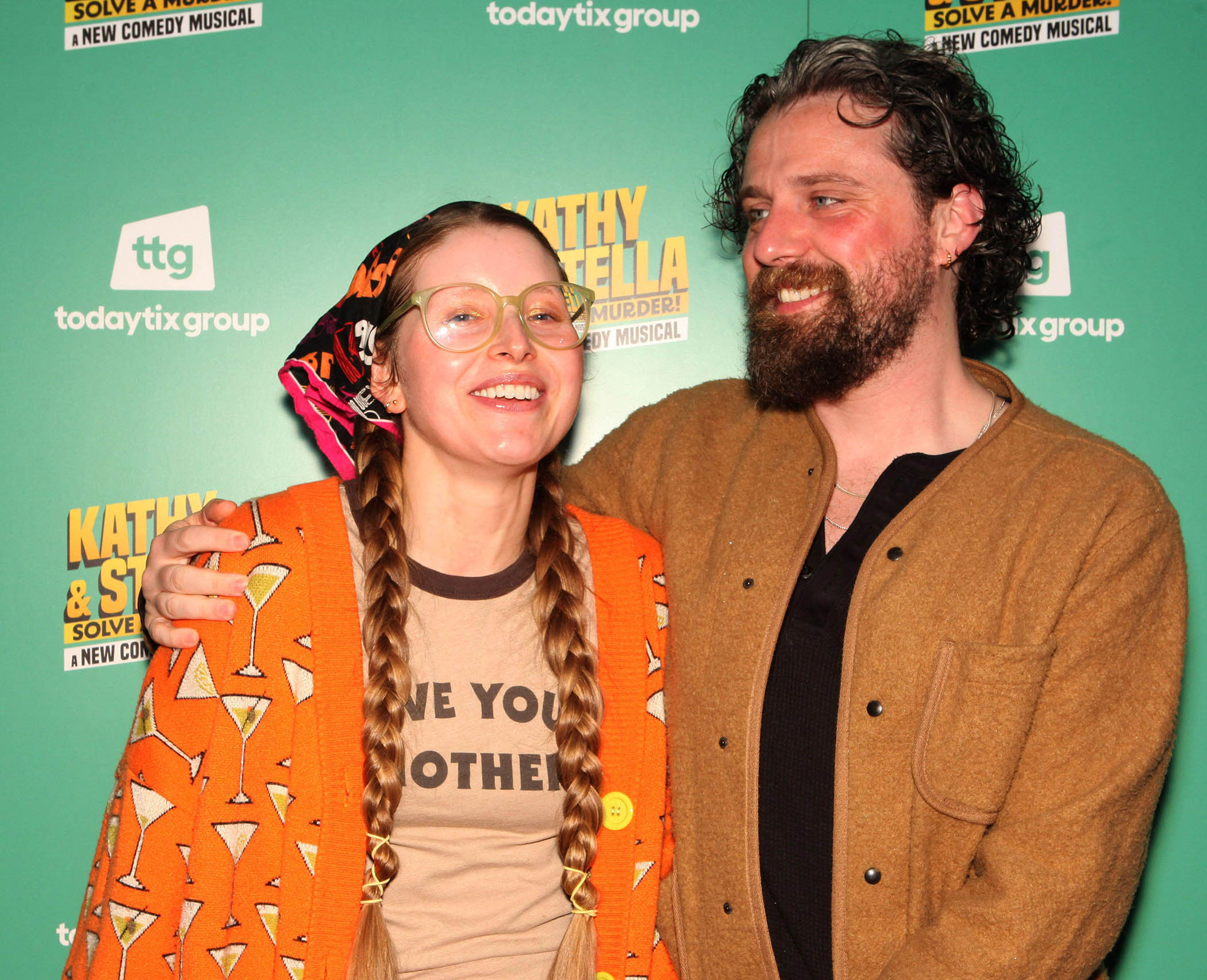
Brown with his partner, the actor and writer Jessie Cave, with whom he hosts the candid podcast Before We Break Up Again
On the evening of our meeting, Brown is performing as the headliner on a small bill at a basement club in Manchester, a regular gig. In the café upstairs, he scribbles ideas on a notepad – directions for a stage where the stakes are low enough to experiment. He has been thinking, he tells me, about our conversation earlier in the day about authenticity. Specifically, the awful spectacle of movie stars having to pretend to enjoy the company of “dweeb” interviewers while trudging through a press-junket tour. The monetisation of authenticity, he says, has led to a world in which “Billy Bob Thornton is being nice to a nerd”.
I laugh, but Brown, the terminal over-thinker, is already squinting at the thought. The joke, he says, feels warped by its algorithmic potential.
“This is a bad way into a standup routine, but a good way into an Instagram reel,” he says. Stage routines thrive on hesitation, misdirection, digression and trust. An Instagram story, by contrast, demands the blunt immediacy of a premise that can be understood before the viewer’s thumb has time to move.
“Perhaps,” he says, “the point should be more about how authenticity has become a monetisable framework? Forget being unable to tell whether something is AI or not. We need a way to distinguish whether Harrison Ford is actually being nice to Alison Hammond.”
The gig is sparsely attended, mainly by university students. Brown, however, performs with the same gusto one might expect at a sold-out theatre. He spars with the audience, moving between his natural poles of campness and violence, charming the room and then admonishing it.
Midway through the set, he tries out a Stewart Lee-ish bit about how lucky the audience is to be seeing a comedian of his experience performing in such an intimate setting. The audience looks only momentarily confused. They do not know Brown’s backstory. “I was cancelled,” he tells them. “What for?” one student shouts. “I said the N-word on stage 14 times.” The crowd laughs, assuming it’s a joke.
Afterwards, as we drive back to Liverpool in the family’s spacious people carrier, I ask whether he had planned to address the cancellation tonight, and in such an unguarded way. “I was surprised to hear myself bring it up,” he says. For a while we sit in silence. According to Nietzsche, a joke marks the death of a feeling. I ask Brown whether that might apply here: whether his sudden, semi-conscious willingness to treat one of the most difficult moments of his life as a throwaway line might be evidence of healing. “Perhaps,” he says. “I’ll have to think about that.”
Thank you for reading. Tell us what you think by writing to letters@observer.co.uk
Additional photograph by Alamy