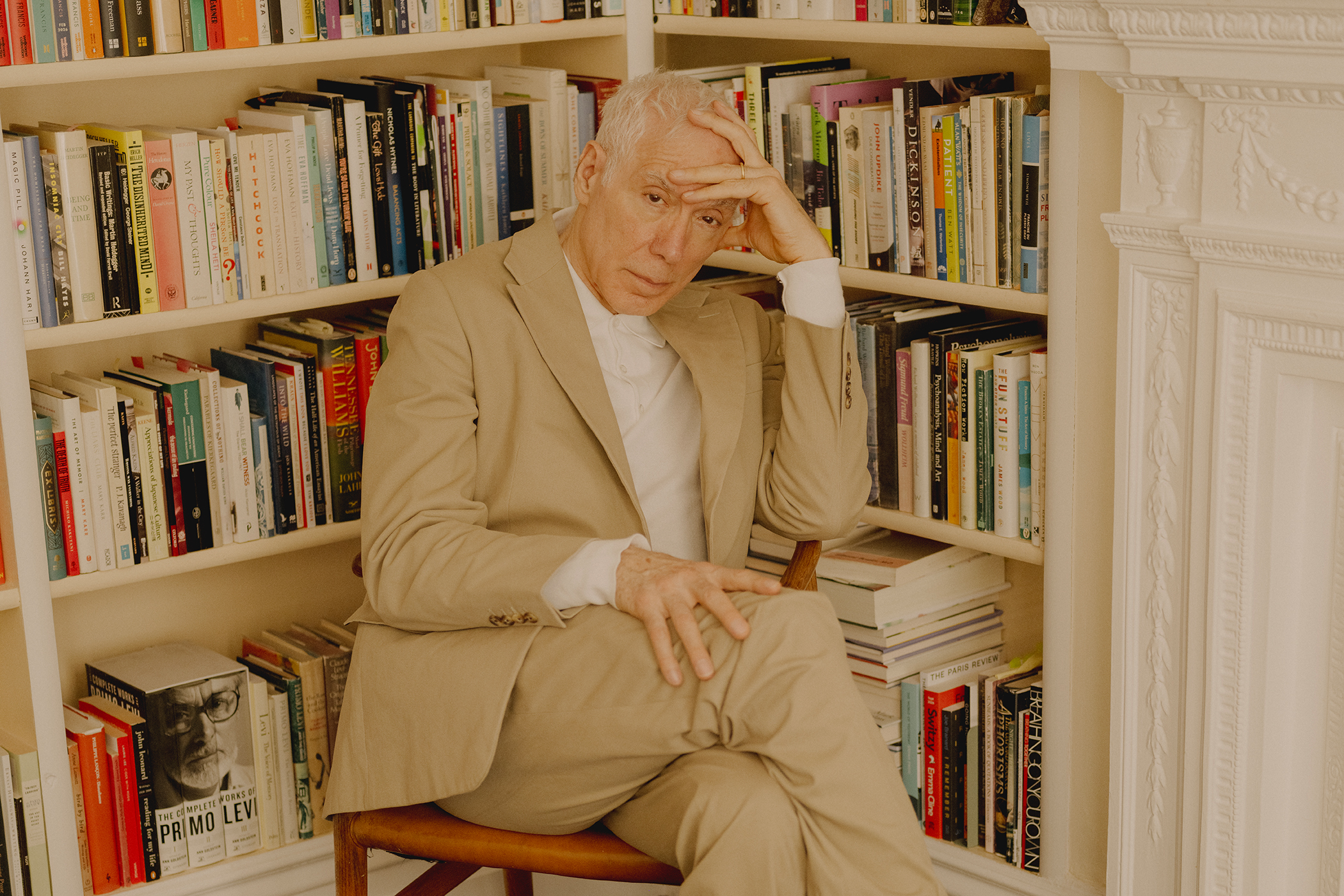


I meet Stephen Grosz, an eminence in British analyst circles, in his consulting room in Hampstead: above the mantelpiece is a photograph of an analyst’s couch, as if the room is reflecting on itself. Before we begin, Grosz, a tall, grey-haired man with a gentle manner and an American accent – he was born in Indiana – cleans his spectacles carefully and asks if I would like to clean my own. It feels like an exquisite metaphor.
I have been in therapy for 30 years, and it would be wrong not to describe my feelings about meeting Grosz. I am afraid of him, and I want him to like me. I am projecting my estranged father on to him, of course, but our roles are reversed: Grosz is usually the listener; I am usually the talker. Entering the consulting room, I will feel vulnerable, especially with an older man. Perhaps he is nervous, too. He stops the interview after 12 minutes and asks that we begin again.
Grosz has practised in London for 40 years and has written three books about his heavily anonymised patients: Therapy, The Examined Life and now Love’s Labour, a series of vignettes related to love. The Examined Life was a surprise bestseller because it unlocked, in plain and elegant prose, the secrets that we carry, and that impel us. To read it is to discover a language you didn’t know you could speak.
Many of the case studies in Love’s Labour are about lost love. I found them both wonderful and terrible, because there is so much fear in them. But perhaps I am writing about myself. Everything you say, or think, in a consulting room is a tell: psychoanalysis is detective fiction for the soul. Often Grosz’s patients do not speak to him openly but rather with their behaviour. One boy spat on him to demonstrate the disgust with which he was treated by his family. A girl once tried to embrace him, reanimating the rejection of her dead father. Grosz’s patients let him experience what it is like to be them. He calls it “a journey to the underworld”.
Grosz begins Love’s Labour with himself. “Because I wanted it to be about love,” he says, “I thought I had to put in certain things about myself, because even I’ve fallen in love.” He emphasises the “I” to make it sound like a joke – as if a man so devoted to understanding emotion cannot be overwhelmed by it – though it isn’t. “I thought it was cowardly not to,” he goes on. “I think you only believe a book if you believe the narrator.”
And so, in the prologue, which he calls “Surrender”, Grosz returns to himself in 1983, when he began the therapy required to be an analyst. He writes this of himself then: “I was 31 years old and immature. I was impulsive and quick to fall in love and often confused intensity with intimacy. I thought I was clear-eyed, but I saw love through the limited and limiting storylines of popular culture”.
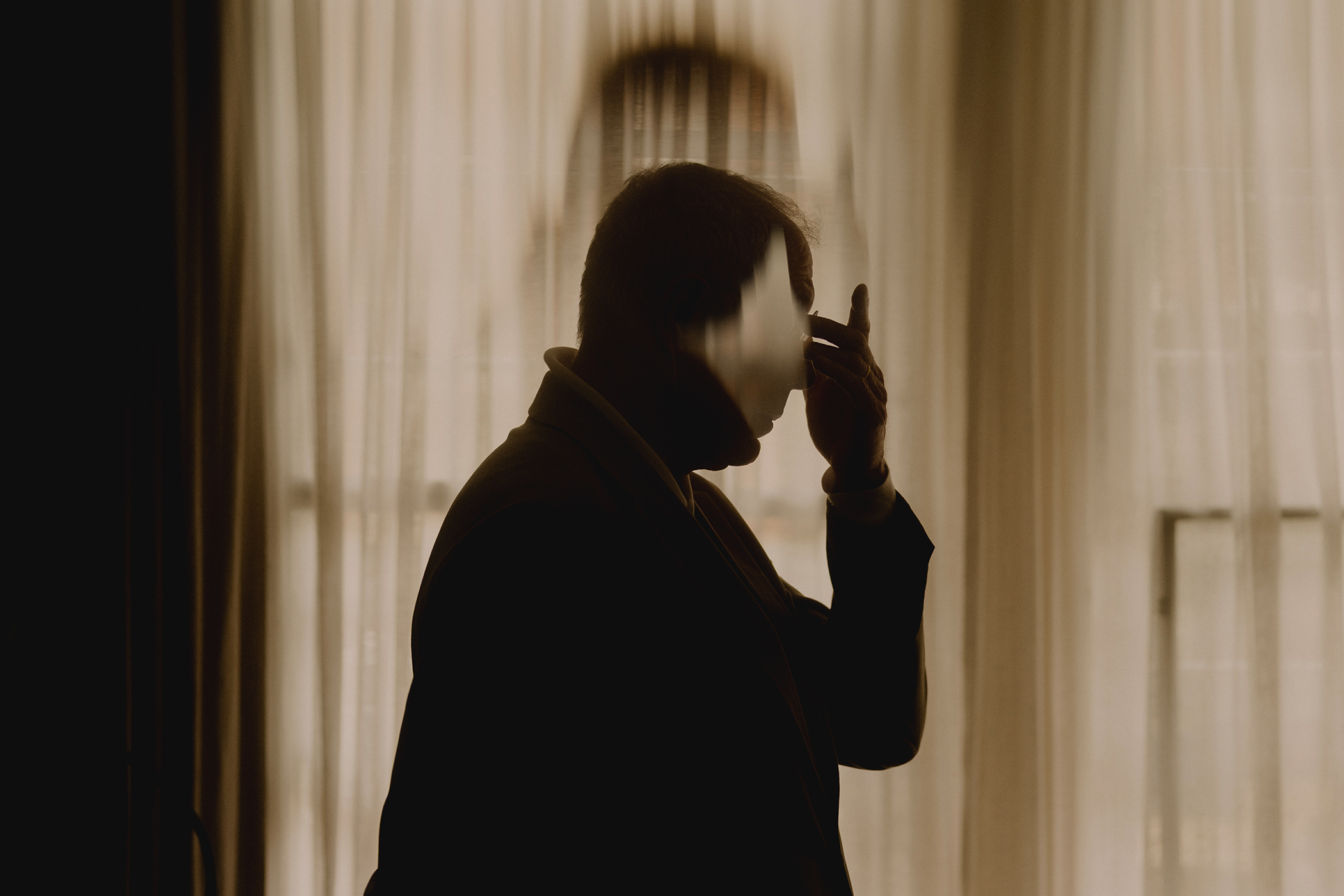

Grosz is the middle child of three, born to a father whose parents died in Auschwitz, and they are all analysts. At his first session “I could hardly speak,” he says, which “I think now was a response to the relief of knowing that someone was there to listen to me, and that he would be there the next day and the day after that, for as long as I wanted to come.” Grosz was born with a birth defect, and he spent a lot of time in hospital as a child. “I loved my parents,” he says, “but, through no fault of their own, I didn’t altogether trust them growing up.” In Love’s Labour he adds, “They never talked to me about my surgery. I think they believed that if we didn’t talk about it, I’d get over it sooner.” He became “over-conscientious to reassure them that I was OK,” and “couldn’t speak my anger.” So began, he writes, “my masquerade of goodness.”
It didn’t serve him. “Like lots of people,” he says, “I believed that if I submitted, if I gave everything to the person I loved – also to teachers, also to my analyst – that they would take a shine to me, they would love me, and that their affection back, their love, would transform me. That’s very common, but it’s not love. It’s a masquerade of love.” He offered submission to his analyst – also, presumably, to his lovers – but not surrender. “Submission is transactional,” he says. “To surrender is to let go, to experience a release. When two people surrender to each other, they feel alive, empowered, accepted. They feel love.”
He didn’t understand pain. “I thought the many kinds of pain we suffer when we love another person – longing, anxiety, grief – were feelings to avoid. I didn’t understand that pain is the finest instrument we possess for knowing what we desire”.
Grosz knows that it is common for us to deceive ourselves about love. “But we also have the power to undo self-deception. Love’s labour is the work we must do to see clearly ourselves and our loved ones. It is our attempt to join the world as it is.” He quotes the novelist and philosopher Iris Murdoch: “Love is the extremely difficult realisation that something other than oneself is real. Love is the discovery of reality.”
Newsletters
Choose the newsletters you want to receive
View more
For information about how The Observer protects your data, read our Privacy Policy

Love’s Labour is split into a series of patient case studies, of which his first is a woman named Sophie, who comes to Grosz because she is engaged to be married but cannot bring herself to post her share of the invitations. She brings to therapy a dream: she and her parents – she is an only child – are in a waiting room, about to be gassed. “We were all going to die,” she told Grosz. There are two truths in Sophie’s story. The first is universal: “If we are ever to have intimacy,” Grosz writes, “we will have to lose our adolescent selves and the impossible expectations we bring to love. As time passes, we lose our younger selves, people and places, and, eventually, life itself. Ultimately, we lose everything we have loved.” He goes on, “We give up the womb to have the breast. We give up the breast to have solid food. Each of those is a loss.”
The second is truth exceptional: the baby born to her parents before Sophie died. “Through no fault of their own,” Grosz writes, they “couldn’t bear to let Sophie become important.” The key to his understanding was in a detail: Sophie was always late, and she was late because “she had learned from her mother that what was absent could be more important than what was there.” Sophie had to learn to be embodied, unlike her dead sibling. She had to learn that she is real, and that only when she was real could she love. What Sophie told Grosz mirrors Murdoch’s quote. “I didn’t understand,” she said, “that mourning means accepting reality.”
Then there is Ravi, who was so jealous of his wife’s luminous ability to love him that he fantasised she was having an affair. “Ravi’s belief that Sonal [his wife] was unfaithful vandalised the real love she gave him,” Grosz writes. “His delusion degraded her love. It destroyed the idea of her as his loving wife. He couldn’t see himself clearly and, in the end, refused to do love’s labour: the ongoing task of reconsidering our story anew.”
While reading the book, Ravi enraged me – he refused to care for Sonal as she was dying – and so I ask Grosz: “Don’t you ever want to shake them? Don’t you ever say, ‘Come on!’” (I am thinking about Dr Melfi, the psychoanalyst in The Sopranos, who complains that her patients lie to her). “I do say, ‘Come on,’” he says. “I can be very tough.”
Is Dr Melfi a good analyst?
“No,” he says.
‘When two people surrender to each other, they feel alive, accepted. They feel love’
‘When two people surrender to each other, they feel alive, accepted. They feel love’
There is Kate, who lost her beloved father and slept with her uncle. She wanted to both revive her father and receive the love of her cold mother through a father-figure. There is Matt, a highly functional married man who secretly sleeps with men. Grosz decides that Matt does this because, as a child, he was never allowed to be angry. “I feel slightly unreal,” Matt told him. “Maybe what you want is a place where you can bring all of yourself,” Grosz replied. Matt “started slowly being more available to his rage”.
Grosz quotes the analyst Donald Winnicott: “If a child is not hated when he does something deplorable, then his love – when he does something lovable – will not be real to him. It seems he can believe in being loved only after reaching being hated.” Children must be allowed to be hated, and to hate. Matt had falsely “learned that hate ruins everything,” Grosz says. “His sexual life was his solution to the problem of not feeling free to hate the person he loves.”
I was most struck by Abigail, a student unloved by her father and working as a sex worker. This “was an antidote to my father,” she told Grosz, because with her clients she could have “the very feelings she’d longed to have with her father”. Sex work, she said, “cured me of my father”. But it didn’t. It was instead a form of revenge, because “she was so angry with him for not loving her as a child.”
Intimacy starts with the self. Even so, I ask Grosz what makes a successful marriage. “Two forgivers,” he says swiftly. To love well “you have to see yourself. Sometimes you’re great and loving and wonderful, and sometimes you’re petty and awful.”
‘For a lot of people, love is about doing what they have to do to be desired’
‘For a lot of people, love is about doing what they have to do to be desired’
He recalls a “really difficult” patient who described a fight with his wife. “His analysis cut in, and he was able to think and see things from her point of view for the first time. And he started discovering. We just see our story, and we don’t hear the other person’s story.”
In Love’s Labour, one analyst runs off with another analyst’s husband, and provides a neat paradigm for a rather bogus question about analysis: do you rescue others, or yourself? I agreed with the husband thief that she should inhabit herself by loving him, but I hated her for it. Did Grosz? “My wife would laugh,” he says. “But I think I feel I barely know what goes on in my own marriage. I just don’t feel I could judge people. I’m always surprised when people do. Who knows what was going on in those marriages?”
Sometimes people offer “a masquerade of love” in therapy, as he did when he was young: “I come each week. I pay my bill.” These patients are not “bringing 100% of themselves,” he says. They are bringing a transaction. “If I give you all this, the stuff you ask for, and the stuff I think you want, you will love me and change me.” They take this transaction with them everywhere. “For a lot of people, love is about doing what they have to do to be desired,” Grosz says. “It’s not about the work of seeing themselves or seeing the other.”
He briefly thinks of a poem. “I love that [Czesław] Miłosz poem about seeing oneself at a distance,” he says, and he quotes it: “Love means to learn to look at yourself / The way one looks at distant things / For you are only one thing among many / And whoever sees that way heals his heart”
He says the last line quietly, but avidly. “It’s so simple,” he says, “but there is something about our point of view on our narratives, our storytelling, ourselves.” If we can listen “with kindness and compassion, realising that often people doing hurtful things may be doing them because they’re protecting something, or frightened of something, it means slowing down, thinking about the impulse. And that’s what love’s labour is. It’s that work in a relationship. I think we’re raised to think that we don’t have to do that. I think that’s a lot of the narrative of popular culture. That happy relationships happen [by themselves]. And I don’t think they do.”
The confusion is natural, because it is also born of love. “From birth, we are raised to conceal our complex, inner lives; no matter what we feel about our mother and father, we’re told we love them. Between what we feel and what we are told we should feel there is a gap. Our desires are created in this split.”

To me, the most interesting story about Grosz is in Therapy, his first book. It is about the time he took his father to his birthplace in Ukraine, in the company of a tour guide called Alex. They were touring the empty Jewish sites – almost everyone who had lived there was dead. His father did not like the wandering: he asked to go back to the hotel. Alex told Grosz about another person he had guided. “This was where my grandmother’s house was,” she told Alex, “the synagogue was here, my home was here.”’ Alex told Grosz, “There’s nothing there, and she sees everything. With your father, everything is here, and he sees nothing.’” If I think this is key to Grosz – the person he couldn’t return to childhood for healing was his own father – he will not talk to me about it. I asked. Still, he told the page. “Sometimes, like Alex, I take my patients back to the place they started from, using whatever landmarks remain. I, too, help them pace out an invisible but palpable world”.
I wonder if this diffident eminence is really a crazed romantic: but that may be projection. Perhaps I am. Even so, psychoanalysis is pain. And pain tells you what you need.
Love’s Labour by Stephen Grosz is published by Vintage (£11.99). Order a copy from The Observer Shop for £10.79 (10% off RRP). Delivery charges may apply