


The bench we sit on is raggedy and disagreeable, with a gap in the middle where there should be a plank. The view, however, is fit for meditation: a roll of Hampstead Heath and trees that ache to bloom. As we look at the bandstand 100m away, Tom Rosenthal says something silly. I am inclined to believe it. “I’ve been in situations where I’ve seen someone from this distance and had a good feeling.”
Nothing obliges Rosenthal to approach people in parks and ask if they are willing to chat. He is a 39-year-old musician with two children and billions of streams on Spotify. But a little over a year ago, he wanted to do something new. “I grew up in a flat with my mum, and the window from this flat looked over a very small park. I could see the benches in front of me. And I thought it’d be fascinating to talk to these people on benches.” It is a simple origin story for a podcast with a simple title: Strangers on a Bench.
The concept is as you might expect. Rosenthal sits down on a bench next to a stranger and, if the stranger consents, he records their conversation. In the first 80 episodes, these strangers have been old men, young mothers, flâneurs and homebodies, people battling serious illness and those who have seen it off. Each episode is a walk through someone’s mind, contoured by the highs and lows of life and death.
Rosenthal knows how, and when, the podcast series will end. But for now a few seats are left in his time capsule. Because Strangers on a Bench is a time capsule. It is an antidote to an atomised world, which so often falls short of true connection. It might be something else, too.
The confessional boxes of the late 16th century placed a screen between confider and priest, before which Christians might be asked to divulge their sins to the entire congregation. Many of today’s digital equivalents, such as the subreddit r/confession, which gets 2m weekly visits, and the art project PostSecret, which has more than 800m views, are a mixture of their forebears. Anonymity is preserved, but the words are public.
Strangers on a Bench, which receives around 100,000 downloads an episode, adopts the same approach. No one who appears on the podcast is named and nothing is captured on video. This is designed, says Rosenthal, to eliminate preconceptions. “It allows listeners to be surprised and give someone more of a shot than they would have in other circumstances.”
At least half of those who are asked don’t want to chat. Rosenthal can have bad days where nearly everyone says no. But his homely charm works its magic on enough people. Maybe it’s the lilt of his voice, steeped in song with a slight lisp, or the warmth of his features, a baby face with a beard. Whatever it is, I experience it myself.
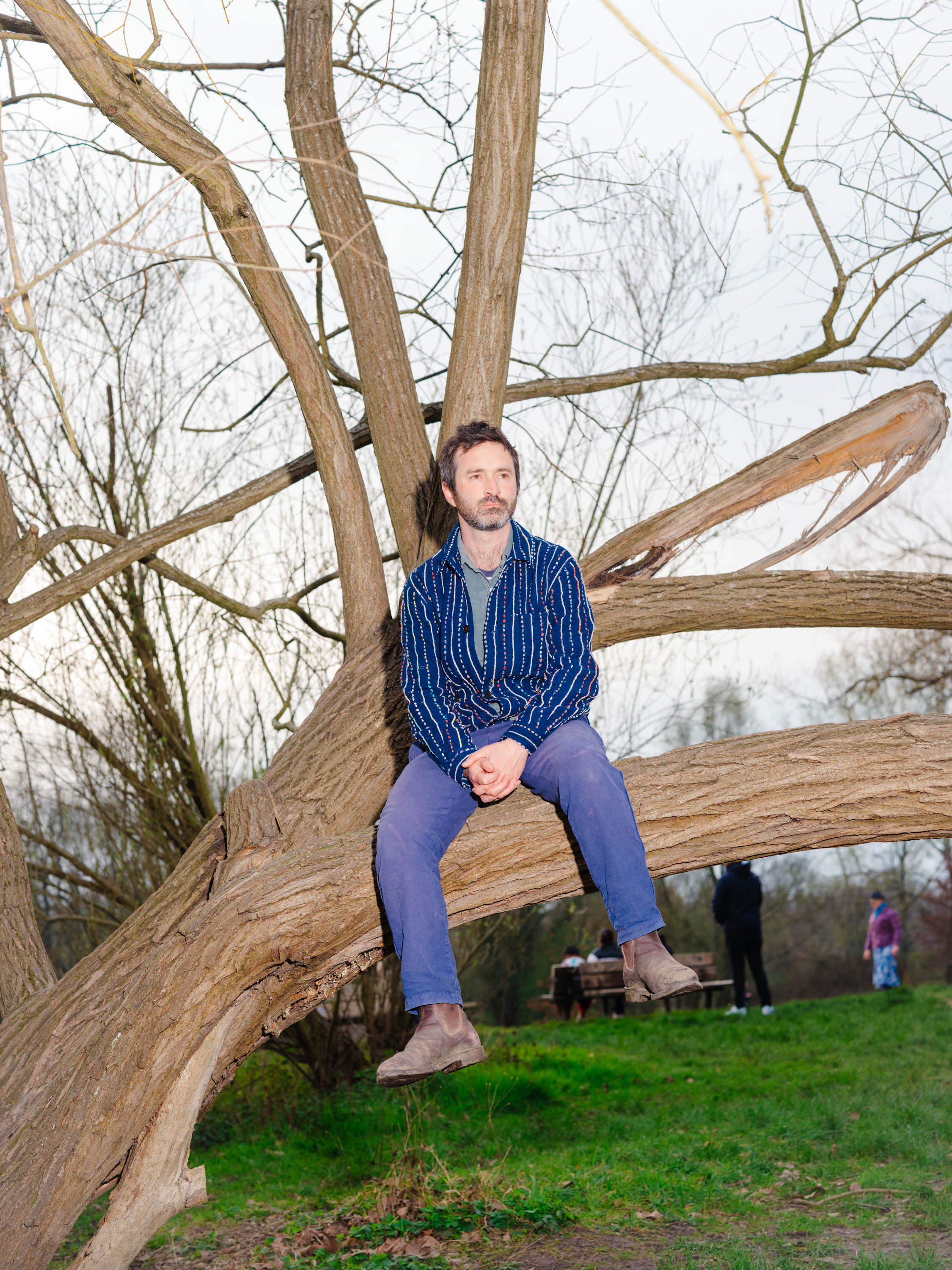
‘There have been numerous instances where people, especially men, say: “I don’t talk about this with my friends. We don’t have these conversations”’
I am supposed to be interviewing him on a bench. And yet there are times when I fall into confession mode, babbling on about narrative therapy and the virtues of green space. I sense him listening as he would listen to a stranger. Prying when he needs to. Keeping silent when he should. People on the podcast regularly express surprise at how vulnerable they are being. Perhaps it’s because Rosenthal is happy to share insights into his own life. What you hear feels less like an interview than a conversation between equals. It feels the same when I talk to him. He is, I admit, quite good at this.
Rosenthal starts each episode by asking the stranger their favourite day of the week. The conversations that follow have recurring themes. (“So many people have had awful childhoods.”) But they are never predictable. “Anything can happen. There have been huge moments when someone’s revealed information halfway through which has just changed the outlook of everything.” This can be an affair, a break-up, an illness, an estrangement.
The first episode I heard was called “The Disappearing Cyclist”. It features an ageing Cockney who spent 35 years on drugs before one day saying to himself: “Your life is shit, do you want to change it?” He goes to a bar, where he begins chatting to a couple who convince him to cycle to India. He ends up on the road for 17 years. Like many of Rosenthal’s strangers, he is a folkloric figure. “I’m an old man who talks to people then disappears,” he says. But he is lost for words when you least expect him to be. Asked how he felt when he received a major diagnosis, he says: “I don’t know. I really don’t know.” Sometimes there is no story to tell.
Another stranger confides that she left her private equity job due to burnout, describing how she started walking in thepark. A therapist tells her to talk to the trees, to watch how slowly they move. “Everything in the universe should be operating more at that frequency,” says the therapist. Each of Rosenthal’s episodes do just that, fading into colour like sycamore in spring. “There have been numerous instances where people, especially men, say: ‘I don’t talk about this with my friends. We don’t have these conversations.’ Or: ‘I haven’t really talked about this before.’”
Strangers on a Bench has predecessors and contemporaries. In 1980, Allan Bridge set up the Apology Line in New York City, where callers confessed to an answering machine – occasionally to murder – and left others to judge. In 2010, Itaru Sasaki set up Kaze no Denwa, or the windphone, in Ōtsuchi, Japan. It is an unconnected telephone booth where visitors grieve departed loved ones by speaking into a receiver.
In the UK, A View, From a Bridge takes the visual concept but puts the phone on a bridge. A camera slowly zooms out from the person talking. Some celebrities have appeared, but they are far less interesting than the ordinary folks. The undisputed stars are Dan, Roy and Owen, three teenagers from Derbyshire who like to “chill out with a spliff on, catch a couple of carp, eat a bit of snacks”. Within two minutes, they have meditated on friendship, loyalty and parental loss.
Tomsieplomsie, an Instagram account with more than 100,000 followers, practises a less stylised version in the Netherlands: a short vignette of someone’s life told at street level. Many of the love stories are sweet enough, even if they follow familiar beats, but the best participants are the ones who say something unexpected. Like Michaela, who admits she used to get sad when she had sex with her new partner, because she couldn’t help but think of her old one. The creator, Thomas Caarls, tells me that he began the project because he was “feeling a bit lonely”. He has a straightforward view of why the format works. “I think everyone likes to talk about themselves,” he says. “I think everyone likes to be heard.”
It’s surely deeper than this. Rosenthal gives three reasons why people listen to Strangers on a Bench. They would apply to similar projects, too. People like to eavesdrop, like to hear themselves in others, and like to hear about lives unfamiliar to them.
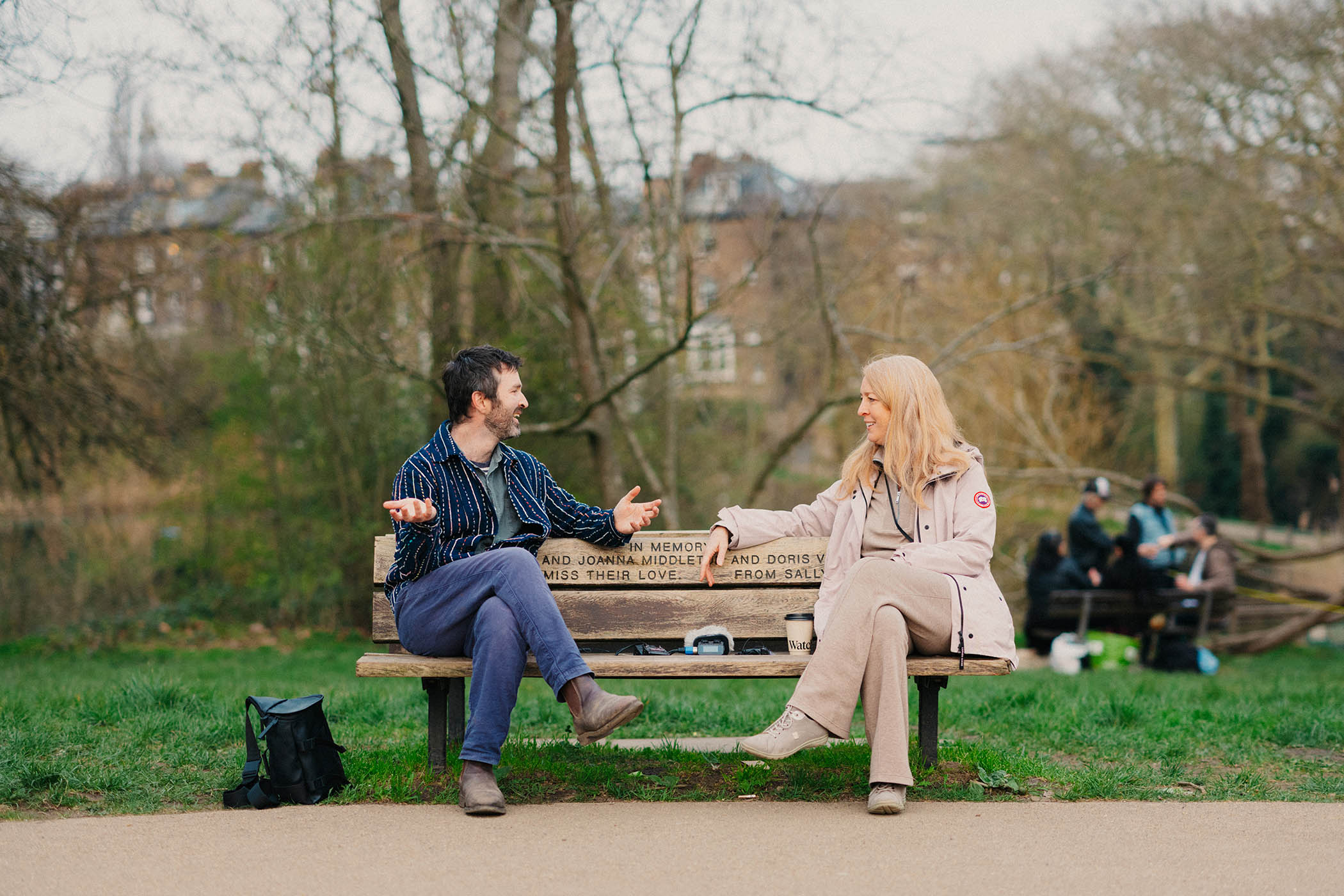
‘I don’t think anything I’ve encountered comes close to the elation I feel being part of bringing someone towards that moment of epiphany’: Having a chat on Hampstead Heath
But there is a fourth reason, which may be proffered by a cynic. We are in the age of the trauma plot. Society is obsessed with devastating backstories, whether of royals (Spare by Prince Harry), child stars (I’m Glad My Mom Died by Jennette McCurdy) or fictional friendship groups (A Little Life by Hanya Yanagihara). Psychic wounds have come to be regarded by many as shorthand for entire personalities. According to this worldview, trauma is a currency in which pain is not pain until it’s disclosed, and pain is not understood until it’s seen. Only in disclosing the pain can the healing begin. Only in seeing the pain can someone prove their moral worth.
And there is pain in Strangers on a Bench. Rosenthal has only been brought to tears once. “You wouldn’t have heard it, because she was crying more. The woman was talking about her failed suicide attempt and she was talking about it while crying.” But loss comes up repeatedly. Such as the story of another woman whose child died as an infant. “She’d never processed it. By thinking about how she lives now, and what her relationship with her other child is, and her own life, we could trace her being stuck back to that.” Rosenthal is honest about how these breakthroughs affect him. “I don’t think anything I’ve encountered comes close to the elation I feel about being part of bringing someone towards that moment of epiphany.”
But I’m interested in how the listener feels. Because what Rosenthal is describing sounds a lot like therapy without containment. Is that why people like Strangers on a Bench? Because they want to hear a story of pain? So they can relate to it or feel relief that they do not? Is the podcast making money from this dance between confessor and eavesdropper?
These are legitimate questions, but fall down on two fronts. First, Rosenthal doesn’t earn anything from Strangers on a Bench. “I choose not to have adverts because I hate them,” he says. “Also, I don’t want to exploit the strangers in any way. Money ruins everything.” Secondly, a scan of recent reviews of the podcast finds no mention of suffering or trauma whatsoever. It is all about connection, insight and gentleness. Perhaps the audience has self-selected to exclude the kind of people who slow down at car crashes, but if it has done so, it’s for a reason. When strangers get cold feet about being on the podcast, which has happened a couple of times, they no longer feature. When strangers choose to talk about suffering, they never appear to be defined by it.
There is no better example than episode 47, when Rosenthal sits next to a man with terminal cancer. This is the most potent set-up imaginable for dwelling on pain. But that’s not the direction the conversation takes. The episode is joyful and diverting, not least because the stranger has amassed an enormous collection of brass screws. We know this because he talks about them at length. There is acknowledgement that he is dying, of course, and some of the misty-eyed wisdom that humans impart when they near the end: “Tell people you love them.” But in this living memorial, the emphasis is on the living. On the inevitable flow of the world. “There we go,” Rosenthal says to close the episode. “There we go,” responds the stranger.
Rosenthal was invited to the funeral. Mourners could scan a QR code to listen to the conversation and each took a screw from a box. Rosenthal has a couple of his own. No longer a stranger at all.
For the length of a podcast, each person who talks to Rosenthal has power over their story. A bench and a microphone can do that. The conversations are edited, bits are cut for length, but none of the chronology is ever changed. People are at liberty to discuss what they want and sometimes you hear a stranger grow into this role. They are guarded at first, then they transform. “It’s like watching the changing of the seasons in full flight,” says Rosenthal. And as one season folds over to the next, they can transform others, too. “There have been people who’ve changed their whole lives after listening to an episode.”
“Has the podcast changed your view on the world?” I ask.
“Basically, yeah. I probably wouldn’t have separated from my partner if I hadn’t started the process [of talking to strangers]. I would have done it eventually. What I mean by that is you talk to enough older people who are forced to compartmentalise their life and go: ‘These were the pivotal spots. Then for five years I did this. For five years I did this.’ Those little bits of time are clicks of a finger. They can piece together their whole life in a matter of minutes. It’s a heavy realisation.”
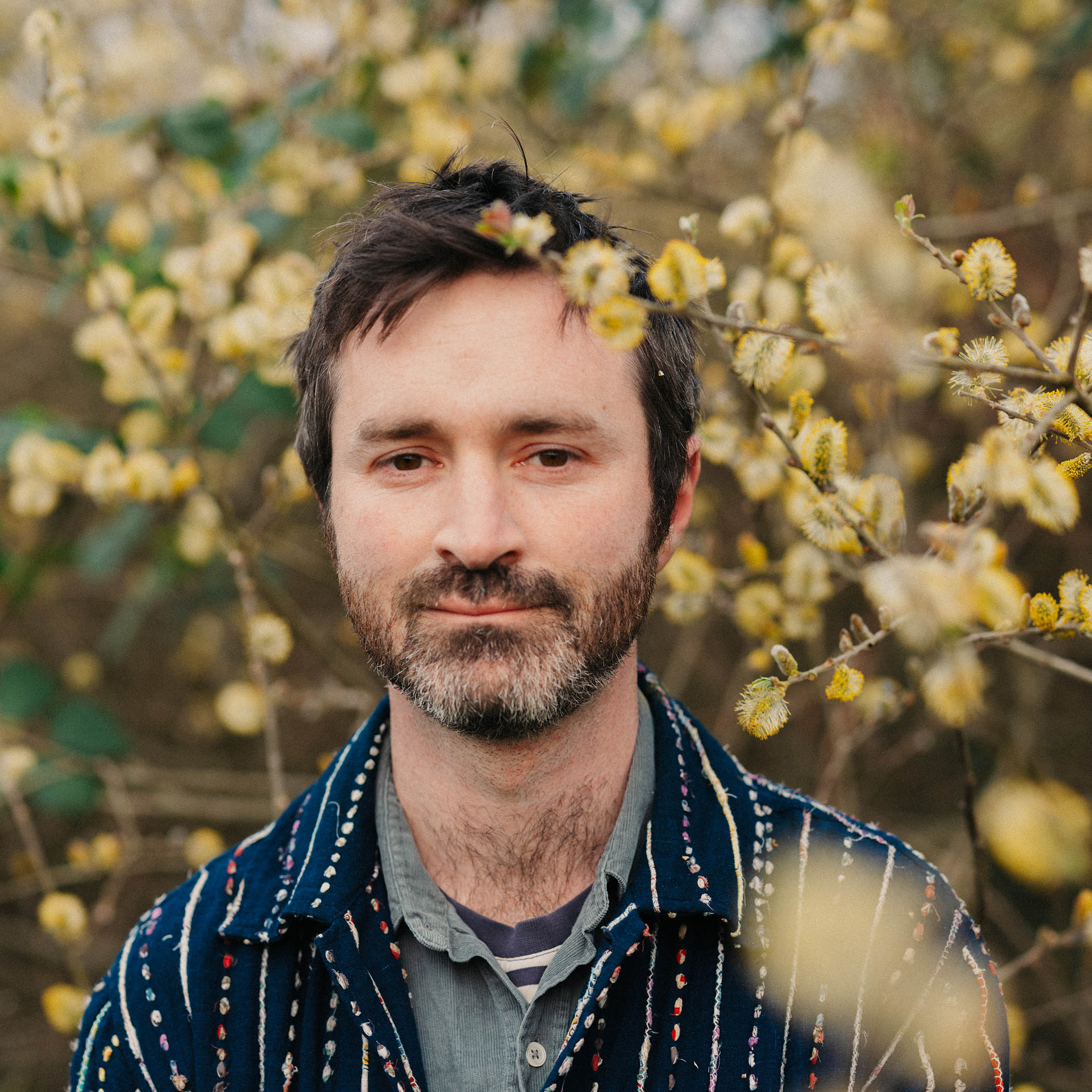
‘I probably wouldn’t have separated from my partner if I hadn’t started the process of talking to strangers’: Tom Rosenthal
Rosenthal waves his hand over the gap where the plank should be. “These 80-year-olds are me and you tomorrow.” That, I suppose, is the power of a confession. If it lands with the right person, at the right time, it can send them down a different path.
The last 80-year-old I knew, I mean really knew, was my grandmother. I was born in a pebbledash house in Burnley with her, my mother and my brother. My mother worked long shifts at Blockbusters, so my nan often looked after me. At 4ft 11in, with wild curly hair, she was highly superstitious and invariably hard up. On Saturdays, we watched Who Wants to be a Millionaire. It was a natural choice for a woman who graced every bingo hall in the South Pennines. “When I win the lottery,” she would say, “you can have what you like.”
She died in 2014. I didn’t really see her in her final years, after she was diagnosed with cancer and Alzheimer’s. I was afraid of what the creases on her face would show me: age, mortality, the future that awaits us all. It cost her too much to talk over the phone, so she sent letters. They’re full of warmth and longing. I’m not sure if I responded to any of them. “Sorry I didn’t see you when you came home,” she wrote in one. “I miss you very much. I gave your mum £25. She said you needed to buy something for your birthday. Next year I’d like to give it you myself.”
In my nan’s last letter, she said she was saving up for me in 5p coins. “I wish I was young again, going dancing and drinking. Never mind.” She signed off on a cliffhanger: “I hope I’ll be winning the Thunderball and I mean the big win.” When she passed away, I couldn’t bear to see her body. I was worried I would no longer recognise its creases. I was scared that it would show me a stranger. If I believe Rosenthal, it might have shown me how to live.
It is 2026 and I am on a bench. You have my confession. The one that, 12 years on, I still find difficult to understand. Tom Rosenthal has long since left me on the Heath. So I interview myself. I hold a stick like a mic and talk to the trees. I watch how slowly they move. How does it feel to admit all of this now?
Better. Better, I think.
Newsletters
Choose the newsletters you want to receive
View more
For information about how The Observer protects your data, read our Privacy Policy