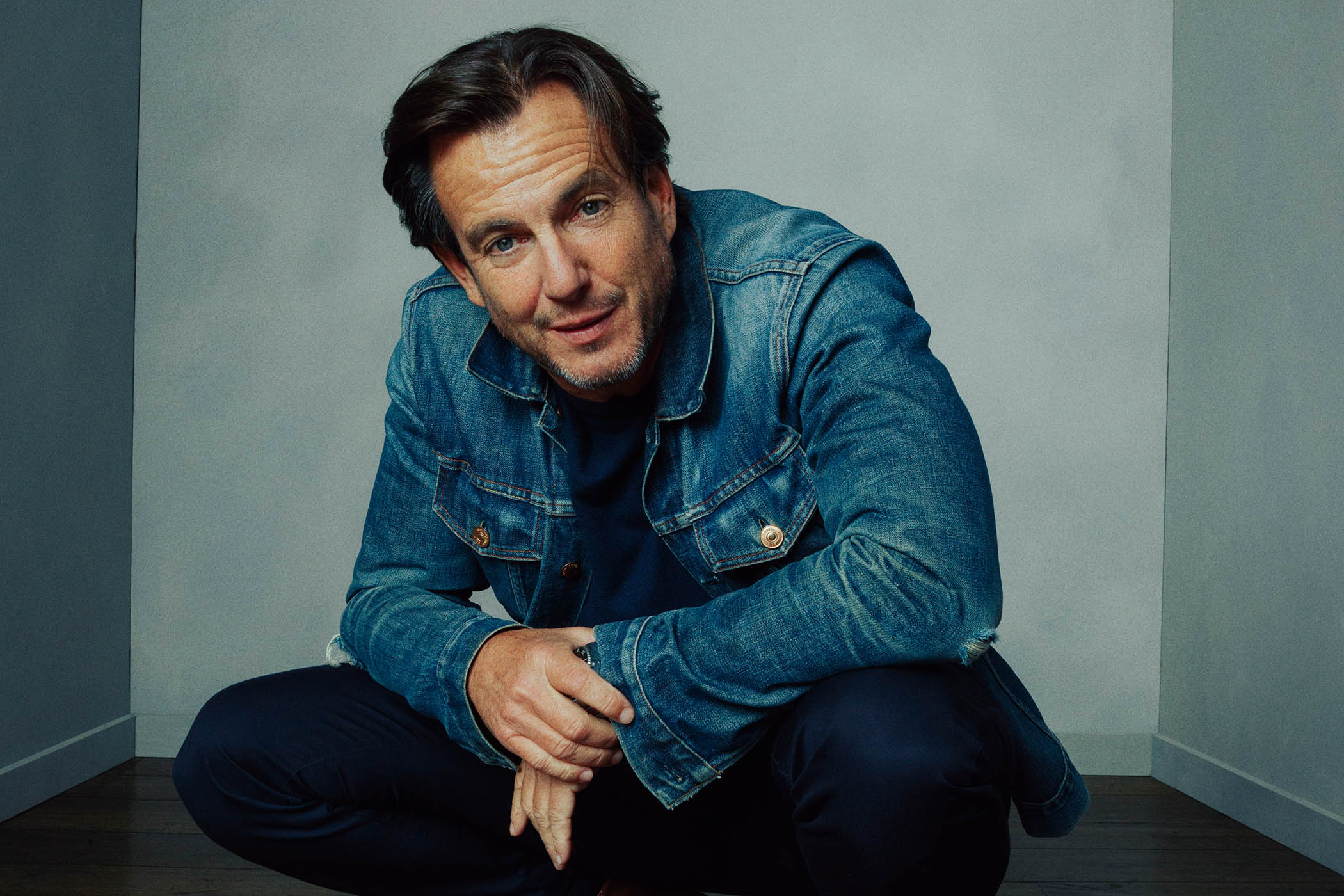

Will Arnett, 55, was born and raised in Toronto and moved to New York City in 1990 to study at the Lee Strasberg Theatre and Film Institute. He is best known for playing Gob Bluth in the series Arrested Development, and for voicing both the titular horse in Netflix’s animated series BoJack Horseman and Batman in the Lego Movie franchise. His voice can also be heard as one third of the popular podcast SmartLess, which he hosts with friends Jason Bateman and Sean Hayes. Arnett lives in Los Angeles. His latest film Is This Thing On? – co-written by Arnett and Mark Chappell, and directed by Bradley Cooper – is out on 30 January.
Is This Thing On? is about a man going through a divorce who turns to standup, inspired by the life of the British comedian John Bishop. How did you first hear his story?
From John Bishop! We met at a lunch on a canal boat in Amsterdam in November 2018. One of our mutual friends said, “John, why don’t you tell the story of how you became a standup comedian?” And he did. I was like, “Wait, wow, this is insane.”
You co-wrote the script as well as playing the character based on Bishop. What about his story did you think would make a great film?
It was less about him becoming a famous standup, and more about him remembering moving out as he’s going through a separation. He was living alone and spending the weekend with his kids. One Monday with nothing else to do, he went to an open-mic night, went on stage and said: “I think I’m getting a divorce.” He got some chuckles, and then started to expand on where he was at for the first time out loud. The relief he got from that stuck with him in the same way that it stuck with me as an idea. And then he went back the next week and did it again.
You spent time in comedy clubs in New York as part of the research. How did that go?
I rehearsed for six weeks in front of real audiences as [my character] Alex Novak. People would sometimes know who I was and I’d have to push through that. I had to fight my urges as a performer to win the room over. Bradley [Cooper] would say to me: “You don’t need to go and be you. We’re doing something different.” But even playing a character it was still scary, because it’s just you and a mic. There were times when it was great, and there were times where, put simply, I bombed.
Did it become addictive for you, as it does for Alex?
100%. I mean, one night recently I called Liz – the manager at the Comedy Cellar who plays herself in the film – and asked her if I could go out that night. So after a long day of working I went down at 10 o’clock, got on stage and did some material I’d written. That feeling is really intoxicating. I can see where the magic lies.
Did you find any similarities between sharing a funny anecdote on your wide-ranging, off-the-cuff chat podcast, SmartLess and doing standup?
I’ve never consciously made that connection, but I could see how it did help. I think there’s experience gained from talking openly on the podcast, which is not scripted. We never discuss what we say before we get on the show – everything is happening in real time.
The film is about divorce and families coming apart, which is something you’ve experienced. Did it feel cathartic or painful to dramatise that experience?
It’s not my story, but it’d be foolish to think that I didn’t identify with some of the experiences Alex is having, because that’s part of my life. I always try to bring in elements of my life to connect to the character, because if I can’t connect through something that feels real, then it’s not going to seem real.
Standup is notoriously difficult to capture on screen. How did you and Bradley Cooper approach it?
The first thing Bradley said to me was: “I see your face filling the frame.” He had a very clear, cinematic view of how he wanted this to be. And that started to inform the way that we rewrote [the script after he came onboard to direct]. Bradley established that dynamic of the camera being up-close and we realised quickly that it was going to be a really effective way to tell this story. People say, “Is it distracting having the camera so close?” And in fact, it wasn’t because it felt less performative. The closer you get, the less you can hide.
You and Bradley have been friends for a long time. Did that help when working on this?
It helped because we trust each other implicitly. We’ve both been through so much in our lives. I know everything about Bradley; he knows everything about me.
You grew up in Canada. Is the sense of humour different in the US?
Canada sits in a funny spot. To use a hockey analogy, if I may, we’re up against the glass looking in. We are close to the US, but a bit separate. We kind of live in our own place comedically, too. Canadians are a bit better at laughing at themselves, which I think is really important.
Who gives you the most satisfaction when you make them laugh?
Probably my dad, and then my grandfather before him. Sean [Hayes] and Jason [Bateman, his SmartLess co-hosts] are hilarious. It’s satisfying to make those guys laugh.
Comedy and podcasts are attracting huge audiences of young men. What about those mediums do you think has drawn them in?
For our podcast, I think we actually have more women listeners than we do men. But boy, that’s a really big question. Why are young men so unhappy? Internet isolation, addiction to phones, algorithms… Where do you want me to start?
I read that when you were younger, you were asked to leave school because you were a bit of a troublemaker. Has that sense of mischief been useful in your career?
Yeah, mischief is really important in comedy. With school, it was a mutually agreed upon separation – a conscious uncoupling. I didn’t like the confines of a traditional all-boys boarding school, which was really rule-heavy. But it’s also a good place to sharpen your comedic skills because it makes you more inventive.
Is This Thing On? is released on 30 January