

The Nasa bleep you hear, when mission control radios the Artemis astronauts, has a name: it’s a Quindar tone, a slightly flat B note or a very sharp A, to warn the cosmos that its silence is about to be interrupted.
It’s a delightful irony that our silent universe has inspired so many musicians and composers. Orion’s progress in the past week has prompted plenty of spaced-themed earworms: try Gustav Holst’s The Planets suite, David Bowie’s Space Oddity, the Prodigy’s Out of Space or the Waterboys’ Whole of the Moon. You’re welcome. Don’t @ me.
Those Quindar tones have lodged in my ear too, mostly thanks to a track by the Orb – Super Nova At The End Of The Universe – that features Quindar tones and a clip of a Nasa astronaut talking about a “trans lunar injection burn” of the sort that took Orion away from Earth last week.
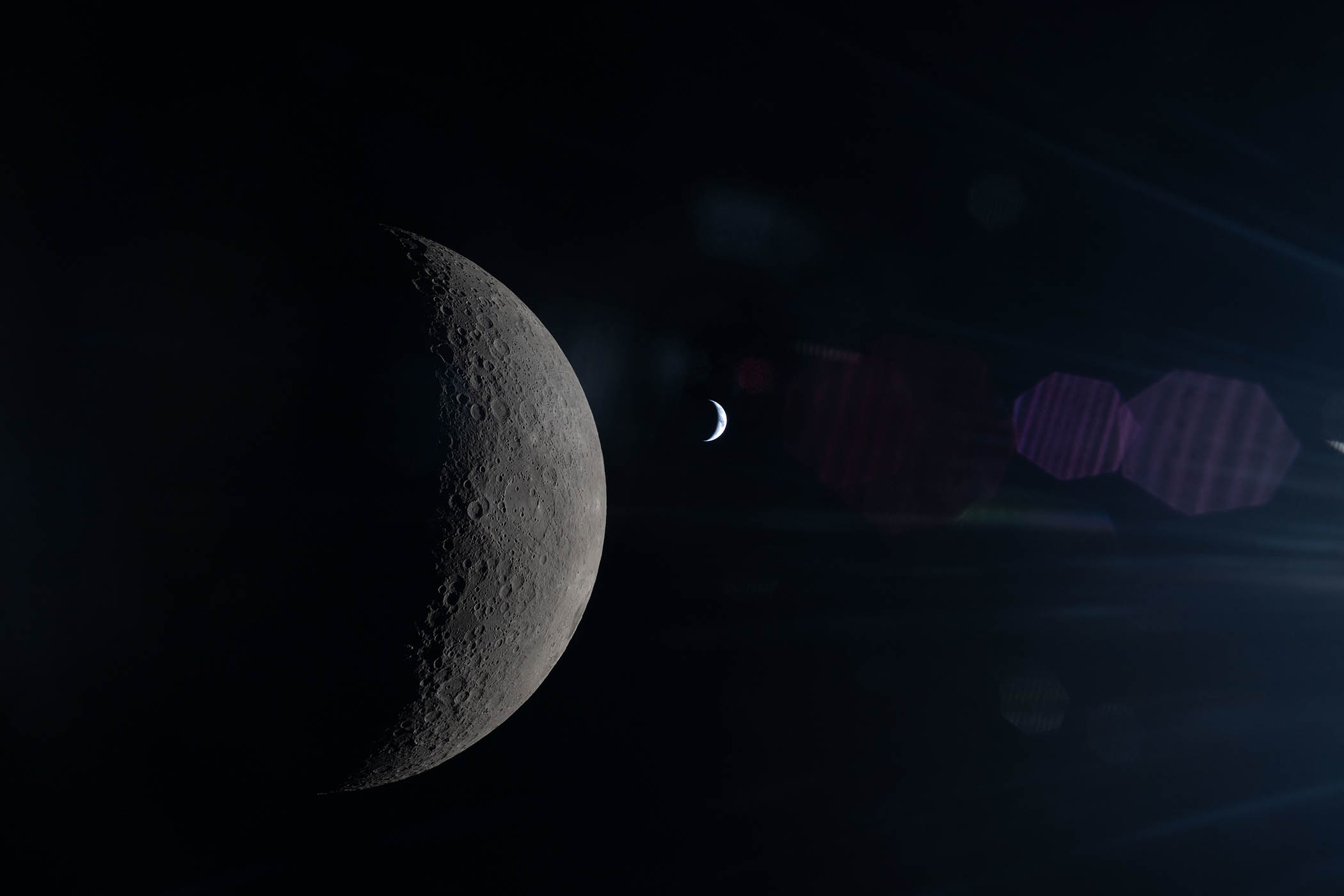
It’s not just space that’s an inspiration; the sonic textures of 65 years of Nasa missions – the Quindars, the tinny radio transmissions, the countdowns, the roar of engines – have all left a footprint on musical culture as significant as Neil Armstrong’s on the moon, or last week’s images of moonrise and Earthset.
For decades, composers and musicians have raided the agency’s audio archives for samples, including Hans Zimmer, who has won two Oscars and 12 nominations for his film scores, one of them for Interstellar. Podcasts may be small fry in comparison to a Christopher Nolan film, but Zimmer is as much of a space fan as Holst or Karlheinz Stockhausen, and he made time to compose the theme tune for the BBC series 13 Minutes to the Moon.
When the series was first broadcast in 2019, Zimmer said his starting point had been Nasa’s recordings, Quindar tones and all. “There’s a quality about it that is so mysterious,” Zimmer said. “Sound being sent back across space and being recorded – badly – with what was the best technology at the time. But still. There’s a grittiness to it and there’s a danger in every sound. You can feel it could just go terribly wrong.”
That grittiness is still there. When astronauts Reid Wiseman or Christina Koch say “Go ahead, Houston”, or Capcom – the capsule communicator – replies from mission control, it’s as recognisable as any of the Apollo missions.
In fact, you can chart most of Nasa’s history since its founding in 1958 via whosampled.com, the website that has taken the mystery out of sampling.
John Glenn’s trippy description of his experience orbiting the Earth in Friendship 7 in 1962 gets an airing in The Grid’s One Giant Step. “I am in a big mass of some very small particles that are brilliantly lit up like they are luminescent,” he says, an ideal counterpoint for the psychedelic instrumentation on this 1990 dance track. “I never saw anything like it – they're coming by the capsule and they look like little stars.”
Later in 1962, John F Kennedy made his “We choose to go to the moon” speech, which still thumps tubs harder than any modern politician, and extracts have inspired Jean-Michel Jarre, Gang Starr and Dizzee Rascal.
By 1968, Apollo 8 was doing at Christmas what Artemis 2 did at Easter. Frank Borman, Jim Lovell and William Anders were the first astronauts to see the far side of the moon, and they broadcast the first 10 verses of the Book of Genesis on Christmas Eve. Mike Oldfield, Astral Projection, Moon Safari and even Michael Jackson took clips of that.
From there it was one small step to Apollo 11’s moon mission in 1969, and elements have been used from lift-off to landing, not least Capcom’s back-and-forth status check with the flight controllers – “Booster?” “Go!” “Retro?” “Go!” “Guidance? “Go!” – and the moment that Armstrong says “Tranquillity Base here – the Eagle has landed”. Countless dance and hip-hop acts have used some snippet or other, from Lisa Lashes and the Smart E’s to the Jungle Brothers and Def Leppard.
Zimmer is right too about “things going terribly wrong”. The “Houston, we have a problem” of the Apollo 13 rescue mission in 1970 and the tragedy of the Challenger space shuttle in 1986 are on records by a horde of artists including GWAR and Beyoncé.
Even so, this focus on jeopardy is out of keeping with the two big musical space themes: hope and wonder. Hope, even from Richard Nixon, whose phone call to Tranquillity Base included this line immortalised in song: “All the people on this Earth are truly one.”
Contact by Daft Punk is another case in point. It samples a long passage by Gene Cernan, to date the last astronaut on the moon, when he describes an unidentified flying object from his capsule window. “There’s something out there,” he concludes, and we’re invited to agree (but wait, Area 51 fans – it was probably just a burning rocket booster).
The voices of Reid Wiseman, Victor Glover, Christina Koch or Jeremy Hansen will surely join them.
Glover, the first black lunanaut, seems a strong candidate for his obvious enthusiasm during the moon approach as he lists features he is starting to see: “Absolutely unbelievable, this is incredible,” he says, eliciting the response from Capcom: “Copy, moon joy.”
The astronauts’ words as they are about to go out of contact are also things I can imagine hearing in the future. “We’re still going to feel your love from Earth,” Glover says. “We love you, from the moon. We will see you on the other side.”
Koch too: "We will explore. We will build ships. We will visit again… we will inspire.”
Copy, moon joy.
Photograph by NASA via Getty Images
Newsletters
Choose the newsletters you want to receive
View more
For information about how The Observer protects your data, read our Privacy Policy