SpaceX’s first offer of shares to the public, which initiated its prelaunch countdown last week, is arguably capitalism’s final frontier.
An unprecedented amount of money is being raised to finance the extraordinary entrepreneurial ambitions of one man – Elon Musk – whose business plans for building and dominating the space economy range far beyond anything previously regarded as investable by the general public. To buy SpaceX equity will be to boldly go where no shareholder has gone before.
SpaceX’s S-1 initial public offering (IPO), filed on Wednesday with the US Securities and Exchange Commission, is the opposite of the usual heavily lawyered corporate template. The many risk factors that can potentially disrupt the company’s journey to infinity and beyond are not footnoted legalese, but front and central. You would expect nothing less of a business whose mission statement is “to build the systems and technologies necessary to make life multiplanetary, to understand the true nature of the universe, and to extend the light of consciousness to the stars”.
The prospectus lists many remarkable achievements, many of them pulled off despite being given no chance by the experts in conventional wisdom, including approximately 650 successful rocket launches – at least 85% of them with reusable boosters. Also, running a constellation of more than 9,600 satellites in low Earth orbit. And about 550 million active monthly users of the company’s AI. All of which is nothing compared with the great works that are said to lie ahead, including developing “new trillion-dollar markets on the moon, Mars and beyond”.
The IPO will raise $30bn (£22bn) in cash for SpaceX at a probable record-breaking valuation expected to be about $2tn. Only oil giant Saudi Aramco has previously raised as much going public, but that was at a far lower valuation of $1.7tn and was for a proven business extracting vast profits from the state’s oilfields. SpaceX earned revenues of only $4.7bn in the first quarter of this year and made virtually nothing from the businesses it expects to drive its long-term growth (Indeed, its AI unit lost $2.5bn in the first quarter of this year). These areas, from space tourism, asteroid mining to AI, it says it will deliver from space – powered virtually for free by the sun – via its datacentre satellites. The future profits to justify the venture’s eye-watering price still lie mostly in the mind of Musk.
About whom, there are many things to be said – plenty of which would be considered red flags in any other entrepreneur. Walter Isaacson’s biography reveals a man with an, at once, inspiring and abrasive personality, subject to wild mood swings and dark moments, an impossibly complicated personal life, perhaps ill-advised amounts of use of psychedelics, and an unfathomable tolerance for extreme, arguably reckless risks. He also drained the democratic energy from Twitter when he bought it for $44bn in 2022, making his rebranded X a mouthpiece for extreme views – not least his own – and amping up political polarisation.
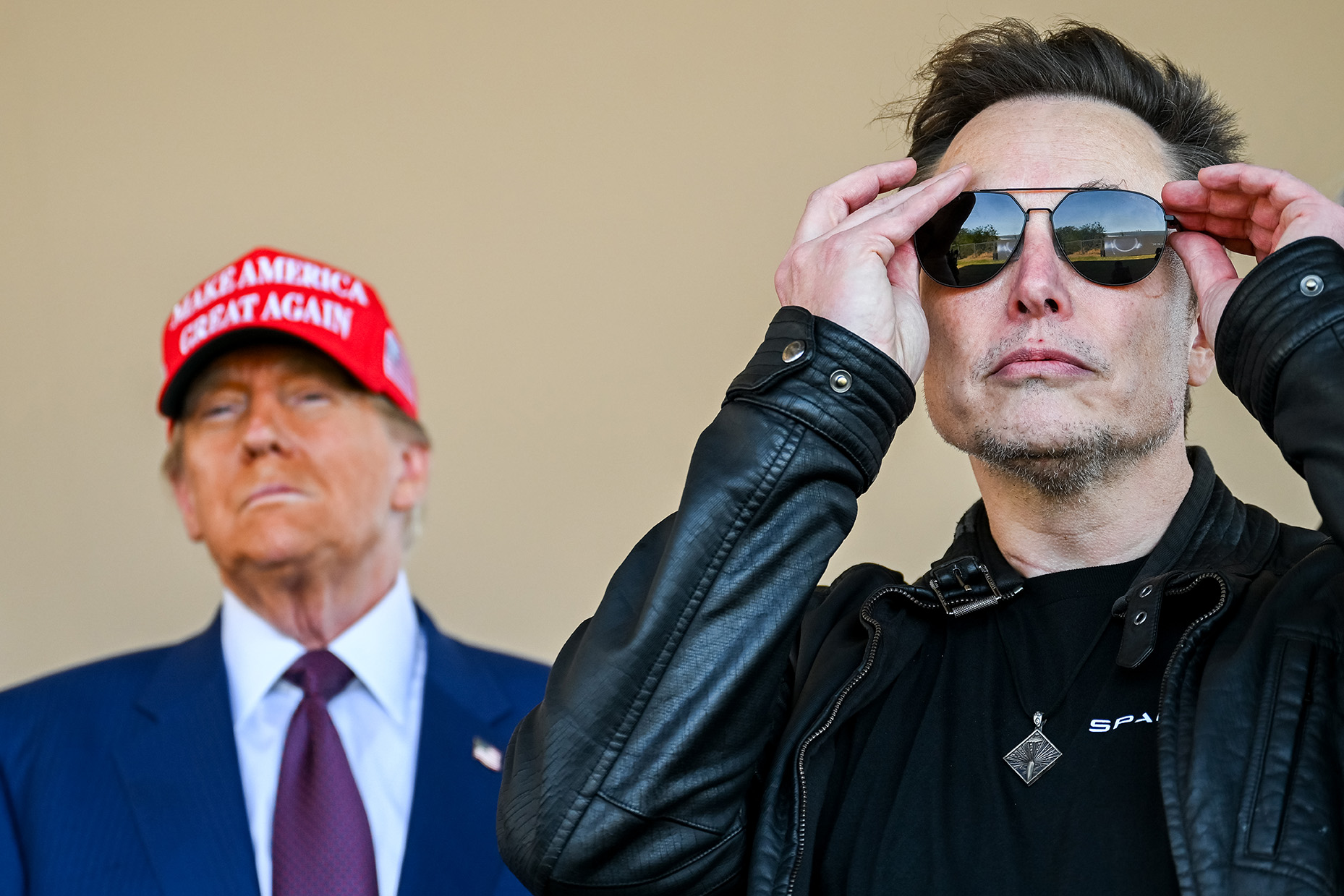
His brief unelected foray into government, as head of Doge, Donald Trump’s “department of government efficiency”, was needlessly cruel and, ultimately, a failure, at least in terms of Musk’s stated goal of saving the US government $2tn, instead of closer to the $2bn or less that some independent analysts have found he made. Musk reportedly regards the capacity for empathy as a “bug” in western civilisation, not as humanity’s greatest strength.
At PayPal, he helped launch the fintech revolution, paving the way for today’s crypto boom. At Tesla, he catalysed a transition to electronic vehicles at a time when the combustion engine incumbents of Detroit seemed to be stalling it for ever. Now he is well on the way to making autonomous self-driving cars the first mass-market proof of how AI can outperform humans.
Already he is the world’s richest man. The SpaceX IPO will carry him closer to being its first trillionaire. Sure, this breaks all the conventional rules of executive remuneration (as did his deal at Tesla, which itself could pay him $1tn if the carmaker’s market value rises from its current $1.6tn to $8.5tn), but only because it sets a target so stretching that no other chief executive would consider it serious. He also consistently breaks the norms of corporate governance; any investor who wants the chief executive to be meaningfully accountable to shareholders should probably give SpaceX a miss.
John Maynard Keynes once questioned the wisdom of entrusting the future of the economy to a stock market that he regarded as a casino – and there is no more daring attempt to shape the future than this. During the early 18th-century South Sea bubble, a prospectus sought funds for “a company for carrying on an undertaking of great advantage, but nobody to know what it is”. Given the massive uncertainties surrounding SpaceX’s prospects, its pitch is arguably not much different; crucially, however, its “undertaking of great advantage” will be led by Musk, who – whatever his faults – boasts an extraordinary record of making investors rich.
Newsletters
Choose the newsletters you want to receive
View more
For information about how The Observer protects your data, read our Privacy Policy
If nothing else, Fomo – fear of missing out – will convince many investors, great and small, that buying a few tickets in the Musk lottery is well worth a flutter.
Thanks for reading. You can tell us what you think by writing to letters@observer.co.uk
Photograph by Brandon Bell/Getty Images