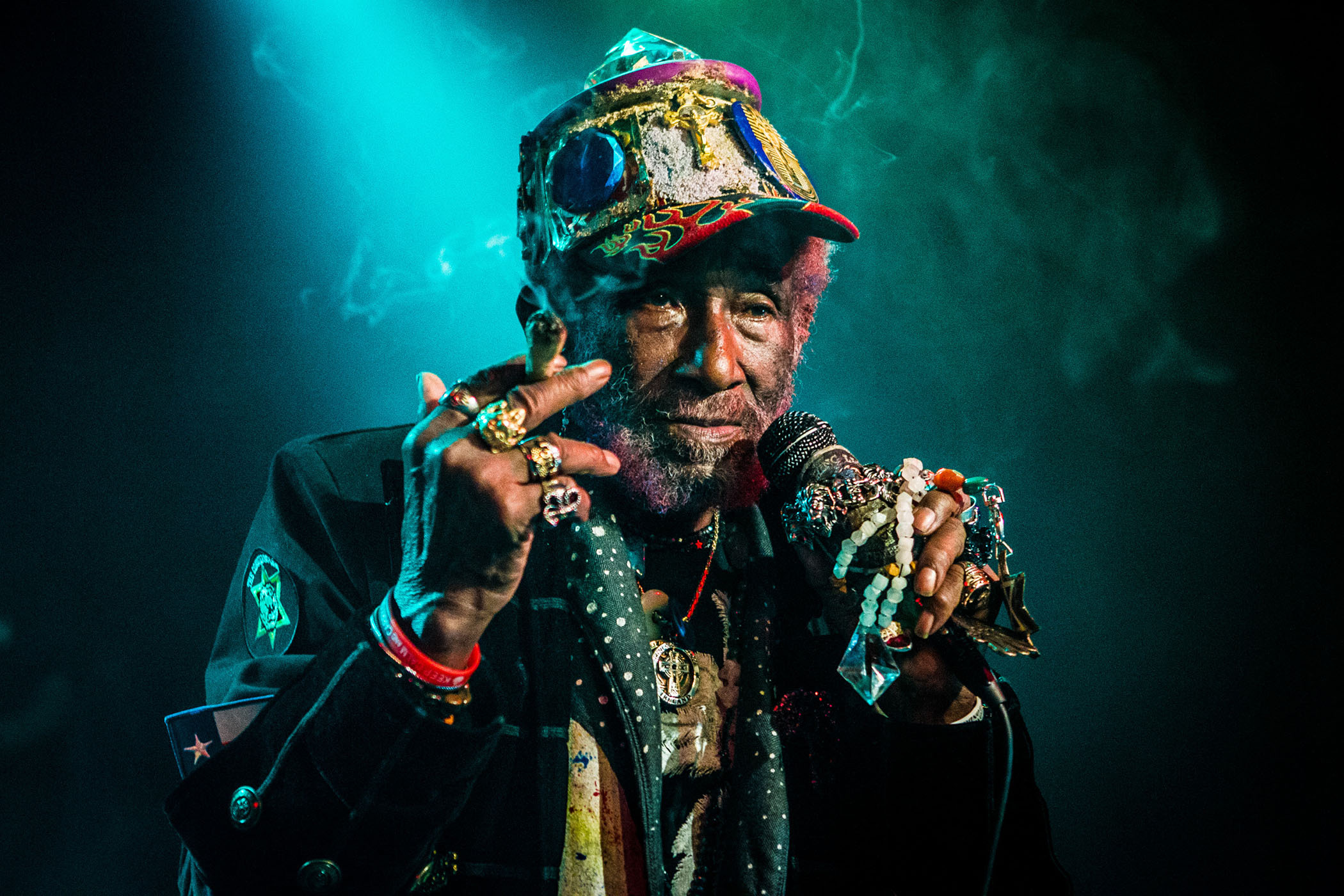


In 1968, Lee “Scratch” Perry, then a 32-year-old record producer struggling to find his place in the cut-throat world of the Jamaican music business, released a song that signalled the sonic adventurism to come. Called People Funny Boy, its caustic lyrics were aimed at his former employer, Joe Gibbs, a Jamaican producer with whom he had fallen out over money.
Released on Perry’s own independent label, Upset (soon to be named Upsetter, the second, and most fitting, of several titles he also conferred on himself), the single sold 60,000 copies in Jamaica. It is now recognised as one of the earliest songs to use a sound sample, in this instance a repeated, slightly unnerving snippet of a baby crying. As such, it was a moment of invention that has reverberated through pop history ever since, from dub reggae to hip-hop, techno and beyond.
In the years that followed, Perry would release countless similarly inventive singles on the Upsetter label, become a formative influence on the Wailers, and establish himself, alongside Osbourne “King Tubby” Ruddock, as the leading architect of dub, a genre that utilised echo, reverb and dissonance to create new experimental soundscapes from the basic rhythmic elements of existing songs.
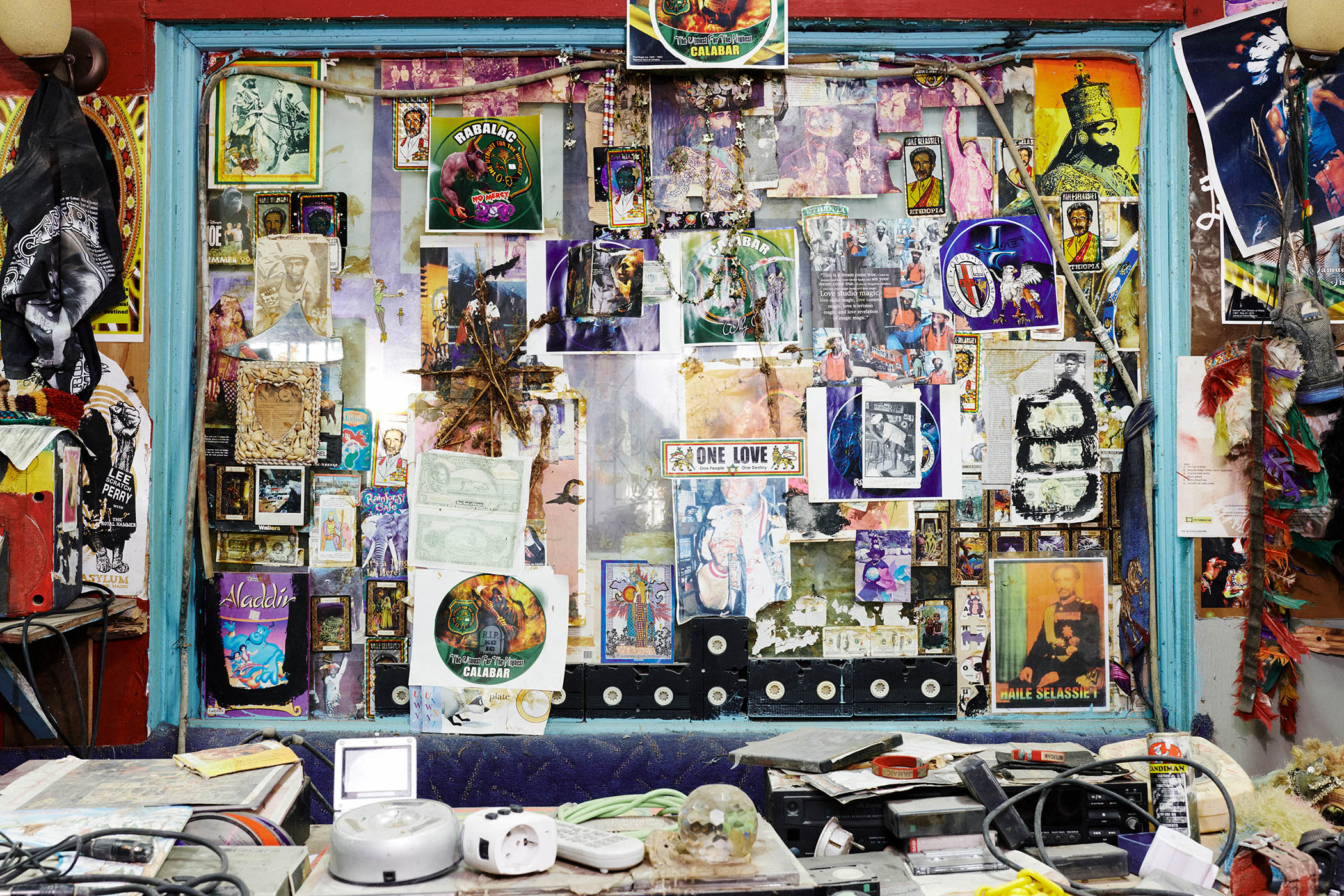
A collage inside Perry’s Black Ark studio
By the time of his death, aged 85, in August 2021, though, Perry’s reputation for madcap eccentricity had all but overshadowed his musical genius. Having relocated to Switzerland in the 1980s, the records kept coming, but he had long since refashioned himself as a singular kind of performance artist, dressing in elaborately self-accessorised outfits, and baffling journalists with his wildly associative wordplay.
It was sometimes easy to forget that Perry’s radical experimentation had placed him among a handful of visionary record producers-cum-auteurs – Joe Meek, Phil Spector, Brian Wilson – who changed the course of music by using the studio mixing desk as an instrument in itself. (That all of the above experienced mental illness following a period of game-changing creativity surely says something about the obsessive nature of their calling.)
Lee Perry’s most fertile period stretched from 1973 to 1978, when he created songs that are now considered classics of Rastafarian roots reggae. They include Junior Murvin’s Police and Thieves, Max Romeo’s War in a Babylon, George Faith’s To Be a Lover and the Congos’ Ark of the Covenant, each one a testament to his seemingly instinctive ability to create soundscapes that reflect the militant and the devotional with equal ease.
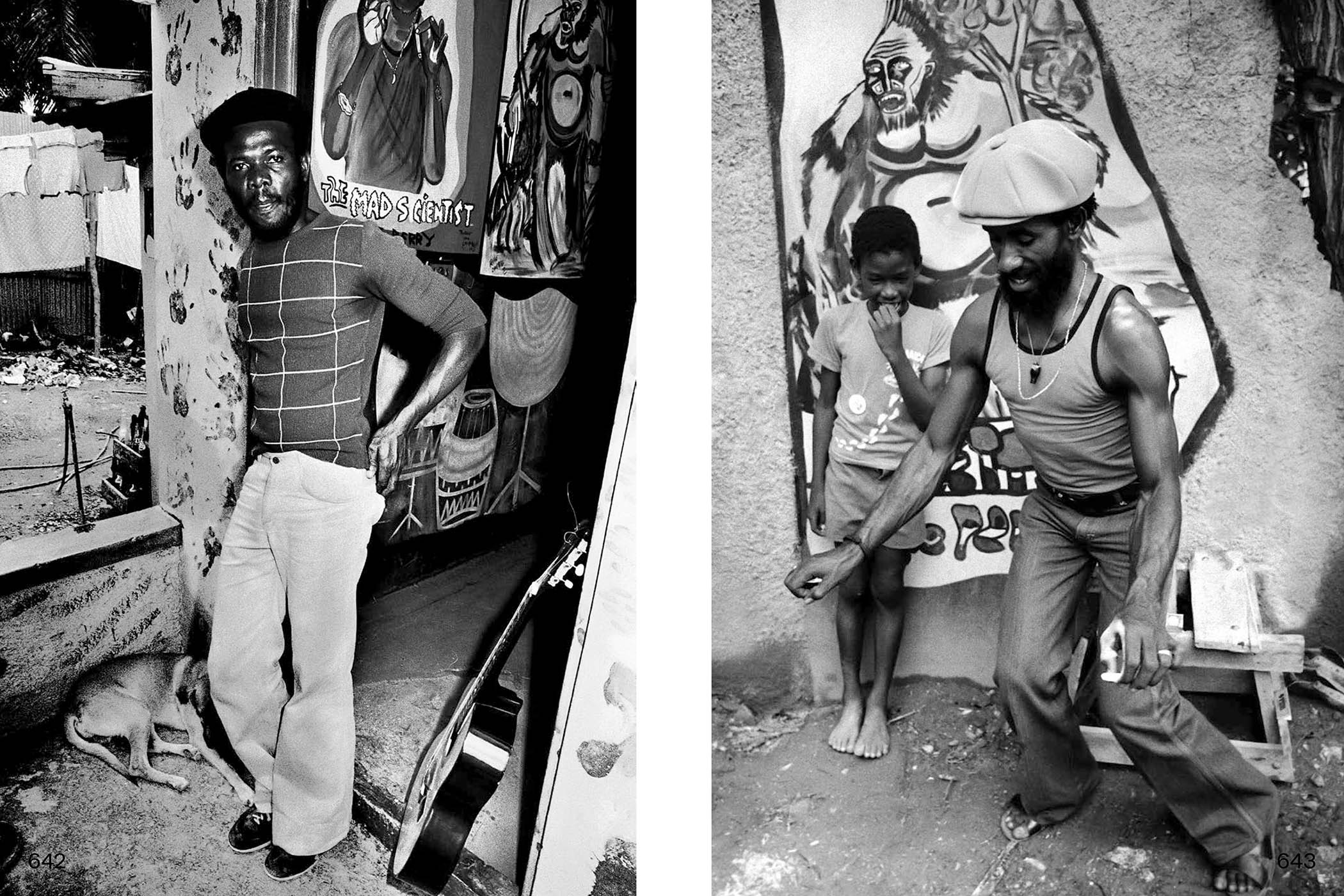
A new photo book documents the musician’s time at Black Ark
The locus of Perry’s creativity at this time was his Black Ark studio in Washington Gardens, Kingston. There, he defied the limits of a rudimentary four-track studio set-up, making music that was by turns luminous, ghostly and unsettling. He was prodigious, often creating several remixes of a single song by radically dismantling and reconstructing the original, utilising echo, delay and all manner of effects – the sound of what appears to be a cow mooing is a recurring theme.
Often, the result, as with the Congos’ now classic album, Heart of the Congos, was a thing of mesmeric beauty, opaque and shimmering, deeply spiritual in its import. At other times, as on Dr Alimantado’s song, Best Dressed Chicken in Town, the unhinged sonic and linguistic interplay between the artist and producer demonstrates how far it is possible to go while making music that remains gloriously, audaciously hypnotic.
The Black Ark itself was an extension of Perry’s fervid imagination; its interior, as well as the surrounding yards and walls, was covered in paintings, drawings, runic inscriptions and collages culled from advertising, comics, posters and pages from the Bible. For a time, chicken wire adorned the mixing desk, a reference perhaps to his initial nickname, Scratch. At one point, abandoned electric toasters were perched on top of the railings around the building – toaster being the Jamaican term for DJs who rap over an instrumental backing, which Perry often did in typically surreal fashion.
Newsletters
Choose the newsletters you want to receive
View more
For information about how The Observer protects your data, read our Privacy Policy
The idea that Lee Perry was an outsider artist as well as a musical innovator is at the heart of a new book from the Swiss-based art publisher Edition Patrick Frey. Fittingly, given Perry’s alignment with Rastafarianism in the 70s, it resembles a bible, with its title, Black Ark, embossed in gold on a black backdrop. Now in its second edition (the first sold out mainly through word of mouth), it is an audacious reframing of the Upsetter and his most productive creative environment. Across almost 700 lavishly illustrated pages, it makes the case for the studio as not just a sonic laboratory but a constantly evolving installation.
Throughout, the evidence of Perry’s unorthodox art is ample and comprehensive, not least in photographer Marc Asekhame’s exhaustive visual inventory of the interior of the studio and surrounding buildings, which was made over several months, just before the producer’s death. The images are a haunting depiction of what is now, after several decades of neglect, a ruined monument to a mercurial genius. Many of the instruments and technological hardware, as well as artefacts and clothing, are encrusted in dirt. Others have been damaged by a fire that occurred in 1982, when Perry suffered a breakdown brought on by long hours of work, prodigious amounts of rum and spliff, and the tense atmosphere of a space that, by then, had become a magnet for hangers-on, gangsters and Rastafarian mystics, all demanding money.
Ironically, the moment that many regard as Perry’s crowning achievement – the recording of Heart of the Congos – precipitated his breakdown, which was dramatic and destructive. The light and the darkness are both in evidence: the devotional Rastafarian murals painted by Robert van Campbell, AKA Jah Wise, and the plethora of Xs that Perry scrawled over every surface as his mind unravelled.
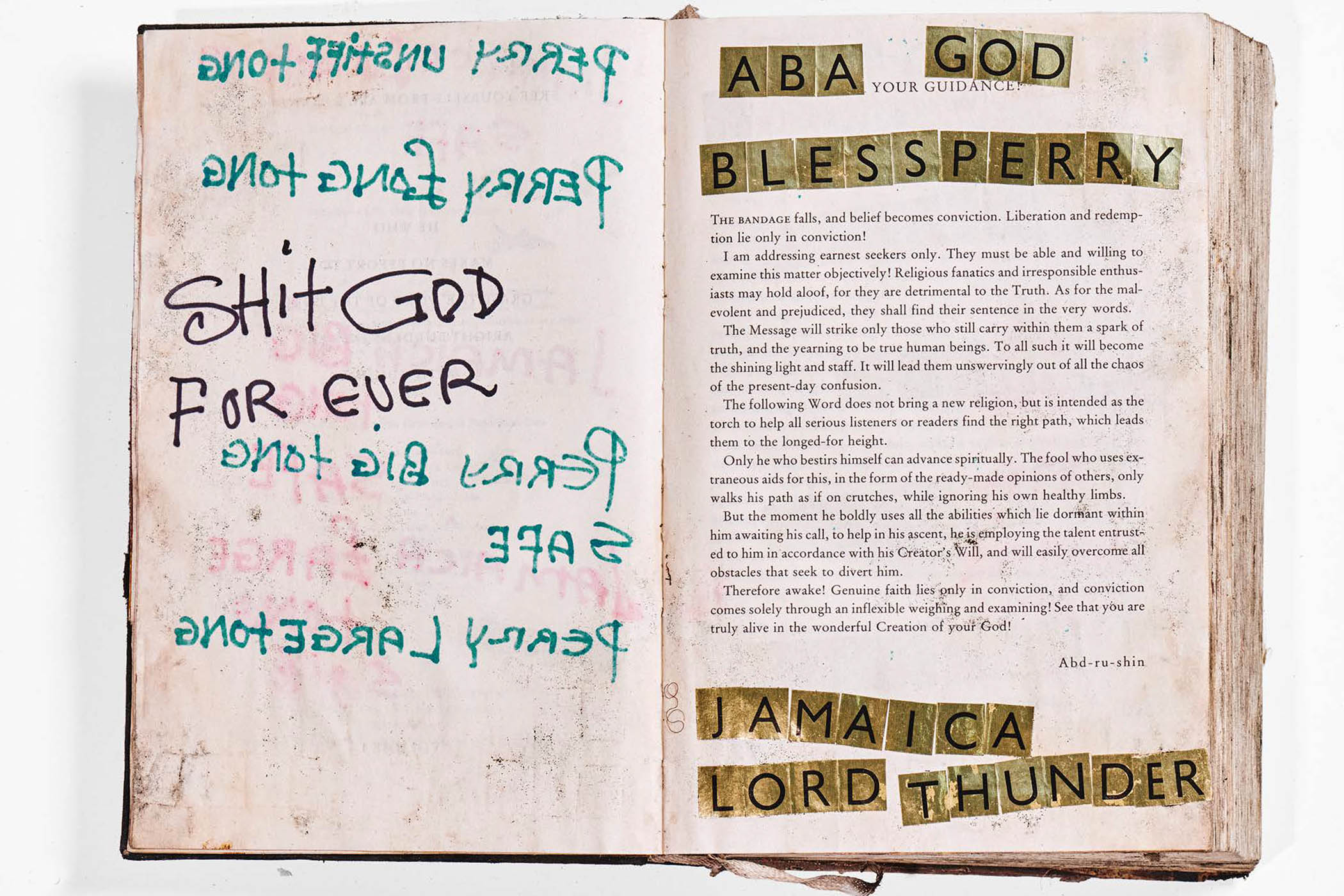
Black Ark is published by Edition Patrick Frey
In the preceding years, the Black Ark was a place of extravagant creativity, Perry’s visual imagination as tireless as his musical one. His biographer, David Katz, whose newly published Dub Revolution is an authoritative history of the genre, provides a timeline of the Black Ark era that attests to the producer’s prodigious productivity as well as his unpredictability. In one of several illuminating essays in the book, the art historian and curator Veerle Poupeye, whose speciality is Caribbean and Jamaican art, notes that the elaborately decorated environment Perry created at the Black Ark “relates to older cultural practices such as the so-called yard art that can be found throughout the African diaspora”.
She describes yard art as a “culture of bricolage, of making something extraordinary and meaningful out of nothing, in doing so often transcending and uplifting the mundane and even dispiriting realities in which cultural products are created”.
She also relates Perry’s performative persona to the Jonkonnu masquerade tradition “found throughout the Caribbean” and whose origins lie in the plantation era. Poupeye describes the masqueraders as “both playful and threatening,” a description that could easily apply to the Upsetter. According to one of his post-Black Ark collaborators, Neil “Mad Professor” Fraser, Perry once put a spell on a musician whom he suspected of having an affair with his wife, Pauline. “It was part of his personal Obeah,” Fraser told me, “and he believed in that stuff.”
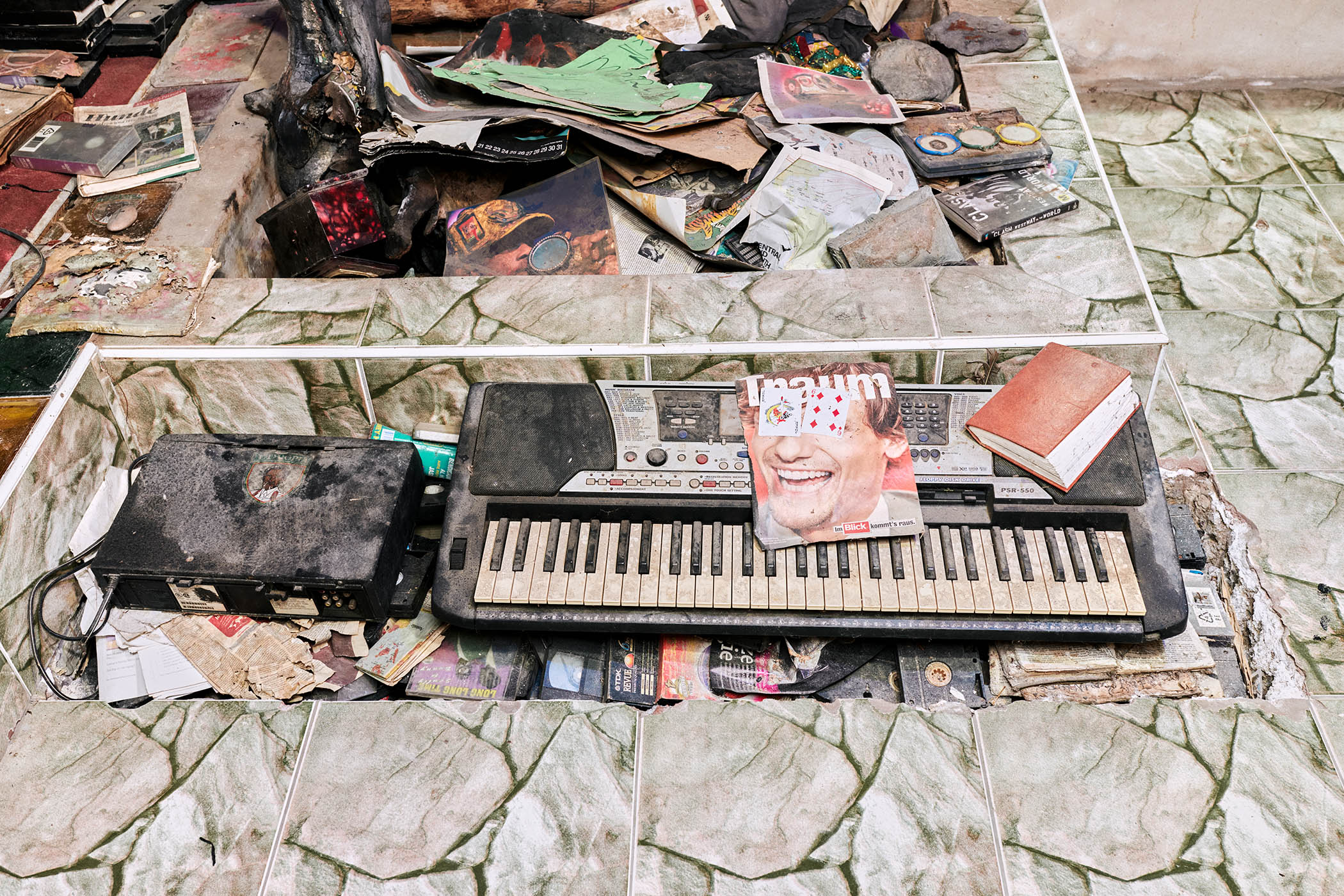
Instruments and ephemera in Perry’s studio
In another essay, the curator and writer John Corbett places Perry in the afro-futurist tradition of other musical mavericks such as the jazz composer and bandleader Sun Ra, and the funk iconoclast George Clinton, who created alternative worlds that “subtly signify the marginalisation of black culture”.
All of these reflections seem pertinent, yet Perry evades them, just as he evaded attempts by interviewers to pin him down. For me, Perry’s presence is most potent in the images of the remnants that survived the destruction of the Black Ark: the faded colours of the murals and paintings; the layers of mud, dirt and rust that cover the tape decks and consoles. That Perry, in his frustration and despair, may have set fire to the studio he built in his own image only adds to the sense of a dream derailed.
Black Ark is published by Edition Patrick Frey (€68).
Thank you for reading. Tell us what you think by writing to letters@observer.co.uk
Photographs by David Corio/Michael Ochs Archives/Getty Images, Courtesy of Edition Patrick Frey and The Visual Estate of Lee Scratch Perry, © Marc Asekhame, 2021, © Adrian Boot / Urbanimage, 1978
Edition Patrick Frey