Photographs by Tom Pilston for The Observer
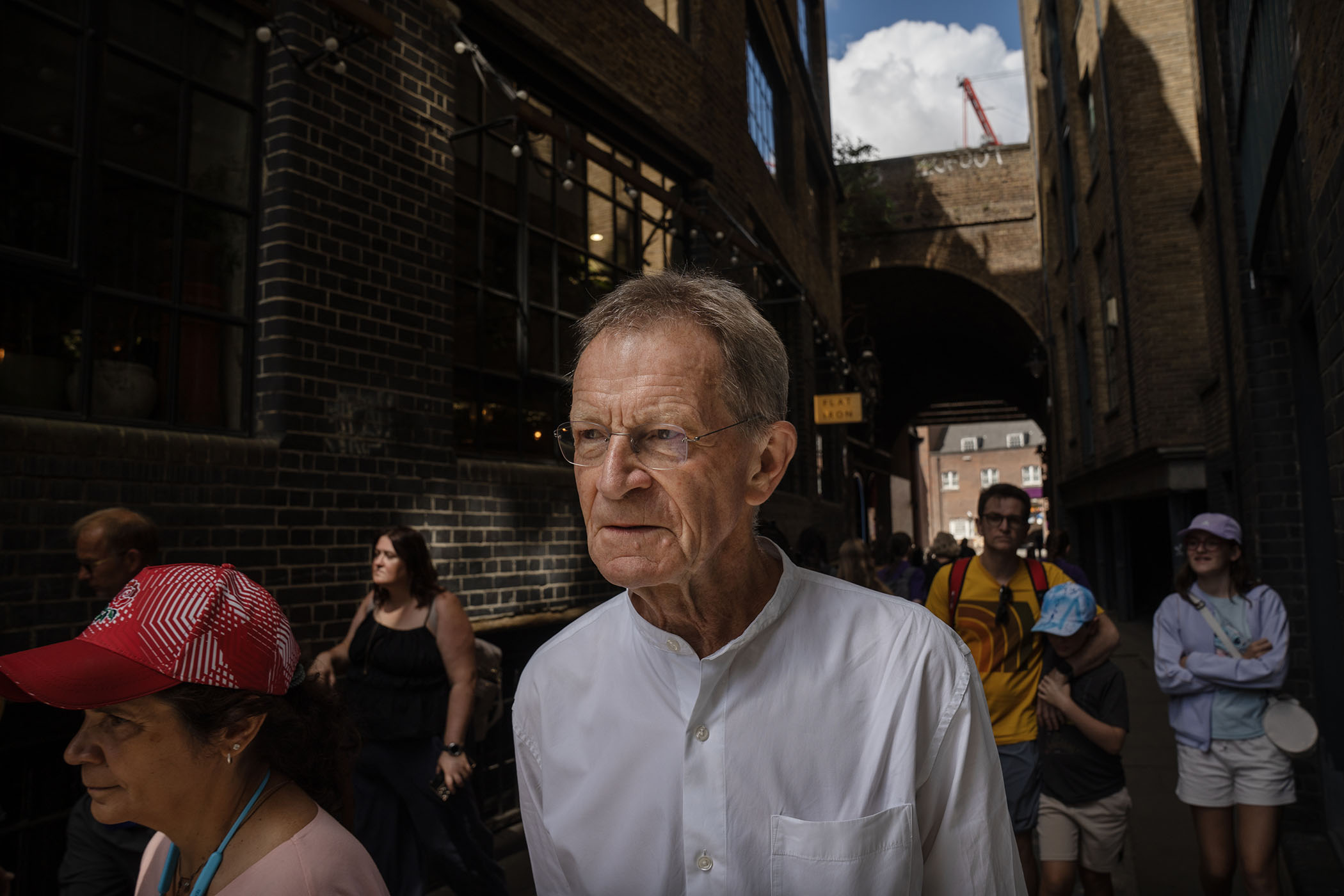
It is 50 years to the day since Nicholas Serota started as director of the Whitechapel Gallery when we meet outside the east London venue for our walk between the cultural landmarks of the capital. “It was on the edge of the City and, of course – this was 1976 – there had been a big influx of people from Bangladesh,” he says. “The whole area was very run down. I was interested in making a gallery that had international aspirations but was also related to the local community.”
Over the next decade, Serota transformed the gallery from a struggling artistic backwater into a groundbreaking cultural institution. He put on exhibitions of the American sculptor Eva Hesse and the German painter Gerhard Richter as well as promoting emerging British artists including Antony Gormley, Richard Long and Tony Cragg. But he also staged a landmark show called Arts of Bengal. “Suddenly everyone realised the gallery was something they could engage with and that it was not just for people from the West End. It was also for people from the East End.”
Serota, who is now 80, has done more than anyone in Britain to popularise contemporary art. As director of the Tate, he turned a fusty collection of paintings in Pimlico into an empire with four museums around the country. He restored a derelict disused power station on the South Bank to create Tate Modern, attracting more than 5 million visitors a year. Since 2017, he has been chair of the Arts Council, a position he leaves at the end of this month.
He says his aim has always been to “change society” by showing that art is for everyone. “The great thing about the Whitechapel is that you come into the gallery straight off the street. You walk through those doors and suddenly you’re in a different environment. It’s magical in a way, but it’s not a temple,” he says. “You could say the same walking through the Turbine Hall at Tate Modern. You wander in and you’re not quite sure where you are, but it feels as if it’s a place for you. You don’t have to have a lot of knowledge. It’s not elitist. There isn’t a hierarchy of people who are in the know and people who are not. This isn’t a club.”
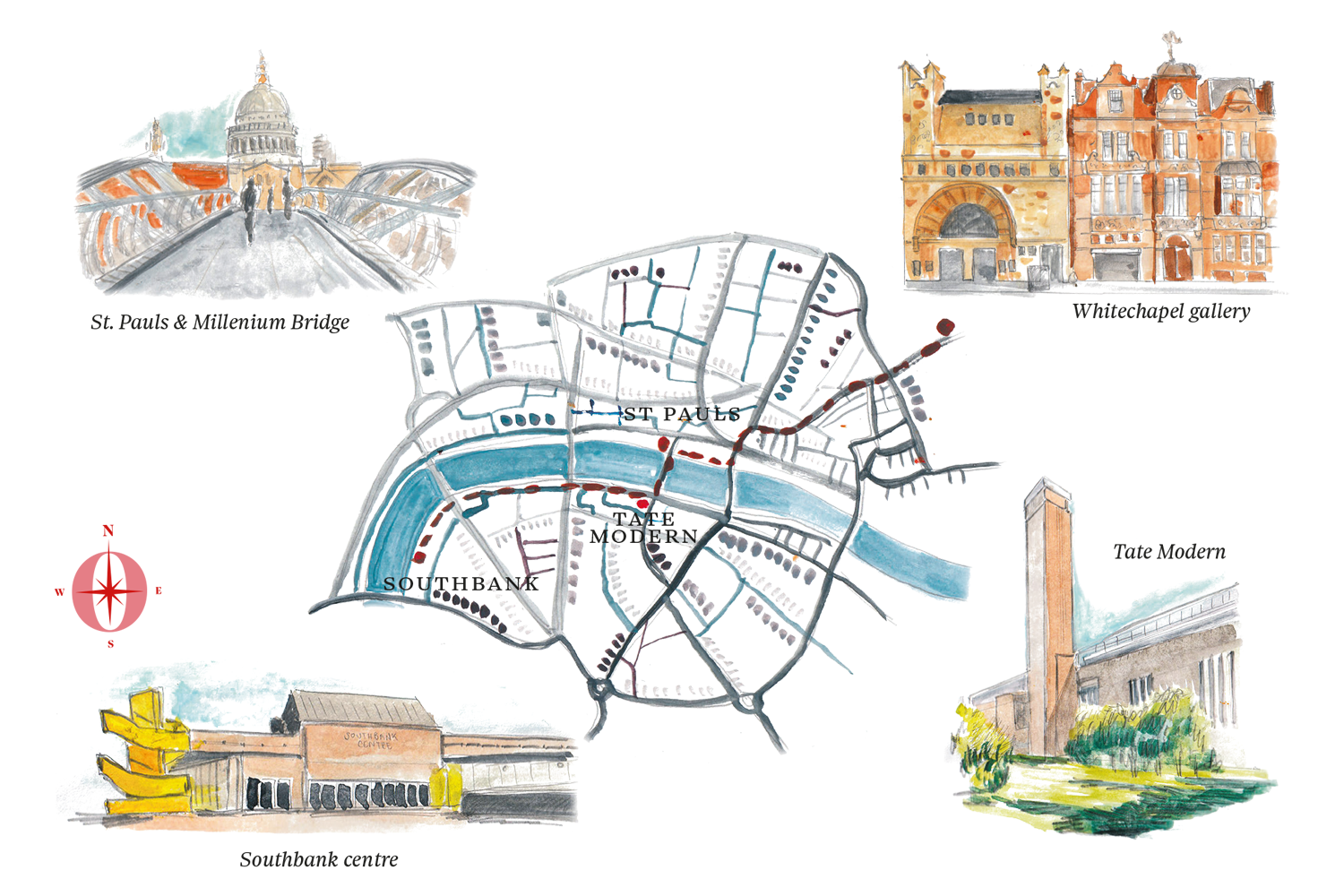
Our walk will take us from the Whitechapel Gallery to Tate Modern, the two shrines to contemporary art that he created. As we set off along the Whitechapel Road, the traffic is roaring between the gleaming skyscrapers of the City of London and the council estates of Tower Hamlets, one of the poorest boroughs in Britain.
Serota may now spend his time looking at spreadsheets but, with his crisp white collarless shirt, black trousers and frameless glasses, he is still a curator at heart (this weekend he is taking his hammer and spirit level around to help one of his children hang pictures in a newly decorated house). Throughout his career, he has always had an extraordinary eye for the next big thing. I ask how he spots a future star. “I never really showed a younger artist who I hadn’t met in the studio [first],” he replies. “You spend time looking at magazines, you go to exhibitions, you go to the Venice Biennale. Then you make a judgment and use your intuition.”
We dart across the road, weaving between stationary buses and cars. Does he ever have an “emperor’s new clothes” moment and wonder whether a conceptual piece – a duct-taped banana or an unmade bed – is really art? “When it’s made by someone who we recognise to be an artist, it’s a piece of art,” Serota says. “That’s what Duchamp [who turned a urinal into a gallery exhibit] would have asked you to believe. You can take an object from one context and put it in another, and it can draw your attention to something in the world that you haven’t otherwise perceived. Artists shape our world and make us see the beauty in the world or the horror in the world.”
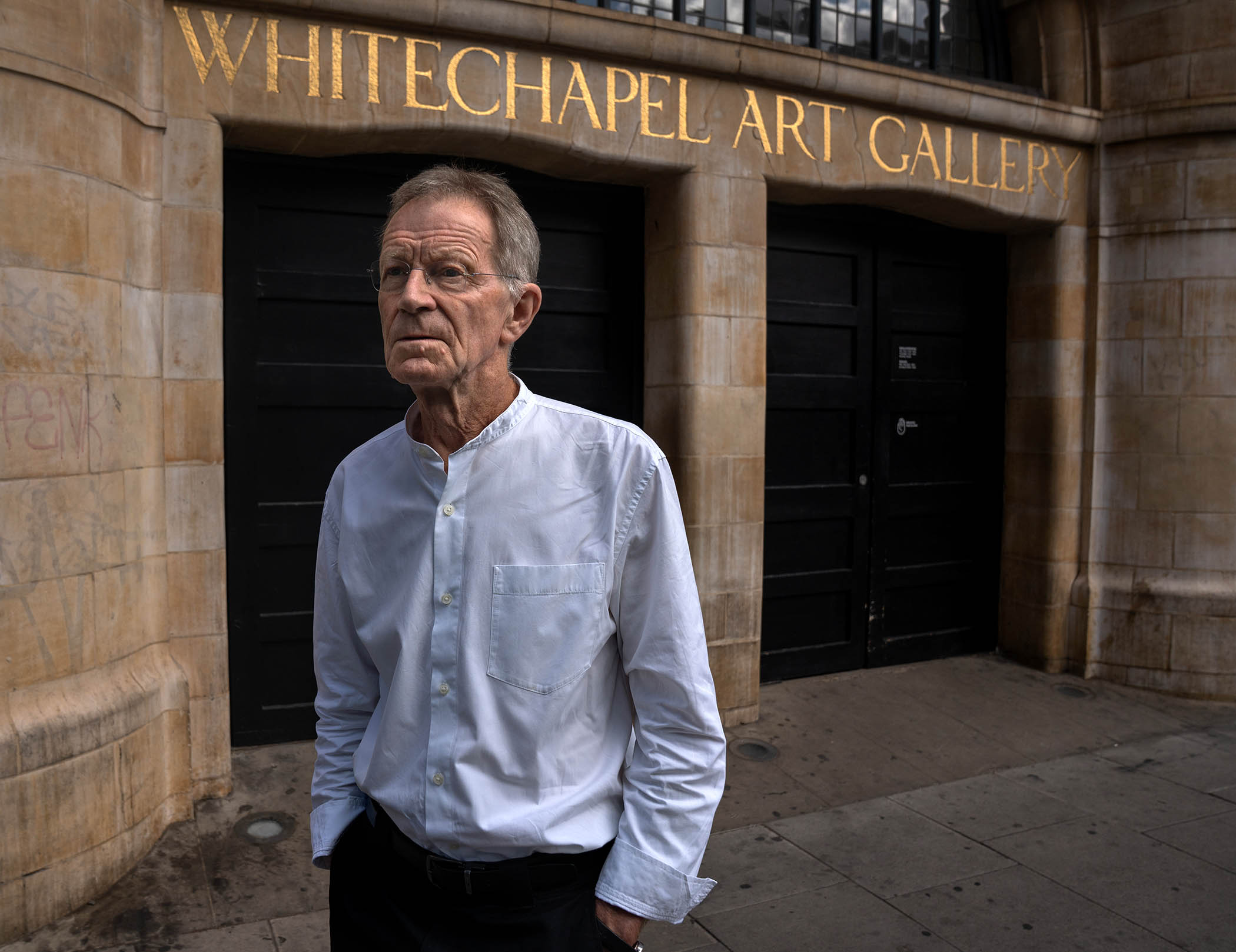
We walk past St Botolph’s church. “I can remember when it was just an isolated beautiful building in a sea of low-rise neglected properties,” Serota says. Now it is surrounded by glass skyscrapers. As we wander through the financial district, Serota insists he is not against art galleries being commercial with their blockbuster shows. “These big institutions should do reassessments, looking again for the next generation at some of the great celebrated names of the past,” he says. “The experience of standing in front of a Frida Kahlo self-portrait is a totally different experience from looking at it on the screen or the page. That’s important, but then the question is: how do you do the show, and what are you bringing attention to?”
‘You need to put in some public money because it takes a while for people to realise that something is important’
‘You need to put in some public money because it takes a while for people to realise that something is important’
Nicholas Serota
Serota does not approve of NFTs (non-fungible tokens), digital artworks authenticated and traded on a blockchain. “It’s tulip mania – capitalism at its purest. It’s about buying something in the belief its price will go up and then you’ll be able to sell up and make money. It’s not about the fundamental character of the thing.” Damien Hirst – one of the Young British Artists who Serota championed in the 1990s – is among those who have embraced the technology. A few years ago he burned hundreds of artworks worth £10m because collectors had chosen to buy a digital rather than physical copy. “I have been a great supporter of Damien’s work,” Serota says. “Do I like everything he has done? No. But do I think every play by Shakespeare was of the same quality? No.”
Newsletters
Choose the newsletters you want to receive
View more
For information about how The Observer protects your data, read our Privacy Policy
We walk on to London Bridge and catch our first glimpse of Tate Modern along the river from the Shard. The Arts Council chair refuses to accept the bean-counter view that culture is a frippery the country cannot afford. “The arts are part of all our lives. It’s not a question of being a luxury,” he says. “Andrew Lloyd Webber has never had that much public investment. He can create an audience. But if you want a wide range of theatre, you need to put in some public money because it takes a while for people to realise that something is important.”
The arts are a good use of state funds, he insists. “Every time you put a pound into the arts, the economy grows by £2.50. Cultural investment leads to the regeneration of towns and cities. Hull was totally transformed by being City of Culture in 2017. Margate with Turner Contemporary is another example.” Last week he visited Gloucester, where the Arts Council has supported an organisation providing artists’ studios. “That sounds rather ‘nice to have’, but there were two graphic artists who have suddenly been picked up by the industry and are now being published all over the world.”
We go down the steps to Borough Market and past Southwark Cathedral. As chair of the Arts Council, Serota has been criticised for withdrawing funding from theatres and galleries in London, forcing the English National Opera out of the capital. It must have been hard to go from being a curator to wielding the axe. “I spent a lot of time trying to raise money for Tate over the years,” he says. “When I left, everyone said: ‘Oh, how nice you’re not going to have to keep asking people for money. You’ll have the pleasure of giving it away.’ Well, the pleasure of giving it away is quite a mixed blessing because in order to give you sometimes have to take.”
He admits he is “not sure” he would do everything “exactly the same” if he were doing it again, but he has no real regrets. He recently went to a new opera commissioned by the ENO. “It’s going to come to London, having premiered in Manchester,” he says. “It means that there are young people in Manchester who will think about being involved in classical music or contemporary music in a totally different way.”
Serota is passionate about ensuring that children from all backgrounds have access to the arts. “We all know that private schools find ways of doing it, but state schools don’t have the resources. You have talent everywhere but opportunity is not everywhere,” he says. “There are politicians who believe in it but there’s still this concern that the tabloid press will ask why are kids being taught about how to pickle a shark in formaldehyde or some absurd example taken from what people regard as being some kind of elitist art which it’s not.”
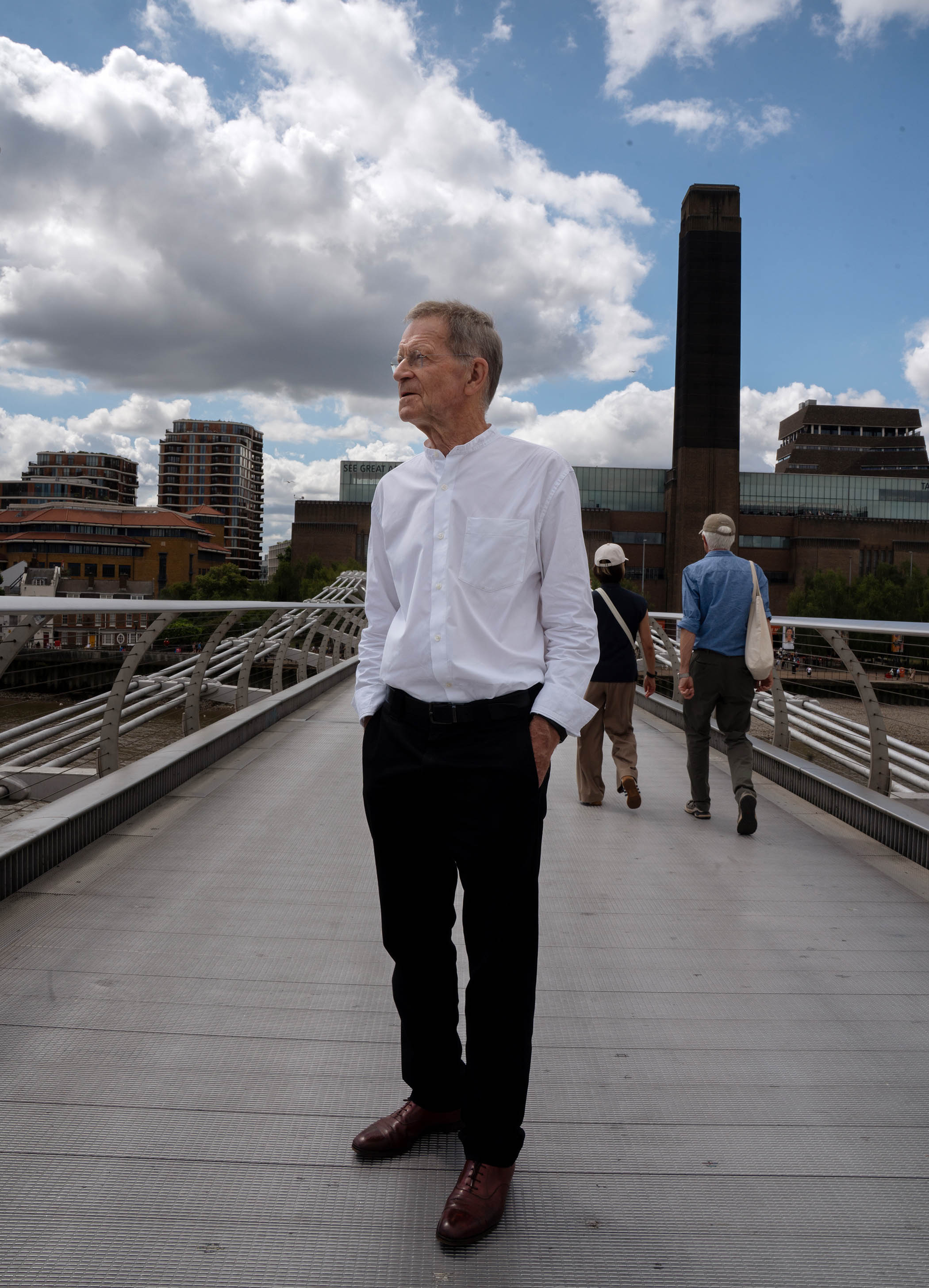
We walk on to the Millennium Bridge, looking towards St Paul’s. Tate Modern is behind us. “The humanities, the understanding of music, drama, art are things that stay with you for your whole life,” Serota continues. “It’s not just about knowledge – it’s about experience and understanding and feeling. There’s a lot of talk about the fact that you know we need people to be proficient in Stem [science, technology, engineering and maths] subjects, because that’s our future. Actually, our present is that we’re world-renowned in the arts. Wherever you go across Europe and America, people are clamouring for British artists, British performers. It’s a great success story, so we should be backing it.”
As schoolchildren stream past us, heading towards the gallery, Serota says he worries that education has become too narrow. “The brilliant scientists are very creative. Jony Ive [the Apple designer] and James Dyson [the entrepreneur] trained at the Royal College of Art,” he says. “I do think there’s a better system in Europe where young people are encouraged to take a wider range of subjects right the way through to 17 or 18. I’m an example of someone who did one year at university studying economics, then switched to art history. I don’t think doing economics hurt me in any way. I found it quite useful, but I’m really pleased I changed.”
Serota thinks young people have to take “a ridiculous number” of exams. “It’s all about memorising knowledge rather than writing freely or using intuition or imagination. It’s too restrictive. What you need are skills to manipulate that knowledge, the ability to think critically and the ability to express yourself.” Creativity is more important than ever in the age of artificial intelligence, he suggests. “The arts, like science, are about invention. It’s about your imagination, your ability to think around the corner and outside of the box. That equips us to do the things the machines can’t do.”
We walk down towards Tate Modern. When he discovered the power station, it was derelict and in the middle of nowhere, with a 10ft wall blocking views of the river. “I can remember the first time I came into the building, we walked into what was the turbine hall. It was a magnificent space. Then we climbed up a lot of metal ladders on to the roof. You could almost touch St Paul’s and suddenly it didn’t feel as if it was a long way away. We ended up buying it for £8.5m – [a] tiny [amount] compared to all kinds of other things.”
The Tate ended a sponsorship deal with BP in 2016, following protests from environmental campaigners. “We have to carry the public with us,” Serota says. “Clearly, at a moment when we are experiencing the impact of climate change [with the recent heatwave] you can understand why people feel strongly.”
Galleries and museums are on the frontline in the culture wars. “They should be as open as they can about the history that has led to the objects being where they are,” Serota says. But that doesn’t always mean restitution. “I don’t think you can say everything should go back or everything should stay. The Bayeux tapestry is coming on loan. The British Museum has offered the Elgin sculptures on loan, but the Greeks have said: ‘We don’t want them on loan, we want ownership’ – so that’s the impasse. I think we all learn from having great works around us, some of which have come from other places.”
As he stands down from the Arts Council, Serota has no intention of retiring. “My biggest concern remains that we’re not supporting the next generation,” he says. “You can’t take five years out and then pick it all up and expect to carry on. The arts are a long-term business. Often you need to invest just at the moment when it’s most difficult because that investment is about giving people hope and belief in a future and a society in which they can feel at ease.”
Illustration by Ellie Wintour for The Observer
Illustration by Ellie Wintour for The Observer