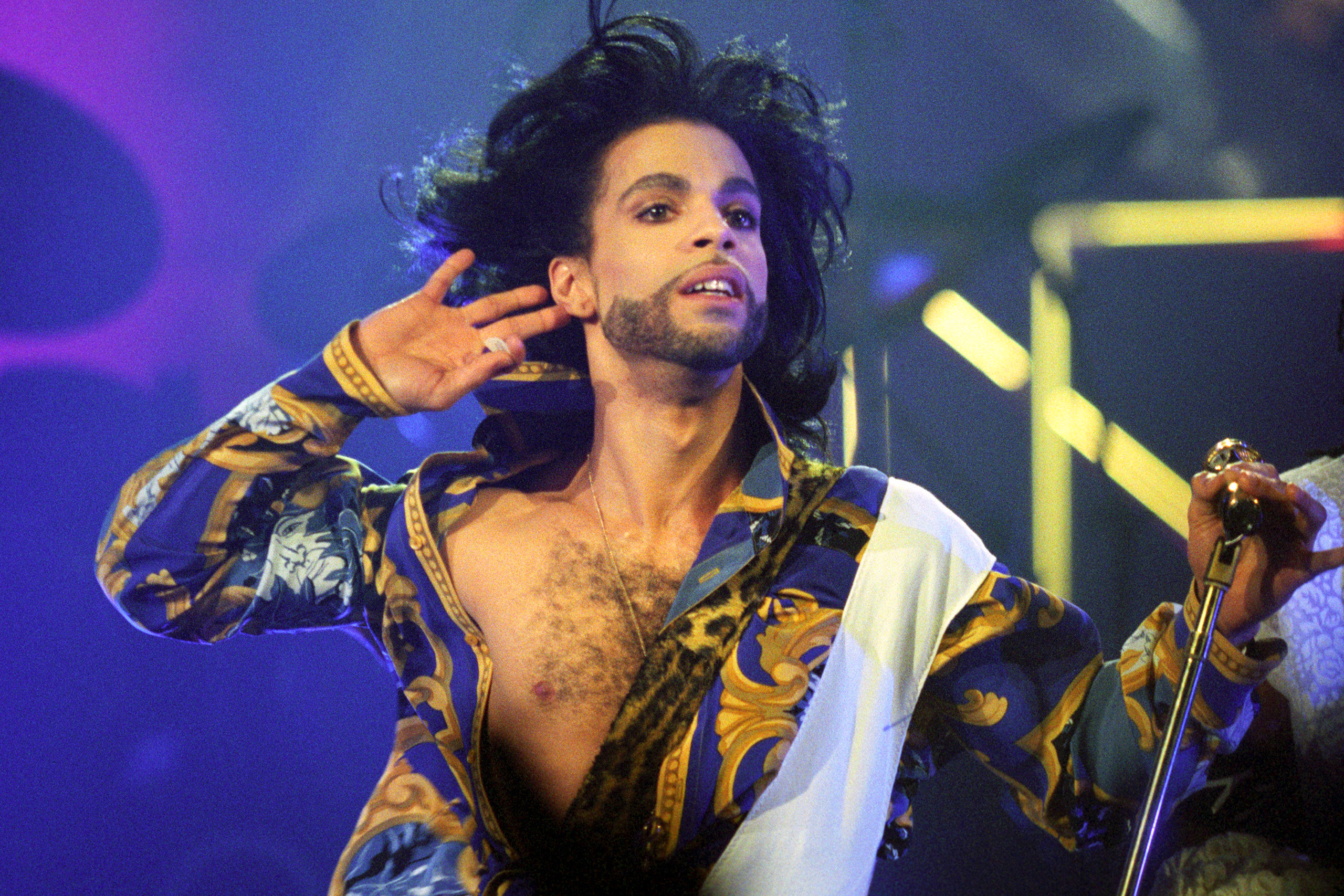

There were many reasons to mourn the untimely death of Prince, ten years ago this week, but there was something appropriate about one of the mundane facts of it: he was in an elevator when his body was found at his Paisley Park home after inadvertently overdosing on painkillers. As the most playful aficionado of revelation and judgement day he would have enjoyed the speculation about whether he was on his way up or down.
The fact was, of course, that in his 57-storied years on earth Prince Rogers Nelson had always found a space somewhere mercurially above the corporeal. His music spanned every American genre from gospel to jazz to hip hop and his thrilling sense of individual freedom was equally fluid. He embodied the possibilities of the American dream for invention and reinvention that went far beyond economic uplift. And if you were to date the current fall of that particular American gift to the world, of being who you wanted to be, then 21 April 2016 might be a good place to start.
The immediate tweets in response to Prince’s death were telling. Barack Obama, in a heartfelt statement, wrote that he did not know Prince well, though the artist had played a magical private concert at the White House a few months before, but that “few artists have influenced the sound and trajectory of popular music more distinctly, or touched quite so many people with their talent… ‘A strong spirit transcends rules,’ Prince once said - and nobody's spirit was stronger, bolder, or more creative. Our thoughts and prayers are with his family, his band, and all who loved him.” Obama was staying at the US embassy in London when the news broke. He and the ambassador played Purple Rain and Delirious at Winfield House as a preface to that day’s round of meetings with David Cameron.
Donald Trump was in the final stages of the most vicious Republican primary contest in history in April 2016. He tweeted inevitably about his own purported links with the star. “I met Prince on numerous occasions,” the then front-runner for the Republican presidential nomination wrote, inevitably putting himself centre stage. “He was an amazing talent and wonderful guy. He will be greatly missed!” Trump started to use Purple Rain at his campaign rallies, before the artist’s family intervened to prevent him. “The Prince estate will never give permission to President Trump to use Prince’s songs,” they subsequently tweeted to clarify, when Trump persisted in playing the song.
There is no record of Trump meeting Prince, though they were no doubt at some of the same parties in the 1980s and 1990s. Prince, however, did once write a song about the future president. In the summer of 1989 he wrote and produced Donald Trump (Black Version) for his offshoot band The Time, which became a track on their fourth and final album Pandemonium. The track is a little love song, in which the singer attempts to seduce the object of his desire by suggesting that, like the ludicrous property developer, he could offer every form of bling: “True love and affection/These are nice (so nice)/But when a money man walks in the room, girl/You look more than twice/Donald Trump: black version/Maybe that's what you need/A man that fulfills your every wish/Your every dream.” In his 2012 book Prince: The Man and His Music, the biographer Matt Thorne wrote that “‘Donald Trump (Black Version)’ continues the theme of a black rewrite of [the film] Wall Street.” It was Prince’s jester-like response to that priapic version of gilded American capitalism.
In the years since the singer’s death there has been a good deal of internet glossing of those lyrics. The arch conservative National Review claimed that the song was an unadulterated hymn of praise to the corporate America that Trump represented, that the singer was a Kanye West-style convert to the philosophy of the Art of the Deal. Trump has more than once retweeted references to the song, as if to make that case.
That might be funny if things hadn’t got so serious. It should probably go without saying that those surface interpretations of Prince’s lyrics are comically tin-eared toward the other great gift that he gave to popular music: the layers of irony that he laid down along with his multi-instrumentalism on each track.
I only met Prince once, for a profile for this paper. It was, appropriately enough, toward the end of 1999, and he was making his party plans for “two thousand zero, zero,” oblivious to the millennium bug. In the hour or so in which he spoke, he covered a lot of ground: there was a memorable exchange about Miles Davis (“I’d go round to his place and he’d come to the door butt-naked, just to see my reaction,” he recalled. “And that was something you didn’t want to see. All of human history was on that body…”), much discussion about his recently completed efforts to remaster everything he had ever recorded, to escape his contract with Warner Bros. (“you walk into a meeting with the word ‘slave’ written on your face with mascara, and you know it does kind of change the dynamic a little,”) and a bit of apocalyptic prophecy that has only got more relevant in the years since: “These guys come out of a summit meeting and say, you know, we really, really tried but we couldn’t really agree how to stop killing each other. Y’all can’t say that. We don’t want to hear your failures. There’s an easy way to stop killing”.
In thinking back to that memorable hour or so, though, there is always one thing that stays in my head: more than anyone else I’ve met in my journalistic career Prince offered a brief glimpse that everything in his life was an opportunity to play, and to create. He knew, from a childhood with a tyrannical father, that there is nothing bullies hate more than genuine artistic imagination. It’s the thing they crave and the thing they lack and the thing that they know deep down they can never control. In this sense, if America wants to be great again, there are plenty of reminders of how to do so in Prince’s back catalogue; his reworking of the founding fathers’ “pursuit of happiness” that introduces 1999 might be a good place to start: “Don’t worry, I won’t hurt you/I only want you to have some fun.”
Newsletters
Choose the newsletters you want to receive
View more
For information about how The Observer protects your data, read our Privacy Policy