
Albert Scopin arrived in New York aged 26 in July 1969, having left his native Germany with a vague idea of becoming a photographer. “It was the day after the Americans made it to the moon,” he tells me. “There was a lot of excitement in the air, but I didn’t have much money and no idea where to go. Luckily, I met some musicians who told me about the Chelsea.”
Established in 1884, the Chelsea Hotel on Manhattan’s West 23rd Street soon gained a reputation as a sanctuary for artists and outsiders. Literary giants such as Oscar Wilde, Mark Twain and Arthur Miller had stayed there and in the 1950s it provided a temporary home for transient Beat writers like William Burroughs, Allen Ginsberg and Jack Kerouac, who, it is claimed, wrote his breakthrough novel On the Road there in a three-week burst of intense creativity.
In the mid-1960s, Bob Dylan composed his epic love song, Sad Eyed Lady of the Lowlands at the hotel and Leonard Cohen immortalised it on Chelsea Hotel #2, a plaintive ballad that referred to his brief liaison with the singer Janis Joplin.
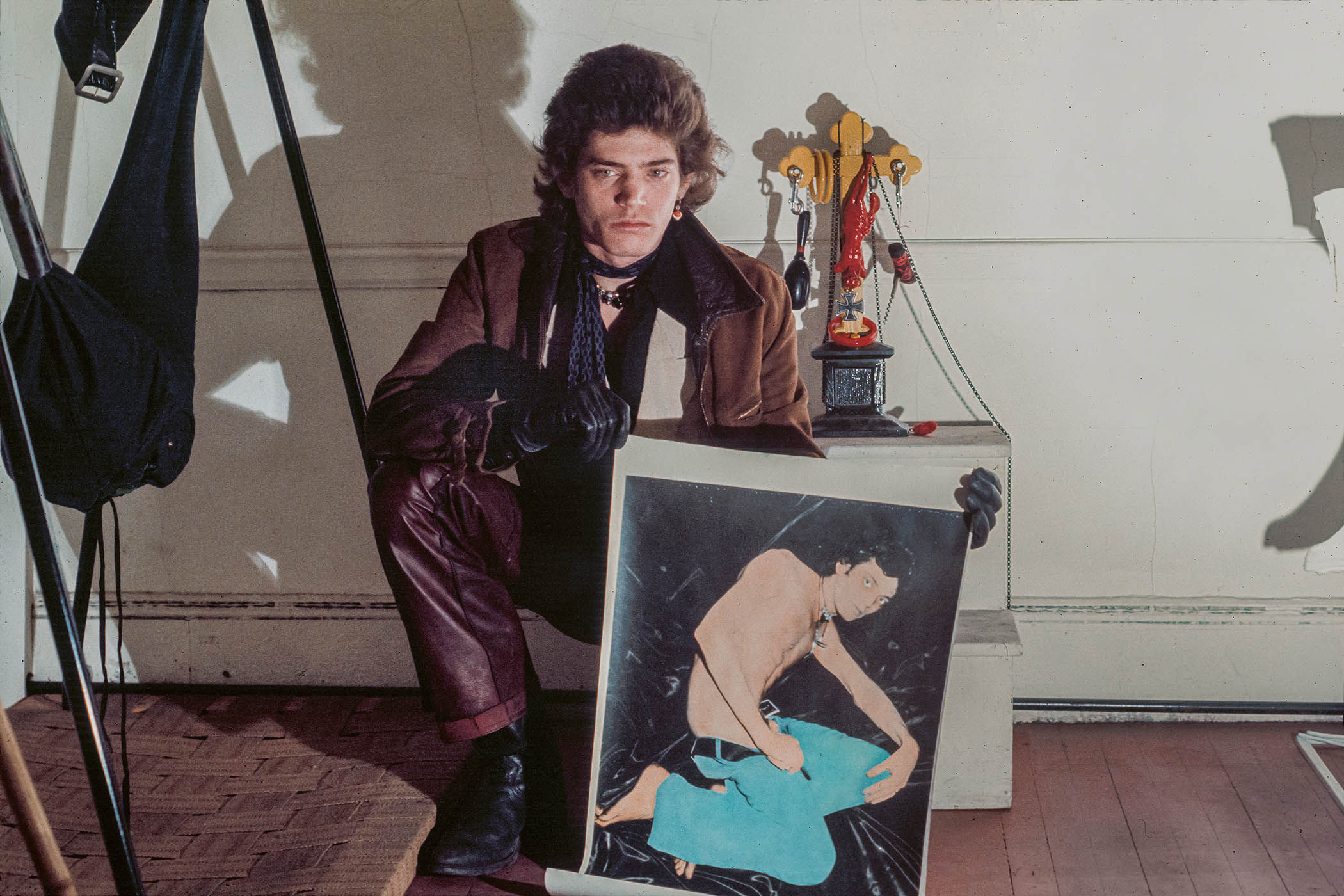
A young Robert Mapplethorpe, who created homoerotic collages using found pictures before he took up photography
When Scopin pitched up at the Chelsea, it was a place of extremes: the more expansive rooms on the top floors were home to socialites, established artists and curators, while those on the lower levels were populated by underground artists, struggling musicians, drifters and junkies. Scopin lived among the latter in what he describes as “the lowest category, a kind of darkroom with a tap”, soon becoming part of a creative milieu that included experimental film-makers Jonas Mekas, Shirley Clarke and Harry Everett Smith; former “Warhol superstars” Candy Darling and Holly Woodlawn; and all manner of lesser-known and effortlessly eccentric characters.
Between 1969 and 1971, he photographed many of his fellow residents in their rooms on a humble Kodak Instamatic and a cheap Pentax. A selection of his images from the Chelsea was published in Germany in Zeit Magazin, but soon afterwards the original photographs mysteriously disappeared from their archive.
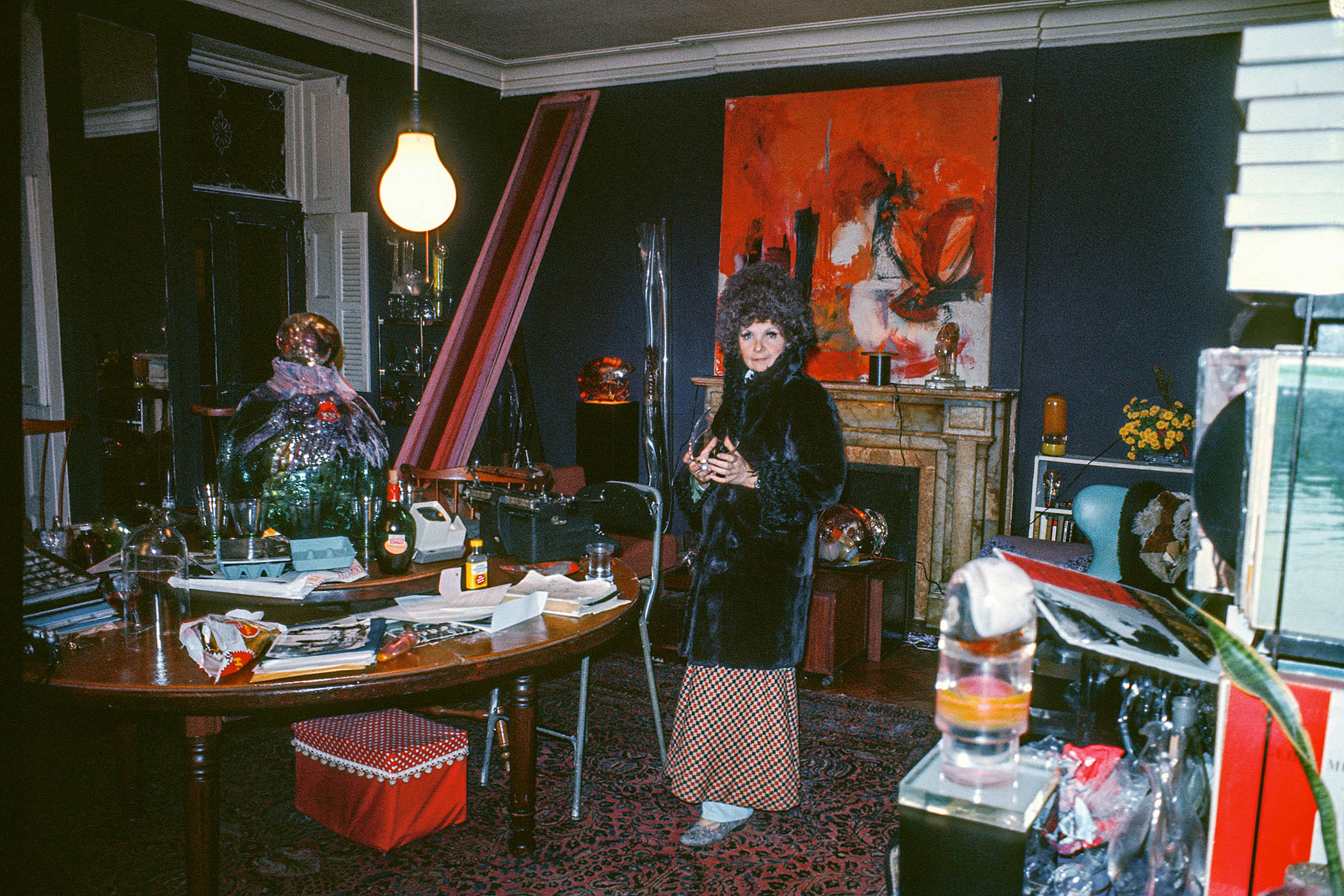
The artist Stella Waitzkin
Decades passed, during which Scopin abandoned photography for painting – he now creates large abstract, darkly ominous landscapes using asphalt. Then in 2016, out of the blue, a German gallerist called Oliver Ahlers contacted him with the news that he was in possession of the long lost negatives and photos, having bought them from an art dealer in Bremen. A book, Scopin: Chelsea Hotel, has just been published by Kerber Verlag alongside an accompanying exhibition in Berlin.
The most striking images feature a then-struggling young couple, Robert Mapplethorpe and Patti Smith, both at the start of their respective creative journeys. In the foreword to his book, Scopin notes his first impressions of them. “They were a very striking, very particular couple: Robert, good-looking, cool, cynical, detached; Patti, punk outfit, expressive face, plain-speaking, full of life.” Scopin was initially taken aback by Smith’s energy: “It felt like she could run up walls and along ceilings.”
He encountered the pair at a nude photoshoot organised by the fashion photographer Bill King, who had hired the young German as an assistant. “Bill was always busy but he was disorganised and never seemed to make much money,” recalls Scopin. “In the evenings, he would hold nude shoots with all kinds of people. Back then things were a lot more loose and free. There were drugs and wild parties and nudity was no big deal.” The resulting photos were never published because King never thought to ask anyone involved to sign a release form. “They just got lost to history.” says Scopin.
Back then things were a lot more loose and free. There were drugs and wild parties and nudity was no big deal
Back then things were a lot more loose and free. There were drugs and wild parties and nudity was no big deal
In her memoir Just Kids, Smith describes the Chelsea as “an energetic, desperate haven for scores of gifted hustling children from every rung of the ladder. Guitar bums and stoned-out beauties in Victorian dresses. Junkie poets, playwrights, broke down film-makers, French actors. Everybody passing though here is somebody, if nobody in the outside world.”
Scopin notes that Smith and Mapplethorpe were key figures in that boho community, but somehow separate. “They were different,” he says. “Everyone at the Chelsea wanted to be a star, but they were more serious. I immediately sensed that they were both highly motivated. She was already writing poems and reading her work with an intensity of expression that amazed me. With Patti, it was all there from the start. Robert was more guarded, harder to get close to.”
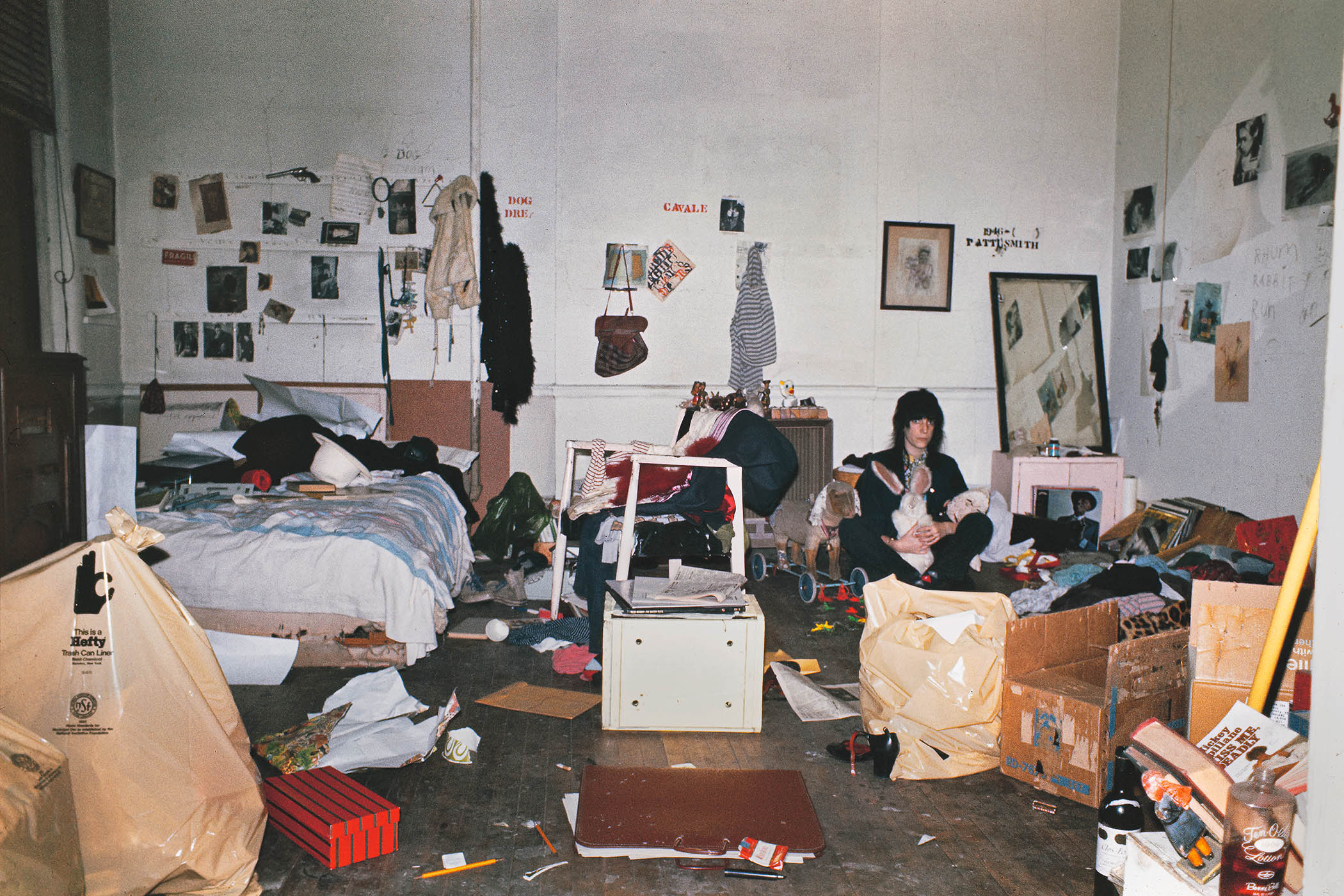
In Scopin’s photographs, Smith poses amid a sprawling mess of clutter: discarded clothes, records, boxes, books and papers; the walls are adorned with cuttings, photographs, drawings and fragments of runic text. “The walls are revealing,” says Scopin, “what is on the walls is a glimpse of what was inside her.”
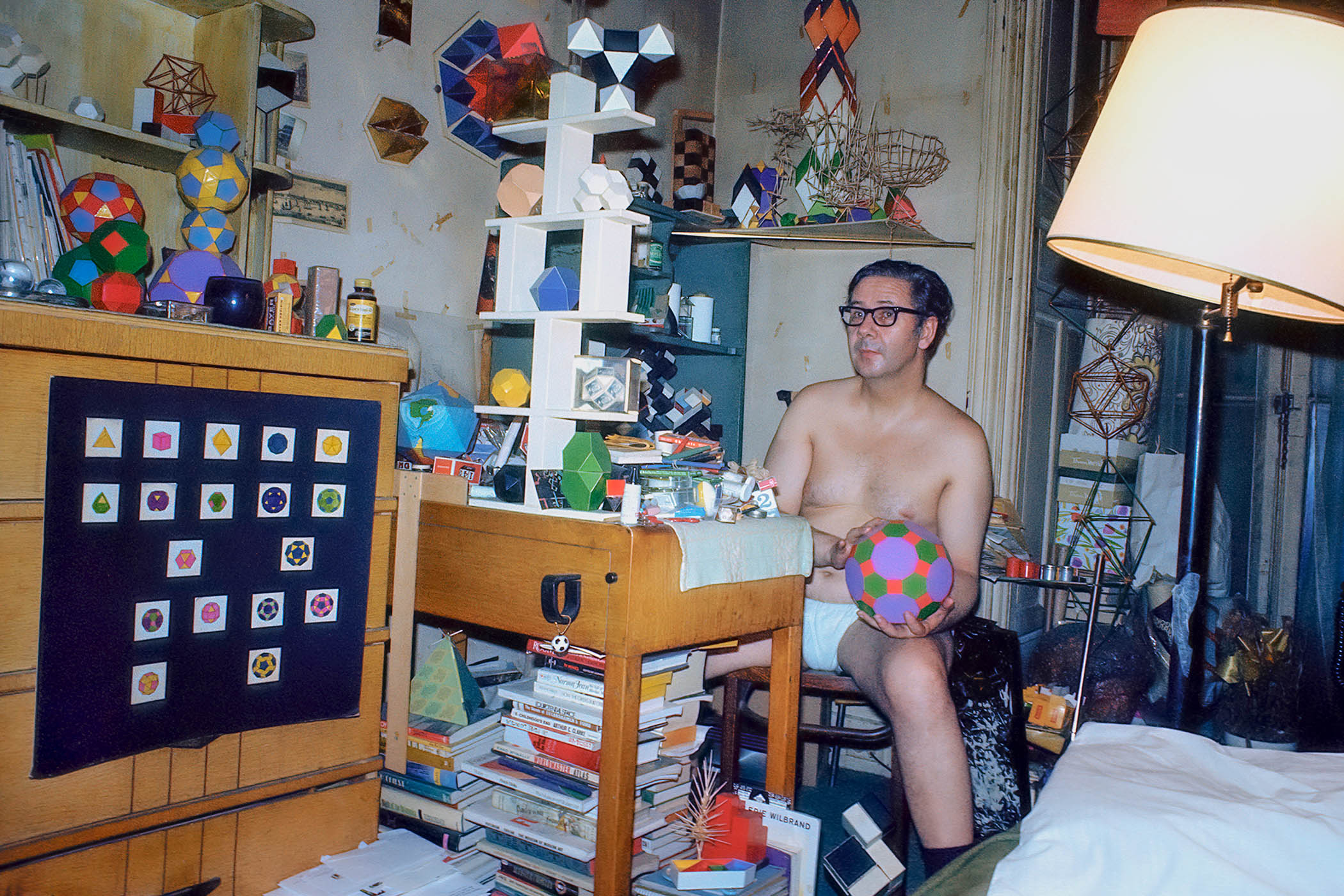
Prince Roderick Ghyka, the son of a Romanian diplomat, in his underwear
In one portrait, Smith sits amid the chaos holding a fluffy toy rabbit; beside her is a toy horse on wheels. In another, she stares blankly at the camera, casually cradling a pistol and looking imperturbably cool in a dark suit, ornately patterned shirt and Keith Richards hairstyle.
In contrast, Mapplethorpe’s studio, which was on the ground floor of the Chelsea annexe, is a bright, more organised space. He looks dandyish in leather trousers, black wide-collared shirt, double-breasted waistcoat and a necklace of silver skulls and dice. He had yet to embrace photography, instead creating homoerotic collages using found photographs from gay magazines. The following year, an artist called Sandy Daley, who rented the room next door, would lend him her Polaroid camera and provide constant support and encouragement as he began to tentatively find his own style.
Photographed together on a sofa in Mapplethorpe’s workspace, the pair look young, cool and totally in tune with each other. Around them the Chelsea’s carnivalesque retinue of artists and eccentrics was in constant flux, but the vibe somehow remained the same: experimental, anarchic and dissolute. Scopin’s democratic eye was drawn to the extrovert, including an avant garde psychedelic theatre group called the the Cockettes, and the reclusive – a mysterious woman called Lola, who only “left her room twice a week: once to see her shrink and once to go shopping”.
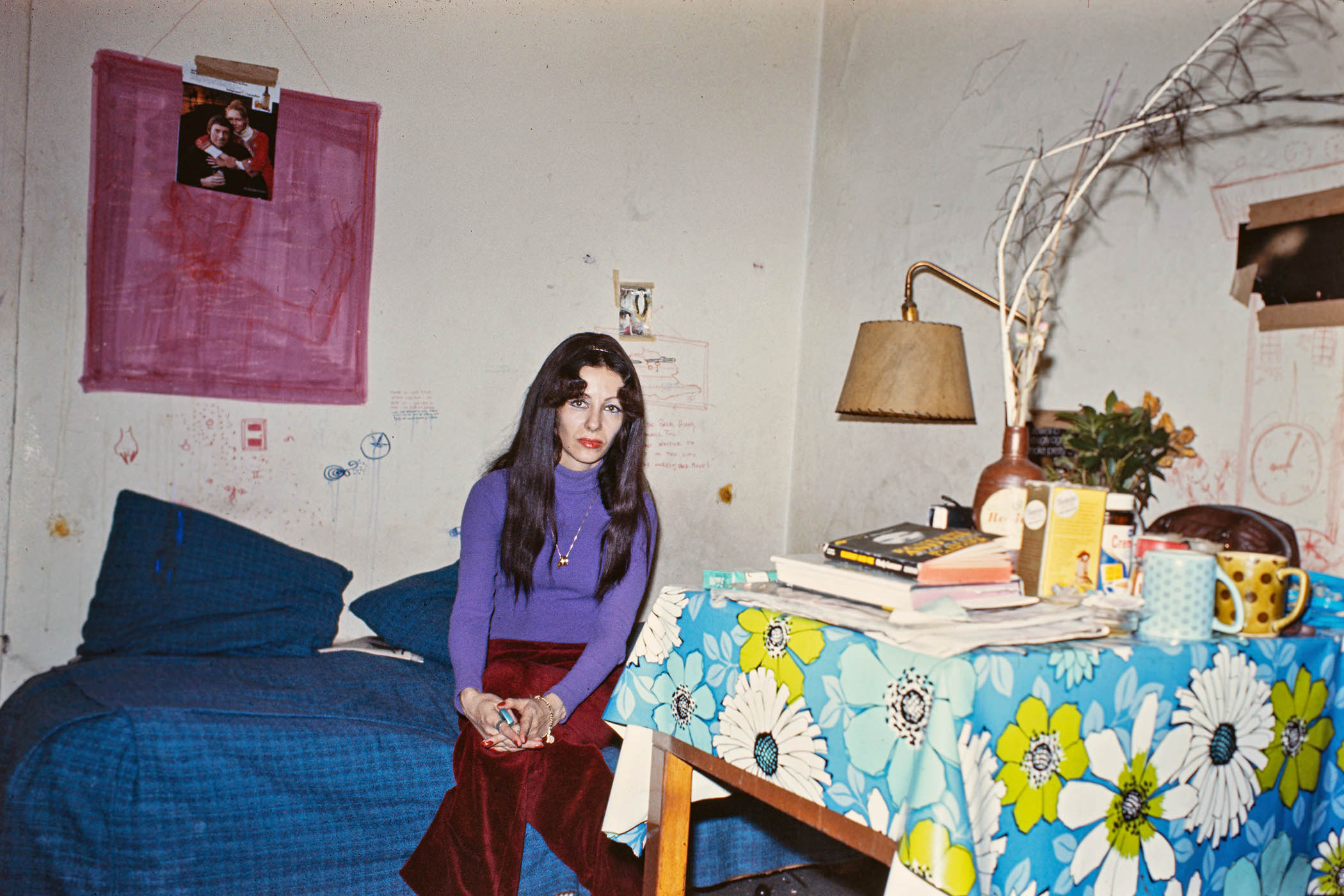
Lola was a mysterious woman who only ‘left her room to see her shrink or go shopping’
The passing parade of characters also includes the hotel’s manager, the saintly Stanley Bard, who often accepted artworks in lieu of rent, and Vali Myers, a self-styled “artist and vagabond”, whose elaborately tattooed face spoke of her beatnik life as a muse, opium addict and former confidante of the writers Jean Genet and Jean Cocteau. At the Chelsea, Myers tattooed a lightning bolt on Smith’s knee.
A young Wim Wenders makes a fleeting appearance, as does an intense-looking Germaine Greer, who spent a few weeks there while on a promotional tour of the US for her book, The Female Eunuch. “She was one of the most unpleasant people I met there,” Scopin says.
In its grainy, intimate observation, the book paints a vivid picture of a pivotal moment in New York’s countercultural history. “Everyone at the Chelsea was interesting, and behind every door there was another mystery.” says Scopin, “I was searching for something – the kind of freedom I didn’t have in Germany – and I found it there. It was an intense and exciting time and then, at a certain moment it was over and we all moved on.”
Scopin’s photographs remain as glimpses of another America, one that was freer and more tolerant of difference. It seems impossibly distant.
Chelsea Hotel by Albert Scopin is published by Kerber Verlag, £38