

Julia Clayton reviews the 150th anniversary exhibition at the Atkinson Gallery, Southport
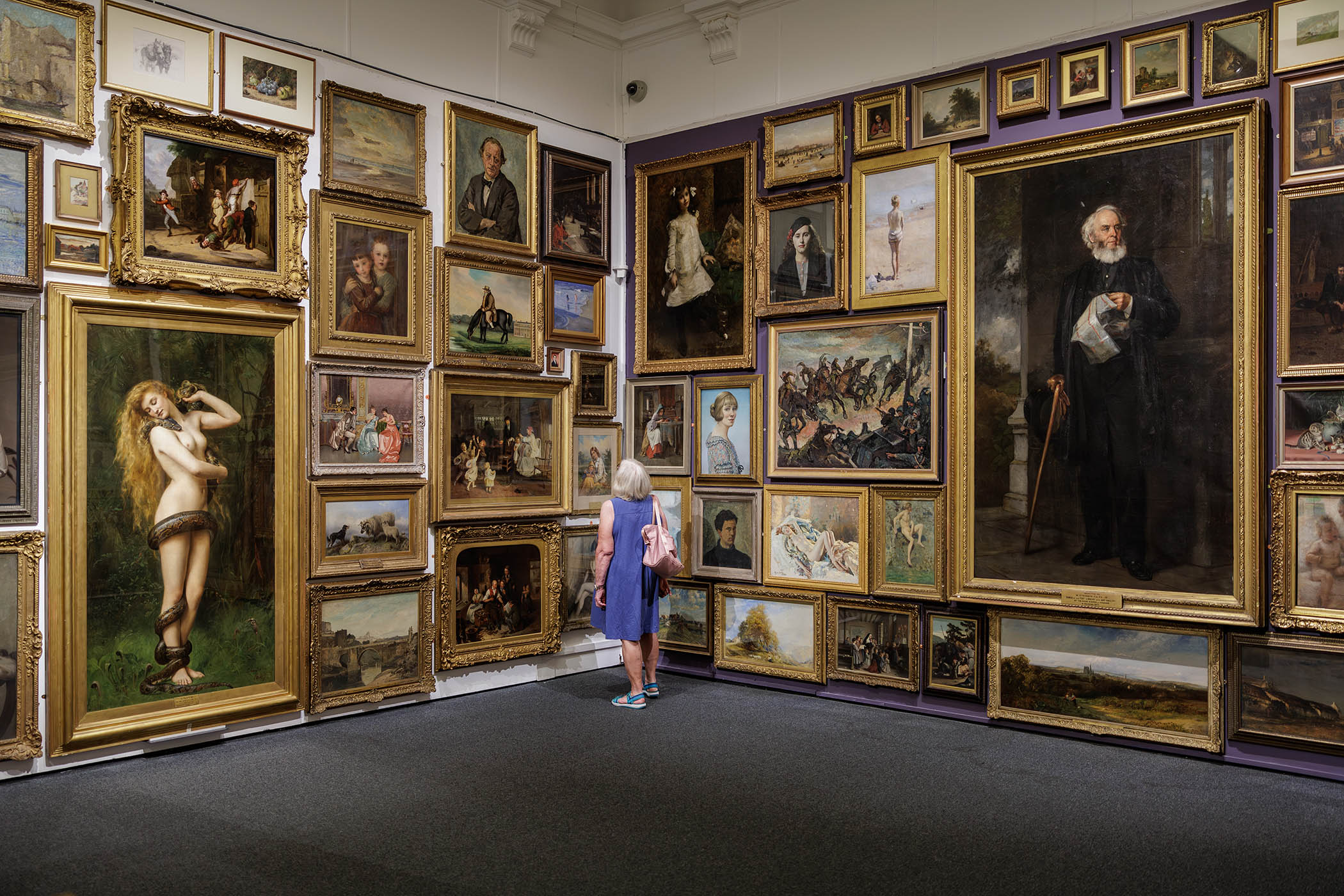
Imagine entering an art gallery with no captions, labels or interpretative panels – “nothing to tell you what you’re supposed to like”, as one of my friends put it. Visitors to the Atkinson Art Gallery in Southport can now do just that, thanks to the inspired decision to recreate the “Salon hang” with which the gallery opened in 1878. Though that first exhibition relied entirely on loans, as the new gallery possessed not a single piece of art, 150 years later the Atkinson faces the problem of how to display some 3,000 artworks, most of which are rarely seen by the public. Now, some 290 pieces have been taken from the stores and presented in a floor-to-ceiling hang, up to five paintings deep in some sections, with the effect that the space itself seems transformed from a rectangular box into an arched vault or treasure chest.
The decision to hang the paintings purely by size and shape rather than by chronology, school or subject has resulted in the juxtaposition of works from different styles, periods and genres: pieces by well-known names - an exquisite Frank Brangwyn pen-and-ink sketch of Montreuil, or an Augustus John portrait of a rather grumpy woman in a red toque - nestle among amateur paintings depicting local shrimpers or genre scenes by Victorian journeymen.
For an audience brought up on “white cube” curation, the concentration of so many de-contextualised paintings in a single space can be quite overwhelming; you can spot the first-timers by the way they pause open-mouthed at the door, before daring to venture into this Aladdin’s cave. Younger visitors, however, wholeheartedly embrace the new layout, charging round the gallery in a way rarely observed in galleries today, counting how many animals they can find (Thomas Sidney “Cow” Cooper’s enormous Bull, Cow and Calf is a favourite). My autistic 13-year-old nephew was particularly taken by Lowes Cato Dickinson’s full-length portrait of William Atkinson, the Yorkshire cotton manufacturer who provided the original funding for the gallery, clutching the plans for his pet project. Given the sheer quantity of art on offer here, the show has reportedly attracted a lot of repeat visitors, many of whom are convinced that new paintings have been added since their last visit (they haven’t).
Its very refusal to contextualise or interpret the art before us, this exhibition invites us to do as I’ve just done: to speculate about the artists, sitters and settings without being told who, what or where they are
Its very refusal to contextualise or interpret the art before us, this exhibition invites us to do as I’ve just done: to speculate about the artists, sitters and settings without being told who, what or where they are
Part of the fun, in a gallery without labels, lies in testing one’s own art historical instincts: those dancers in The Dressing Room at Drury Lane, applying their lipstick against a wall of curling photos, must surely be by Laura Knight; that nude swimmer sitting on Cornish rocks (Grey and Green) positively screams Henry Scott Tuke – I even managed to convince myself that the model was a young TE Lawrence.
Regular visitors to the Atkinson will recognise star pieces from the museum’s collection – John Collier’s Lilith, Ernest Normand’s Pygmalion and Galatea, Alfred Munnings’s Trooper, Philip Connard’s The Rat Catcher – but the real strength of the collection lies in its early 20th-century portraiture: Gerald Kelly’s understated Spanish Girl, Gerald Brockhurst’s study of Dorette’s Sister, tentative in her adult clothes. Dorette herself (Brockhurst’s muse, mistress and eventual wife) modelled for Adolescence, an unsettling drawing of a girl appraising her naked body, reflected in a bedroom mirror that one suspects may not be her own.
The two portraits that will stay with me longest, and which have already had me trawling the ArtUK website, are both by artists with local connections: Stanley Reed’s elegant self-portrait (a virtuoso performance in painting a crisp white shirt) and Raymond Lintott’s portrait of his colleague at Southport College of Art, the Scottish painter Ian Grant. While Reed’s gaze is sardonic and sexy, like Rupert Everett playing the role of a society painter, Grant comes across as louche and raffish, a 1930s spiv with pencil moustache, permanent cigarette, plus fours and leather driving coat (alluding to his penchant for racing Bugattis) – definitely the ideal companion for a Liverpool pub-crawl.
By its very refusal to contextualise or interpret the art before us, this exhibition invites us to do as I’ve just done: to speculate about the artists, sitters and settings without being told who, what or where they are. We have perhaps become so used to being guided as to what to think about art, including the aesthetic and moral judgments we should make (and yes, there’s a whole history to be unpacked regarding the source of Atkinson’s wealth) that it’s refreshing to be presented with a show that, while old-fashioned in its antecedents, is unusually radical in allowing the art to speak for itself, and urging us to leave our preconceptions at the door. By Julia Clayton
The premiere of Ovllá at Oulu Theatre in Finland
No’a L bat Miri reviews Ovllá, the first full-length Sámi-language opera, in Oulu, Finland
A language’s first opera is no small matter. For the Sámi, the only recognised Indigenous people in the European Union, every choice within that first opera will be read politically, perhaps even before it is read artistically. Only a few months after Sweden witnessed the premiere of Eatnama Váibmu (The Heart of the Earth), a short opera performed in Northern Sámi based on Indigenous creation myths, Finland welcomed the first full-length Sámi-language opera, Ovllá, as part of the city of Oulu’s celebrations as 2026 European Capital of Culture.
Newsletters
Choose the newsletters you want to receive
View more
For information about how The Observer protects your data, read our Privacy Policy
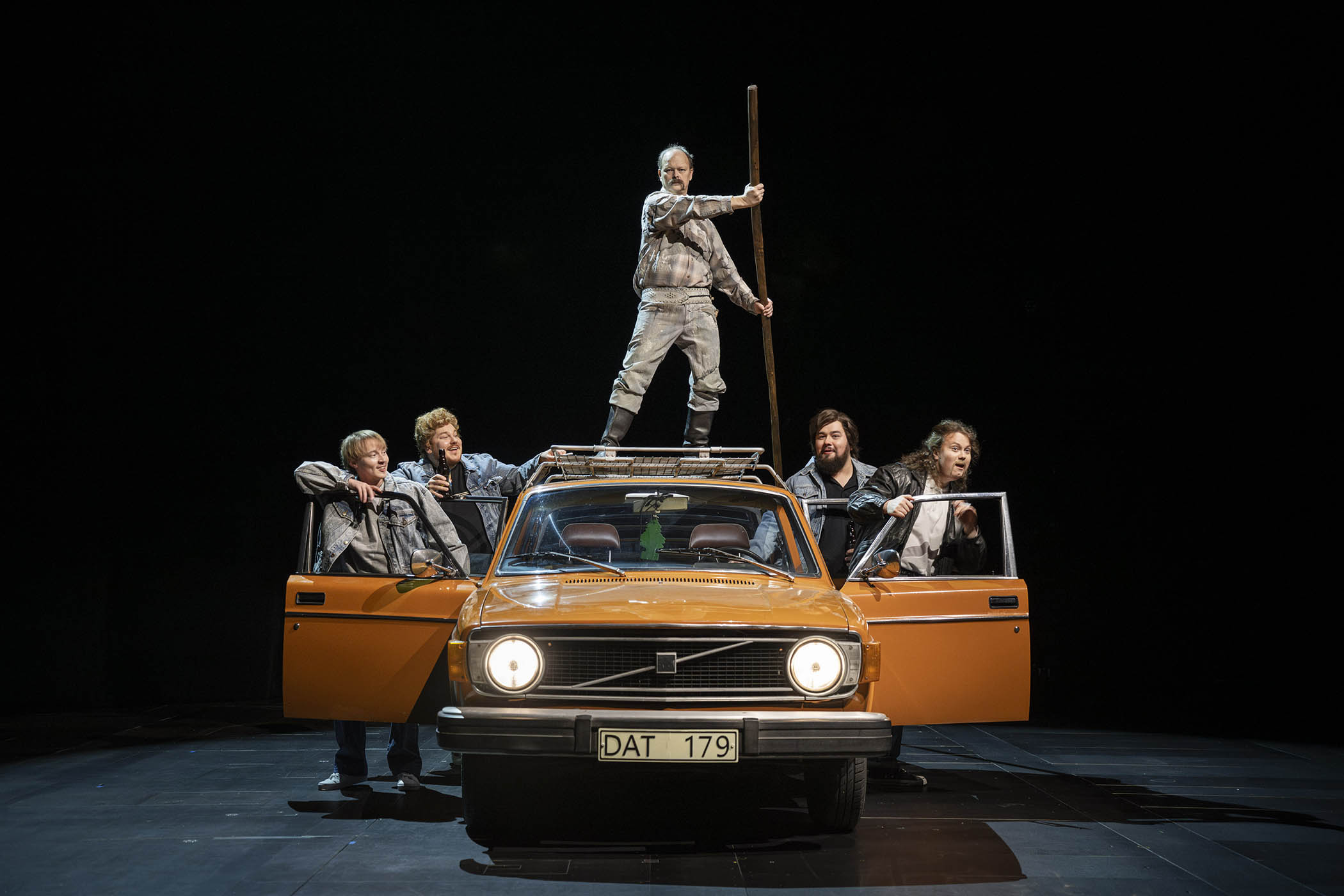
Ovllá, a Sámi man who spent his youth in a residential school, having his own language and culture squeezed out by Finnish norms, travels with his friends to a music festival. There, he meets Ánná, a woman dedicated to the preservation of Sámi traditions. As the two begin a romantic relationship that moves them across borders and through environmental hurdles more treacherous than arctic midnight, Ovllá is forced to make a decision: is he Sámi, or is he a Finn?
What draws attention - and perhaps a chill - first are the microphones strapped to the faces of the majority of the singers. For many opera fans, amplification is a nonstarter, taboo or genre-buster. And throughout the story, it is the case that operatic singing styles are - deliberately - the minority. The two brilliant opera stars present on stage are the Finns who head up the horrorshow of a residential school, turning Sámi children and other rural riffraff into bona fide Finns. This is, of course, a matter of national significance for the young country, free after centuries of Swedish oppression and Russian rule. A strong Finnish identity is a strong Finland. Ovllá represents this with “European” norms, visually and vocally.
There were the subtle sounds of the ice, the snow, the currents of reindeer migrating through the landscape
There were the subtle sounds of the ice, the snow, the currents of reindeer migrating through the landscape
The genre participates in the narrative. Every layer of the production reflects an identity grappling with its own denial, hybridisation, re-emergence. Switching between operatic Finnish, gentle, straightforward musical theatre singing and the piercing traditional joik tradition of the Sámi people, Ovllá does not try to tell the story of Sámi oppression in a borrowed tongue.
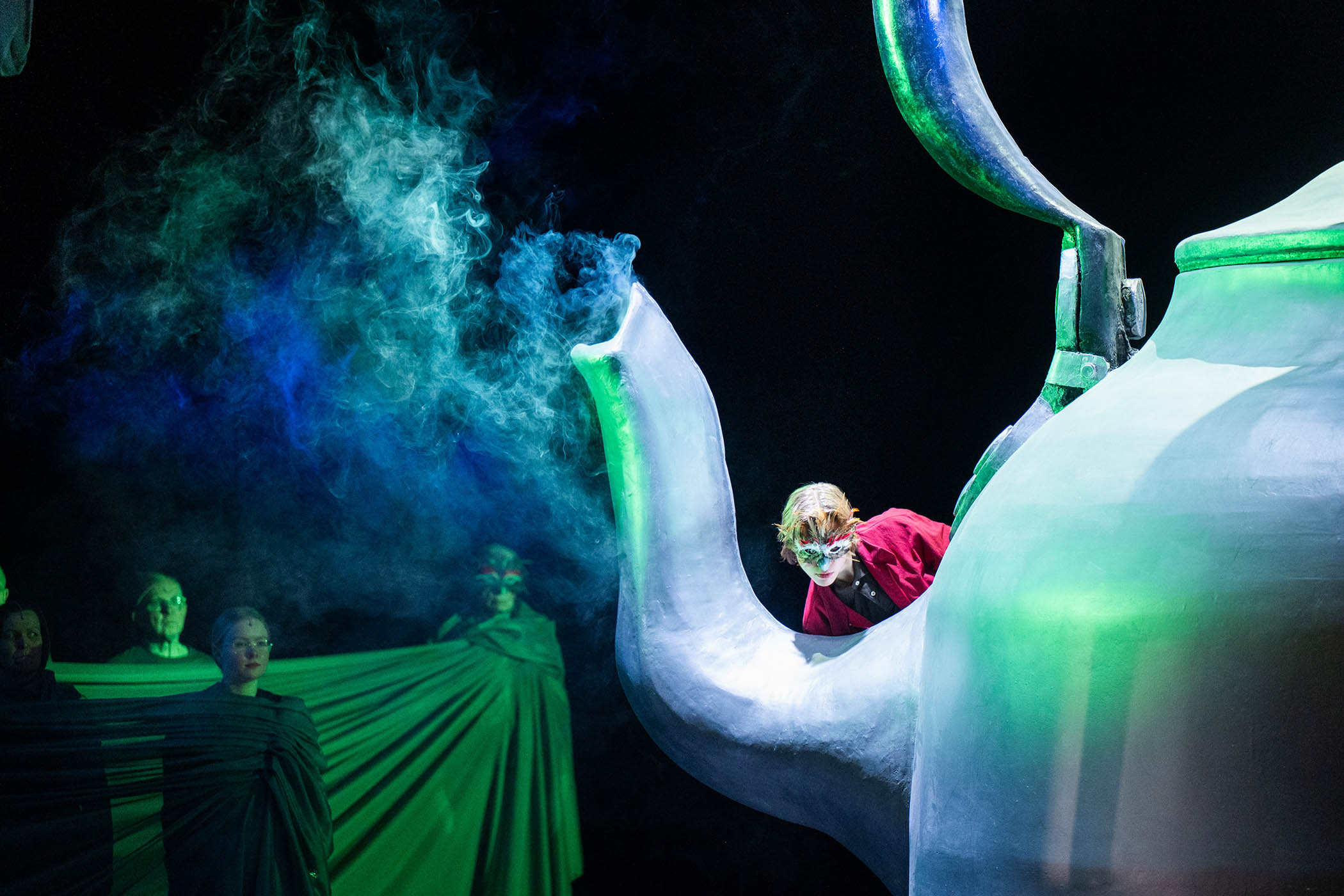
Similarly, while the set design is simple, it is radically effective. In particular, from the depths of the mine where Ovllá works to the similarly dark school, the coordination between Øystein Heitmann’s lighting design and Auri Ahola’s choreography provides a masterclass in the way shadows tell a story. Everything on stage is a veil for something else, opaque shapes turned into habitable spaces by shifting lights. It’s a delight to watch.
While the libretto is poignant and Juho Sire/Siri Broch Johansen captures not just a story of what happened to the Sámi people in Finland, Norway, Sweden and Russia, but a tale familiar to Indigenous and minority peoples the world over. Emil Kárlsen’s joiks sound like they were pulled from the foundations of the Earth.
The real star is the composer Cecilia Damström. One of the most engaging operatic scores in years, Damström’s work displays both a clear literacy of the great composers before her, a sensitivity to Sámi languages and the realities of Sámi life, and a fluency in her own distinct musical voice. She relays both landscape and internality of characters, beautifully articulating the struggle within each about how she contends with a society that might not enable her to exist fully, or to raise her child in the language in which she thinks, feels, wonders and loves; the music exists substantially, wondrously, skillfully as the foundation for the opera. The texture, the clear sense of an emotional arc - particularly in her handling of the strings - suggests that the instrumental track would be compelling on its own, even without the brilliant costumes and diversity of human voices.
Rumon Gamba conducted the Oulu Sinfonia adeptly; with fewer than three dozen musicians in the pit, the sound was powerful in moments where the score called for it, and not a stray note was heard when the musical stage was cleared for the treat of joik-as-aria. This is surely an emotionally significant piece of work with the music to back it. But is it opera?
It is an opera in the way that the Sámi are European. Before the mythologies and codes of “civilised” conduct emerged on the continent and found their way up to the Nordic peninsula, before the now-familiar operatic norms of unamplified vocal projection and sometimes incomprehensible, overly stylised verbal phrases, there were the subtle sounds of the ice, the snow, the currents of reindeer migrating through the landscape. And there were ways of singing that were less concerned with convincing an audience than with sharing the truth. By No’a L bat Miri
Photographs by Dave Jones, Jouni Porsanger