

The air in the courtroom will be charged with drama on Monday evening when Richard Ayoade, Lee Mack and Paterson Joseph each take the stand. The performers are joining stars of the academic and legal worlds for a trial that aims to strike at one of Britain’s most vulnerable cultural targets: William Shakespeare’s sense of humour.
The accusation, to be tried in public, is that Shakespeare’s plays are criminally unfunny, and as Professor Emma Smith prepares to speak for the defence, she finds she is not altogether convinced of her case. Smith, one of the dramatist’s acclaimed biographers and an academic at Hertford College, Oxford, is to give her authoritative opinion (Ayoade will be her fellow expert witness) in front of a real high court court judge, but was uncertain how to testify.
“In true legal spirit, I said I didn’t mind whether I defended Shakespeare or argued that he wasn’t funny,” Smith says. “The expectation, after all, would be that I would laboriously explain how Shakespeare’s comedy works, like every teacher you’ve ever had, and in the process reveal it’s not amusing at all. So I would have been quite happy to be the person saying so.”
The premise of the event – staged for one night only in London’s Criterion theatre in aid of the Coram Shakespeare Schools Foundation – is that Will Kemp (AKA William Kempe), the era’s best-known clown, played by Mack, has taken Miles Jupp’s Shakespeare to court for the crime of being unfunny. Kemp claims he was forced out of Shakespeare’s acting company after having to perform the playwright’s terrible jokes night after night.
Whichever way the judgment swings, it is fair to say the popular vote is already in: persuading anyone that Shakespeare is funny has long been an awkward business, and readers of this piece are likely hoping that no Shakespearean jokes are coming up.

Actor Paterson Joseph is eager to spar with Mack in court: “Of course, Lee had to be Kemp, the funniest man in the room – or so he thinks”
The wordplay, submerged political allusions and ribald double meanings are hard to relish. The damage has been done by all those interruptions to the action of a play, in which some licensed lord of misrule comes to the foot of the stage, cocks an eyebrow and delivers an unintelligible tangle of words, before sauntering into the wings looking pleased with himself.
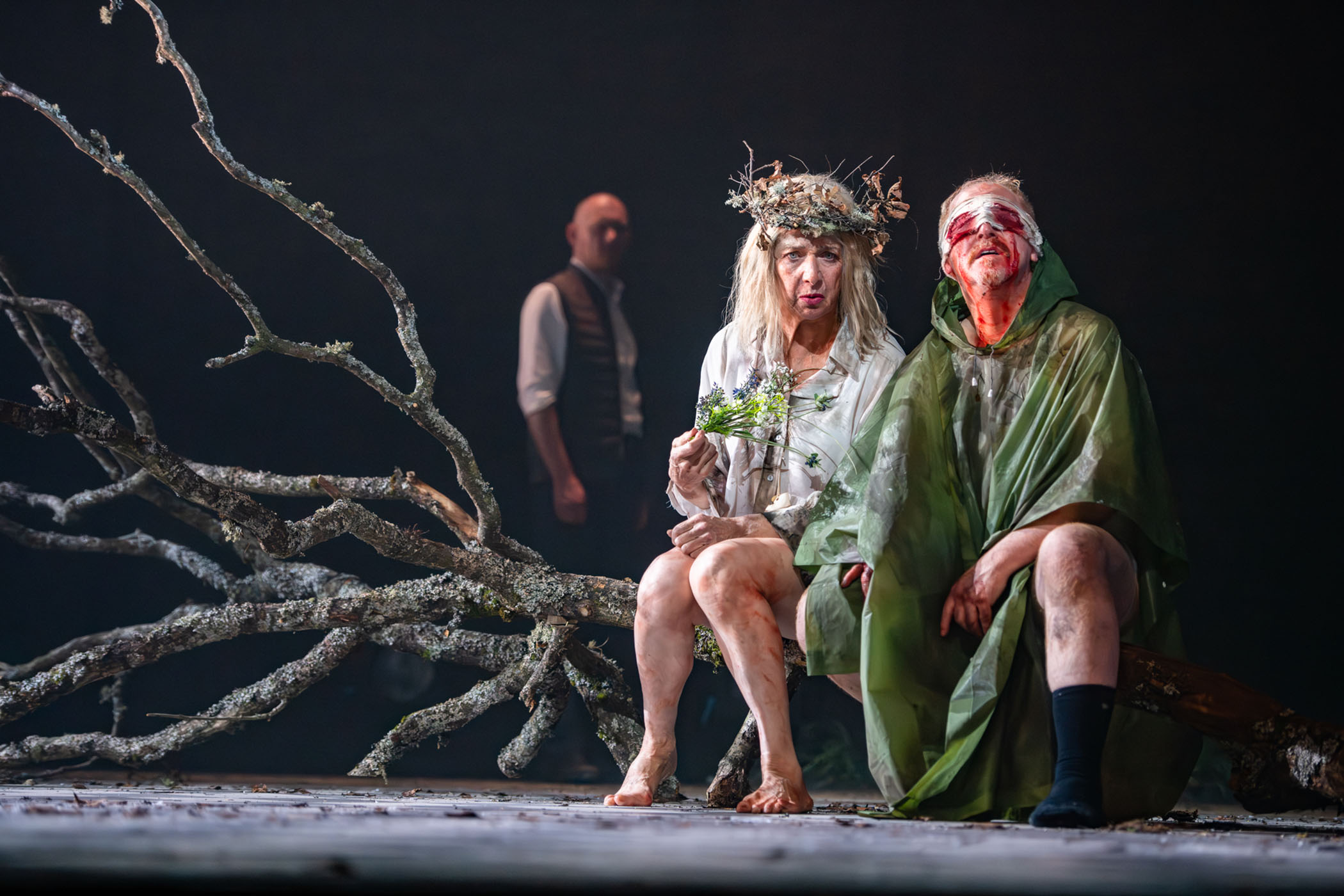
Understandably, many modern directors simply cut these passages of “comic relief”; they crop up even when mutilated corpses have just been dragged upstage to the sound of wailing. These moments are hard on the actor, and even harder on an audience that has come out for an evening of high-minded tragedy.
“Every sane person hates that theatregoer who laughs aloud at a textual footnote about some obscure thing nobody else understands,” says Smith. “It is the most tedious thing of all, followed only by what’s now a more prevalent curse – all those theatrical thrusts of the groin intended to make the audience laugh.”
Smith admits that a lot of the jokes in Shakespeare’s time were rude sexual puns: “It can often seem like that quip about Freud’s work; that everything that is longer than it is wide is a phallic symbol and everything with a hole in it stands for women’s genitalia.” Smith also has her doubts about the comic value of getting words muddled up: “That feels to us quite a low form of wit. It’s something we associate with children.”
But Joseph – who will appear in court in the guise of Shakespeare’s other great stage fool Robert Armin – is happy to embrace a music hall vibe. “Shakespeare wants gags! He can be a cheap comedian,” he argues, in a pre-match warm-up. “He is not always after highfalutin references to Queen Mab. He wants the fool to get on, be funny and get off, because now we are going to kill Mercutio or Macduff’s family.”
Newsletters
Choose the newsletters you want to receive
View more
For information about how The Observer protects your data, read our Privacy Policy
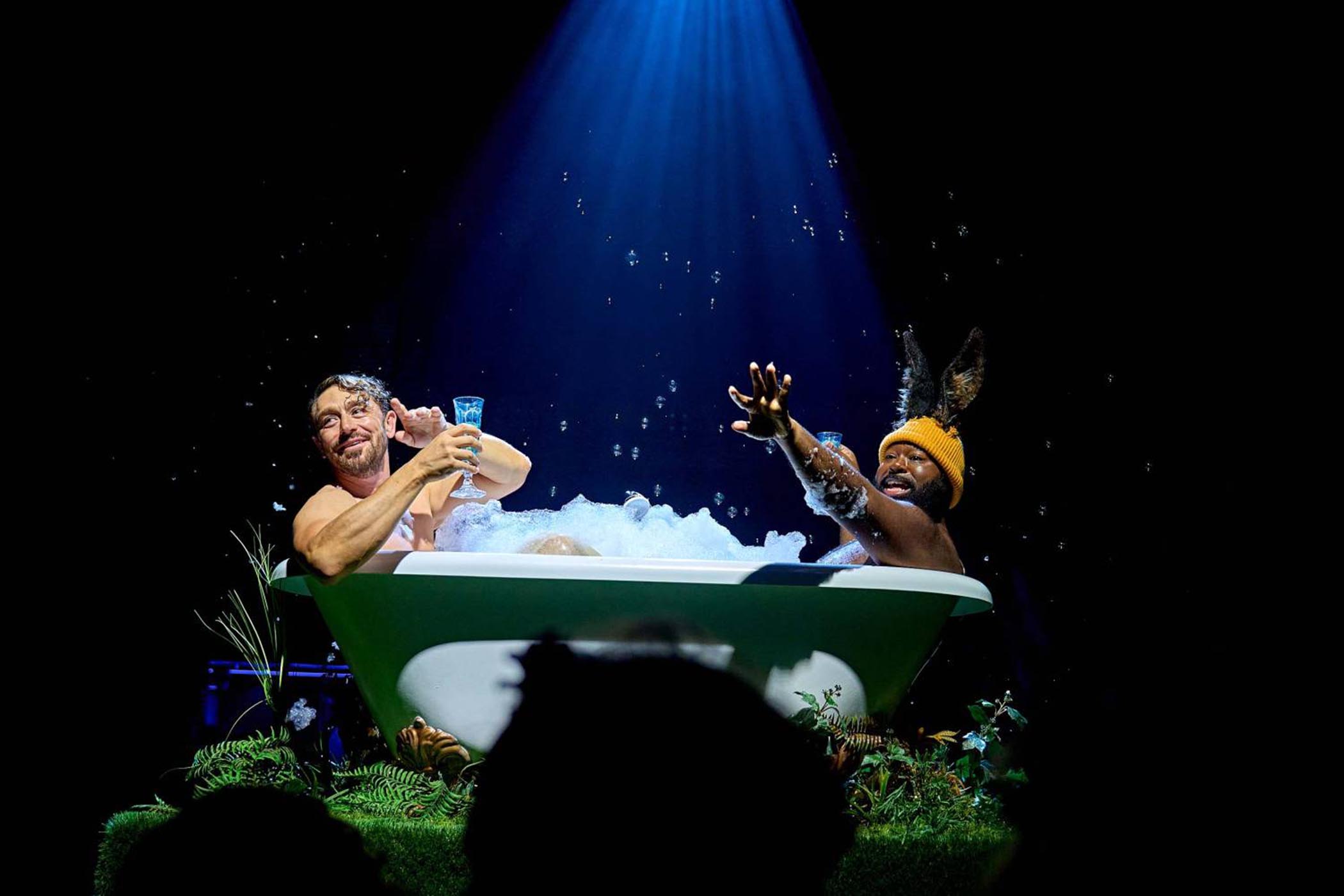
The evening has been lent legal structure by Benet Brandreth KC, son of the broadcaster and politician Gyles Brandreth. “I have set up some authentic pleas,” he tells me, “and, of course, we have leading KCs on hand, and Dame Joanna Smith in the chair.” Yet despite Brandreth’s professional interest in the power of argument, he suspects the best proof of Shakespeare’s humour is always a good production: “The recent A Midsummer Night’s Dream at the Bridge [in London] showed how funny it can be if well updated. It is a 500-year-old play, but it’s based in farce and misunderstanding.”
The best legal defence against Shakespeare’s unfunniness is probably to say that he didn’t write the offending passages anyway
The best legal defence against Shakespeare’s unfunniness is probably to say that he didn’t write the offending passages anyway
The trial is a bit of charitable fun, so for the participants the verdict will prompt only a fleeting sense of vindication or a brief sulk. But over in King’s Lynn, Norfolk, the outcome is of great concern. The case pits Shakespeare’s key comic collaborators Kemp and Armin against each other, and King’s Lynn is definitely Team Armin.
It is where he was born, and the home of his latter-day champion Tim FitzHigham, an actor and comedian, who has been conducting research into the Elizabethan comic for the Shakespeare Institute in Stratford-upon-Avon. FitzHigham believes Armin, who began appearing with the Bard’s acting troupe in 1590, shortly before Kemp left, is the true font of all British wit – at least when it comes to character comedy.
Armin was once more famous than the playwright himself and regularly sold out the house, FitzHigham tells me. “He was Shakespeare’s principal comedian for the majority of his writing career. He fundamentally changed comedy. We could not have had Fawlty Towers or Blackadder without him.” Armin was also the first to play Feste in Twelfth Night, Autolycus in A Winter’s Tale and the Fool in King Lear, but – crucially – he also wrote his own plays.
It is the dialogue in these dramas that suggests he might also have penned many of the comic interludes in Shakespeare. His scripts often involved a trio of comic characters, who make similar observations and share similar names; for example, there’s Armin’s Tutch and Shakespeare’s Touchstone, then Armin’s Goodman Holmes the gravedigger and Shakespeare’s Goodman Delver the gravedigger. If FitzHigham is right, the best legal defence against Shakespeare’s unfunniness is probably to suggest he didn’t write the offending passages anyway.
Smith recognises the arrival of Armin as marking “a big shift from the slapstick of the zany Kemp, who was good at getting his words muddled and being pompous, and who probably played Bottom and Falstaff. All this changes when Armin comes in. He is much more the melancholy clown. You could draw a line down to Tony Hancock’s comedy and onwards.”
There’s a latent cruelty in Armin’s fool Feste, says Smith, especially when he taunts Malvolio, that pompous figure of fun who has been played to great effect by many, including Stephen Fry, Tamsin Greig and the late Ken Dodd. The same “unflinching hard edge” is detectable in Lear’s Fool, and Smith agrees Armin could be the originator of lines. “I wouldn’t be at all surprised if he wrote that material. Some of it is comic characterisation, while other bits are like episodes of standup, only imperfectly tied to the rest of the play. Like a showcase for somebody.”
Meanwhile, Joseph is eager to spar with Mack in court: “Of course, Lee had to be Kemp, the funniest man in the room – or so he thinks. But Armin was a sophisticated comic, who also sang beautifully. On stage, he knows the score and twists people around. For me, the best clowning certainly came once Kemp had buggered off to make his fortune in Europe.” There is textual support for this too, Joseph says: “It’s there in Hamlet, in that line: ‘And let those that play your clowns speak no more than is set down for them.’ In other words: ‘Stop all that nudge-nudge, wink-wink while we are trying to do something interesting out here.’”
The trick to getting the jokes to work, Joseph argues, lies in the rehearsal room, where it must become comprehensible. He loves the “porter scene” in Macbeth: “You’ve got one of the most tense moments in Shakespeare, where this wife and husband have murdered the king, and are having a domestic row. Then on comes this fellow talking about having too much to drink. The audience needs the release and it’s a brilliant thing to squeeze them into that vice and then let them out in this absurd way, before plunging them back into the tension.”
For Smith, the comedian is the significant factor. “Some scenes were the right fit for Kemp and make difficult material for others,” she says, “But the real issue is that that the written versions of Shakespeare’s comedy that have come down to us are static. They represent a version, but not the energy a specific performance once gave to it.” Smith is grateful to stick to analysis and never deliver the jokes herself. As Armin’s Feste says: “Well, God give them wisdom that have it, and those that are Fools, let them use their talents.”
For more information and tickets visit Coram Shakespeare Schools Foundation.
Photograph by Manuel Harlan/Getty Images