
It is a time of change at the glorious Old Vic. This is Matthew Warchus’s last season as artistic director. The theatre has been reconfigured so that plays are staged in the round, as if the audience were part of an experiment. The dramas themselves – 20th-century classics – are being given a new spin.
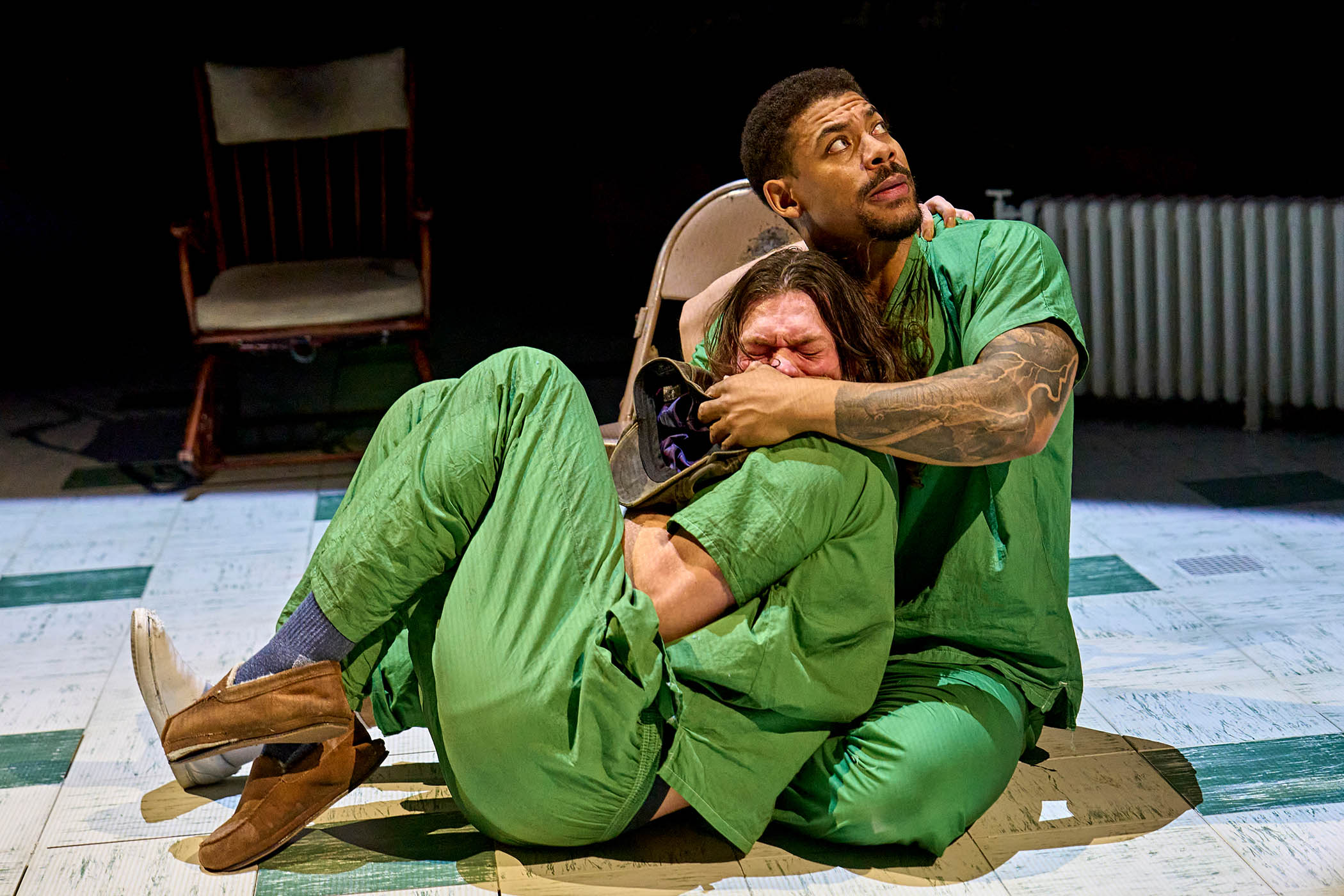
In June, Patrick Marber will direct an all-female production of Glengarry Glen Ross. Hard to know whether that will prove inspired or perverse, David Mamet’s rhythms seeming to pulse with masculine life. Meanwhile, the director Clint Dyer is attempting to shake One Flew Over the Cuckoo’s Nest (the Dale Wasserman play based on Ken Kesey’s novel) into fresh life. He has altered the dynamics of power in the asylum by a radical recasting: all but one of the patients are black.
It is as logical as it is bold: to make this the picture of a disenfranchised group (the non-black patient is, as in the original play, a Native American) at the mercy of an authoritarian administration. The execution, the bid for independence is stirring. Still, it can’t muffle the creaks of the old drama, with its misogyny and its antique hippy view of mental disturbance.
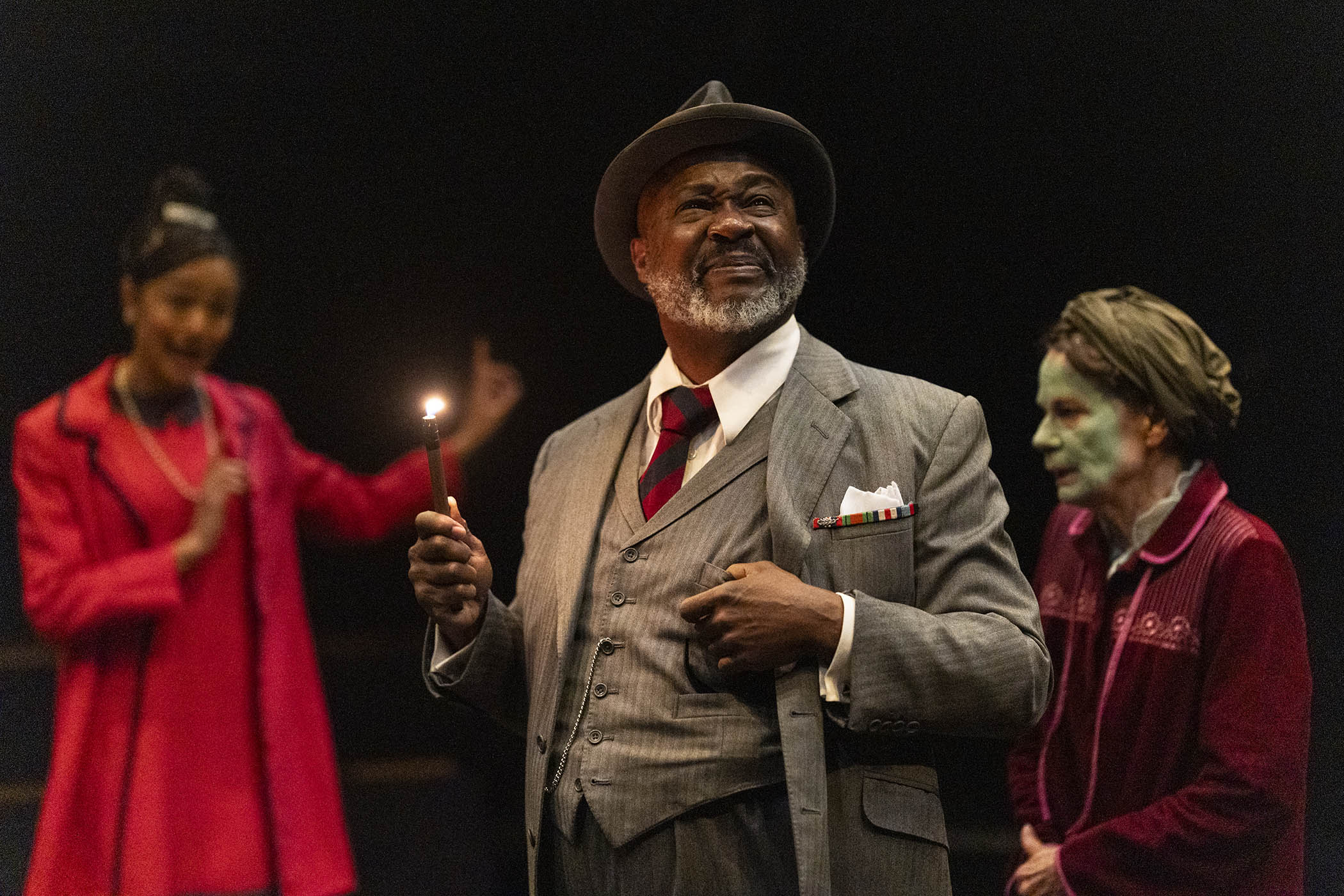
Dyer, who, with Roy Williams, made the Death of England plays blaze at the National, has set up a reverberating framework, though you need to read the programme notes and onstage captions to make full sense of it. It is Mardi Gras in Congo Square, New Orleans, a space in which enslaved African Americans gathered when congregation was illegal: the evening begins with drums and ends with Giles Terera singing Nobody Knows the Trouble I’ve Seen.
The action most familiar from Miloš Forman’s 1975 film takes place shadowed by this context, though the script makes no reference to it. Into an asylum of cowed men – some voluntary patients hiding from hard circumstances – bursts Randle P McMurphy. Feigning madness to escape jail for statutory rape, he causes havoc as he blasts his fellow patients out of their numbness, wheedling and bullying them into defying regulations.
The execution is stirring, but it can’t muffle the creaks and misogyny of the old drama
The execution is stirring, but it can’t muffle the creaks and misogyny of the old drama
It is hard to banish the memory of Jack Nicholson with his Catherine wheel eyes and electric glide, but Aaron Pierre engulfs the part, shouldering opposition out of his way. He is a huge presence who looks as if he is made out of different material from everyone else, moving like an inflatable, bouncing across the action, buoyed up by the waves of his ego.
His adversary, Nurse Ratched, who just wants everyone to obey orders and knuckle down to subjugation, is given a subtle touch by Olivia Williams who, after the withdrawal of Michelle Gomez, stepped into the production at short notice. She plays against the violence of her name, and all the better for that: softly spoken, chilling commands drop from her mouth caressingly; she drip-feeds poison, making “medication” sound like “meditation”.
The battle between them – here more of an icy impasse – propels the action, lays out the drama’s sympathies and exposes the play’s weaknesses. Even when the boss figure is remade so that she comes cloaked not only in institutional but in imperial power, the ragged thinking of the original hangs in the air. The really sane person is the man who seems to be mad. The more untrammelled the behaviour – Pierre pulls down his trousers to show the nurse the glory of his patterned boxers – the more authentic. Authority is not so much questioned as assumed to be pernicious; medical knowledge is suspect; we don’t like experts.
The pronouns are crucial. Nurse Ratched, the only character with a damning name, who is – ho ho – greeted as “Rat-shit”, is accompanied by a hefty whiff of sex-starved spinster. The only other female characters are wheeled on to release men from their hang-ups. The chaps, however, are there to fulfil themselves, not least the Native American strongman, who goes from mute to mighty.
Twenty-two years ago at Edinburgh – featuring a muted Christian Slater, a terrific, twitching Mackenzie Crook and snakelike Frances Barber – the play seemed to have its eye solely on the masculine archetype of Iron John. Dyer’s colonial conception is sharper and more substantial but it hovers rather than lands. The action spins under the whip of Chris Davey’s lighting; Terera, in paisley dressing gown, is beautifully silky and morose as a closeted gay man weighed down by the size of his wife’s oh-so-scary breasts. It is the dodo play that is at fault. Time for some new fledglings.
Newsletters
Choose the newsletters you want to receive
View more
For information about how The Observer protects your data, read our Privacy Policy
One Flew Over the Cuckoo’s Nest is at the Old Vic, London, until 23 May
Photograph by Manuel Harlan