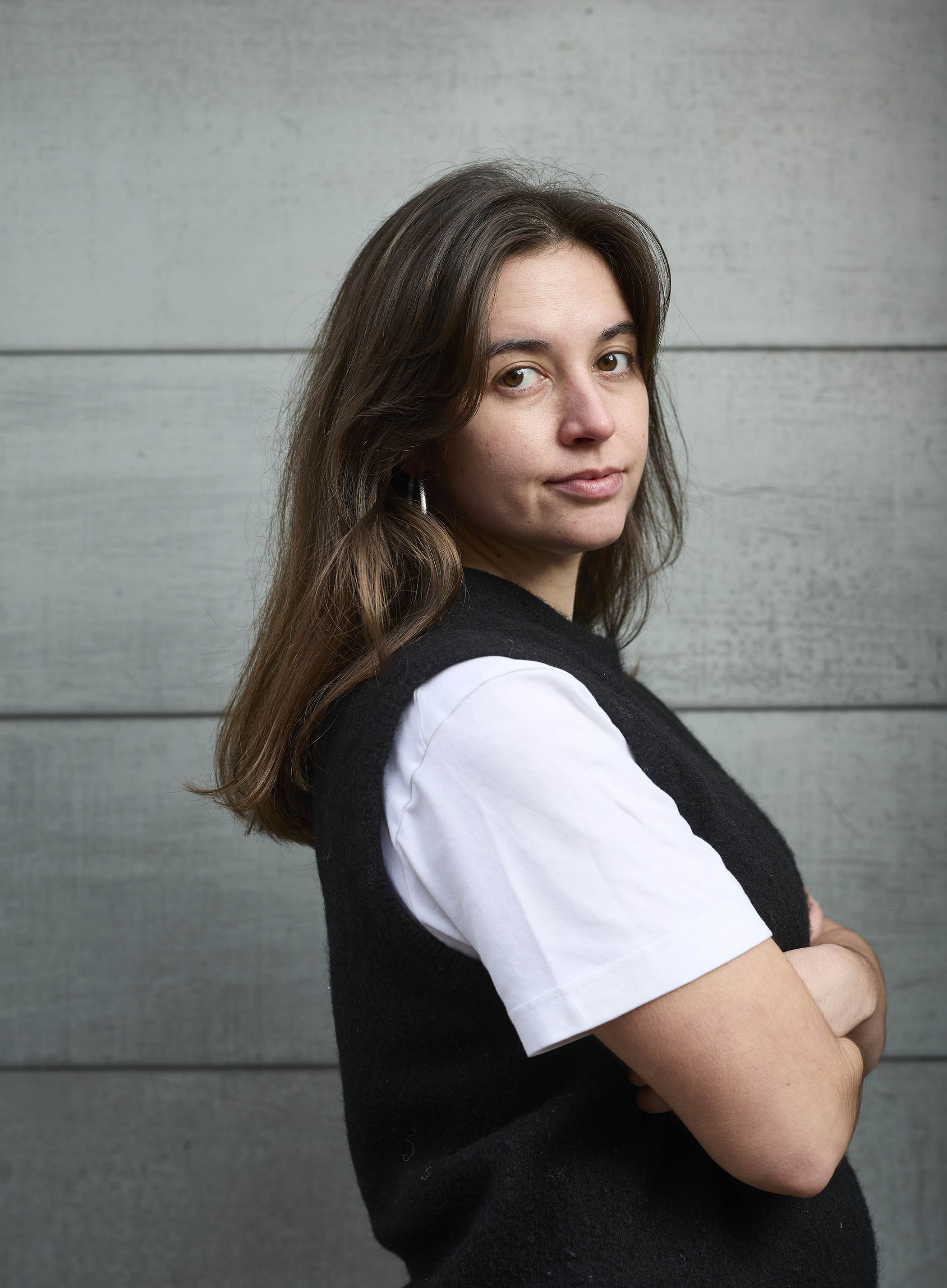
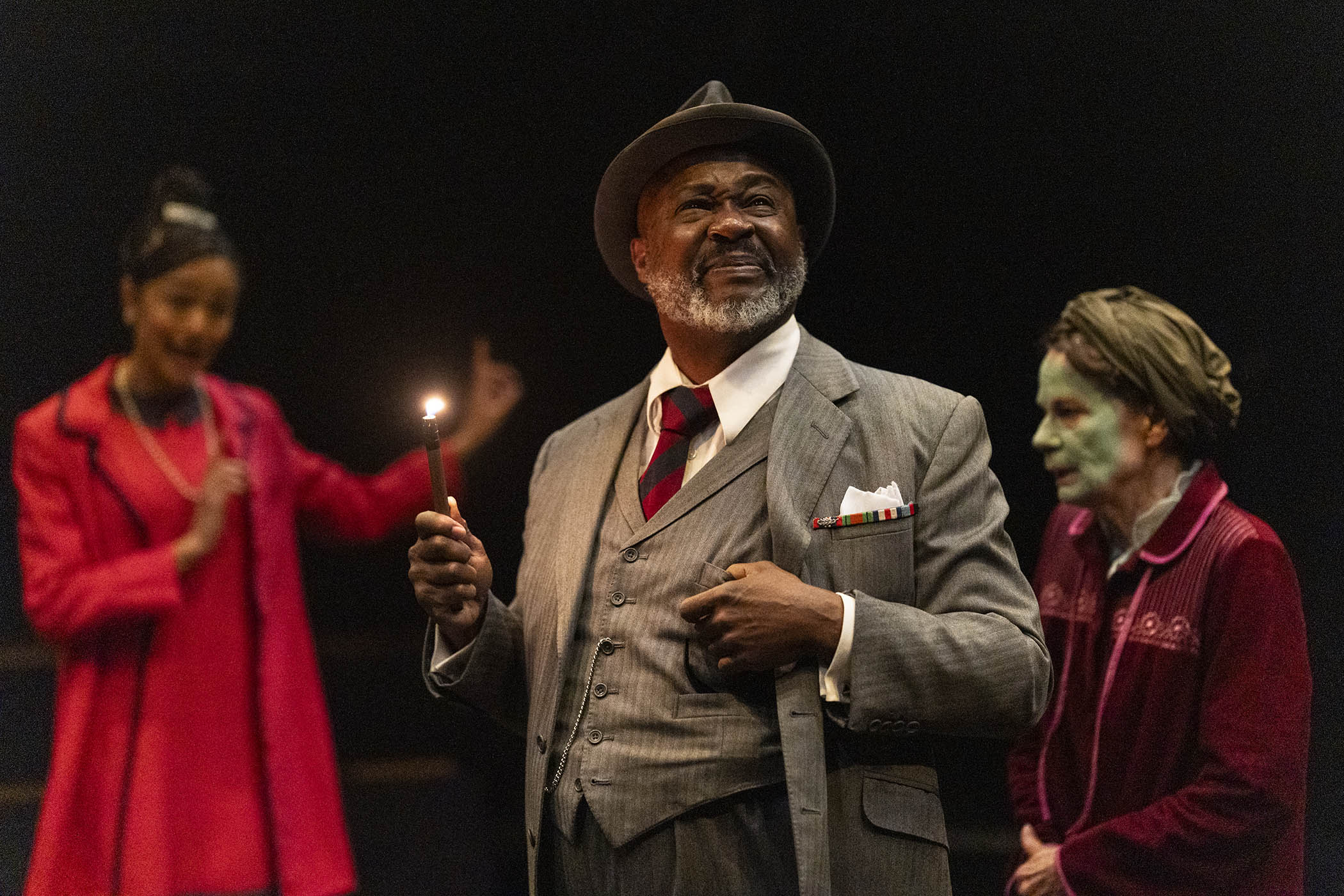
Ava Pickett was born in Essex in 1993. Her breakthrough, Olivier-nominated play 1536 follows three young women in a Tudor village in Essex who react to the persecution of Anne Boleyn. It won the Susan Smith Blackburn prize in 2024 and had a sold-out run at the Almeida theatre in 2025 last year. Pickett’s writing spans stage and screen; she is also known for Brassic (2023-25), The Buccaneers (2025) and How to Get to Heaven from Belfast (2026). She adapted the novels Emma (2025) and The Manningtree Witches (2026) for the stage. She has co-written a forthcoming Joan of Arc biopic with Baz Luhrmann. 1536 opens in the West End on 2 May and a TV version for the BBC has been announced.
1536 opens this week. How are rehearsals going?
It’s obviously terrifying because a play comes into the world at a certain point and you never know how it’s going to be received. There’s always fear. But the thing that’s been incredible is that it’s such a privilege – it sounds so wanky – to be able to go back to something and be like: “Oh, this really worked and this didn’t.”
The play feels relevant to today; the parallels with the Epstein revelations, for example, are striking. Did you have that in mind when writing?
Definitely. I remember when I started writing it, I just felt very paralysed by the neverending cycle of news stories about women going missing, women being killed, women being attacked, and nothing really changing. Those men in power who do terrible things, who are not held accountable, what does that mean for everyone in society when that bleeds down?
You have a real fascination with Anne Boleyn…
Honestly, I’m obsessed with her. I think about her all the time. There are certain historical figures that get cult status among women. Anne is a great representation of how we tell history or how we remember history and how fiction can become fact in the process. I remember being taught that she definitely fucked her brother. And it’s like, well, I don’t know if that’s true actually; I think we should just debate that a bit.
The female friendships in your work are vicious. What role do they play in your life?
My female friends are the great loves of my life. They teach you what love actually is because it’s the sort of love that is unconditional, and unconditional love is really ugly and really difficult. We’re taught to hate each other and compete against each other. And because there’s no room for women really, we all end up arguing over this tiny patch of grass we have. But they are the most important relationships you end up having. I love it. I will continue writing about it.
You trained in acting first – when did you start writing?
I was really good at drama and I had a great drama teacher. But I don’t think there was enough education on what all the different jobs were and the idea of being a writer felt so alien. When I left drama school, I had to move back to Clacton, which is where I’m from. And I had no money and no contacts, nothing. I started writing out of desperation to just create something. I felt really ashamed and really lost. But then I wrote a pilot, sent it to someone I’d auditioned for years ago, and he got me into London and was like: “You’re really good at this, I think you should do this.” I have really benefited from people getting in my corner and saying: “We are going to champion this girl.”
A lot of your work is set in Essex. What is it about the place that means you can transpose any story there?
I’m writing something at the moment and it’s actually the first thing that’s not set in Essex, and it’s so hard. I want to represent young women that look and sound like my sister or my mum. My ambition is to always try to make those stories feel big and epic and complicated, and funny and dark and alive.
Your writing style is pacy, with more expletives than one usually finds in period dramas...
My rhythm is always going to be fast. And I’m just really sweary as a person. I’d never really thought about it that much until 1536 was on. I wanted [the characters] to feel real and primal, clever and unpredictable. It is a fine line. But everyone I know in my life is so funny, even when stuff is bleak. There’s so much shit I can’t do, but I’m good at that and I love doing it.
Can you tell us more about the Joan of Arc biopic?
Working with Baz Luhrmann has been one of the most nourishing, wonderful experiences of my life. I know that sounds dramatic, but I grew up on his films, so to meet him was incredible. He had read 1536, which is how I got the job. You are always nervous about whether it’s gonna work, but it ended up being this incredible chemistry. The aim of the film is to honour [Joan] as a teenage girl and a real person. I hope it’ll be satisfying, human and brilliant, but with all of [Luhrmann’s] vision and creativity.
Compared with the women who make up the worlds you are writing, the men are often disappointing. Why is that?
Ha! I think they unfortunately are products of the time they’re living in. It is like that [Margaret Atwood] quote: “Men are afraid women will laugh at them, and women are afraid that men will kill them.” I love the male characters as much as I love the female characters, but I can’t save them from themselves. There’s so much humanity in Richard and William [in 1536] and then it gets lost. And that’s the great tragedy of a lot of young men that I know. You can sort of see who they could be, and then they’re not, and that’s what makes it all the more disappointing.
Is there another period or woman in history on your mind next?
I love the Victorian period. But what I was thinking the other day is that I love Boudicca. She’d be good. She’s fun. I do feel like I’m going to be writing period [dramas] for a very, very long time.
Photograph by David Levene/Guardian/eyevine