
Teeth ’n’ Smiles was a hit when it opened at the Royal Court in 1975, though there was talk of a car crash. The legend is that Keith Moon, notorious drummer of the Who, slammed his Rolls-Royce into the side of the theatre, staggered drunk to the dressing room of the play’s star, Helen Mirren, and tried to force himself on stage.
Did he feel a kinship with her character, a fellow casualty of the rock industry? A musician destroyed by disappointment, watching the pathetic conclusion of the 1960s revolution, which was men impotently smashing things. The playwright David Hare considers – seriously, unseriously – the end of the acid dream through the disintegration of a struggling rock band; on and off stage, it is very much a play of its time.
But disillusionment doesn’t age. Everything comes back around, even this, Hare’s rarely staged musical drama, revived for its 50th anniversary. It is not merely commemorative, but a night of compulsive entertainment – the script still bitter, still teasing, still so assured, even as its characters are floundering. It arrives just months after the six-time Olivier-nominated Stereophonic, which – at the same theatre, to the same slick standard and with similar use of live music – reimagined the breakdown of a 1970s Fleetwood Mac-esque band. Surely Hare’s play was an inspiration. Stereophonic focused on the ego; Teeth ’n’ Smiles the collective: consumerism, elitism, sexism, selling out. Modern audiences are interested in counterculture because it is a museum piece. Hare reminds us that it also felt this way in 1969, awaiting punk’s all-out anarchy. The teeth are gritted and the smiles are dead-eyed. “We don’t sell tickets on the quantity of the suffering we can offer,” the band are advised.
Musicians today have to play to the lifeless algorithm; in the play, it is a tough crowd of Cambridge students. Inspired by Hare’s experience of watching Manfred Mann play a dismal gig at his alma mater, Maggie Frisby and the Skins are performing for the poshos at a Jesus College May ball for £120. Like all good musicians, they despair. “Where is the money and where are the girls?”
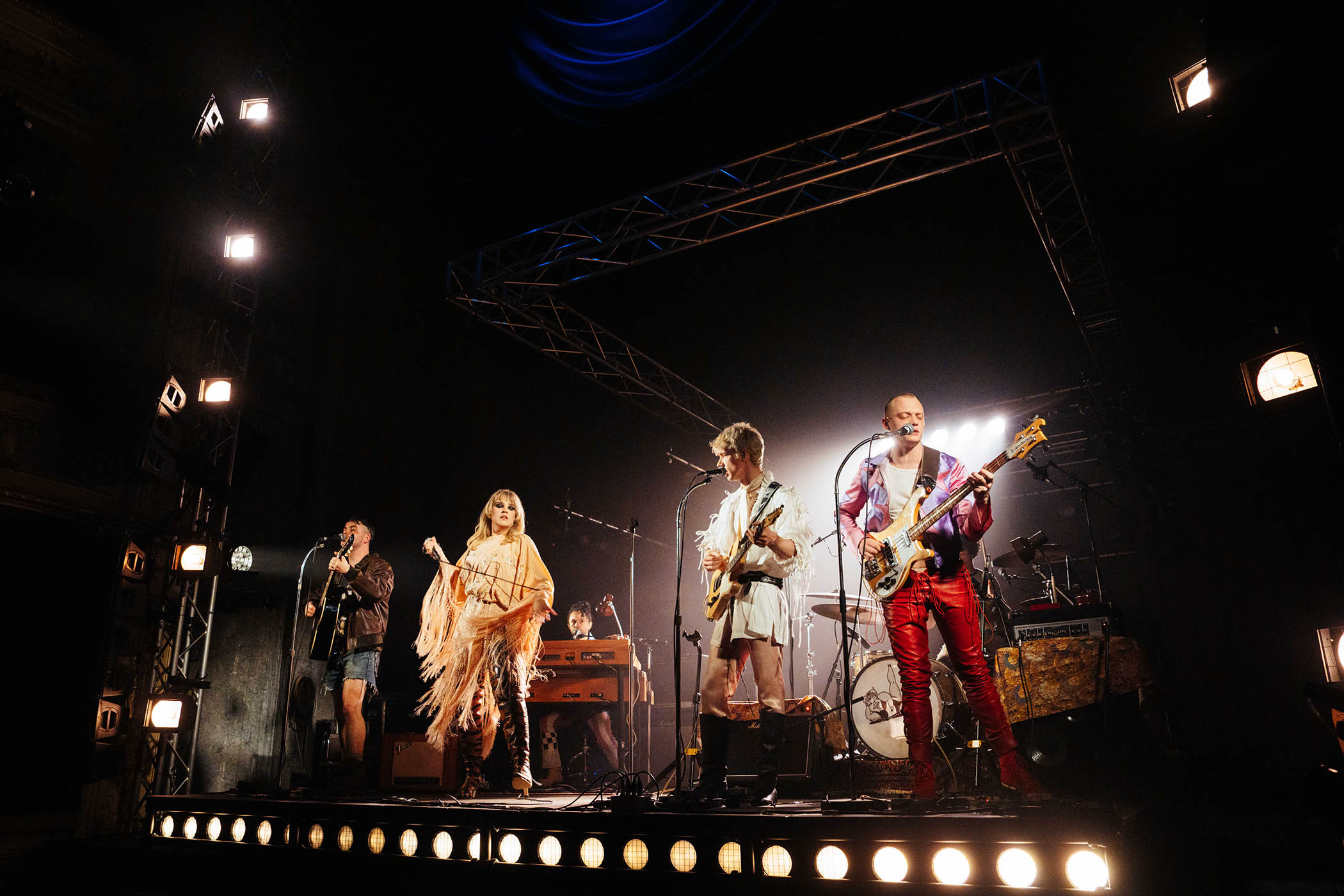
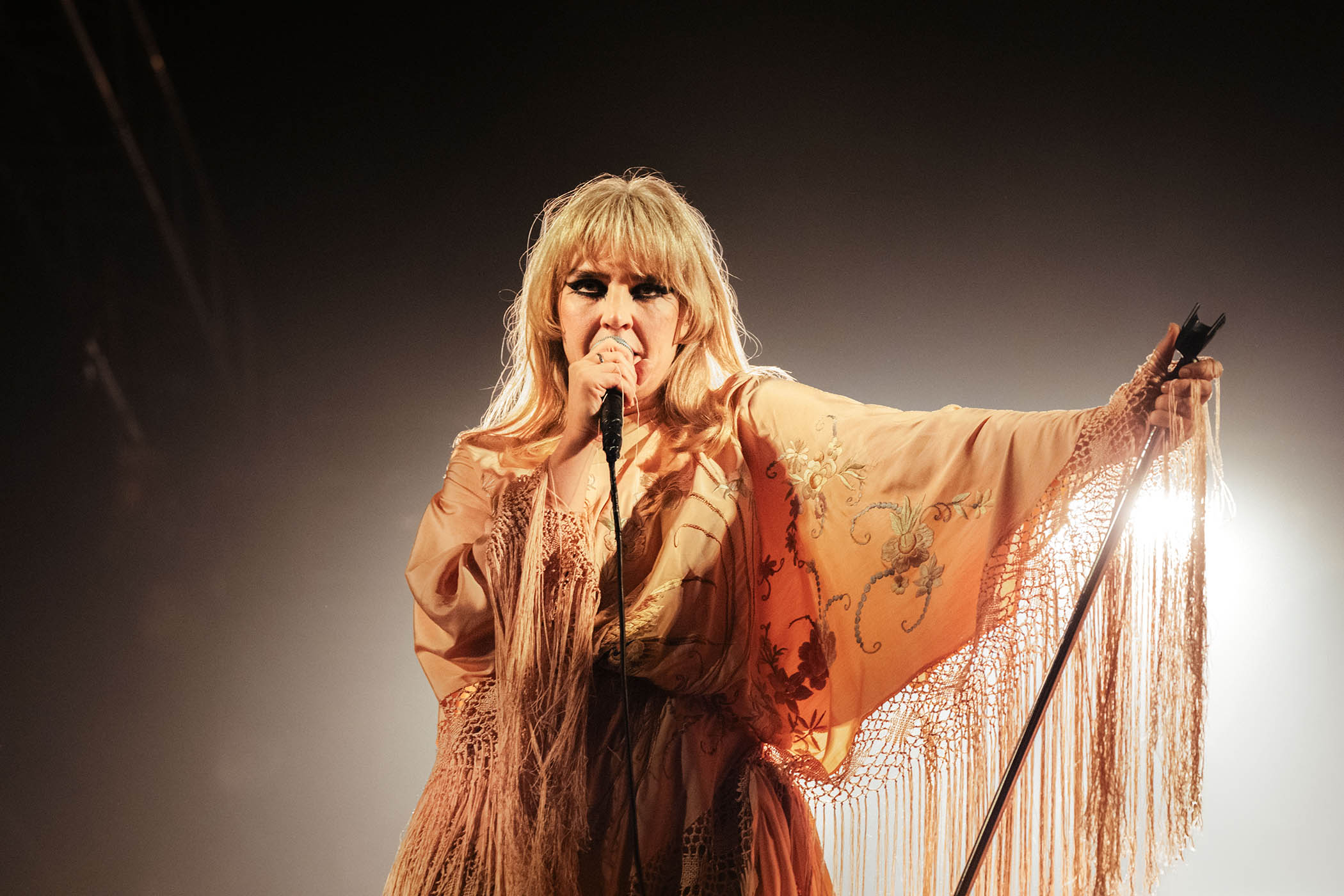
The five lads just want a good time; frontwoman Maggie (played by Rebecca Lucy Taylor, AKA singer-songwriter Self Esteem) wants to get blind drunk and see things more clearly. They are as compatible and coherent as the clothes they wear: from fringed kaftan to red leather trousers, New Romantic sleeves to half a head of hair (not so much costumed as styled by designer Alex Mullins). For Maggie, it all gets very dark night of the soul, but here is a dweeby student coordinator, Anson (Roman Asde), to remind her she still has three sets to play and she’s 90 minutes late. Anson is wet as a toilet brush, with hair to match. After failing to rouse her audience, Maggie sinks – grimly, heartbreakingly – to showing him a good time instead.
Hare had no interest in simple “self-destruction”; those tragic antiheroines were a “newspaper myth”. Mirren, he has said, brought to the role an unselfconscious naturalism, but the problem was she couldn’t sing. Would the reverse be true of today’s casting? Mirren drew on Janis Joplin; Self Esteem draws on Self Esteem: a working-class female pop star, grafting in the inhospitable world of men and elites. Even her stage name speaks of a desire to prove herself. We knew Self Esteem could sing – with a clean, theatrical, unfashionably powerful voice that is just right for the stage – but Taylor can act too. On both counts, she has range. She is funny, feral, deadpan; when downstage playing her own original folksy composition (added to Nick and Tony Bicât’s original rock numbers), she is, for a moment, mercifully mellow.
Her Maggie elicits adjectives usually ascribed to men: charismatic, lecherous, boisterous, crass. She is too lucid and self-aware for a woman allegedly off her face (must rock stars always brandish bottles of whisky?), but director Daniel Raggett conjures a coarse, frenetic energy. The Cambridge students wanted something more “Dionysiac”. Maggie mimics shoving a mic up her arse.
The band are either backstage – a dreary, smoke-filled college basement in 50 shades of brown – or performing on a stage thrust forward, with the blinder lights, in Chloe Lamford’s design. The music is loud – hearing protection is available on request – and in front of me, an audience member films one of the numbers on her phone. I can only imagine she thought she was at a gig.
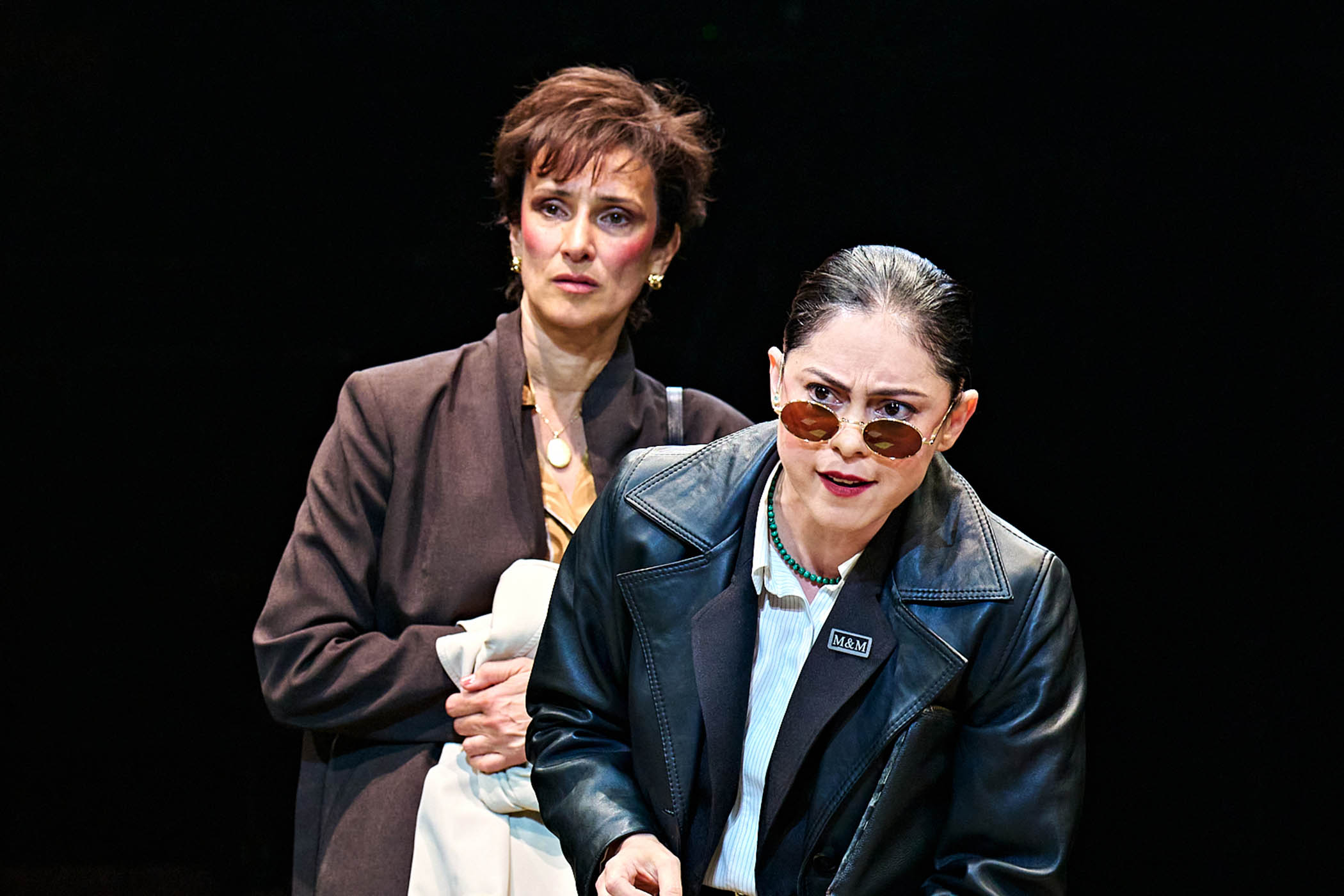
It is Jojo Macari’s bassist Peyote, not Maggie, who is the real liability, hanging, with acid-wide eyes, on the stage rigging like a monkey with the face of a Jolly Chimp. As the manager, Phil Daniels plays to type: monotonal, unthreatening, ever the wisecracking Londoner. Floppy-haired Arthur (Michael Fox), the faux-cerebral songwriter who is a college alumnus, is Maggie’s old flame, but is too headmaster for my – and, I would wager, her – tastes. She doesn’t know what to make of him or his principles, which are to say something while having nothing much to say. She had more chemistry with the toilet brush.
The problem with the play is Arthur’s: that, for all the lofty talk of a failed revolution, no one really defines on what political terms it failed. Maggie wants to “keep moving”, but to where God only knows. If this is the point – to dramatise the end of imagination – it is one that needn’t be made over and again. In the end, Maggie’s screams ring out around the cloisters, the dreaming spires where acid dreams go to die.
Newsletters
Choose the newsletters you want to receive
View more
For information about how The Observer protects your data, read our Privacy Policy
Teeth ’n’ Smiles is at Duke of York’s theatre, London, until 6 June
Photograph by Helen Murray