


When I’m cooking, I constantly try to incorporate an element of playfulness. I want there always to be something that makes people think, “Oh, what’s that?” – to make them stop and think about what the flavour is. That’s what makes food fun. So, generally, my recipes are quite high contrast: something very savoury, something sweet, something tangy – and then that element of play.
You can have lots of fun putting different toppings on labneh. Making it is such a simple thing to do, but it will see you through many different meals. You can have it on toast, or as a base for a salad. Eat it with a compote and granola for breakfast, or you can mix it with icing sugar and mascarpone to make a little cake icing. It’s delicious with smoked salmon, or you can just drizzle it with olive oil and za’atar and scoop it up with crudites and pita bread.
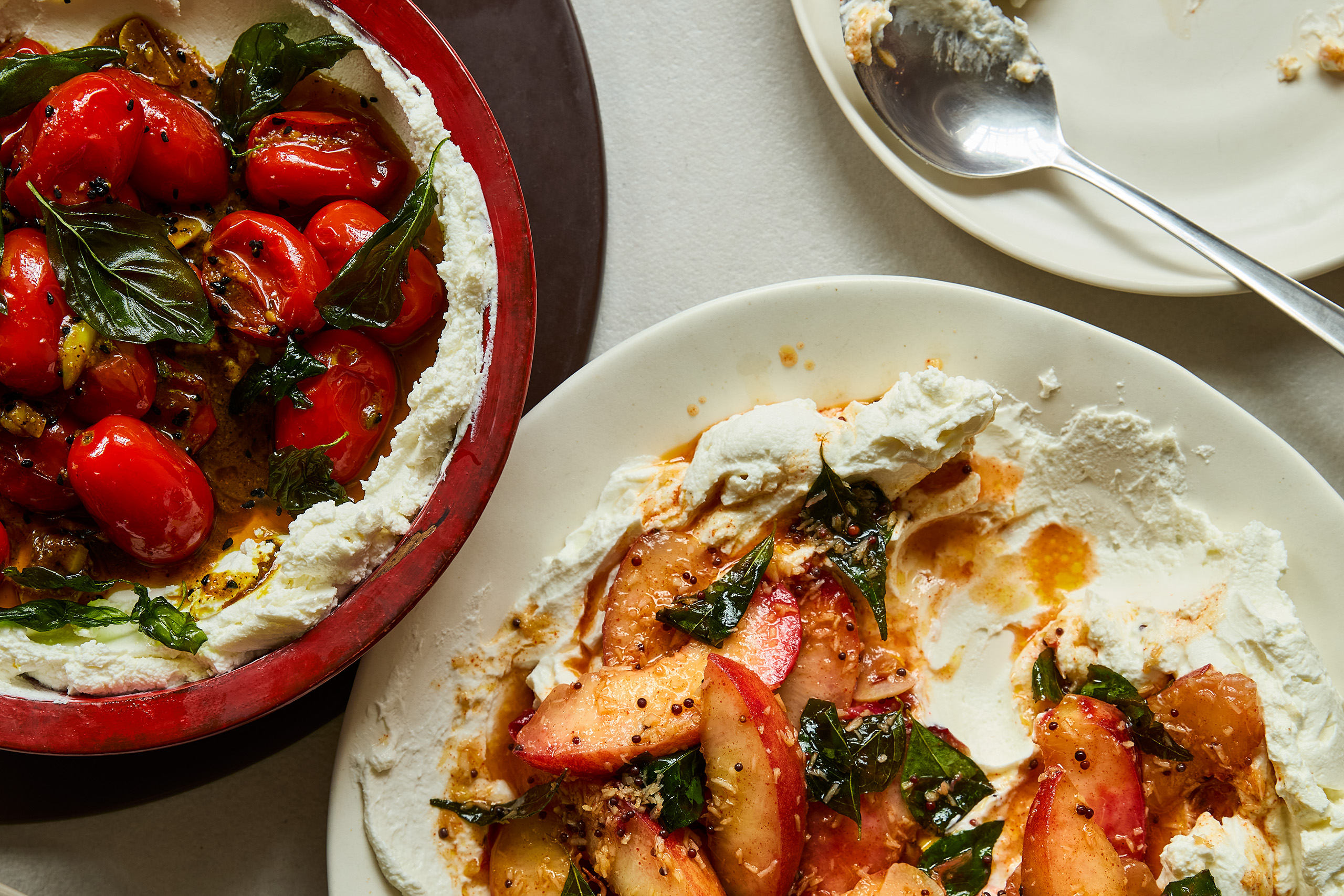
Confit tomatoes and labneh is a classic combination, the extreme tang of the yoghurt intensifies the sweetness in the tomatoes. Hawaij is a Yemeni spice mix that I love – it has turmeric, black pepper, cardamom, cloves, coriander seeds. It’s quite unusual, but it goes really well with vegetables and adds a nice layer of flavour here, in what would otherwise be quite a simple dish.
The recipe with peaches is based on a dish I made for a pop-up in Sri Lanka. They’re ingredients that you might not think to put together but I like the dramatic contrast of the very sweet peaches, the quite fragrant curry leaves and the really sour and thick labneh. It’s quite fresh and fun and playful.
Labneh
A strained yoghurt eaten across the Middle East, this is sour and tangy and belongs in any mezze spread, either as is, perhaps sprinkled with olive oil and za’atar or with one of these toppings if you’re feeling adventurous. I go for the Fage brand 5% fat yoghurt here, as it’s already very thick and sour and ensures a luxurious-feeling labneh. It also loses less whey than other brands, so you get a better yield. I go for the Fage brand 5% fat yoghurt here, as it’s already very thick and sour and ensures a luxurious-feeling labneh. It also loses less whey than other brands, so you get a better yield.
Makes 600g, serves 6
5% fat Greek yoghurt 950g
fine sea salt 1 tsp
The night before you want the labneh, whisk the yoghurt and salt together in a bowl until fully combined. Place a colander over a separate bowl and line it with a clean tea towel. Tip the yoghurt into this, then fold over the tea towel to fully cover the contents. Place a heavy bowl directly on the cloth-wrapped yoghurt, then transfer to the fridge overnight. Decant your labneh into a container the next day, and it’s ready to use.
Confit tomatoes, hawaij and crispy basil
The combination of tomatoes and labneh is just the best. Sweet and sour, they complement each other so well, while hawaij elevates this topping to something special. Crispy basil makes this look beautiful, but you can scatter over fresh basil leaves and skip the frying part, if you prefer.
Related articles:
Serves 4 as a topping for labneh
olive oil 70ml
basil 30g, leaves picked
fine sea salt 1 tsp, plus more for the fried basil
garlic cloves 4, finely sliced
cherry tomatoes 500g
hawaij 1 tbsp
nigella seeds ½ tbsp
Heat the olive oil in a small saucepan. Line a plate with kitchen paper and grab a slotted spoon. Once the oil is hot, drop in half the basil leaves and stir and fry until they turn translucent; this will only take 20-30 seconds, so be ready with that spoon. Once it is ready, scoop the basil out on to the prepared plate and sprinkle with a little salt. Repeat with the second batch of basil leaves, then set aside.
Turn the heat to medium-low, add the garlic and fry for 2 minutes until fragrant, then add the tomatoes, hawaij and the 1 tsp of salt. Stir and gently simmer for 15-20 minutes or until the tomatoes have softened and their skins have split. Turn off the heat and allow to cool. Smooth your labneh on to a serving dish and spoon over the tomatoes and some of the flavoured oil. Sprinkle over the nigella seeds and crispy basil and serve.
Peach, curry leaf and coconut
This is inspired by a holiday to Sri Lanka. After a few weeks surfing with friends, I travelled the southern coast until I settled in Hiriketiya, the most picturesque little bay. Somehow over dinner on my first night I was talked into doing a pop-up at that restaurant on the next! I drunkenly crafted a menu and the chef promised to head off on his motorbike to forage for fresh rambutans, curry leaves, pandan, local kithul treacle and curd, a very tangy set buffalo milk sold in beautiful clay pots, which reminded me of labneh. Cooking with these new ingredients was a revelation and this salsa, served on labneh, is so evocative of the meal I cooked that night.
Serves 4 as a topping for labneh
olive oil 4 tbsp
garlic cloves 2, finely sliced
desiccated coconut 2 tbsp
black mustard seeds 1 tsp
fresh curry leaves 30
lime juice 2 tbsp
chilli powder 1 tsp
agave or maple syrup 1½ tbsp
fine sea salt ½ tsp
ripe peaches 3, stoned, each cut into 16 slices
Place the oil in a saucepan over a low heat. This cooks very, very quickly, so keep a bowl next to the hob ready to decant the cooked mix into, as it continues to cook off the heat.
Add the sliced garlic to the oil and fry for 1-2 minutes until it is beginning to colour on the very edges. Add the coconut, mustard seeds and curry leaves and fry for a further minute or so until the curry leaves have crisped and the mustard seeds have taken on a slightly deeper colour. Decant straight away into the bowl and immediately stir in the lime juice, chilli powder, agave syrup and salt.
Add the peaches to this marinade and toss to coat. Leave them to macerate for at least 30 minutes before smoothing your labneh on to a serving dish and topping with the peaches and their dressing. Eat this with a pile of hot flatbreads, alongside hummus and moutabal for a lovely spread.
Recipes from Centrepiece by Helen Graham (£28, Hamlyn). Buy a copy at observershop.co.uk for £25.20. Free UK standard P&P on online orders over £25
Newsletters
Choose the newsletters you want to receive
View more
For information about how The Observer protects your data, read our Privacy Policy