

February in Britain often feels like a month caught in between. Winter still has its grip – mornings are sharp, the light is pale and low – yet there are signs things are beginning to shift. The days stretch a little longer. In our kitchens in London, we start to see the first real pleasures of the season arrive: crates of blood oranges, bursting with colour and perfume; gorgeous forced rhubarb from Yorkshire, so bright pink it practically glows. Cold waters do wonders for the fish and this time of year it is almost at its best: lean, pristine, delicious. Purple sprouting broccoli also begins to appear, a hint that spring is on the way.
These recipes are inspired by dishes that will appear on my menus this month. We take a small number of excellent ingredients and treat them with care, to bring out their essence without too much interference. At Brat and Mountain, we cook standing over fire, but these will also work beautifully for you, standing at your stove at home.
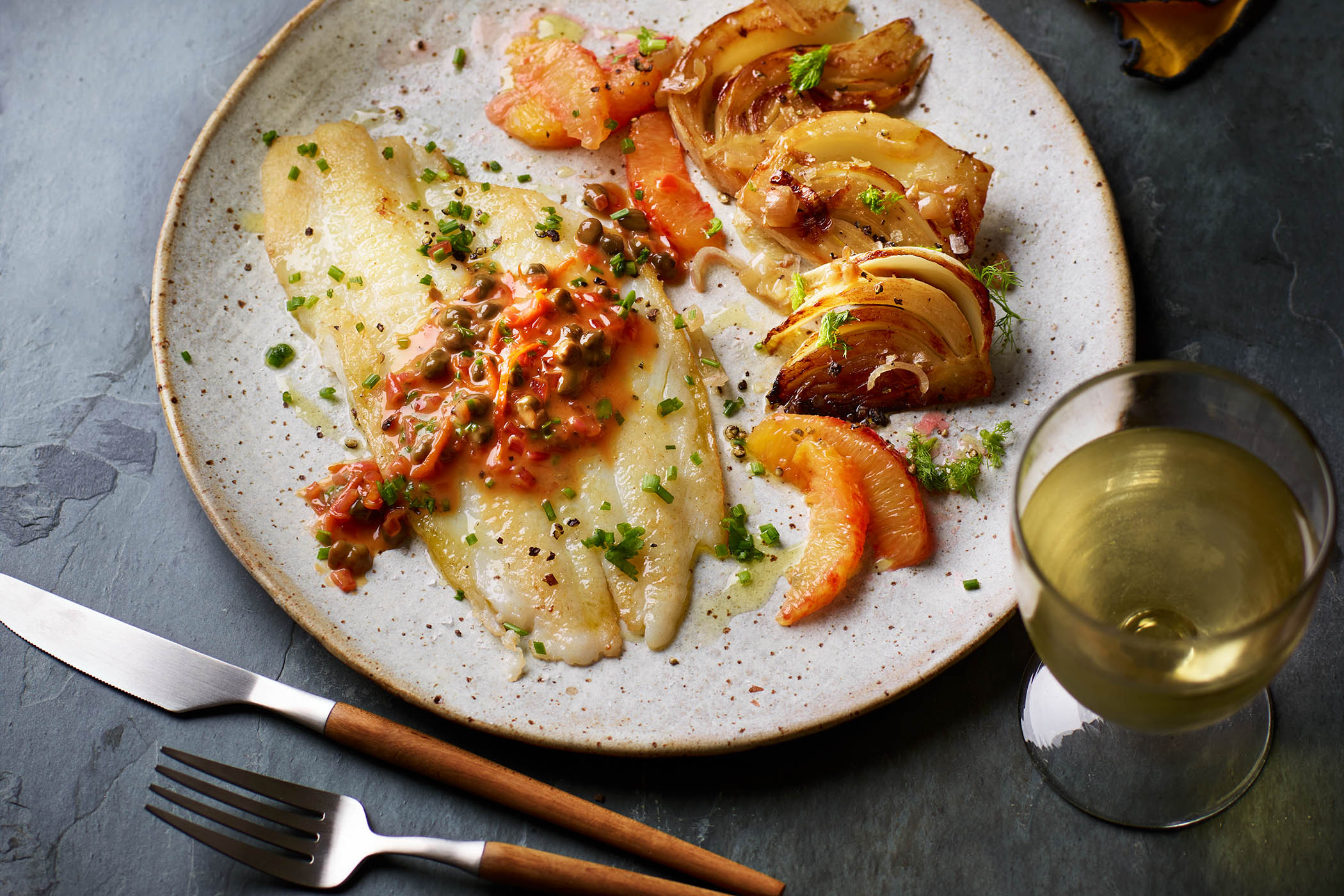
February doesn’t feel like a time for excess, it’s about clarity, balance and comfort that doesn’t feel too heavy. The lemon sole is a perfect example of this. Get it on the bone, if you can, season it well, and cook it hot and fast until the flesh just turns opaque. A well cooked piece of fish needs very little else. The sauce is where you can introduce warmth and brightness – blood orange for sweetness and acidity, capers for salt, and butter to bring it all together. It’s rich, never cloying, and works particularly well at this time of year when citrus feels especially welcome.
The pudding follows a similar style. Forced rhubarb is one of the real joys of late winter in Britain. It’s sharp, vivid and unmistakably seasonal. Baking it gently preserves its colour, letting it collapse just enough into its own juices while retaining structure. Paired with a simple rice pudding made with buttermilk, it becomes something both comforting and fresh. The buttermilk and rhubarb cut through any richness, bringing a lightness that is also warming, sweet but not too indulgent.
Both dishes are understated and reward attention – to the heat, seasoning and timing. It’s the kind of cooking that feels right for this time of year, when pleasure comes from small things done well – all eaten slowly as the daylight stays around a little longer than last week.
Grilled lemon sole with blood orange, caper butter and braised fennel
Serves 2. Ready in 45 minutes.
I love the sweet, caramelised flavour of fish with a sauce that has fragrant citrus, salty capers and a buttery finish. The braised fennel is an entirely different proposal to its raw form. It’s soft, sweet, almost creamy, and has a versatile side I return to again and again to have with fish in the colder months.
lemon sole 1, whole, skinned and trimmed (or 4 small fillets)
olive oil
sea salt to taste
chopped parsley and fine chives to finish
blood orange segments to finish
For the sauce:
blood orange juice 250ml fresh (usually the juice from 3 or 4 oranges)
blood orange zest of 1
white wine or champagne vinegar 2 tbsp
shallot 2 tbsp, finely minced
double cream 1 tbsp
unsalted butter 12 tbsp, cold, cubed
capers 1-2 tbsp, drained and roughly chopped
salt to taste
white or black pepper to taste
For the braised fennel:
fennel bulbs 2, large
olive oil 2 tbsp
onion 1, small (or 1 shallot), sliced thinly
garlic clove 1, crushed
white wine or chicken stock 100 ml
salt to taste
black pepper to taste
lemon 1, optional
To make the braised fennel, trim the tops, reserving some fronds to use for garnish. Cut the bulbs into thick wedges through the root, so they hold together. Heat the oil in a wide pan over a medium heat. Add the fennel, cut-side down, and cook until golden, usually about 4-5 minutes. Turn and lightly colour the other side.
Stir in the thinly sliced onion or shallot along with the crushed garlic clove. Pour in the wine or stock, and season with salt and pepper. Cover and cook gently for 20-25 minutes, until the fennel is tender and sweet.
Remove the lid and let the liquid reduce slightly. Taste the cooking liquid and adjust seasoning as required – add a squeeze of lemon or a little zest if you like. Keep warm until needed.
For the blood orange sauce, combine the juice, zest, vinegar and shallot in a small saucepan. Bring to a boil and then simmer over medium heat until reduced to 3-4 tbsp, about 4-5 minutes. When you have the right amount, you can strain it – optional, but it does make for a smoother sauce – then return the liquid to the pan.
Whisk in the cream, keeping the heat very low, you don’t want this to boil. Then, to emulsify the sauce, whisk in the cold butter, a few cubes at a time, fully incorporating each addition before adding the next. The sauce should be thick, glossy and pale orange.
Remove the sauce from the heat and stir in the capers, then taste and season with salt and pepper.
Keep the sauce warm until needed over barely warm water – never let it boil.
When you’re ready to cook the fish, pat the sole dry, and lightly oil both sides. Place a heavy pan over medium-high heat until hot. Add a thin film of olive oil. Just before you cook it, season the sole well with sea salt.
Place the fish in the pan, laying it away from you. Cook it for 1½-2 minutes, until the underside releases easily from the pan and you can see it’s golden. Turn it carefully and cook for a further 45-60 seconds – you want the flesh to be just opaque. Lift the fish on to a warm plate and let it rest briefly.
To serve, spoon the hot blood orange and caper butter over the lemon sole. Finish with the herbs and blood orange segments. Add the fennel wedges and spoon over their pan juices and scatter with fennel fronds.
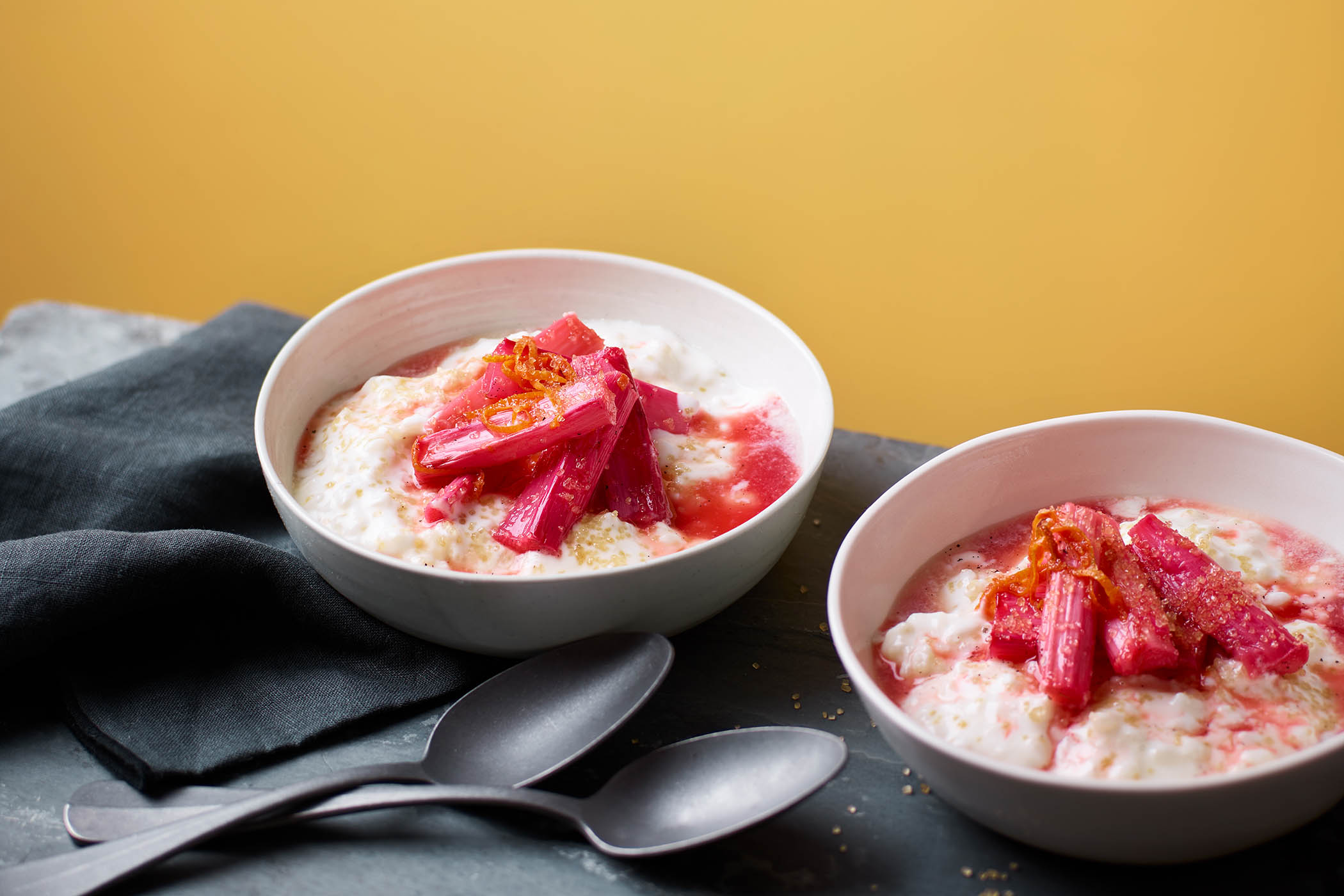
Sharp and sweet: baked rhubarb with buttermilk rice pudding
Baked rhubarb with buttermilk rice pudding
Serves 4. Ready in 1 hour.
We serve a version of this dish at Brat, where both the rice pudding and rhubarb are baked in the wood oven and they take on its smoky elements. It works just as well in a home oven or on the stove. The dish is about the contrast of hot and cold, sharp and sweet, creamy and fresh. It’s best served warm, not hot – and leftovers make a great breakfast!
pink forced rhubarb 500g, cut into batons about 5-6cm
caster sugar 80g (or to taste)
orange or lemon zest of ½, plus a little extra to finish
vanilla pod 1, split (or 1 tsp vanilla paste)
blood orange juice 2 tbsp (or water)
demerara sugar or honey to taste
For the buttermilk rice pudding:
short-grain rice 100g (pudding rice or arborio)
whole milk 600ml sugar 40g
lemon 1, strip of peel
salt a pinch
buttermilk 200ml, plus a little extra to finish
double cream 50ml (optional)
Preheat the oven to 180C/gas mark 4. Put rhubarb in a snug baking dish and scatter over the caster sugar, citrus zest and vanilla. Add the juice or water.
Cover the dish tightly with foil and bake for 20-25 minutes, until the rhubarb is just tender, but still holding its shape.
Meanwhile, as the rhubarb is baking, make the rice pudding. Put the rice, milk, sugar, lemon peel and salt into a heavy saucepan and bring gently to a simmer, stirring often. Cook over a low heat for 25-30 minutes, stirring regularly, until the rice is soft, and everything has thickened and is creamy.
Remove the rice pudding from the heat, let it cool slightly, then stir in the buttermilk and cream, if using. Taste and adjust for sugar or salt.
When the rhubarb is done, remove the foil, spoon over the cooking juices and bake for a further 5 minutes to allow it to glaze in its own juices. Remove from the oven and set aside.
Serve the rice pudding and rhubarb warm or at room temperature. Spoon the rice pudding into four bowls, top with batons of baked rhubarb and its pink juices. Finish with a drizzle of buttermilk or cream, a pinch of citrus zest, and a sprinkle of demerara sugar or honey.
Newsletters
Choose the newsletters you want to receive
View more
For information about how The Observer protects your data, read our Privacy Policy