


Keeping vegetable dishes fresh and vibrant is more challenging in the winter, especially if you try to eat with the local seasons. In the colder months, it’s hard to look past roasting roots, blanching and boiling greens, or reaching by default for potatoes. Yes, there is delight and great warmth and comfort to be found in tender, slightly caramelised roasted carrots, or a pile of hot, soft cavolo nero drenched in olive oil – even the ubiquitous roast cauliflower. But it isn’t too long before I find myself longing for the crunch, acidity and freshness of a raw salad. I miss the exciting textures and flavours that we more often associate with summer cooking.
To create magnificent winter vegetable dishes and salads, don’t just go for the obvious – most of the tomatoes, cucumbers and avocados around now fly here from hot countries and almost all are disappointing – and not really what I want to eat in the cold months. Instead, think outside the go-to vegetable box and consider the unassuming, sometimes undesirable, vegetables that are in season here.
Cauliflower can be eaten raw for maximum crunch. Celeriac should be grated and used in a classic remoulade, or in an exciting slaw with shaved carrots, red cabbage, apple, celery and red onion. Douse it in sherry vinegar and olive oil, and add plenty of mint and parsley.
Use cheese and fruit to add richness and sweetness to help balance the bitterness of winter leaves, such as radicchio. You might have to think a little harder to start with, but once you begin using winter vegetables in fresh ways, you’ll find inspiration easy, and your January meals will be packed with crunch and interest.
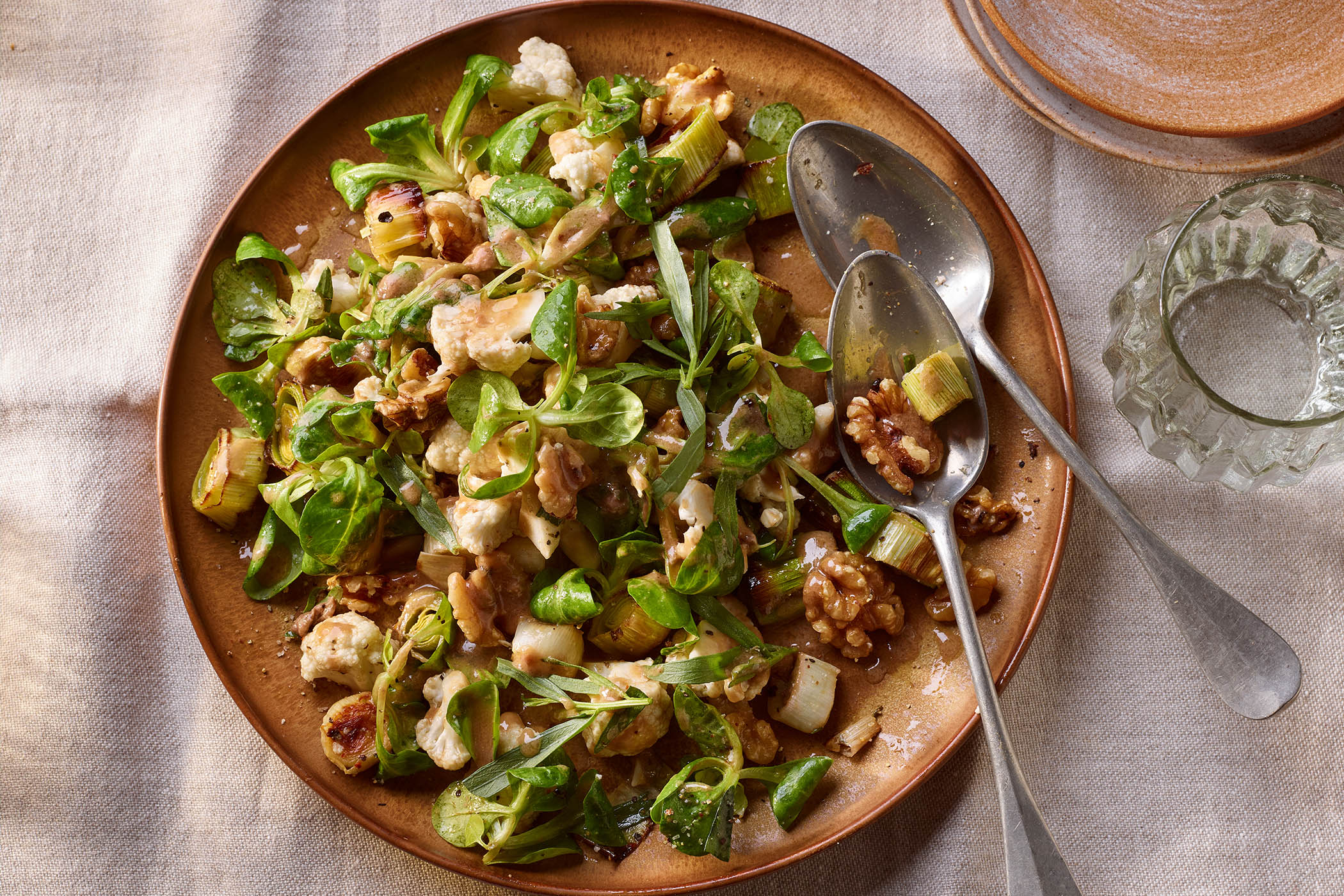
Cauliflower, leek, walnut and anchovy salad
Serves 3. Ready in 30 minutes.
I first ate this delicious seasonal salad in a restaurant in Paris. When I got home, I immediately wanted to recreate it. It (welcomely) shuns the fashion that cauliflower in salads must be roasted. While I like the nutty flavour this gives the cauliflower, I find the texture rather dull. In this punchy number, the cauliflower stays raw, broken into small florets and is liberally coated in anchovy and red-wine vinegar dressing. It’s a very satisfying, savoury crunch.
walnuts 50g
leek 1, medium (250g)
olive oil
cauliflower 200g
lamb’s lettuce 50g
tarragon 10g
For the dressing:
anchovies 10 fillets
garlic ½ clove
red wine vinegar 4 tbsp
lemon ½
extra-virgin olive oil 4 tbsp
Preheat the oven to 170C/gas mark 3½, then toast the walnuts for 8 minutes in the oven and leave to cool.
Slice the leek into 2cm rounds, wash and dry well, then toss in 1 tbsp of olive oil. Season with salt, lay flat on a baking tray and roast for 8 minutes, before leaving to cool.
To make the dressing, blitz the anchovies and garlic in a food processor along with the red wine vinegar and the juice of half a lemon. Once you have a smooth paste, add 4 tbsp of extra-virgin olive oil.
Break the cauliflower into bite-sized florets, place in a bowl and toss with the dressing, then add the leeks and walnuts; season with salt and pepper to taste. Gently fold through the lamb’s lettuce and tarragon. Attempt to artfully tumble the mixture on to a flat plate and finish with a little drizzle of olive oil.
Radicchio, pomegranate, orange, pistachio and parmesan salad
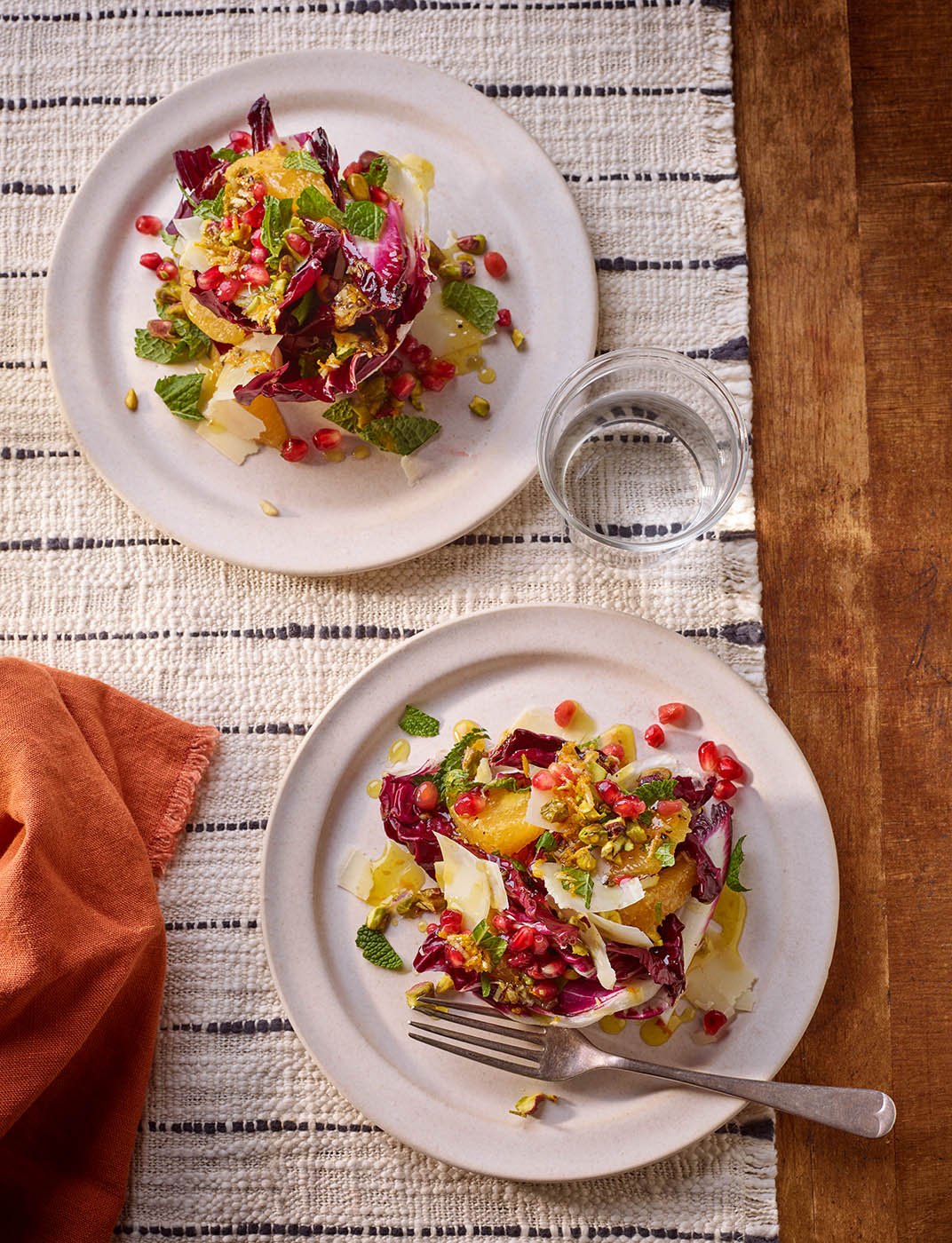
‘Beautiful but bitter’: Radicchio, pomegranate, orange, pistachio and parmesan salad
Radicchio is beautiful but bitter, so it needs something sweet to contrast and complement it. Here, orange and pomegranate do the balancing act, while parmesan and pistachio offer a welcome richness. The result is a well-rounded, well-balanced, truly joyful salad.
Serves 2-3. Ready in 25 minutes.
pistachios 30g, shelled
radicchio leaves 150g (or chicory, or a mix)
pomegranate 1
oranges 1-2
parmesan 50g
mint leaves 5g
For the dressing:
garlic 1 clove, very finely grated
lemon juice 15g
moscatel vinegar 15g
extra-virgin olive oil 50g
salt and pepper
Preheat the oven to 170C/gas mark 3½. Toast the pistachios on a tray in the oven for 8 minutes, leave to cool, then crush.
Separate the radicchio leaves, wash in cold water and dry. Place in a large mixing bowl.
Cut the pomegranate in half, then bash the skin side of each half with a spoon over a big bowl to catch the seeds (you want about 30g). Remove any white pith that lands in the bowl and discard.
Zest the oranges. To segment them, cut off the top and bottom, stand the orange on one end and using a sharp knife follow the white pith to remove the skin. Hold the orange over a bowl and cut down each side of the pith and the fruit will fall out. You want about 85g of segments.
Shave the parmesan with a vegetable peeler. Pick and roughly chop the mint leaves and set aside.
To make the dressing, grate the garlic on a Microplane. Put it in a bowl, add the lemon and vinegar. Leave to sit for 5 minutes, then add the oil, salt and pepper.
To assemble the salad, add the pomegranate seeds, orange segments, parmesan, mint and pistachios to the bowl with the radicchio. Gently fold in the dressing. Add the orange zest and check the seasoning.
Gently lift the salad from the bowl with a pair of servers and pile on to plates, making sure all the ingredients are evenly layered.
Sage farinata with pickled red chilli
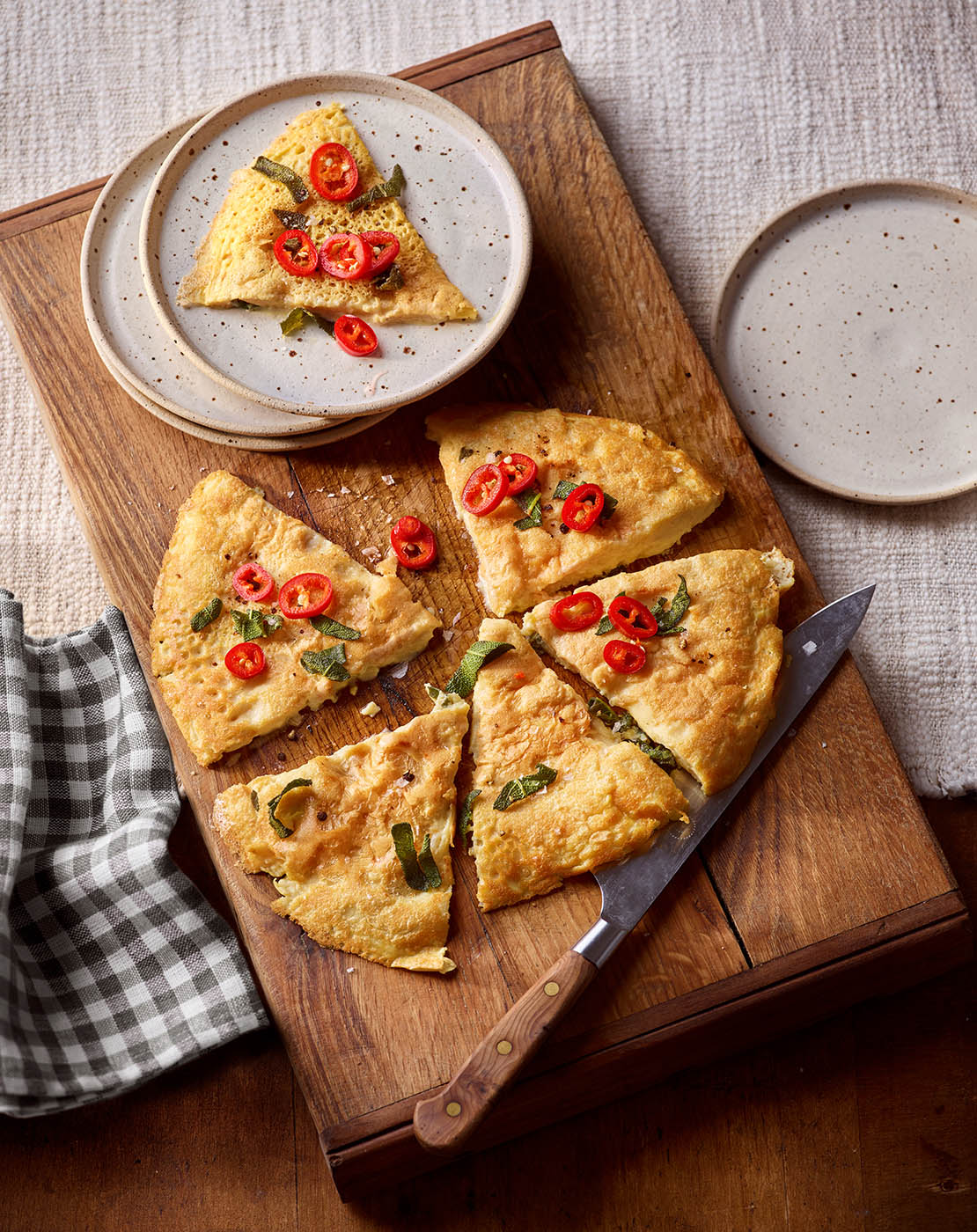
‘A crisp, olive-oily chickpea pancake from Liguria’: sage farinata with pickled red chilli
Farinata is a crisp, olive-oily chickpea pancake from Liguria. When I stumbled upon a recipe for it years ago I was dumbfounded: how could such a wonderful flavour, texture and pleasurable eating experience come from just chickpea flour, water and olive oil? To this day, whenever I make it, I’m still slightly shocked. However, I get it – the simpler the recipe, the better it is.
The batter needs to be made at least 6 hours in advance and can happily sit for up to 24 hours. When I make farinata in the winter, I always serve it with the radicchio salad (above).
Serves 2-3. Resting time 6 hours, then ready in 20 minutes.
chickpea flour 100g
water 300g
salt and black pepper
sage leaves 4 olive oil 3 tbsp
flaky sea salt to serve
For the pickled red chilli:
red chillies 2, large (25g)
caster sugar 20g
red wine vinegar 20ml
water 15ml
olive oil 1 tbsp
You will need a nonstick oven-proof pan.
Put the chickpea flour in a bowl and whisk in the water. It should be the same viscosity as single cream. Add a good pinch of salt and a few cracks of black pepper. Cover the bowl and leave it out of the fridge to thicken.
For the pickled red chilli, slice the chillies on an angle into rounds as thick as a £1 coin. Try to buy mild chillies – the larger they are the less spicy they tend to be, though the only way to know for sure is by tasting them.
Heat the sugar, vinegar and water in a saucepan. When it comes to the boil, add the chillies and simmer until the liquor is reduced by half. Remove from the heat and pour over the olive oil.
When you are ready to make the farinata, preheat the oven to 220C/gas mark 7. Chop the sage and set aside, and give the batter a good whisk.
Heat the olive oil in the pan until hot but not smoking. Add the sage, then pour the batter into the pan, about 1cm thick. Reduce the heat and cook the farinata for 1 minute, then transfer to the oven for 10 minutes until it’s slightly golden on top, has a custardy texture in the middle and is crisp on the bottom. Slide the farinata out of the pan on to a chopping board, slice into wedges, sprinkle with salt and eat with the pickled red chillies. They cut through the richness so well, but it is totally untraditional – apologies to Liguria.
Newsletters
Choose the newsletters you want to receive
View more
For information about how The Observer protects your data, read our Privacy Policy