One of the big celebrations last weekend – I’m late to the party but the mood still resonates – was for 250 years of American independence. When it comes to classical music in the US, we are prone, from a European viewpoint, to see chiefly how it mirrors or departs from the patterns of our own musical life. American classical music – meaning art music with a recognisably American voice, likely to be heard in a concert hall – is younger than the country’s independence.
Establishing that voice took time. For decades, its great orchestras – in New York, Philadelphia, Boston, Chicago and Los Angeles – relied on immigrant Europeans; on their training, traditions and repertoire. In some cases, rehearsals were held in the German language, until wartime anti-German feeling put a stop to that.
Gradually, to glance at the history, homegrown folk music, spirituals and ragtime were woven into distinctive harmonies. Charles Ives (1874-1954) was a pioneer, drawing on what he heard around him, whether a barn dance, a hymn or a parlour song. Aaron Copland (1900-90), famous for his “prairie” sounds – plenty of chords based on fourths and fifths – followed. Leonard Bernstein showed the world a new kind of all-American opera with West Side Story (1957). By the late 1960s, west coast minimalists – La Monte Young, Terry Riley – were hurling Pacific missiles into the increasingly rigid world of the avant garde, restoring melody to the landscape.
A recent article in the New York Times by cultural commentator Joe Horowitz, a former artistic adviser to the radical Brooklyn Academy of Music, created a stir by regretting a decline and loss of focus in American orchestral life. The Boston Symphony Orchestra, one of the world’s greats, seemingly now in chaos, recently caused shock by terminating its contract with the brilliant Latvian conductor Andris Nelsons, familiar to us in the UK from his seven seasons with the City of Birmingham Symphony Orchestra (CBSO) – of which more in a moment.
As usual with any thoughtful attempt to say something general about a country the size of the US, the narrative is blurred by other evidence. Remote from the action, I canvassed views from a few American musician friends. They spoke of smaller initiatives, away from the high-profile centres, with reach and imagination. America 250, via the National Endowment for the Arts (NEA), supported 50 premieres and projects of every stripe, honouring figures in the proposed “National Garden of American Heroes” in Washington DC.
The eclectic list includes a work about Martin Luther King in Alabama, a male-voice choral series in Phoenix, Arizona, and a song cycle in Berkeley, California (by Kevin Puts, who wrote The Hours opera); plus, countless choral works, fanfares, songs and opera. A separate programme has given funding to military bands – central to the country’s musical identity, from marching and orchestral to vocal and jazz. This is a substantial financial commitment. Paradoxically, it may in some way be down to the personal whims of the US president.
Plans for the 250th anniversary predate Donald Trump’s second presidency, but as we have seen, he has constantly reshaped and branded the celebrations. His obsession with having his name (in the event, he failed) on Washington’s Kennedy Center is hard to comprehend. But as one composer – a beneficiary of an NEA grant – asked rhetorically: is there any other president who has so persistently put a classical music institution on the national front page, or considered a high-profile performing arts institution important enough to seize, direct and fight over as a symbol of national power?
The composer added: “After decades of classical music tying itself in knots and asking: ‘How do we prove our relevance?’, here comes Trump, of all people, who simply takes it for granted that classical music matters enough to be controlled, funded, politicised.” The long-term impact, if any, of America 250 on classical music remains an unfolding and strange story. We must watch and wait.
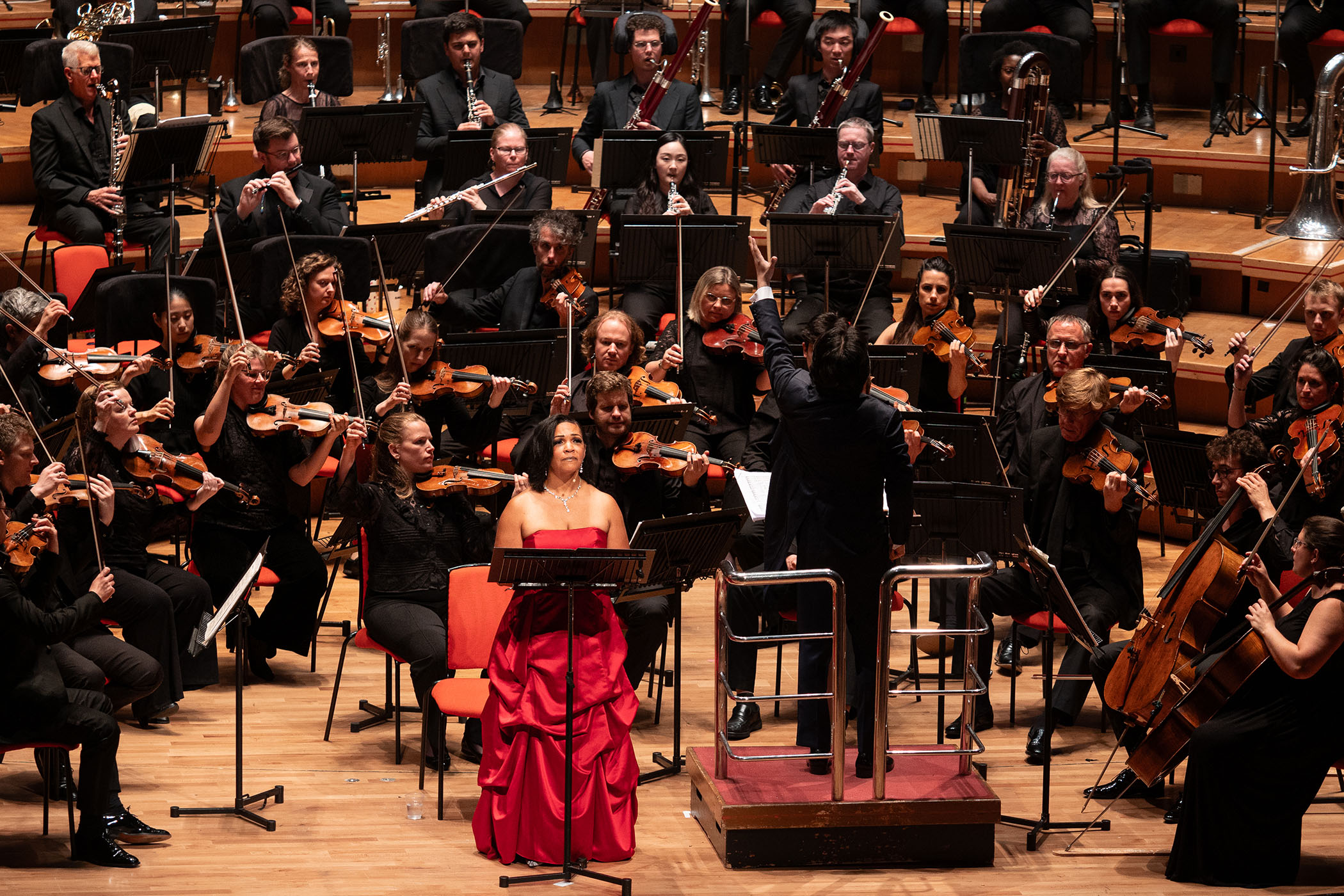
And so back to Birmingham, England. The CBSO, conducted by its music director, Kazuki Yamada, laid on a generous independence day tribute built around a classic of American minimalism: John Adams’s Harmonium (1981). These settings of John Donne and Emily Dickinson for large orchestra and choir were written in a tiny studio in a Victorian house in San Francisco for that city’s new concert hall. Adams’s friends were amused that so spacious a work could emerge from such cramped quarters. The CBSO’s choice was fitting: the orchestra gave the UK premiere of Harmonium in Birmingham’s town hall in 1987, conducted by its youthful chief conductor, Simon Rattle, a longtime Adams advocate. Last weekend, it proved a magnificent and challenging showcase for all the musicians (they will perform it again at the Proms on 26 July).
The concert opened with Copland’s Fanfare for the Common Man (1942), a short burst of brass-fuelled patriotism, and segued into his Lincoln Portrait, which draws on Abraham Lincoln’s Gettysburg address and other writings on democracy. The text was narrated with heart and clarity by the American soprano Janai Brugger. She also sang The Heart of a Woman, an intimate song cycle by Florence Price (1887-1953) in a slightly overwhelming and opulent new orchestral arrangement by the Hollywood composer Lior Rosner (Will & Grace, Superman Returns).
Newsletters
Choose the newsletters you want to receive
View more
For information about how The Observer protects your data, read our Privacy Policy
The other work was Fanfare for the Uncommon Woman by Joan Tower (b1938), a tart rebuttal to Copland, dedicated to female musicians. The orchestra revelled in its noisy vehemence. Throughout this end-of-season concert, Kazuki, the CBSO’s popular Japanese conductor, dispersed his own infectious charm.
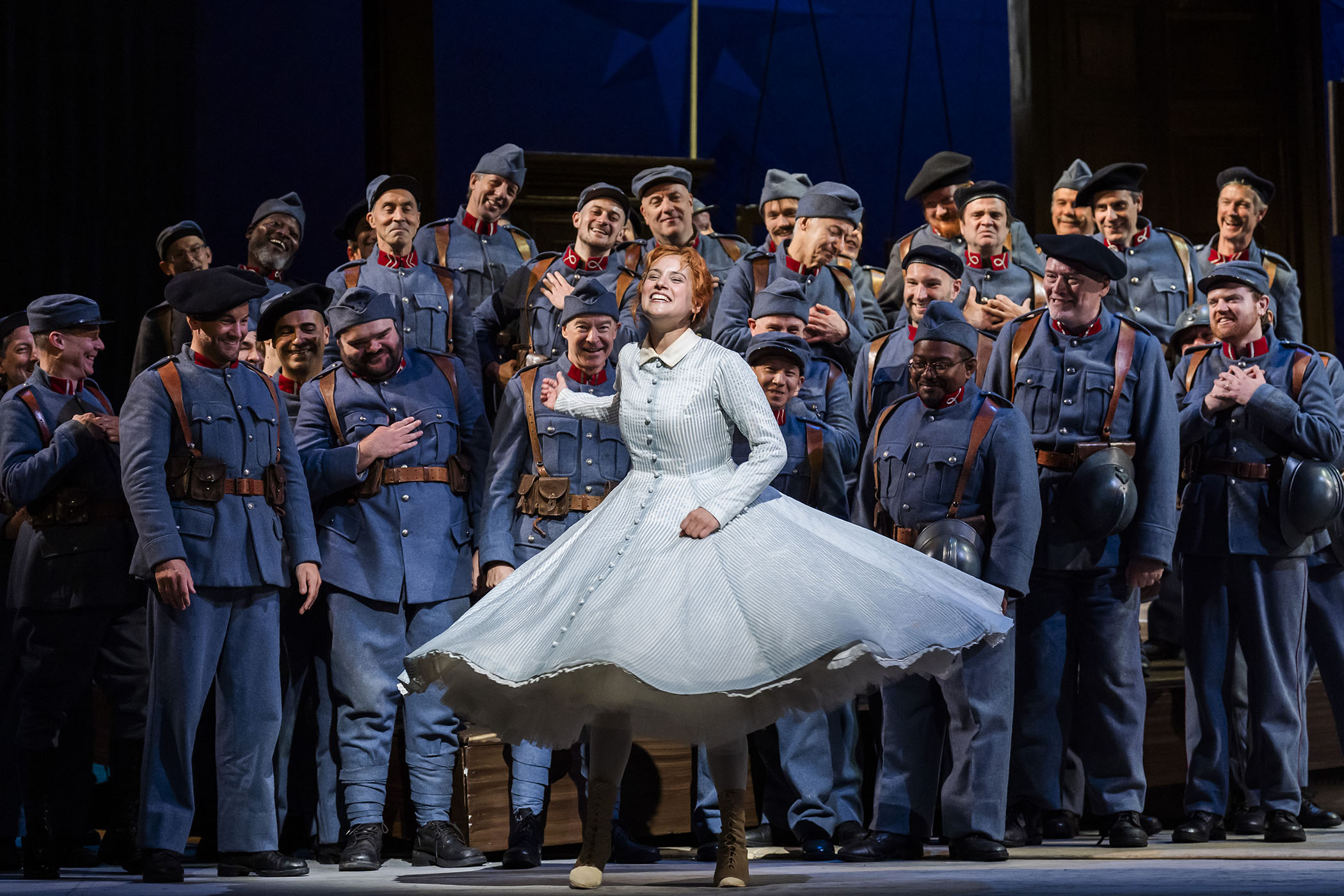
La Fille du régiment by Donizetti at the Royal Opera House
Elsewhere, Grange Park Opera’s Das Rheingold, the first part of the Surrey festival’s new cycle of Wagner’s Ring – directed and designed by Charles Edwards – attracted a buzz, with reason. David Stout’s Alberich, James Rutherford’s Wotan, Christine Rice’s Fricka and top-class Rheinmaidens shone in this Victorian family saga staging. Special praise for Matthew Rose’s gentle Fasolt. He brought a full gamut of emotion to sitting splayed in an armchair. Excellent conducting by Harry Sever and top-notch playing by the Orchestra of English National Opera.
We may yawn at the “I secretly prefer opera without any staging” view, but the London Symphony Orchestra’s performance at the Barbican of Tristan und Isolde – conducted by Antonio Pappano in his element, with Clay Hilley and Sara Jakubiak in the title roles – was spellbinding. There’s another performance on 12 July, and a recording in the offing.
And the Peruvian tenor Juan Diego Flórez returns to Laurent Pelly’s 2010 staging of Donizetti’s comic opera La Fille du régiment, with Sara Blanch a standout tomboy Marie in her Royal Opera House debut, and Tamsin Greig in the celebrity walk-on role of the Duchesse de Crakentorp. Ridiculous French-language fun.
Photographs by Hannah Blake-Fathers, Tristram Kenton