Related articles:
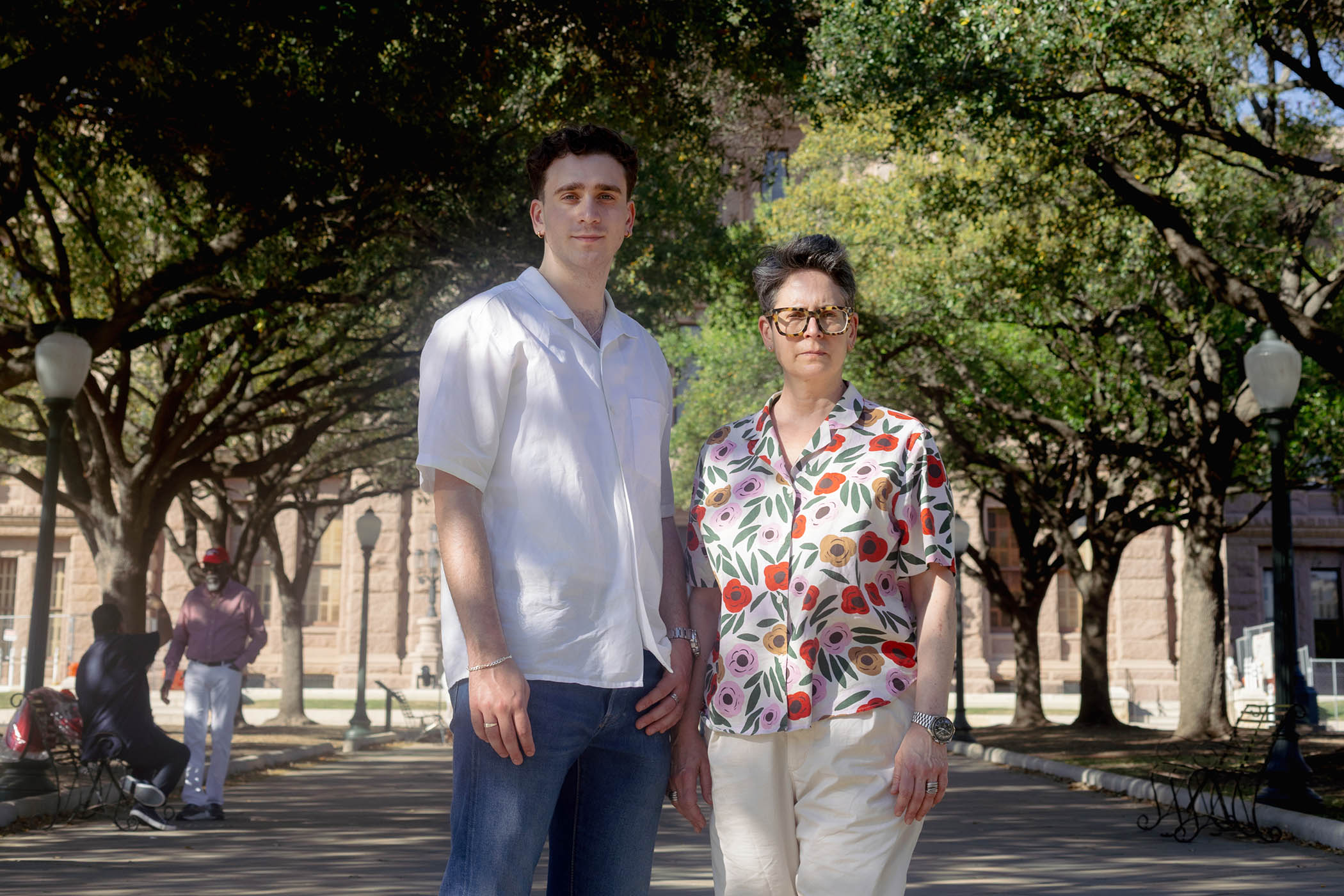

MARILYNNE ROBINSON
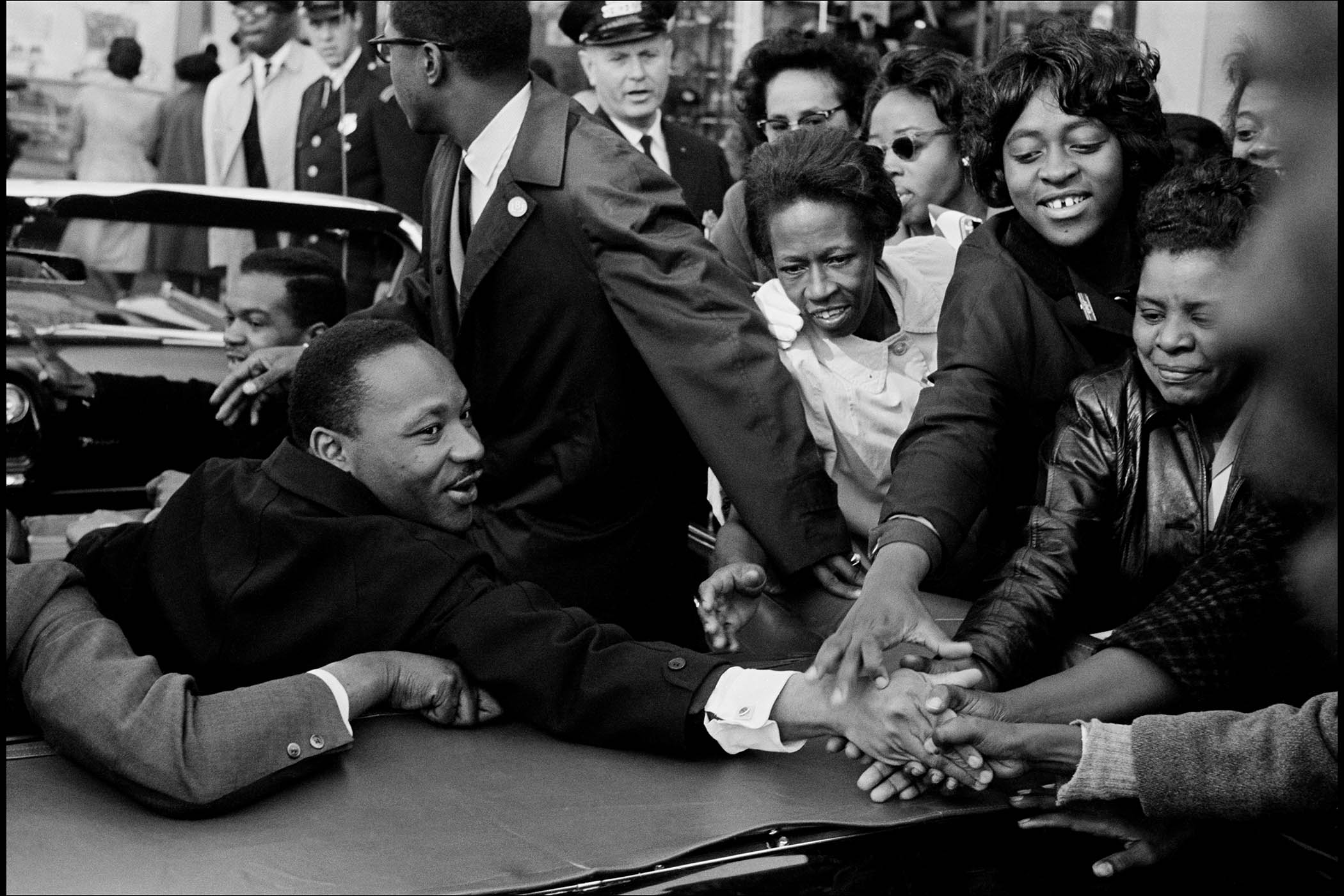
I came of age during the civil rights movement, and that was a very exciting and gratifying time that felt very much as if we were compensating for terrible omissions in our history. It felt as if the momentum would be more or less continuous from that point. That seems not to be the case, but we don’t know. As a matter of ordinary experience, there are a great many highly educated, utterly impressive black people who have made use of their access to everything that matters, to education and so on, and have developed an autonomous power within the culture – not against it, but within it – and I think that is an immutable change, too true to be ignored.
The civil rights movement had the great good fortune of recruiting its primary actors from the black church, and so we had a classic American rhetorical debate that went on and enriched everything of the language and our way of thinking. Sometimes, I worry that if a person today were to hear Martin Luther King, for example, the whole frame of reference that he could assume, and that he assumed so effectively, it would be lost on them. There’s been a strange change in the culture in terms of what is our primary reference, and that has a way of putting the civil rights movement in the past when in fact it deserves to be a continuing influence.
As for the worst of times, well – frankly – yesterday, I thought it was yesterday; today, I’m beginning to think it’s today. I consider this whole episode from the emergence of Donald Trump and his minions to be the lowest point in American history. We’ve had very grave things to try to deal with in this country, in terms of conflict between stated ideals and actual practice, and there was always the idea that we adhere to the constitution, even if we interpret it in very different ways. But that is a frame of reference that has been incapacitated by the fact that the present government is not moved by these kinds of considerations. It claims to be conservative, but conservatism should have some content of traditionalism and respect for the basic self-awareness of the civilisation, and it’s not like that – it’s just not.
There are a thousand things Trump is doing that strike me as egregious, so it’s hard to know where to begin. But now, his government has agreed to give Trump and his entire family immunity from auditing by the Internal Revenue Service. He used to say he was going to release his tax records, but of course he never did, and now he’s trying to put them in a deep freeze until the end of time. That’s awfully monarchical; that has very little to do with the idea of a government of laws. It’s significant, not primarily because of its kleptocratic quality, but also because it’s just the style of how the government runs now, with these incredibly dubious backroom arrangements.
It’s difficult to overstate the amount of repair that will need to be done. They don’t simply break things – they smash them. I just hope that democracy is still out there and that there are enough of us to find the democratic solution to the democratic problem.
ATTICA LOCKE
This entire country was built on a house of cards. It was a lie from its inception – an illusion – because the ideals it professed to be founded on were not the lived experience of everybody present in the country. And yet, as with any illusion, there is magic. In those grandiose, crazy, beautiful ideals, there is a vision of what could be.
Related articles:
As a 52-year-old woman born on this side of the civil rights movement, I came along as America was getting closer to, as Dr King said, living “out the true meaning of its creed”. It was a very difficult, bloody battle, but I grew up watching the country ascend towards its better self, reaching an apex with Barack Obama’s presidency, and what it represented for someone like me. I’ve often asked myself: is it more painful to witness America almost reaching greatness and then backsliding into Trumpism or to never have seen the promise of greatness at all?
But, because I’m an eternal optimist, I still hold out great hope. In this country, we may not have a lot of things – proper healthcare, wealth equality, or even a shared understanding of community. It’s a very individualistic country. But there is a sense of possibility here. We are not burdened with a long history like other countries or with canonical rules of how things must be – so there’s an attitude among Americans that we can do anything. Surely, we can pull this off; we can course-correct. I don’t think the current situation will hold. It’s already not holding. This moment is asking regular Americans: who do you want to be?
Newsletters
Choose the newsletters you want to receive
View more
For information about how The Observer protects your data, read our Privacy Policy
And, frankly, a lot of this is white people wrestling with who they are. Do you want whiteness and the privileges it bestows more than you want a country? Because you can’t have white supremacy and the ideals in the declaration of independence. Racist as the founders were, they left a back door open for freedom for everybody. White folks have to ask themselves if they’d rather burn the whole thing down than let everyone have freedom. It’s something only white people can decide for themselves. Because everybody who’s marginalised – gay people, black people, Latino people, Asian people, Native Americans – we’ve all had to stand up and say: remember what you promised in that document? We’re going to hold you to that. We’ve tapped you on the shoulder and said: be better. Here’s what the declaration of independence says: be better. And this time, you guys have got to work this out.
JENNIFER EGAN
Good news first: despite the delusion of infinity that America’s vastness has always encouraged (and that may underlie our wasteful approach to space and resources), some Americans had the foresight to recognise, early on, that our landscape was finite and needed protection. Starting with Yellowstone national park in 1872, at least 34m hectares (85m acres) of American land has been designated national parks, along with 8m hectares or more as state parks. In all, that’s more than 42m hectares (about 164,000 sq miles, or 425,000 sq km) of mountains, shoreline, grasslands, ancient redwood trees and even oddities such as vast swaths of hardened, cave-riddled lava – the “Craters of the Moon” national monument and preserve in Idaho that I visited with my family in 2012. These parks have a deeply democratic vibe: lodging is basic, visitors’ centres welcoming, campsites abundant. In a country where you may easily be shot for wandering on to someone’s property, these protected public lands are a haven and a testament to the better angels of our nature. (In the sort of dour footnote that must be appended to virtually every aspect of American life, Trump is trying to violate the protected status of these lands to use them for mining and fossil fuel drilling. He has also hiked entry fees for “non-US residents”.)
What got Trump elected in the first place is the nadir of American democracy: our Electoral College, in which a winner-takes-all system in 48 of our 50 states effectively nullifies the votes of millions of Americans. In 2016, Trump lost the popular vote to Hillary Clinton by almost 3m votes – and still became president! George W Bush lost the popular vote to Al Gore in 2000, albeit by a smaller margin of about 500,000 votes. Putting aside crushing thought experiments about how different the world might look today if America’s popular vote had prevailed in those two elections (exchanging Bush’s invasion of Iraq for Gore’s climate wisdom, for example), the electoral system has encouraged perhaps the most dangerous aspect of American political life: apathy.
EDDIE GLAUDE JR
One momentous and horrible decision in the history of the United States occurred in December 1799 and January 1800, when 71 free Black men petitioned Congress to end the transatlantic slave trade and to repeal the Fugitive Slave Act of 1793. The country at that moment had an opportunity to extend the rights of representation to Black people. But in a vote of 85 to one, Congress dismissed the petition. You wonder what would have happened if it had made a different decision. It would have set a completely different trajectory for the nation. We know of the compromises around the constitution (for example, the delay in ending the transatlantic slave trade, the three-fifths compromise, the fugitive slave clause, etc), but here was a moment when Congress had a chance to correct it, and they refused. And the implications were tragic.
A moment where we got it right was in 1965, when two key pieces of legislation were passed. One was the Voting Rights Act, which sought to fulfil the broken promises of the first reconstruction, and it led to an extraordinary expansion of Black political representation and Black political power. The second was the Hart-Celler Immigration and Nationality Act that repealed the Johnson-Reed Immigration Act of 1924. This had set the national quotas and clearly defined American citizenship as ideally white. The earlier legislation was basically written by the Ku Klux Klan. It had solidified the nativism of the United States, codifying the ways in which we thought about who was American. By getting rid of those quotas, the Hart-Celler Act opened up immigration to countries that were initially thought of as banned or unworthy of US citizenship. It changed the demographics of the nation. You could say that this act extended the metaphor of Ellis Island to all the world.
I think we got it right in those two moments. And the reason why I bring them up now is because, in these current dark days, there’s an all-out assault on both of pieces of legislation and the country they helped create.
COLUM McCANN
We don’t always need anniversaries for things we can’t forget. September 11 is fast approaching its 25th anniversary and, while not quite grey-haired, it’s a silver moment. If so much of where we are now is where we once have been, then the planes crashing into the twin towers took us all down. September 11 happened everywhere, from the Bronx to Belfast to Beirut. All of us lived in the pulse of the moment. But it wasn’t just the moment itself. According to the Costs of War project at Brown University, almost 1 million people died as a direct result of post-9/11 violence. Afghanistan. Iraq. Pakistan. Yemen. Syria.
One-million people. That’s a lot of small Hiroshimas.
But one of the other significant costs was the impact on the US soul. It suffered a blunt-force injury along the classic lines of a concussion. Almost 3,000 lives disintegrated into the air, but the brain struck the hard skull of long-term reality.
American liberalism and idealism took a blow it still hasn’t recovered from. People got scared. America was no longer inviolable. The country came indoors, even if it was still acting the bully around the rest of the world.
It is not too far a stretch to say that Trump was released in the toxic bloom of that very blue day. Of course he had always been around and always would be. But he and his brethren hauled in the fumes. Stephen Miller. Steve Bannon. JD Vance. It got into their brain cells and brought on so much of the political cancer apparent today.
There is the infamous image of the falling man as he tumbles from the twin towers. He was never fully identified. Perhaps that’s because he’s still falling.
If America today is an ageing punch-drunk boxer searching for its keys after a bout of encephalitis, it was once – a century ago – a much younger fighter trying to figure out how to get up off the canvas after a crippling blow in the 1920s and 30s.
The Great Depression fundamentally transformed the global economy. The sheer depth of the depression – where US gross domestic product plummeted by nearly 30% and stock brokers ended up selling oranges down along the Bowery in New York – was stunning. In came Franklin Delano Roosevelt with the New Deal programme that launched public works, created jobs and turned the American imagination inside out. Roads were built. Schools. Hospitals. Parks. Jobs were given to artists, writers, photographers. Culture was celebrated in ways it had not been before. But what was even more apparent was the building of an American optimism that, at least for a while, didn’t want to discard its tired, its poor, its huddled masses.
At a time when many nations were turning towards fascism and communism, America turned towards a more benevolent democracy that was prepared to at least try to inspire faith and hope. Did it work? Did the New Deal confront the deep wounds of racism and misogyny, among other things? No.
But the fact is that it happened.
It was the sort of time when Zohran Mamdani would have thrived. The mayor of New York is, in many ways, a grandchild of the New Deal. He still carries that optimism in the face of all available evidence. The American dream may have shattered a long time ago, but there are still the echoes of small shards available to us. Against the current tide of pessimism, that at least offers a small glimmer of hope.
GARY SHTEYNGART
The worst of times was the re-election of Trump. Why was it the worst? Because it was everything the founders of this country were always afraid of. Now, obviously not all the stuff that the founders did and believed in was great, but at the same time, in terms of creating a new political system, they changed the world. And Trump, more than any other leader – Andrew Jackson gives him a little run for the money, Richard Nixon somewhat – epitomises what the system was designed to resist.
How did it happen? My theory is that a third of the country is primed for racism and xenophobia, and those are people that continue to support Trump without any reservation. For the rest, I would say the susceptibility to demagoguery lies in the fact that we’re very low-information. We are an advanced society, but our educational system does not offer introspection or self-reflection, much less an appeal to empathy needed to run a cohesive society. The low-information voter and the typically racist xenophobic voter now exist in such numbers that something like this can happen – that a presidential candidate will say: “Look, I’m going to be a dictator from day one,” and more than half the voting population will say: “Yeah, let’s do that.”
On the positive side of the equation, the election of Obama was an incredible thing. America was less multicultural then than it is now – isn’t that interesting? And still the country decided to do something that most European countries have not done – that most countries we consider to be far more progressive than us have not done – which is to elect a person of colour. I mean, we still won’t elect a woman; that’s a bridge too far – we’re not Pakistan – but we will elect somebody from a group that has, for such a large timeline of American politics, been the untouchable caste of our system. That was a momentary burst of hope.
Things like Trump’s election happen – you can add this to the pessimistic side – because our country has an irrational love of the very rich. And the impact that these folks have had in our politics is huge, starting with Rupert Murdoch and his family. That kind of media always existed to some extent, but never to the extent it does now, especially with Paramount and Warner Bros being bought by David Ellison. So now it’s almost like in Hungary or Russia, in that the media will belong to rightwing billionaires. And combine that with the low-information, low-education voter, and the fact that the average American reads on a sixth-grade level, and you have the perfect storm. Not to mention all the money that billionaires can put into all these different races.
I do think that we’re not going to have another Trump and another politically savvy person like him anytime soon, but at the same time, the system is ripe for more and more abuse, and Trump has set a new benchmark for corruption. There’s always been some corruption, but this is outrageous. In my native Russia, I think Vladimir Putin is looking at it being like: “Wow, there’s a couple of things I can learn from this.”
AM HOMES
I think a lot about Obama’s first election and how it unleashed a barely latent racism and misogyny that had been fomenting just under the surface as the progress of the civil rights and women’s rights movements seemed to have become codified. My sense was that wealthy, rightwing men were frightened and thrown off course and became determined to reclaim their version of America and democracy – one in which white men hold all the power.
This agenda becomes clear when you look at the rollback of abortion rights, the increased racial tensions and deaths of people of colour at the hands of law enforcement, the crackdown on immigration and the difficulty in voting. The amount of money spent on these campaigns has grown exponentially and is now well into the billions, giving the impression that you can buy the version of America they want to live in. Added to that, media, algorithms and chatter drown out the man on the street – and perhaps also facts – so the political system is no longer representing the people, but rather the view of those paying for the advertisements.
As for the best of times, I think about the power of people coming together and taking to the streets in the civil rights marches. As a kid growing up in Washington DC, I have memories of my parents taking us on marches and seeing incredible figures such as King and John Lewis, men and women who pulled communities together, who lived and died trying to ensure equality – a very basic right. I think about King’s 1963 “I have a dream” speech and how essential that was and remains, because without a dream, we also have no hope. This country was founded on an idea of a better future and King made clear that that future needed to include everyone.
VIET THANH NGUYEN
Where to begin? The US has always been two-faced, a Janus of the quiet American and the ugly American. Bill Clinton and Obama are among the quiet, well-spoken liberals also willing to invade or bomb the unruly natives. The Bushes and Trump just went straight to bombing and invasion without the pleasant rhetoric.
To see the two faces of this country, we could go back to the original sins of genocide and enslavement, the nightmare lining of the American dream. Give credit to Indigenous and Black peoples who have survived and built the cultures of memory, struggle, and liberation that other subordinated peoples have drawn from. These movements are among the best of American cultures, forcing the US to live up to its rhetoric of democracy, freedom and equality. Since I am a refugee from an American war, however, I choose immigration as my theme for the best and the worst of the country.
The US would not exist without the unwanted migration of white settlers – at least from the perspective of Indigenous peoples – with Christopher Columbus and the pilgrims being the original, celebrated, heroic boat people (I am among the unheroic boat people). Desiring immigration by white people is a tradition renewed by Trump’s fascination with encouraging white South Africans to come as refugees from a country justly ruled by Black Africans. But immigration by non-white people, or the human trafficking of non-white peoples, epitomised by the enslavement of Black Africans, is much more ambivalently received by a white-dominated US that knows it needs non-white people to exploit but does not want too many at the same time. This tricky balance between racist hate and racist love is central to American tradition.
Racist hate towards immigrants reached a symbolic and legal culmination with the 1882 Chinese Exclusion Act and its eventual sequel, the 1924 Immigration Act. Chinese immigrants, without whom the transcontinental railroad could not have been built, became the victims of the first exclusionary immigration law aimed at a national or racial population. Xenophobic fears in the US led to outlawing almost all non-white immigration in 1924. If this was the worst moment in American history when it comes to immigration, the passage of the 1965 Immigration and Nationality Act may be the best moment.
Racially and nationally discriminatory quotas were ended, and family reunification was allowed (crucial, since the prevention of Chinese women from immigrating was key to preventing Chinese American families from being formed). The designers of this law thought that more European immigrants would come through family reunification. Instead, Asians, Latinos, and Africans took advantage of the new liberalism and the US was transformed demographically.
Of course, I believe this to be for the good of the US, infusing the country with new ideas, new cuisines, new customs, and new energy – not to mention new labour – that helped it to come a little closer to approximating the rhetoric of the American dream. Trump and his acolyte Miller believe the opposite; that these waves of non-white peoples are instead an invasion, an enactment of the “great replacement” that will eradicate white people. So it is that the US has turned, once again, from the face of ambivalent love to the face of outright hate, expressed through deportations, family separations and detention camps. I hope one day soon that enough Americans will understand that xenophobia is a form of domestic violence that only hurts the US, possibly fatally, while the reality is that it is immigrants and refugees who make America great.
RUMAAN ALAM
I understand that America is an experiment, but lately it too often seems a failed one. Sure, utopia is imaginary, but when each new day offers some new low, its impossibility feels so bleak. Still, I wonder whether some of this attitude is simply the narcissism of the present. What would this land’s dispossessed Aboriginal people, or the enslaved who built this country, or the people left out of Thomas Jefferson’s assertion that all “men” are created equal, say about our times, or my pessimism? Missteps are bound to accrue across two and half centuries. Naming one as the most pivotal or damaging is fruitless.
It’s perhaps very American of me to prefer to think about this nation’s high points. Because that is America, isn’t it: an aspiration. I’d say that the moments that show this country at its best are not historic but commonplace. Every week, in courtrooms all over this country, people gather to recite the oath that formalises the process of their becoming American citizens. That’s what American identity is: a commitment to a set of values. If we could honour the principles of those who founded this nation and determine new ways of doing things relevant to our times, well, we’d not end up in utopia, but we’d get somewhere. That people keep coming here, still want to participate in this experiment, is so beautiful and moving. We are continuing to try.
RICHARD FORD
Thomas Jefferson called the declaration of independence (which he helped write) “an expression of the American mind”. Two-hundred-and-fifty years on, we assume that Jefferson, a careful writer, chose “expression” in part because he understood there was either no unified American mind to speak of, or else that there were so many American minds that the more measured word, “expression” (rather than “distillation”, “essence”, or some other absolute) was as forceful as he could live with. For all its resolute listing of George III’s torts against the colonies – shutting down American trade with the wider world, suspending state legislatures, the imposition of vile taxes and a lot more – Jefferson’s preamble to the declaration displays not exactly a tone of reluctance, but a mildish, wits’ end air of acquiescence that, yes, try as we now have to get along with these affronts, they are simply no longer tolerable.
What the declaration of independence was not was fiery; although, through its decades the character of the term “American independence” has been defined, redefined, usurped and perverted to suit all kinds of occasions, needs, temperaments, schemes, plots, misdeeds and political aspiration; some of these quite fiery; some, we see today, quite pathetic and dangerous. At heart, the declaration – which the historian James Truslow Adams depicted as a dream, the American dream – envisions not only a multitude of dreams but also a future in which what’s at stake for the American citizenry will evolve, devolve, develop, degrade, transmogrify and be in contest, while the declaration’s promise would not be extinguished.
The dream of life, liberty and the pursuit of happiness would always be gauged by the goals of the dreamers. And, although he didn’t say so, Jefferson understood that independence would always come with gives and takes, and with disagreements. That was its magic. It would be transactional. E pluribus unum. This was a big, hectic, diverse country he was helping to invent.
The American civil war could be said to be a grave, unforgivable disagreement over independence.
The south’s argument for waging civil war has been overdebated; mostly and misleadingly in the south, where regional autonomy, or states’ rights, is still a divisive political fracture line. (For decades, states’ rights has been coded language for state-sponsored racial inequities and white supremacy.) In the federated US, individual states retain sovereignty over their own governance in all ways not specifically reserved by our constitution to the national government in Washington DC. The act of governance that the 15 southern states wished to remain sovereign over was its maintenance of the institution of slave labour, vital to southern agrarian economies; but also the south meant to extend slave-holding into whatever new states might enter the union in the future. (The constitution had ignored slavery in 1787.) To hold on to this purported right, the south elected to sunder the union by seceding from the other 18 states, and to wage monstrous war in which 260,000 Confederate soldiers died.
You could say the south seceded in order to wrest its independence from what it viewed as an oppressive United States of America. Life, liberty and the pursuit of happiness – for southern white people – required slaves. When the war began in 1861, there were 3.5 million enslaved Americans inside the Confederacy. Here was surely the worst of times for this country.
Somewhat more complicated were the north’s motives. Its states nominally opposed slavery, elected nominally anti-slavery Abraham Lincoln as president, and set out to free southern slaves; although not simply to seize moral high ground (high-grounders were the abolitionists), but also to liberate jobs that subjugated Blacks were performing, thereby allowing white aspirants, north and south, to compete in the industrialising market economy. The north found abhorrent its dependence upon a morally corrupt former appendage that happened also to be threatening the entire country’s economic future and geopolitical viability.
Winning the war would preserve these, at immense cost: 360,000 Union soldiers died in four years. The American Revolutionary war, which lasted more than twice as long, had only cost 48,000 lives. The American civil war can be said to have brought about a profound, crucial but bitterly successful reassertion of what the declaration of independence had pronounced nearly 90 years before. “All men are created equal … Whenever any form of government becomes destructive [of this end], it is the right of the people to alter or abolish it …” No one can plausibly argue that the war’s outcome – the preservation of the union – justified its calamitous means. But it is in the American mind and in the underpinnings of our declaration of independence that the good that comes of bloody conflict comes with sorrows.
Key moments in US history
1776
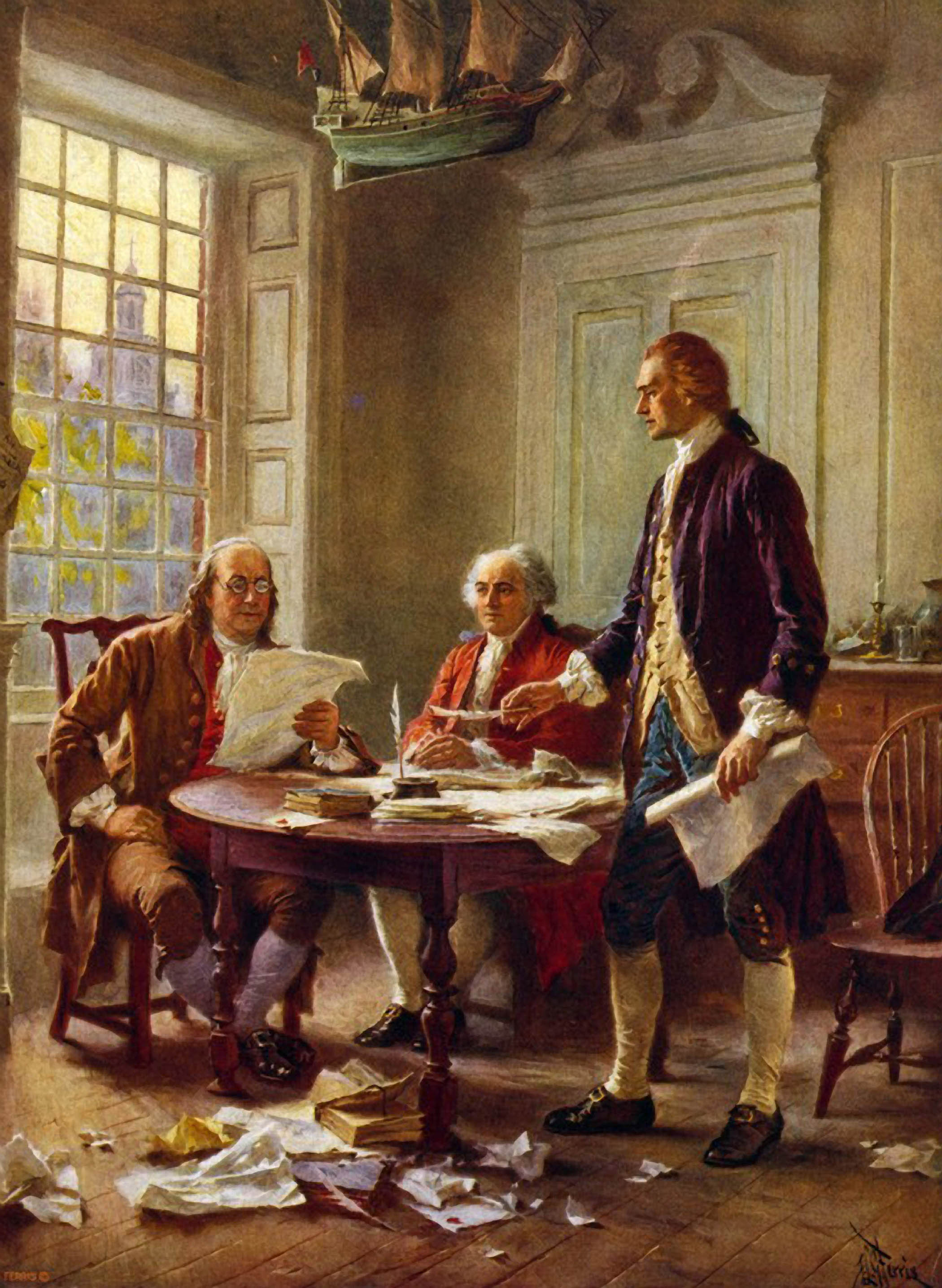
JLG Ferris’s painting of Benjamin Franklin, John Adams and Thomas Jefferson drafting the 1776 declaration of independence.
1862
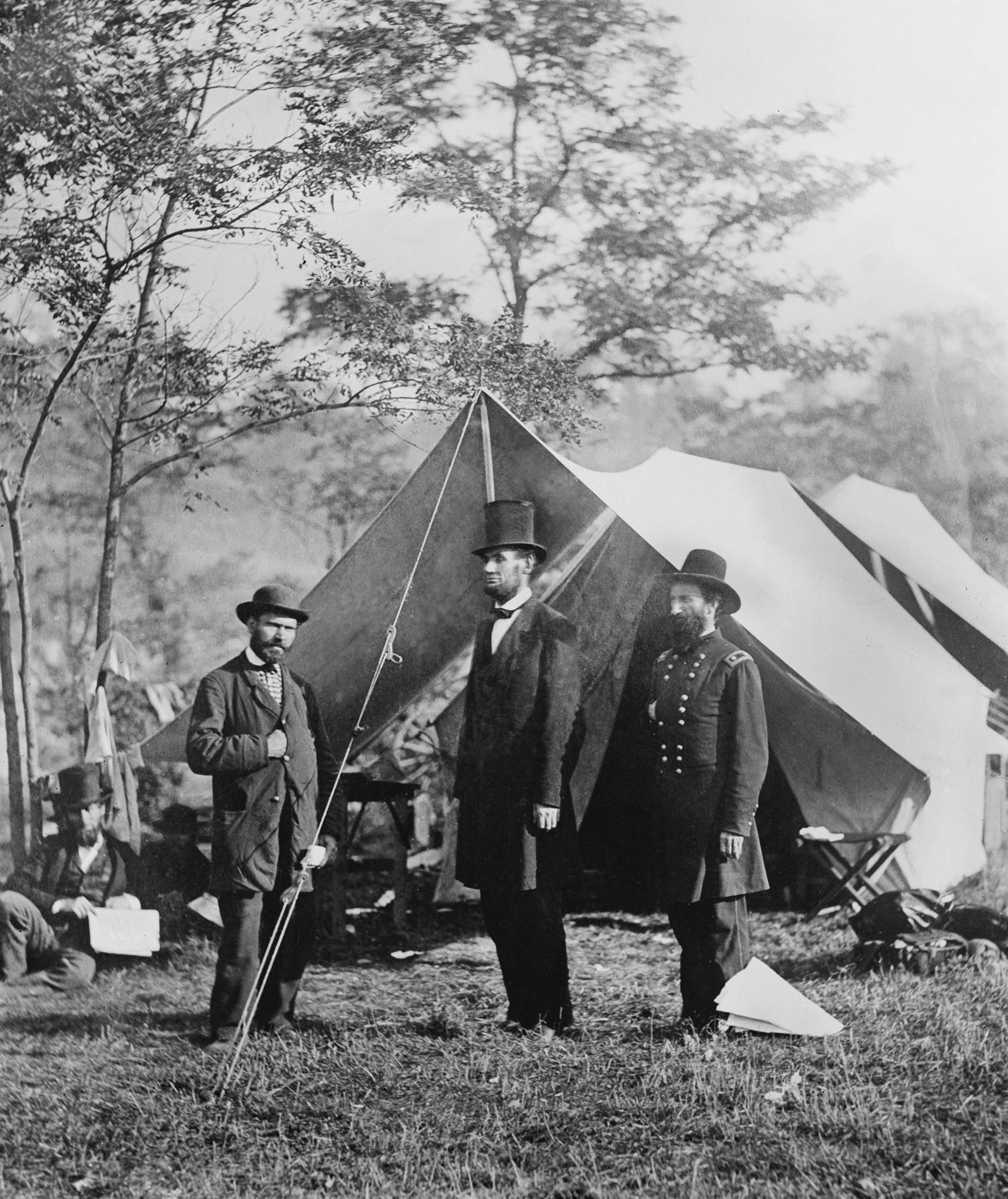
President Abraham Lincoln, centre, in Maryland during the second year of the American civil war, October 1862.
1934
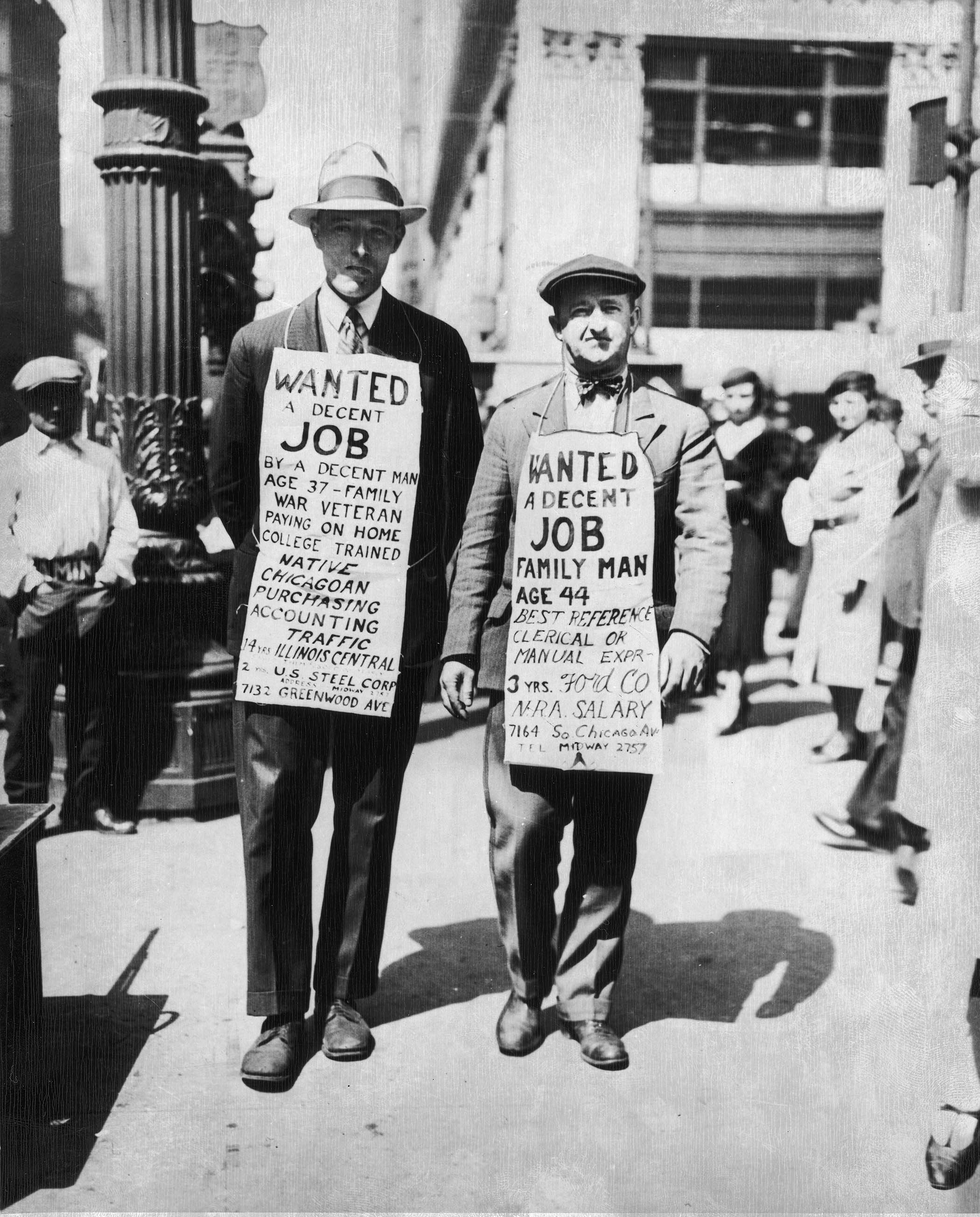
Two men looking for work during the Great Depression, Chicago, Illinois, 15 April 1934. The downturn lasted from 1929 to 1939.
1971
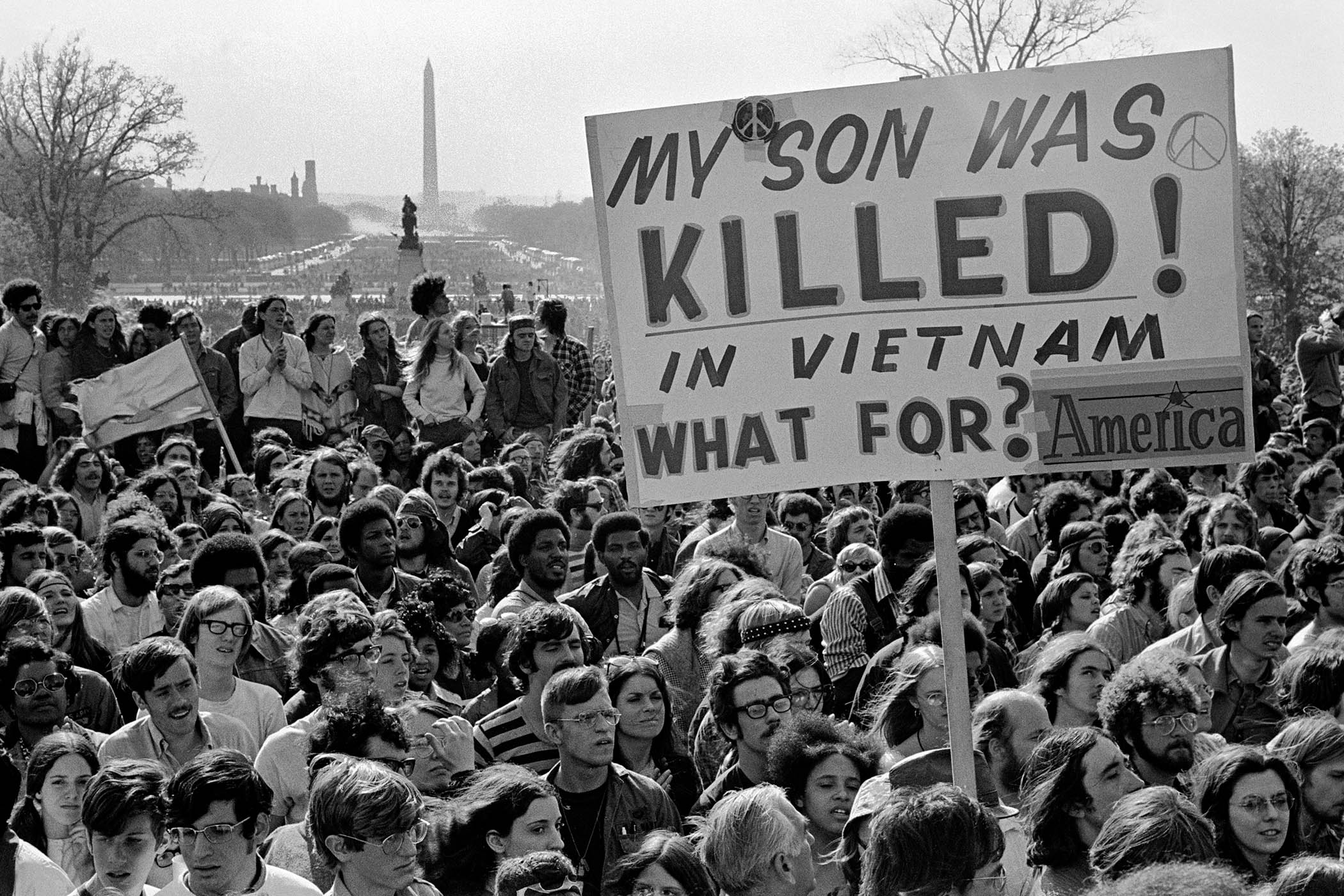
Anti-Vietnam war protesters on the National Mall, Washington DC, 1971. The war ran for 20 years, from 1955 to 1975.
1971
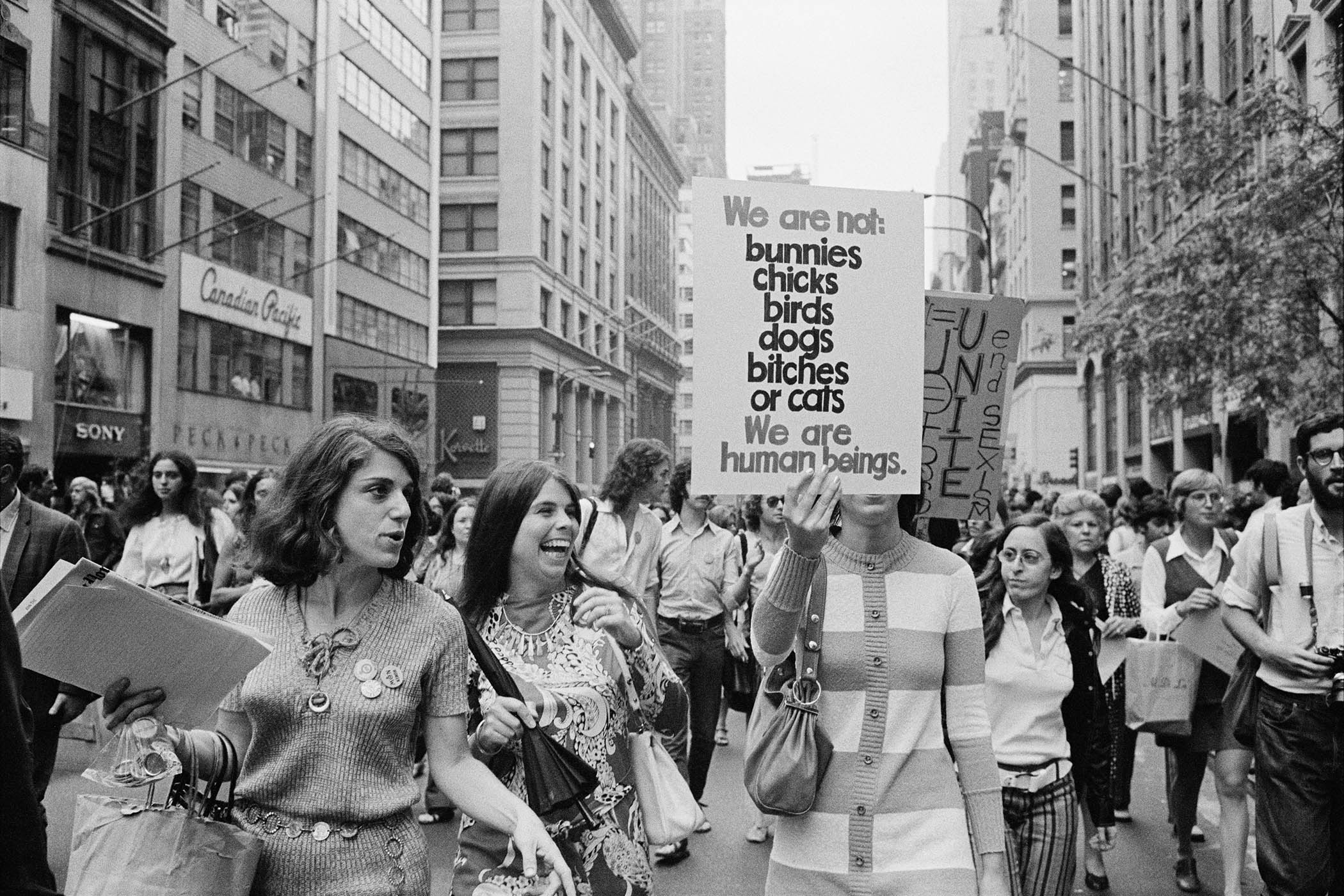
Feminists demonstrate in Manhattan, 1971 – a highly active period for the women’s liberation movement in the US.
2001
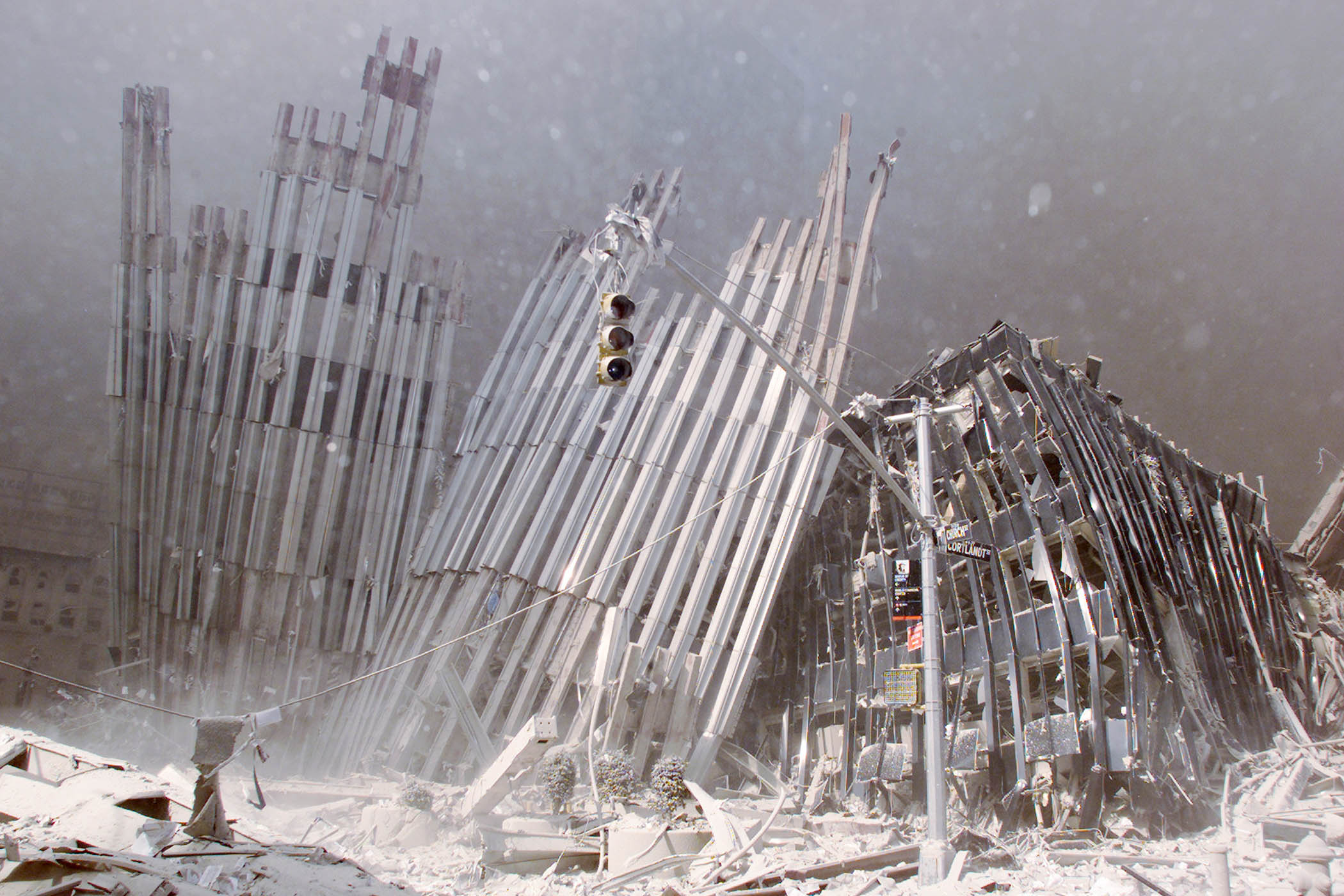
One of the World Trade Center towers lies in ruins after the terrorist attack in New York City, 11 September 2001.
2008
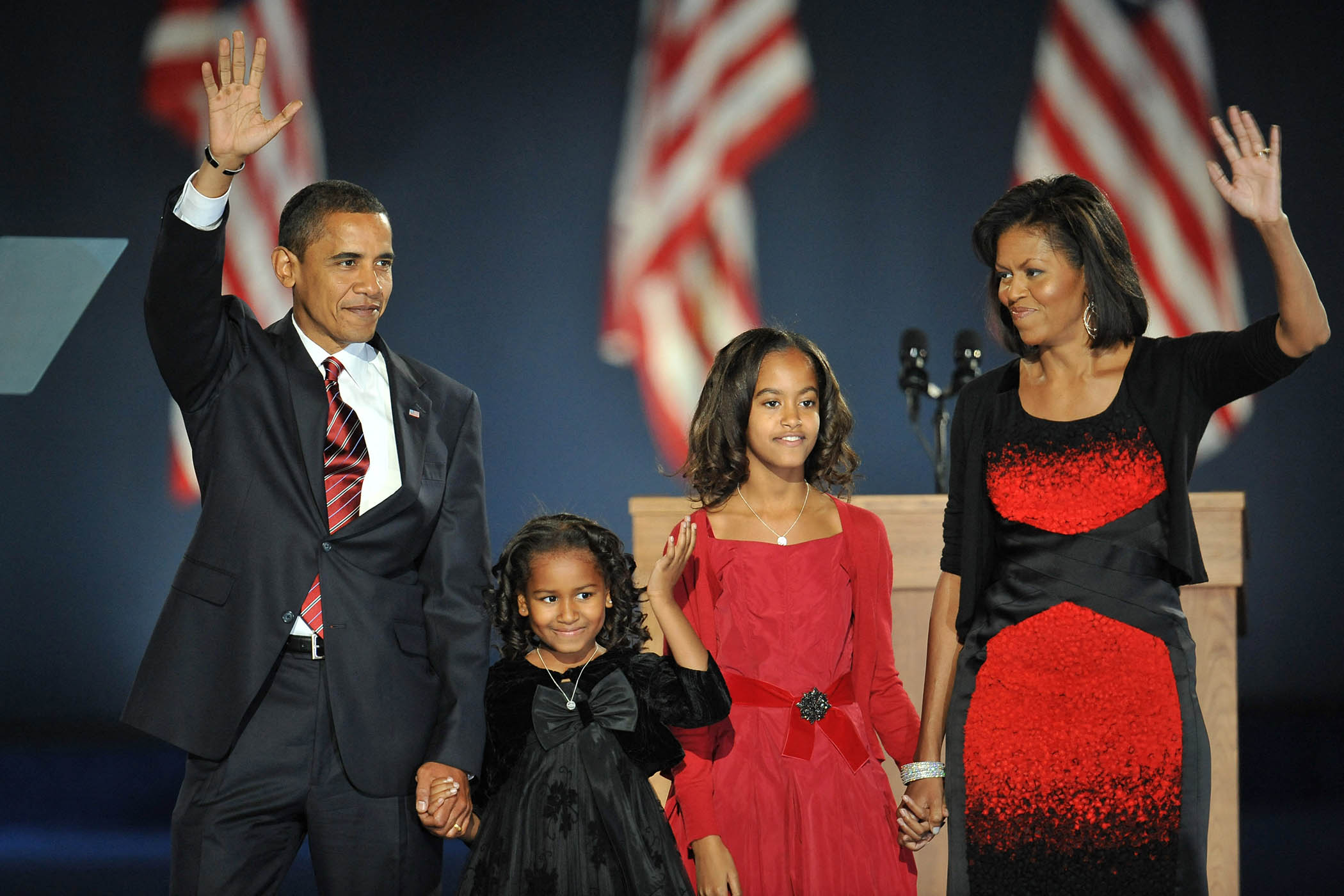
President-elect Barack Obama with his wife, Michelle, and children at his election party in Chicago, 4 November 2008.
2020
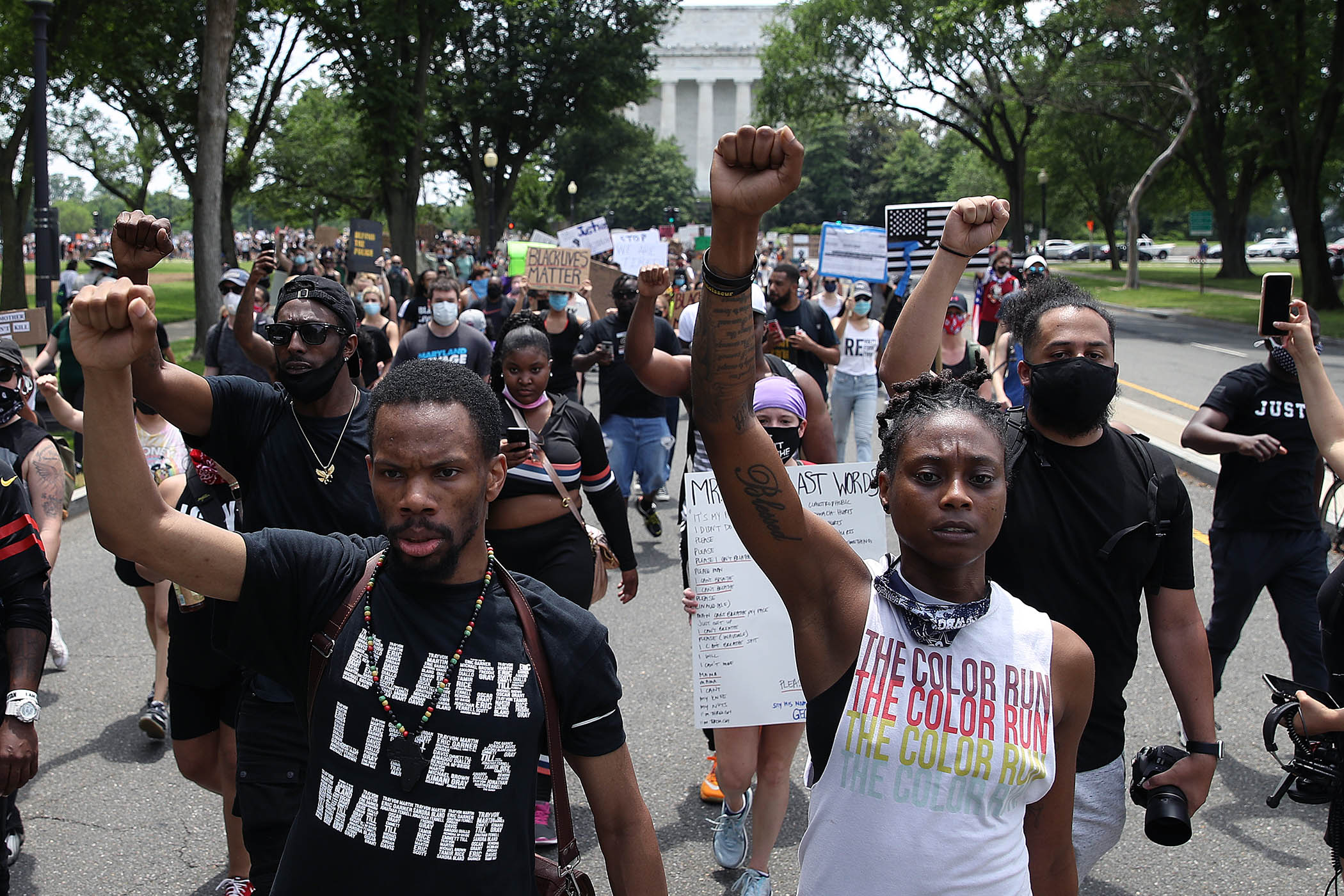
Demonstrators march near the Lincoln Memorial during a protest against police brutality and racism, Washington DC, 6 June 2020.
Photographs by Leonard Freed/Magnum Photos, Universal History Archive/Getty Images, Glasshouse Images/Alamy, Fotosearch/Getty Images, Ernest Cole/Magnum Photos, Corey Sipkin/NY Daily News Archive via Getty Images, Stan Honda/AFP/Getty Images, Win McNamee/Getty Images