Banners fluttered from Barcelona’s wrought-iron lamp posts last week to proclaim a cultural event spoken of, with only the faintest whiff of hyperbole, as a before-and-after moment in the history of international opera. Even qualified to “recent performance history” – composers might otherwise take exception – this was a landmark occasion, the civic excitement justified, the jostle of opera movers and shakers from all over the globe adding to the foyer buzz in the Gran Teatre del Liceu. This was one of those rare and blissful nights when dropped jaws silenced noisy opinion in the queue for coats after.
The fuss? The Norwegian soprano Lise Davidsen, scaling the heights as the most in-demand singer in the world, had chosen the Catalan city to make her debut as Isolde (having previously sung only Act II, in Munich) in a new production of Wagner’s Tristan und Isolde (1865). This was also Davidsen’s return to the stage after giving birth to twins last May. Her Tristan was the American Clay Hilley, one of the small handful of heldentenors – heroic tenors – who can excel in the fiendish role, maintaining stamina right through to the end, which he did, with sterling energy and distinction.
Davidsen’s career took off a decade ago with small Wagnerian roles and the promise, never automatically fulfilled, that the great ones would follow. Now aged 37 and in her prime, she felt ready to sing the most musically complex, as well as one of the longest roles in any opera: Wagner’s Irish princess, illicitly bound in love to the knight Tristan, whose very name encompasses the word sadness. Incandescent with fury at the start, Isolde is transfigured by grief at the end some four hours later, with her farewell music, the Liebestod, some of the most revered minutes (around eight) in the repertoire. Isolde has made careers, and also ended a few.
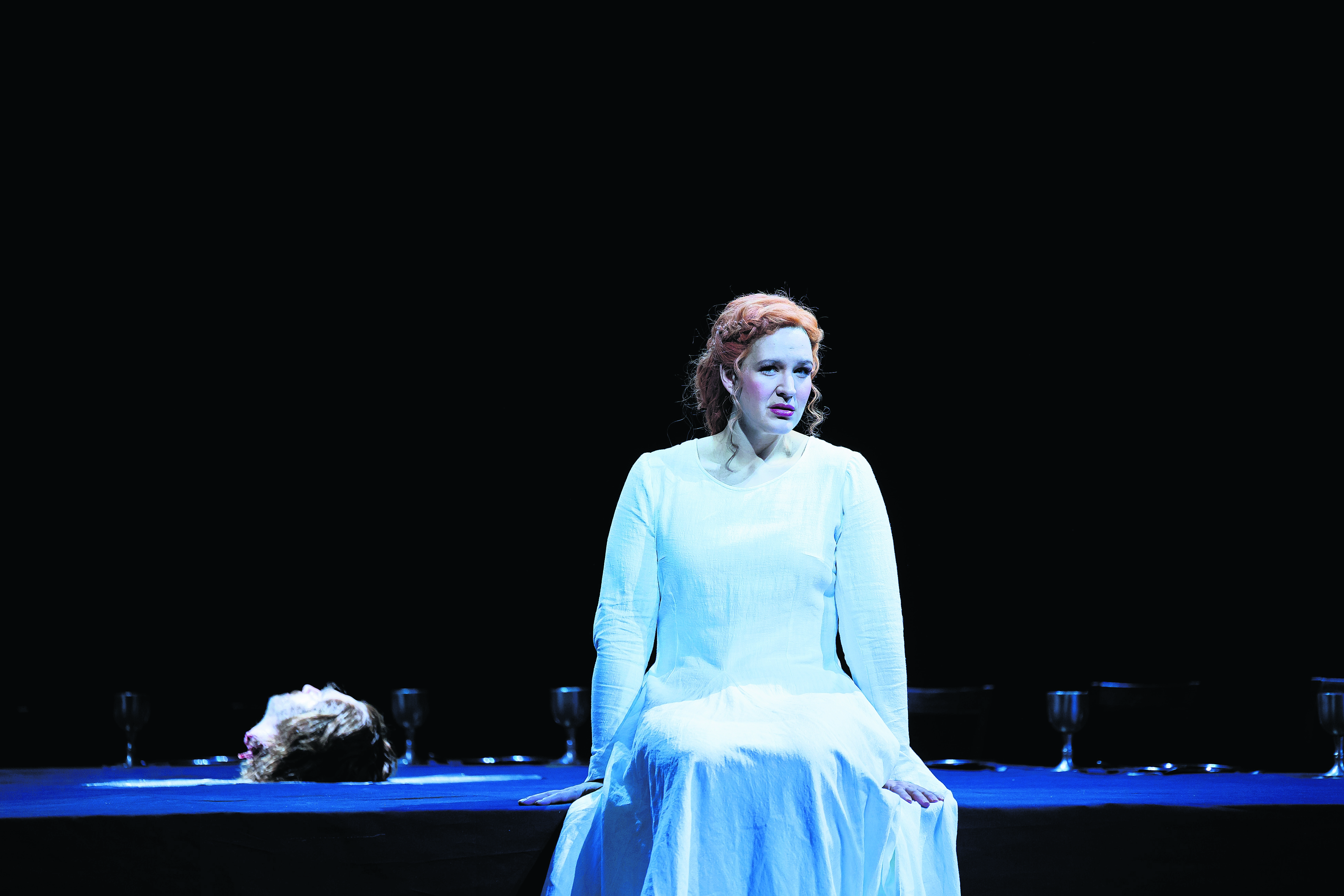
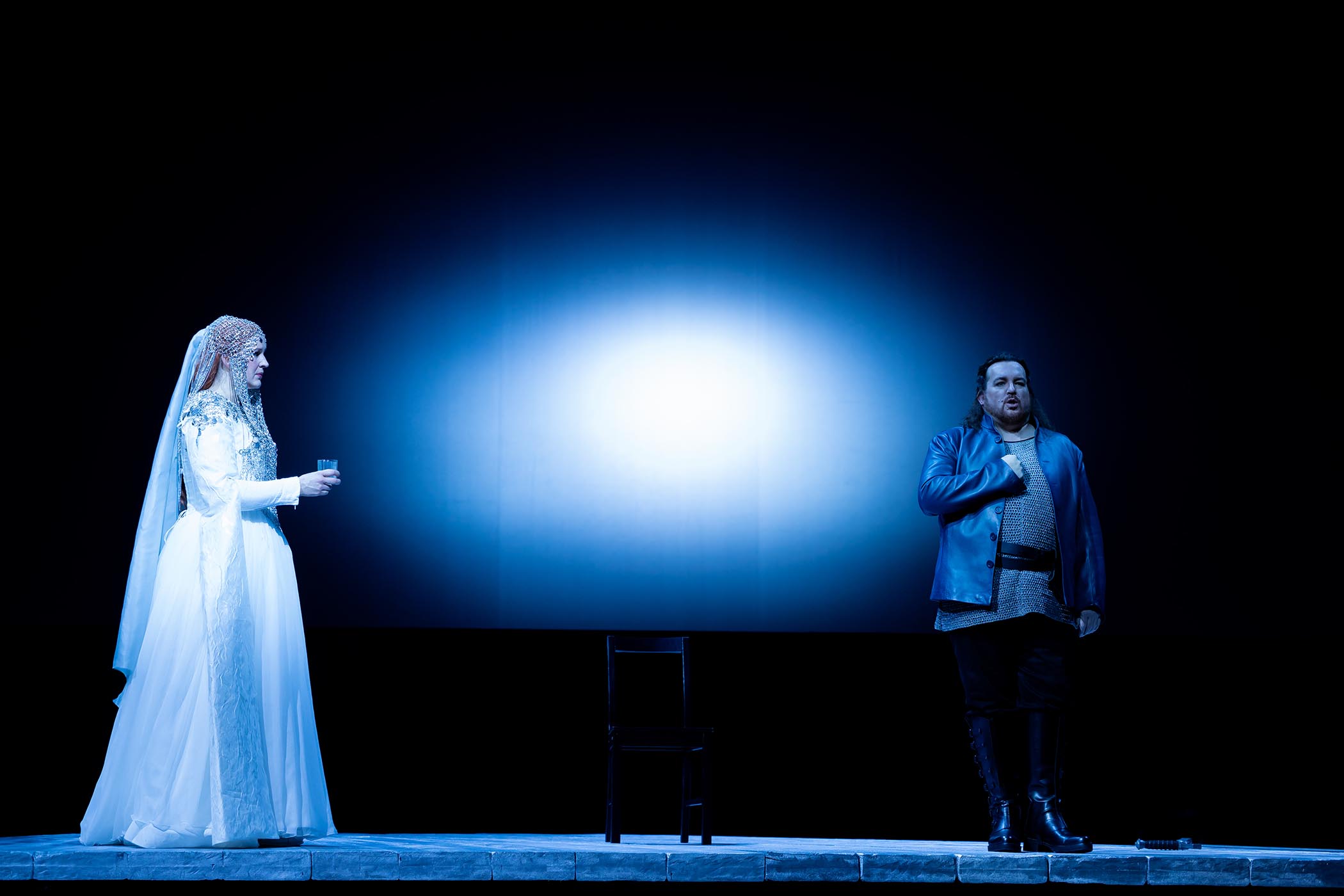
Lise Davidsen in the ‘spare, intelligent and perceptive’ production of Tristan and Isolde at the Liceu in Barcelona
Susanna Mälkki conducted the work for the first time, applying her incisive expertise with contemporary music to Wagner’s immense chromaticism. The Liceu orchestra triumphed, if occasionally loud when soft would have been even better. The production by Barbara Lluch was spare, intelligent and perceptive. Naturally, it provoked a few boos when she and her team (designer Urs Schönebaum) took their bow: Wagner’s ownership by disciples knows no equal; many have strong views. The visual style was Game of Thrones (man buns, black tunics) with a wave at the Duc de Barry (medieval gowns and long hair) and Anish Kapoor (a vast black mirror-moon eclipse affair) but none the worse for all that. It looked severe and handsome.
Lluch concentrated on clarity and emotional storytelling, performers only occasionally overdoing gesture or detail. She showed great skill in helping Davidsen and Hilley through the static ecstasy of Act II, where the action is entirely in orchestra and voices. King Marke, betrayed by his beloved friend Tristan, was sung with affecting intensity by the British star bass Brindley Sherratt. His turning away from the besotted lovers, silhouetted in darkness, was the epitome of sorrow. The Polish baritone Tomasz Konieczny, first trained as an actor with physical skills to show for it, was luxury casting as Kurwenal. Ekaterina Gubanova’s Brangäne was an impetuous and busy foil to Isolde’s monumental composure. Roger Padullés made much of the small, villainous role of Melot.
This was one of those rare and blissful nights when dropped jaws silenced noisy opinion in the queue for coats after
This was one of those rare and blissful nights when dropped jaws silenced noisy opinion in the queue for coats after
The night was Davidsen’s, and everyone’s. Her vocal control, her range of expression and colour, her soft voice singing, her strength and volume in climactic moments felt natural and without strain throughout. She knows how to use her height, never upstaging, understanding the power of stillness, drawing attention only when to do so is required. Her almost disembodied, dreamlike account of the Liebestod was unforgettable, floating her final notes with breathtaking daring. She carries a weight of expectation, heralded as a talent that comes only every half century or so, mentioned in the same breath as Maria Callas and Luciano Pavarotti. Where she differs from both is in the modesty of her character and presentation, even now that the world is at her feet, any fee hers for the asking. We must see where this responsibility takes her.
One brief mention of La Traviata, back at the Royal Opera for the umpteenth revival of Richard Eyre’s production, in Bob Crowley’s grand designs. Westminster City Council should have adorned the lamp posts around Covent Garden with word that Ermonela Jaho was back to sing Violetta, marking 300 performances, and sharing the run with two others. You can see it in a cinema near you this week, or live in the theatre until 17 February. This glorious production is well worth catching.
The Liceu production of Tristan und Isolde is available from 15 February on the digital platform LiceuOpera+. Davidsen will sing the role at the Metropolitan Opera New York, streamed on the Met Opera Live on 21 March 2026, 4pm. She performs Schubert at Wigmore Hall, London, and Aldeburgh festival in May-June
Photograph by Sergi Panizo
Newsletters
Choose the newsletters you want to receive
View more
For information about how The Observer protects your data, read our Privacy Policy