
The notion that music has the ability to unlock our memories and conjure times past ran like a silver thread through three separate events last week; each distinct in their own creation, yet bound by the idea that the sinuous shape of a melody has more power over our minds than mere words or gestures.
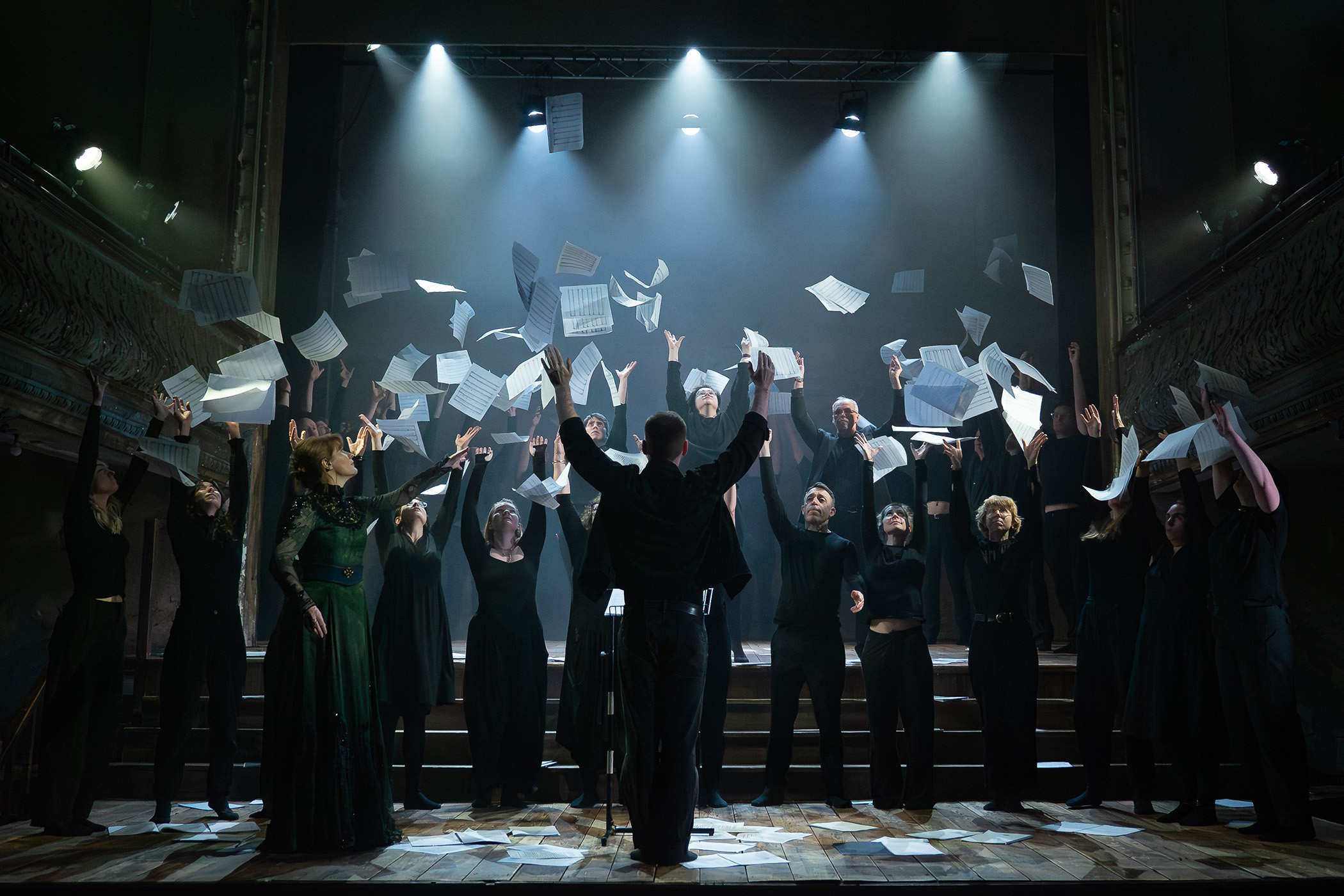
Overhearing the haunting Irish folk tune The Lass of Aughrim triggers the revelation of a secret love in the Fourth Choir’s production of James Joyce’s The Dead, based on the masterly final short story from his collection Dubliners, which returned to Wilton’s Music Hall last week after sell-out performances last year. It should surely become an annual fixture, such is the power of this brilliantly devised evening.
Adapted and directed by Séamus Rea, in collaboration with conductor Jamie Powe, it marries Joyce’s vibrant narrated text to a startling range of well-judged choral pieces, sung with precision and deep musicality by this exceptional LGBTQ+ choir. In fact, forget the term “choir”; here the singers perform as an opera chorus, moving about the stage, reacting to actor Justine Mitchell’s beautifully nuanced narration and becoming the Dubliners of Joyce’s 1907 tale of a New Year’s Eve party.
Powe’s seductive arrangements of traditional Irish folk tunes are interspersed with English Renaissance polyphony and attractive pieces by contemporary Irish composers Áine Mallon and Rhona Clarke. And Bid Adieu – the only known song for which Joyce wrote both the words and the melody – makes a welcome appearance, with a fine solo from soprano Nina Lejderman. It’s rare to sit amid such a spellbound audience, transfixed by the narration and the music – and, yes, there were tears.
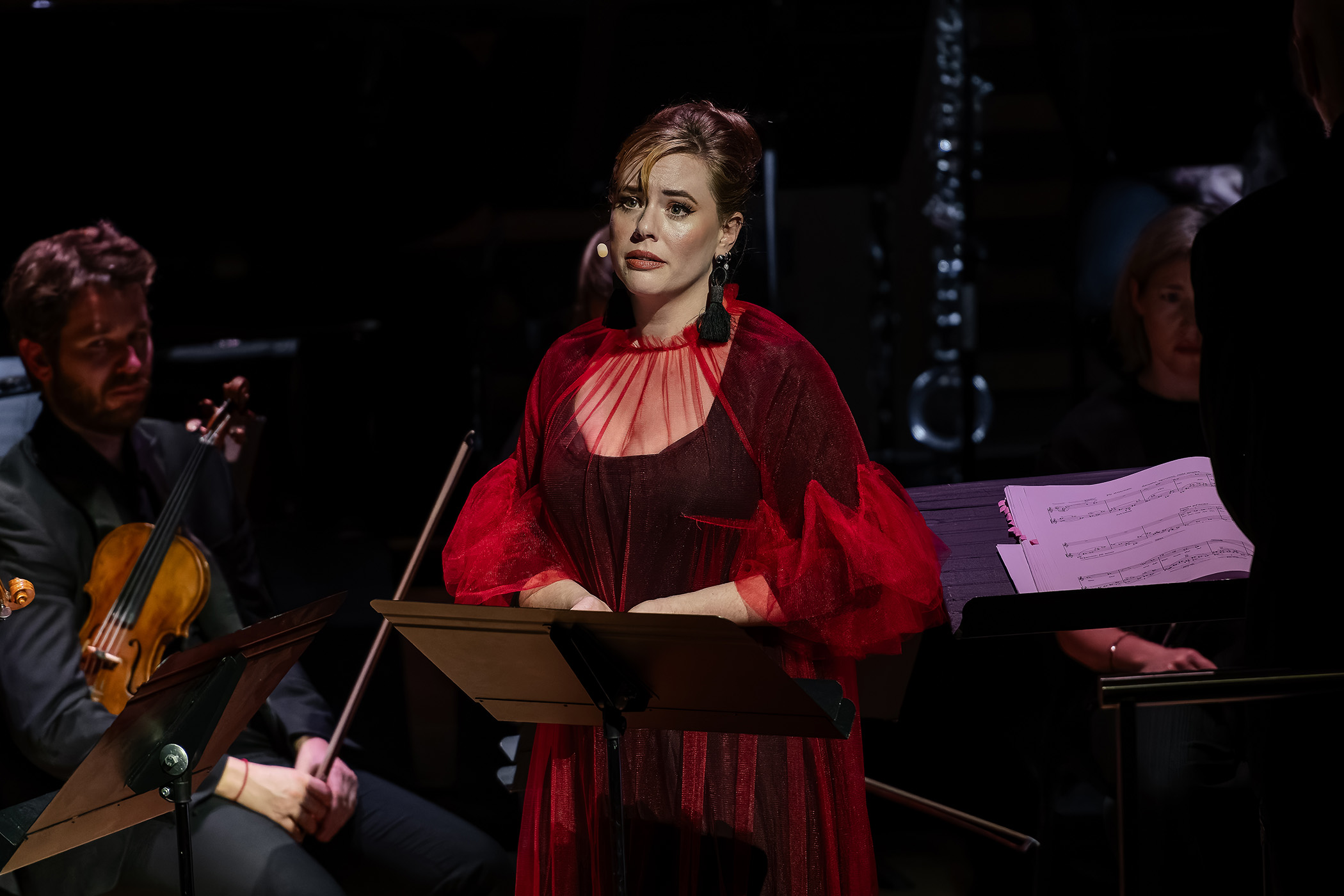
‘Beautifully nuanced narration’: Mezzo-soprano Lotte Betts-Dean performs with the Aurora Orchestra in Memory Unwrapped. Main image: the Fourth Choir perform at Wilton’s Music Hall
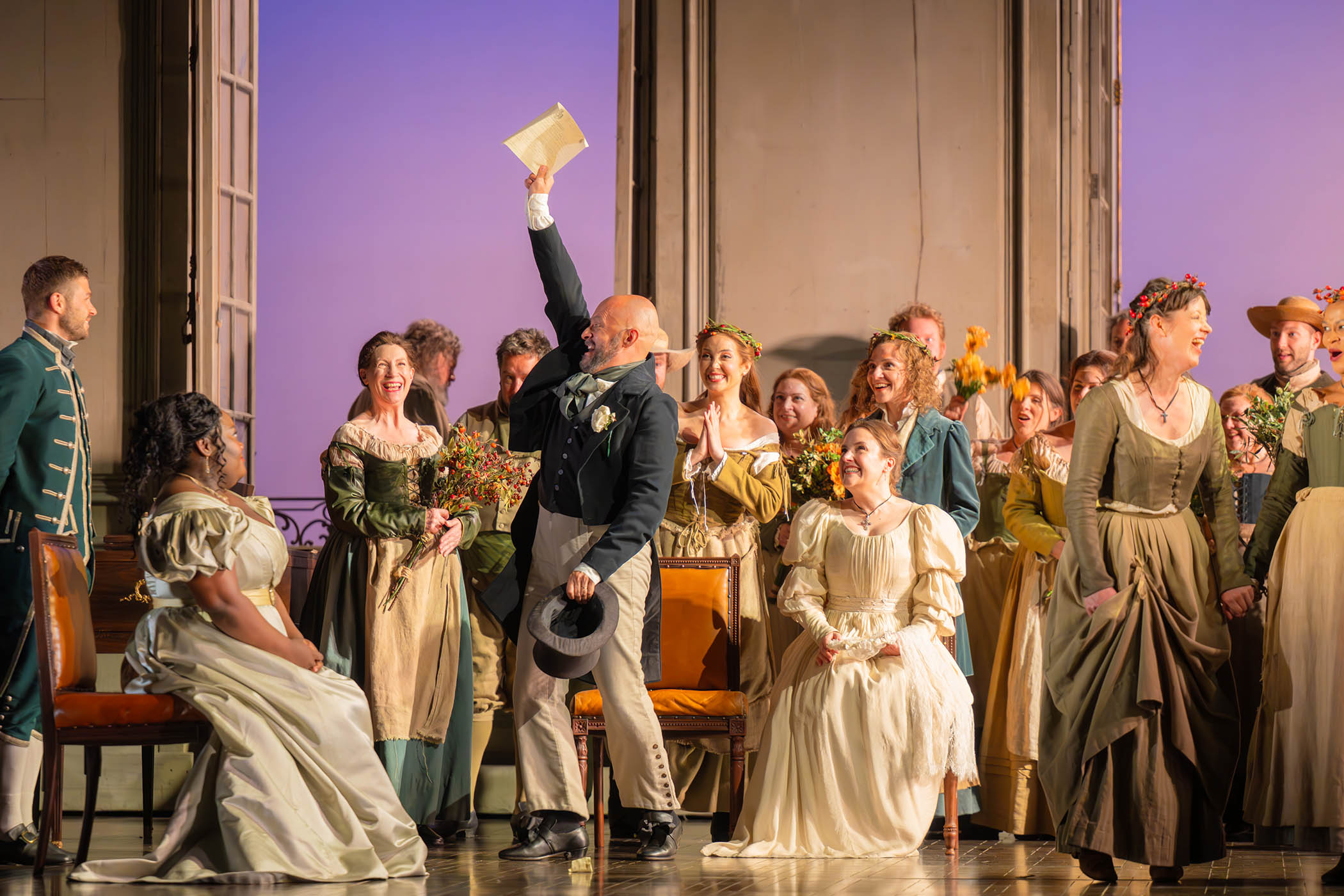
Today, when so much anger and misinformation swirls around migration, it is timely to be reminded that émigrés make a significant contribution to British life, and nowhere more indelibly than in music. From Handel to Freddie Mercury and beyond, musicians have arrived in the UK, some by choice, others – as is increasingly the case today – forced to flee a homeland they no longer recognise. Displacement, the profound struggle to belong and the irrepressible ache for a lost existence, formed the focus of last week’s Another Music festival – a curiously dismissive title for such an impressive event: this was far from just another festival.
Over the course of three nights, more than 30 distinguished migrant musicians performed works by composers who had sought a new life in another country. The opening evening, entitled Between Loss and Belonging, placed committed performances of works by Hindemith, Chopin and Rachmaninov alongside pieces by lesser-known contemporary figures.
The story of Russian composer Alexey Kurbatov’s Piano Quartet, from 2020, is a perfect illustration of the turbulence of exile. He wrote the quartet during the Covid lockdown to be played by, among others, two fellow Russians, the violist Mikhail Rudoy, who had commissioned it, and violinist Roman Mints. Then Vladimir Putin invaded Ukraine and they scattered: Kurbatov to Montenegro, Rudoy to Estonia and Mints to the UK.
Six years on, the single-movement work, epic in scale and symphonic in ambition, finally received its world premiere in this festival, where Mints is artistic director. He was joined by Rudoy, Latvian cellist Kristina Blaumane and Ukrainian pianist Vadym Kholodenko in a triumphant performance of a warm, tonal work whose sweeping themes speak of friendship, resilience and interaction – a succinct summation of this exhilarating festival.
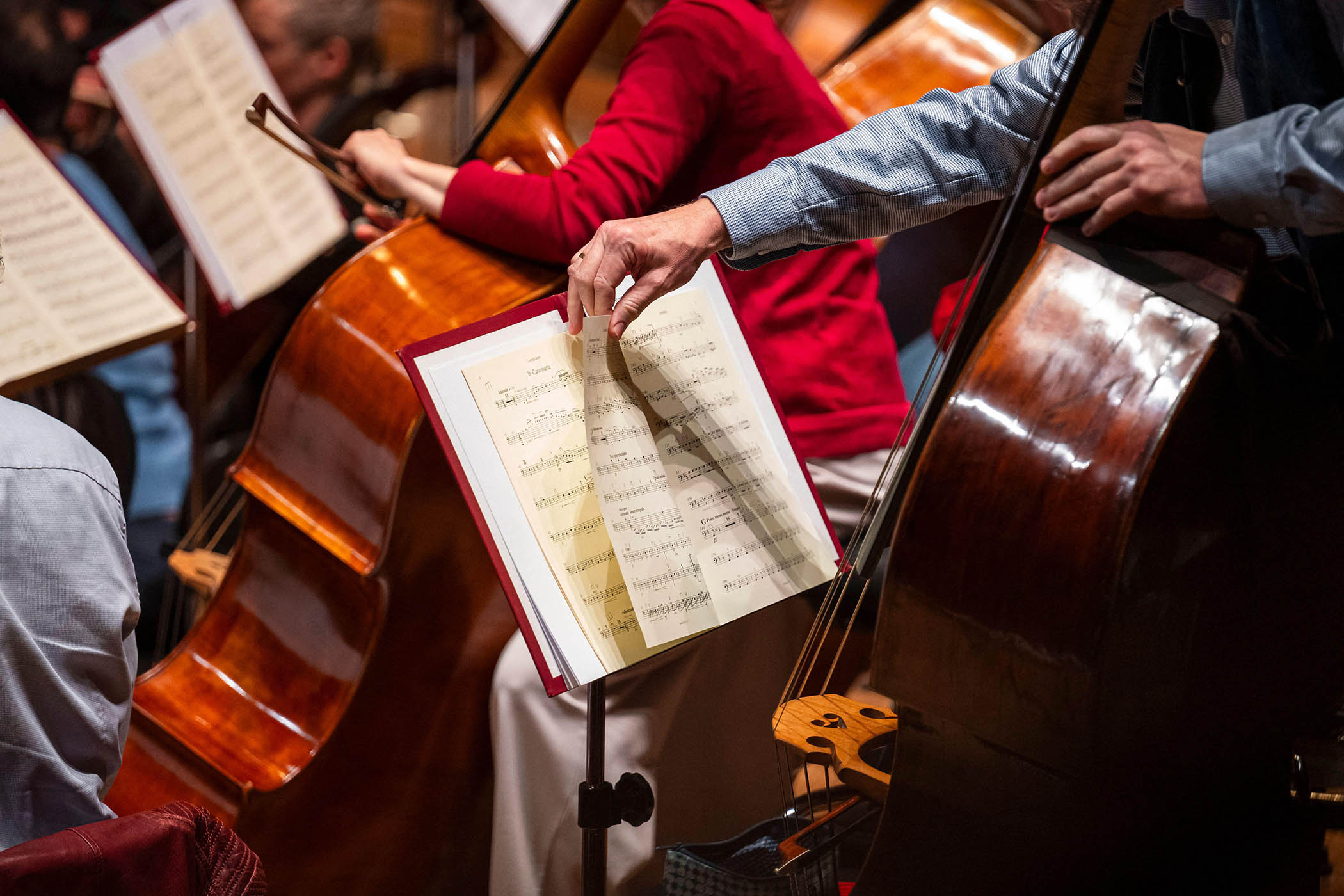
Finally, we come to the latest Unwrapped series at north London’s Kings Place, devoted entirely to memory and music, which at first glance might seem a heading too amorphous to be cogent for a year-long festival. We are assured, however, that it will “explore the extraordinary power of music to stir innermost recollections, to preserve history and to honour the unforgettable”. Judging by the opening week’s contribution from composer/conductor Brett Dean and the mezzo-soprano Lotte Betts-Dean, it promises to be an enjoyable exploration.
With the Aurora Orchestra in arresting form, father and daughter curated a serendipitous playlist, ranging from the powerful (Marta’s aria from Weinberg’s The Passenger) to the ravishing (Dean’s own arrangement of Nadia Boulanger’s Versailles). In haunting, descending glissandi, Dean slid us down his own memory lane in Locket, inspired by a a piano piece by Clara Schumann, which evokes that moment when you rediscover something (in his case, Clara Schumann’s Romance in A minor) and nostalgic recollection floods in. We can all identify with that.
Newsletters
Choose the newsletters you want to receive
View more
For information about how The Observer protects your data, read our Privacy Policy
Photographs by Kathleen Holman/Julian Guidera