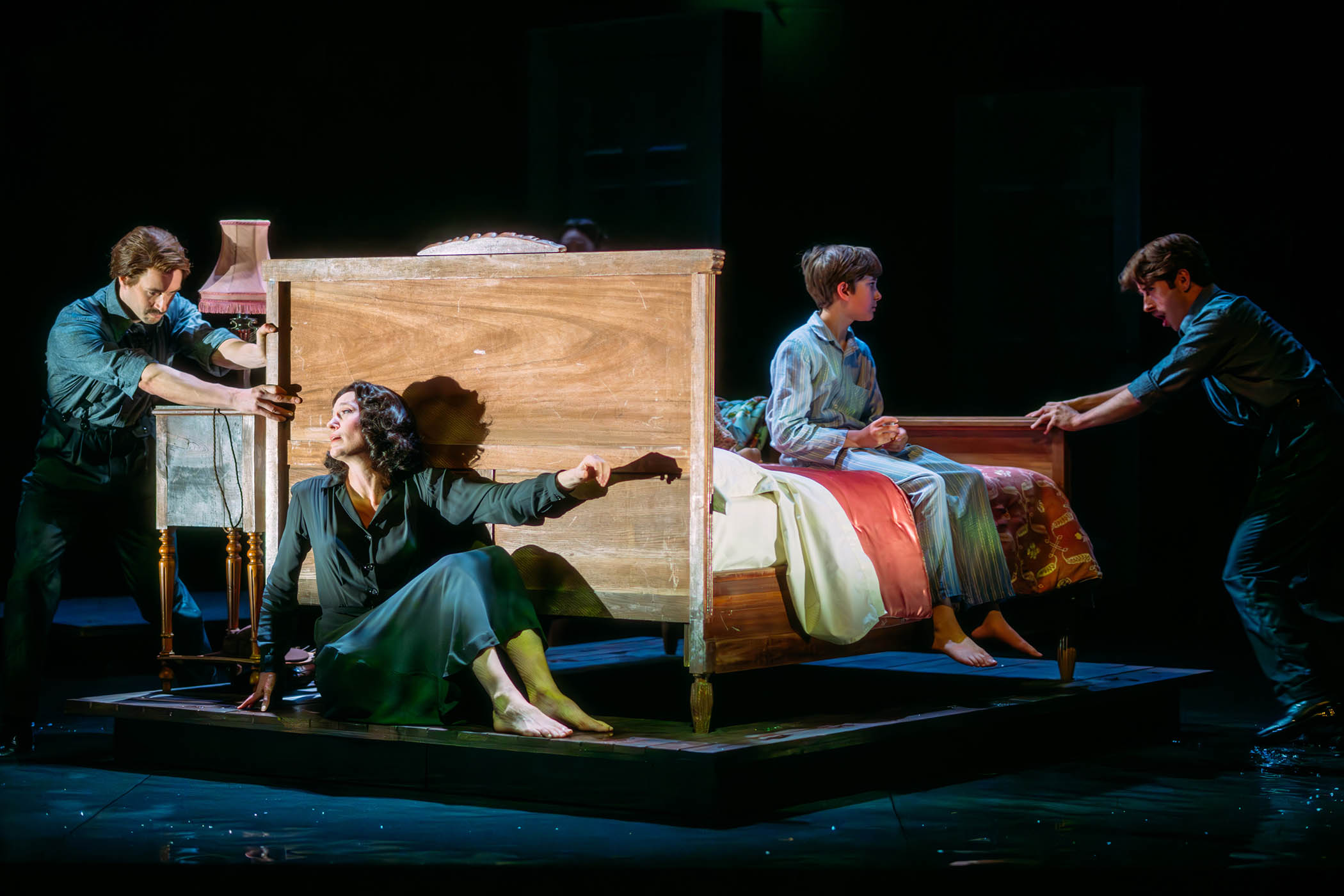

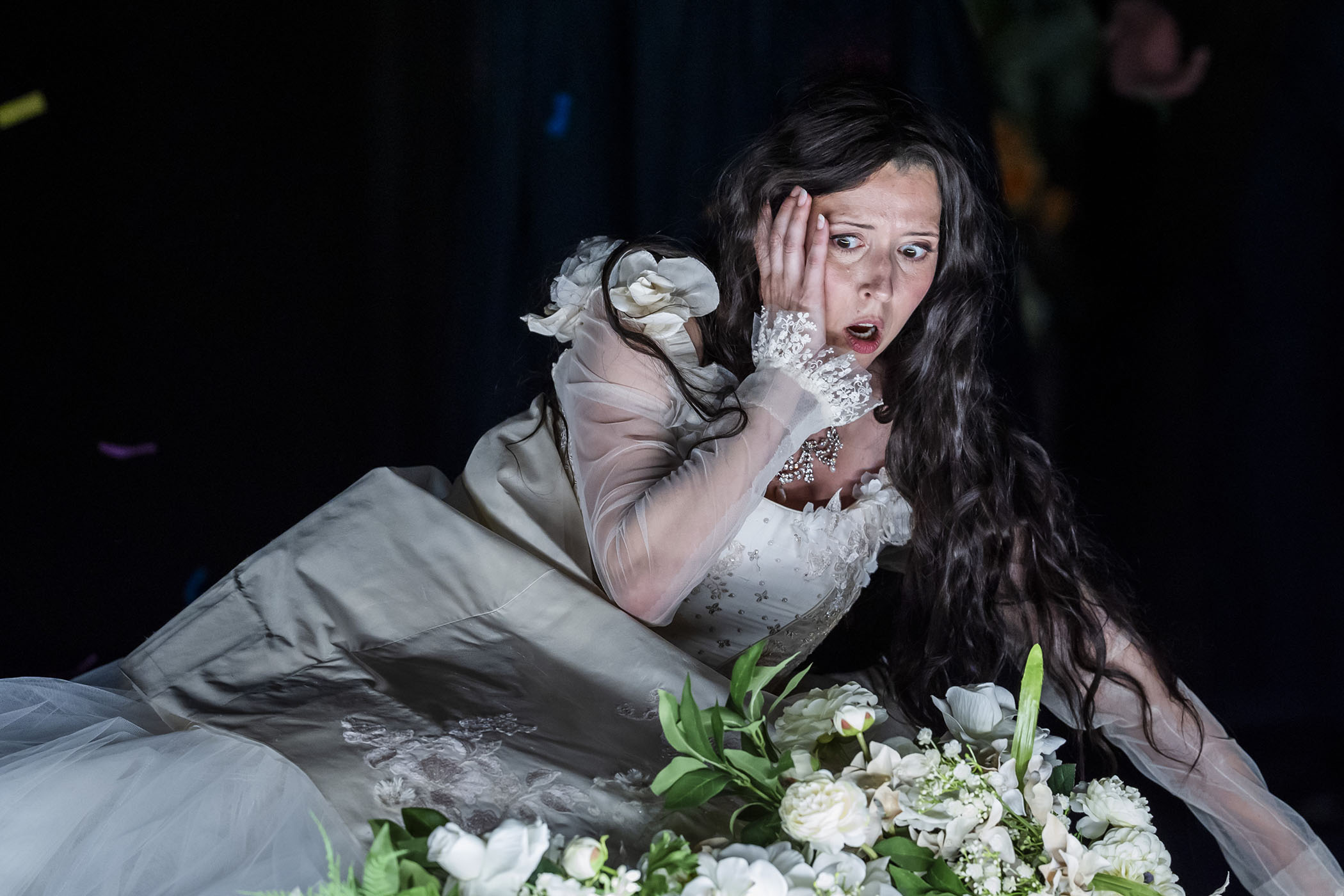
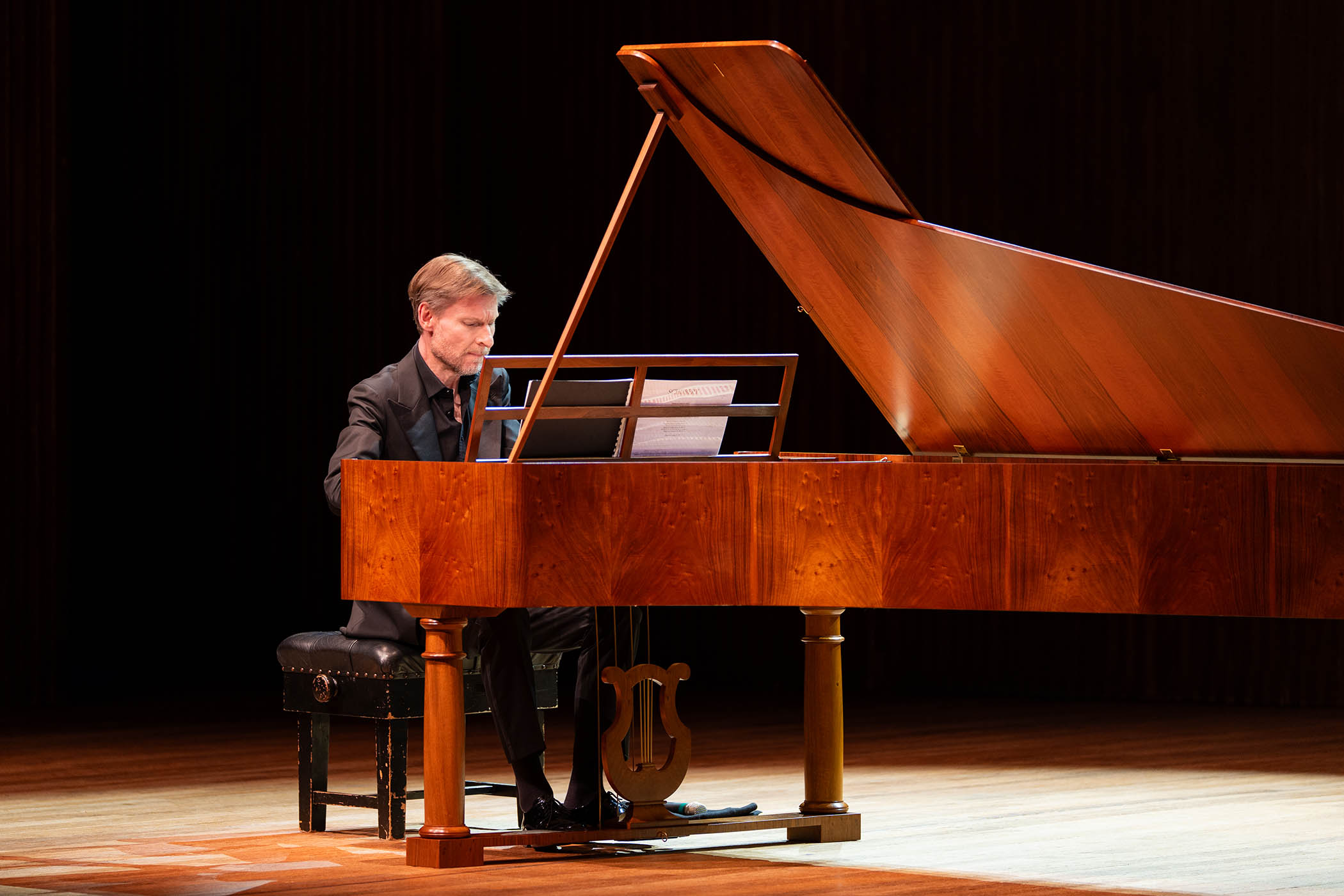
A pianist, unseen in the pitch darkness, plays a few broken chords. A male voice sings the prologue. As our eyes adjust, a woman’s face appears out of the gloom, round, chalky, like a full moon rising. Everything about Benjamin Britten’s chamber opera The Turn of the Screw (1954) is unnerving. A new production at the Linbury theatre, a collaboration between the director Natalie Abrahami and designer Michael Levine, pushes menace to its furthest limits, as befits a tale in which nothing is certain, even death.
The effect is one of wading into a fetid lake. You touch the silty bottom but are quickly sucked into its murky depths. The plot is from a Henry James novella, turned into a libretto by Myfanwy Piper. Two orphaned children, Flora and Miles, are in thrall to a valet, Peter Quint, and a former governess, Miss Jessel, both now dead, cause not revealed. The new governess, nervy and susceptible, sees a spectre at the window. A ghost story unfolds, the more disturbing because it hints at child abuse and innocence corrupted.
The Linbury staging, conducted by Bassem Akiki in a highly capable house debut, remains dark throughout, a degree of light enabling us to see the action but leaving plenty unknown. Video projections of the characters’ faces, outsized and watchful, add a visual counterpoint, as does the presence of two silent doubles of Quint and Jessel, who mirror their actions and emphasise the inescapability of these malevolent beings. Gradually, too, we realise that beds, desk and minimal other furniture, there to convey a country house interior, in fact stand in several inches of water: not so much a lake as splashy effluence.
The cast of six singers, and 13 virtuoso players from the Royal Opera House orchestra, caught every nuance and shade in this powerful but musically compact score. So much relies on the performances of Miles and Flora, sung on first night by children of outstanding ability: Phoenix Matthews and Emilia Blossom Ostroumoff. The almost fragile quality of their voices added to their vulnerability, but both were always audible above the ensemble.
Isabelle Peters as the Governess avoided overplaying hysteria, which intensified the mystery. Claire Barnett-Jones, singing Mrs Grose the housekeeper, brought out the role’s wavering morality: how much does she really know? Kate Royal’s chilling and glamorous Jessel, tonally ungraspable like so much of this work, and Elgan Llŷr Thomas’s alluring Quint, complete an excellent lineup. The run is sold out. I hope they bring it back.
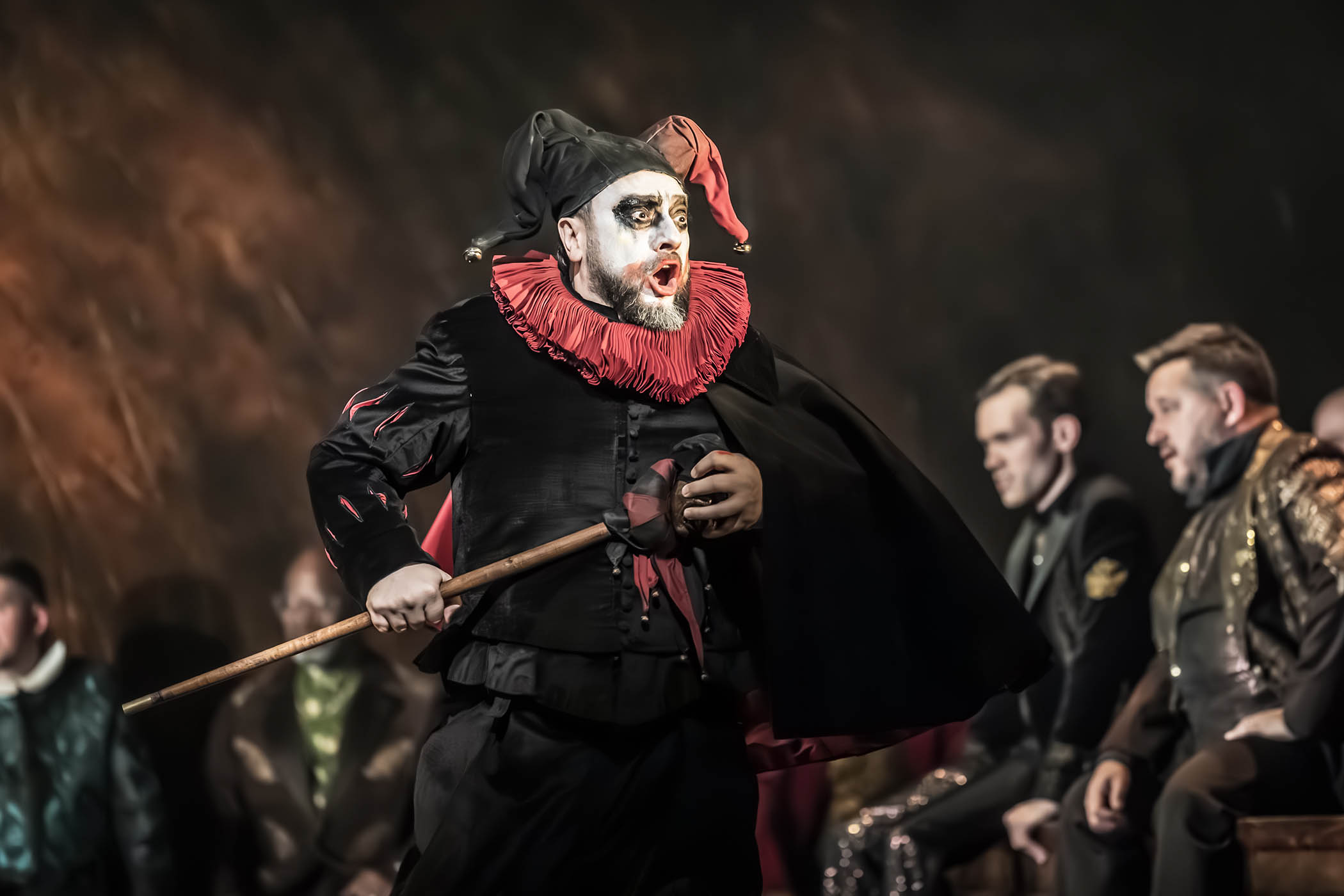
Oliver Mears’s Rigoletto. Main image: Peter Willoughby, Kate Royal, Phoenix Matthews and Elgan Llŷr Thomas in The Turn of the Screw
In the main theatre, the Royal Opera’s 2021 staging of Verdi’s Rigoletto, directed by Oliver Mears and also taking place on a largely darkened stage, is back for a bracing revival. The particular draw is Mark Elder, celebrating the 50th anniversary of his Covent Garden debut – conducting Rigoletto in 1976. His understanding of Verdi, his ability to take a leisurely pace as required, to shape a phrase yet never lose the tension, is one of Elder’s hallmarks. Every moment of this, Verdi’s 16th opera, is allowed to show its vital purpose, from the ominous brass outbursts to the catchiness – intentionally infuriating – of La donna è mobile.
In the lead roles of the mocked court jester and his daughter, Gilda, the Romanian baritone George Petean and the Russian lyric soprano Aida Garifullina were ideally matched, his vocal richness and heft yielding touchingly to her crystalline high trills. As the Duke of Mantua, the Peruvian tenor Iván Ayón-Rivas oozed the right kind of ego and virility, though sometimes pushed above the note in his zeal. William Thomas and Anne Marie Stanley were striking as the charmless but dramatically pivotal siblings, the assassin Sparafucile and the seductress Maddalena; sinister creatures of the night.
Sean Shibe, guitarist extraordinaire, and the Manchester Collective started their short Queen Elizabeth Hall concert, Sea Shanties, with a recording of the BBC radio shipping forecast. We could have listened all night to those recited names – Dogger, Fisher, German Bight – but they were there only to set the scene for a resonant evening free of nautical heartiness. The melancholy Elizabethan John Dowland (1563-1626), in his anniversary year, was given a sensuous makeover, Shibe playing lute with grace and affection. Scottish traditional song met Henry Purcell and the Unthanks in deft instrumental arrangements.
The last work was a world premiere by Ben Nobuto (b1996) – Arksong for electric guitar, string quartet and percussion. The collective’s Beibei Wang shouted orders through a megaphone held in one hand, banging out rhythms on a range of percussion with the other. One of the functions of sea shanties, Nobuto told us, was to help sailors synchronise their heavy labours by singing. Mechanisation, the roar of steamboats, the creep of technology, drowned out this ancient habit. In came a new, splintered sound world of bleeps, bells and, eventually, digital sonic invasion. We know well enough that AI could have generated a piece of music out of these fragments. Nobuto shaped them into something unexpected and human.
The Turn of the Screw is at the Royal Opera House until 6 April. Rigoletto runs until 23 April
Newsletters
Choose the newsletters you want to receive
View more
For information about how The Observer protects your data, read our Privacy Policy
Photographs by Mihaela Bodlovic/Marc Brenner